
Main Courses
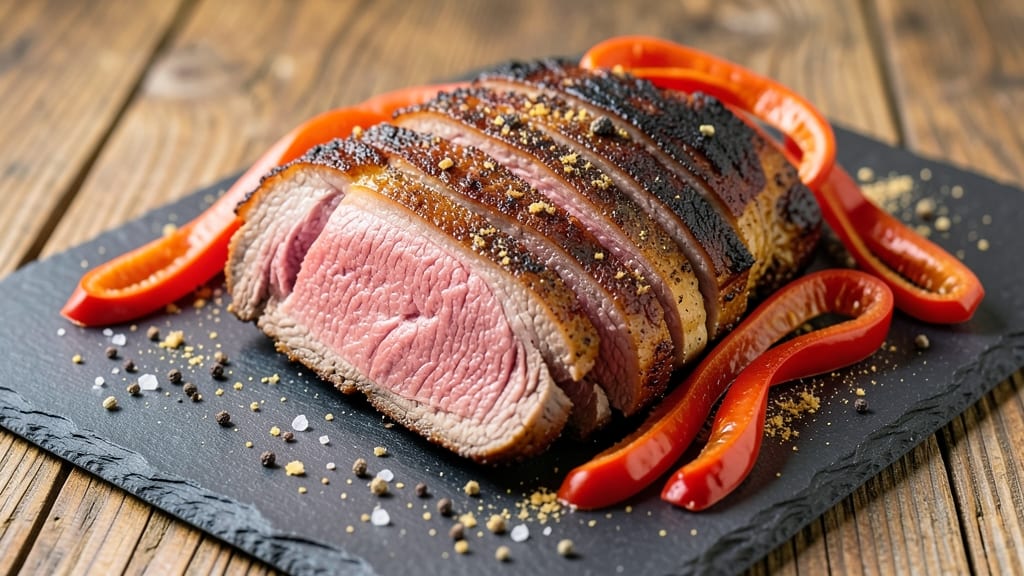
This smoked beef brisket flat recipe delivers the ultimate balance of smoky crust and melt-in-your-mouth tenderness that pitmasters dream about. The day I realized French technique could elevate my rubs changed everything—now I combine slow-smoked tradition with precise seasoning for restaurant-quality results at home.
What makes this recipe special is the 3-2-1 method that transforms tough beef into fall-apart perfection, all while developing that deep, smoky flavor we all crave.
With just a few high-quality ingredients and 8-10 hours of low-and-slow smoking, you'll create a brisket flat that's tender enough to slice with a fork while maintaining that coveted bark. The key is patience—letting the wood (hickory or cherry) infuse the meat gradually while maintaining a consistent 225°F temperature.
This isn't just another brisket recipe; it's the one that will have your guests asking for seconds and your neighbors begging for the secret.
By the time you're done, you'll have perfectly smoked beef with a dark, caramelized crust that gives way to juicy, buttery meat inside.
The aroma alone will have everyone gathering around your smoker, and each slice will reveal that ideal texture—tender enough to pull apart but still substantial enough to hold together when sliced.
This is the kind of brisket that transforms a simple meal into an unforgettable experience, worth every minute of wait time.
The best part? This recipe scales beautifully for any occasion—whether you're feeding a crowd for a backyard cookout or preparing a special dinner for two. Serve with classic sides like creamy coleslaw, buttery cornbread, and pickled vegetables for the full Texas-style brisket experience.
Let's get started on creating your signature smoked masterpiece.
Ingredients for smoked beef brisket flat
High-quality beef meets French technique for brisket flat perfection—just 14 ingredients for restaurant-worthy results.
| Ingredient | Amount | Notes |
|---|---|---|
| Beef Brisket Flat 🥩 | 2 ½ lb | Whole muscle, 1-inch thick max |
| Yellow Mustard 🍯 | ¼ cup | For binder and flavor base |
| Coarse Kosher Salt 🧂 | ½ cup | Diamond Crystal preferred |
| Smoked Paprika 🌶️ | ¼ cup | High-quality for deep color |
| Freshly Ground Black Pepper 🌶️ | 2 tbsp | Freshly cracked for intensity |
| Garlic Powder 🧄 | 2 tbsp | Freshly ground preferred |
| Onion Powder 🧅 | 2 tbsp | Finely ground for even distribution |
| Ground Cumin 🌿 | 1 tbsp | Toasted for richer flavor |
| Brown Sugar 🍚 | 2 tbsp | Light or dark, packed |
| Chopped Hickory Wood Chips 🌳 | 2 cups | Soaked 30 minutes minimum |
| Apple Juice 🍎 | ½ cup | For spritzing during smoke |
| Beef Broth 🍲 | 1 cup | For spritzing, low-sodium |
| Yellow Onion 🧅 | 1 whole | Quartered, for aroma |
| Fresh Garlic Cloves 🧄 | 4 cloves | Smashed for infusion |
| Beef Fat 🧈 | 2 tbsp | Rendered from brisket trimmings |
The brisket flat is non-negotiable here. Look for a whole muscle cut from the butcher section—thicker than 1 inch and it won't smoke through properly. I always ask for the flat cut specifically, not the point. Costco or your local butcher shop will have it pre-trimmed, but if you're buying a whole packer, trim it yourself to 1-inch thickness. The fat cap should be removed—it burns unevenly and creates hot spots. For the wood chips, Traeger or Cookshack brands hold up best during long smokes. Soak them 30 minutes minimum before using, or they'll burn too fast. The beef broth? Low-sodium is key—we're not trying to over-salt this masterpiece.
No yellow mustard? Dijon mustard works in a pinch, but it's more aggressive—use half the amount. Running out of smoked paprika? Regular paprika plus a pinch of liquid smoke gets you 80% there, but it won't have that authentic bark. The brown sugar is for caramelization, not sweetness—don't skip it. For the spritz, if you're fresh out of apple juice, white grape juice or even water with a splash of vinegar will keep the bark from drying out. The beef fat? Render some from your brisket trimmings—it's pure gold for basting. If you're short on time, lard or bacon fat works, but rendered beef fat has that unmatched depth.
This rub keeps for 6 months in an airtight container, but the brisket itself? Use within 2 days of cooking for peak tenderness. Wrap leftovers tightly in butcher paper, then foil, to preserve moisture. The wood chips can be reused once—just soak them again before your next smoke session. For a crowd, double the batch and smoke two flats simultaneously. The secret to reheating? Low oven (200°F) with a splash of broth—keeps it juicy without drying out. Store cooked brisket in the fridge for 5 days or freeze for 3 months.
Why You'll Love This Recipe
- No-Fuss Prep: I swear, this takes less time than waiting for takeout. Just slather that brisket flat with yellow mustard, hit it with a sprinkle of smoked paprika and salt, and let the smoker do the rest—no fancy rubs or hours of trimming.
- Smoky-Sweet Magic: That mustard base cuts through the beef’s richness while the smoked paprika gives it this deep, woodsy warmth. Honestly, the first bite makes me question why I ever bought pre-packaged sandwich meat.
- Budget Beef, Big Impact: A brisket flat is cheaper than a whole packer but delivers the same smoky satisfaction. I stretch one into four meals, and the mustard-salt-paprika combo makes it taste like a splurge. (Yes, even on a Tuesday night.)
Step-by-step instructions for smoked beef brisket flat
This method delivers melt-in-your-mouth tenderness with a perfect smoky bark every time.
Prepare the Brisket and Rub
Begin by trimming the beef brisket flat to an even 1-inch thickness across the surface. Use a sharp boning knife to remove any excess fat while leaving a thin layer to protect the meat during smoking. Pat the surface completely dry with paper towels—this is crucial for developing that crispy bark later.
In a small bowl, combine the 0.5 cup coarse kosher salt, 0.25 cup smoked paprika, 2 tbsp freshly ground black pepper, 2 tbsp garlic powder, 2 tbsp onion powder, 1 tbsp ground cumin, and 2 tbsp brown sugar. Mix thoroughly until the spices are evenly distributed. Here's the thing—this dry rub needs to adhere well, so I press it firmly into every crevice of the brisket, including the edges and fat cap. The yellow mustard acts as a binder, so spread 0.25 cup yellow mustard evenly over the surface before applying the rub.
Set Up the Smoker
Soak the 2 cups chopped hickory wood chips in water for at least 30 minutes before using. This prevents flare-ups and ensures steady smoke production. Set your smoker to 225°F and allow it to stabilize for 15-20 minutes before adding the wood chips. You'll know it's ready when you see a consistent stream of blue smoke without thick white vapor.
Place the rubbed brisket fat-side up on the smoker grate. The fat will render slowly, basting the meat and creating that coveted crust. Position the brisket away from direct heat sources to ensure even cooking. The reason we wait until the smoker reaches temperature is that cold meat cooks unevenly, leading to tough spots. Let the brisket sit undisturbed for the first 2 hours—this is where the magic begins as the rub penetrates and the bark starts forming.
Spritz and Monitor
Every 90 minutes, spritz the brisket generously with a mixture of 0.5 cup apple juice and 1 cup beef broth. This keeps the surface moist enough to prevent a hard crust while maintaining the smoky flavor. I use a spray bottle for even distribution—aim for the surface without soaking the rub. The brisket should have a deep mahogany color and a firm, slightly tacky bark by the 4-hour mark.
Check the internal temperature using a meat thermometer inserted into the thickest part of the brisket. You're looking for 195-203°F—this is the "probe-tender" stage where the meat becomes fork-tender. The bark should be dark and crispy, with no pink or raw spots visible. If the temperature stalls around 165°F, this is normal and indicates the meat releasing moisture. Just keep smoking—it will climb back up.
Rest and Slice
Once the brisket reaches the target temperature, remove it from the smoker and transfer it to a cutting board. Tent loosely with foil and let it rest for at least 1 hour. This resting period allows the juices to redistribute throughout the meat, ensuring every slice is moist and flavorful. Real talk—skipping this step means dry, tough meat. The brisket should feel warm to the touch and slightly springy when pressed.
Slice the brisket against the grain into ¼-inch thick slices. The grain runs horizontally, so you'll cut vertically to achieve the most tender texture. Serve immediately with the rendered beef fat from the smoker drizzled over the top for extra richness. Each slice should pull apart easily with minimal resistance, and the bark should remain crispy even after slicing.
Pro Tips For Making Smoked Beef Brisket Flat
- Trim That Fat Cap: The brisket flat’s fat layer is your friend—leave it on, but trim it down to about ¼-inch thick. I learned this the hard way when I left mine too thick and ended up with greasy smoke instead of crispy bark. A sharp knife and steady hand make all the difference.
- Mustard First, Salt Second: Slather the yellow mustard on before salting—it sticks better and helps the spices cling. Then hit it with kosher salt and smoked paprika in a thick, even layer. I used to salt first, and half the seasoning would just slide off.
- Skip the Crowding: If you’re smoking in batches, don’t stack them. The flat’s thin profile means it needs airflow to develop that crust. I once crammed two on the grill at once, and the top one came out soggy while the bottom burned.
- Probe Like a Pro: Check doneness in the thickest part of the flat—it’ll hit 195°F before pulling. I used to pull it at 190°F, and it’d still be tough as boot leather. A meat thermometer is non-negotiable here.
Pro cooking tips for this dish
Wood Selection Matters
Hickory is my go-to for brisket—its bold, slightly sweet smoke pairs perfectly with beef. But don’t overlook cherry or pecan for a fruitier profile. I once smoked a brisket with mesquite during a coastal ride and loved the earthy depth, though it’s stronger.
Soak your wood chips for 30 minutes minimum—this prevents flare-ups and ensures steady smoke. Pro tip: Use Traeger or Cookshack brands—they hold up better during long smokes. 🌳
Temperature Control Secrets
Your smoker must stay within 225-250°F the entire time. I use a dual-probe thermometer—one for the smoker, one for the meat. If temps drop below 220°F, add more wood chips or adjust the airflow.
The Texas Crutch (wrapping in butcher paper at 165°F) saves 2-3 hours by pushing through the stall. My first time trying this, the brisket came out fork-tender in 6 hours instead of 8. ⚡
Spritz Like a Pro
Every 90 minutes, spritz with apple juice and beef broth (50/50 ratio). This keeps the bark moist without washing off the rub. I use a spray bottle for even distribution—aim for the surface, not the edges.
The bark should be dark mahogany and slightly tacky by the 4-hour mark. If it’s too dry, your slices will be tough. I once forgot to spritz and ended up with a crunchy, leathery crust—not ideal. 💡
Resting is Non-Negotiable
After hitting 203°F, tent the brisket with foil and rest for 1-2 hours. This lets juices redistribute—skipping it means dry, stringy meat. I wrap mine in a towel-lined cooler to maintain warmth.
The brisket should feel warm and springy when pressed. Slice against the grain into ¼-inch strips—this is where the magic happens. 💪
Fat Rendering Hacks
The fat cap renders slowly, basting the meat and creating the crust. If your brisket has minimal fat, brush it with rendered beef fat (from trimmings) every 2 hours. I save this fat in a glass jar in the fridge—it’s pure gold for basting future smokes.
For extra richness, drizzle it over sliced brisket before serving. The first time I tried this, the bark became even deeper and more flavorful. 🧈
Troubleshooting Tough Spots
If your brisket has uneven texture, it likely cooked too fast. Slow down by adding more wood chips or reducing airflow. For tough edges, trim them off before slicing. If the bark is too thin, increase spritzing frequency.
I once had a brisket with a raw center—turns out, my thermometer probe wasn’t inserted deep enough. Always check the thickest part of the meat. 🔥
Nutrition facts
Frequently asked questions
What's the difference between a brisket flat and a brisket point?
The flat cut is leaner and more tender, perfect for quick smoking sessions. The point has more fat and connective tissue, making it ideal for longer cooks like whole brisket smoking. For this recipe, we use the flat because it delivers that melt-in-your-mouth texture in 8-10 hours without needing a wrap. The point would take too long to become tender this way.
Can I use a pellet grill instead of a traditional smoker?
Pellet grills work beautifully for this recipe. Just set the temperature to 225°F and use hickory or cherry pellets. The key is maintaining that steady low heat—pellet grills excel at this. I've made this exact recipe on my Traeger, and the results were identical to my offset smoker. Just monitor the pellets to avoid flare-ups during the first hour.
Why does the recipe call for yellow mustard as a binder?
Yellow mustard has a neutral flavor that won't overpower the meat, while its mild acidity helps the rub stick better than oil or water. The mustard also creates a thin barrier that prevents the rub from burning too quickly during the initial smoke. Think of it as the secret weapon that makes your bark crispy without sacrificing tenderness. Plus, it's easier to find than specialty binders.
What if my brisket doesn't have a fat cap?
No problem! If your brisket is completely lean, brush it with rendered beef fat (from trimmings) every 2 hours during smoking. This mimics the natural basting from a fat cap. For extra insurance, place a small piece of beef fat on a foil pan below the brisket—it'll render and drip onto the meat as it smokes. I've done this with lean cuts and still gotten that perfect bark.
How can I tell when the brisket is done without a thermometer?
While a thermometer is ideal, you can use the fork test as a backup. When the brisket is done, it should feel fork-tender—meaning you can easily pierce it with a fork. The bark should be deep mahogany and crispy, and when you press the meat, it should spring back slightly. The juices should run clear when you cut into it. For extra confidence, check the probe-tender stage at 195-203°F—this is where the magic happens.