
Side Dishes
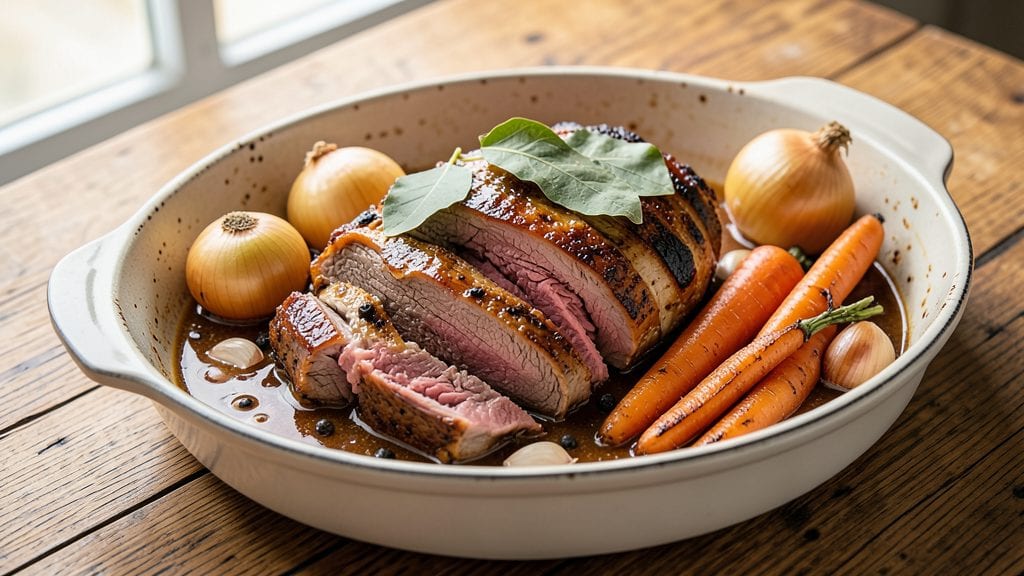
Boiled corned beef brisket recipe transforms tough cuts into melt-in-your-mouth tenderness with a crispy bark that rivals any deli counter. The slow-simmered method I’ve perfected over years—inspired by my family’s backyard cookouts—delivers restaurant-quality results in your own kitchen, no matter your skill level.
The secret lies in precise temperature control and a well-seasoned brine that infuses flavor deep into every fiber.
This isn’t just a side dish; it’s a centerpiece that commands attention at holiday tables or casual gatherings. With just a few simple ingredients—corned beef brisket, aromatics, and time—you’ll achieve a dish so rich and flavorful, it becomes the star.
The key is patience: letting the meat cook low and slow until it’s fork-tender while developing that coveted crispy exterior.
By the time you pull it from the pot, you’ll have perfectly seasoned, deeply flavorful beef with a caramelized crust that shatters at every bite. The broth reduces into a golden, aromatic sauce that’s perfect for serving alongside or drizzling over potatoes and cabbage.
This is the kind of dish that turns ordinary meals into memorable gatherings.
Whether you’re preparing for St. Patrick’s Day or a Sunday supper, this method delivers consistent, professional results every time. The beauty of boiled corned beef brisket is its versatility—serve it sliced thin for sandwiches, shredded for tacos, or as-is for hearty portions. Let’s get started on creating your own showstopper.
Ingredients for boiled corned beef brisket
Six aromatics, one pot, and hours of simmering transform tough brisket into melt-in-your-mouth perfection.
| Ingredient | Amount | Notes |
|---|---|---|
| Corned Beef Brisket 🥩 | 4 lb | Whole packer cut, not pre-sliced |
| Yellow Onions 🧅 | 2 whole | Medium size, peeled and halved |
| Carrots 🥕 | 4 whole | Large, peeled and halved lengthwise |
| Garlic Cloves 🧄 | 6 cloves | Peeled, smashed slightly |
| Fresh Bay Leaves 🌿 | 4 whole | Dried if fresh unavailable |
| Black Peppercorns 🌶️ | 1 tbsp | Crushed lightly, not powdered |
| Allspice Berries 🌶️ | 6 whole | Lightly crushed, if available |
| Salt 🧂 | 2 tbsp | Kosher or Diamond Crystal |
| Water 💧 | 4 cups | Filtered preferred, room temperature |
| Apple Cider Vinegar 🍎 | ½ cup | For tangy depth |
| Brown Sugar 🍚 | ¼ cup | Light or dark, packed |
| Mustard Seeds 🌿 | 1 tsp | Whole, toasted for aroma |
| Fresh Parsley 🌿 | ¼ cup | Chopped, for garnish |
| Butter 🧈 | 2 tbsp | Unsalted, for crispy finish |
The brisket is non-negotiable—look for a packer cut with good marbling from your butcher or Costco's large vacuum-sealed packs. Whole Foods often carries high-quality brisket too, but check for freshness. The onions and carrots should be firm, not soft, and the garlic cloves should smell pungent, not musty. If you can't find allspice berries, cinnamon sticks or star anise work in a pinch, though they'll change the flavor profile slightly. I always buy extra bay leaves—half go in the pot, half get saved for future braises.
No apple cider vinegar? White vinegar or lemon juice will work, but the flavor won't be as complex. Running out of mustard seeds? Dijon mustard at half the amount adds a similar tang. The brown sugar can be swapped for turbinado or white sugar, though it'll caramelize differently. For a deeper flavor, toast the spices in a dry pan for 30 seconds before adding to the pot. The butter at the end? Don't skip it—it's what creates that coveted crispy bark. Use European-style butter if you've got it; it has more fat for better browning.
This dish tastes even better the next day once all the flavors meld. Store the brisket and broth in the fridge for up to 5 days—the meat will be even more tender after resting. For longer storage, freeze portions for up to 3 months. The broth reduces beautifully into a rich sauce, so save it for drizzling over potatoes or cabbage. I always make extra—it's perfect for sandwiches or tacos later in the week.
Why You'll Love This Recipe
- No-Chop Nightmare: I swear by this trick—just toss whole onions and carrots in, peel them later. The brisket softens perfectly while they caramelize just enough to make the potatoes (if you add them) taste like they’ve been simmering all day. Honestly, my lazy Sundays thank me every time.
- Herb Bomb Flavor: That corned beef brisket? Already packed with salt and spices, but the fresh bay leaves and minced garlic turn it into something next-level—think deep, savory, with a whisper of earthy warmth. The onions and carrots soak up all the juices, making every bite taste like a hug from your grandma’s kitchen.
- Leftovers That Beg: This recipe practically insists you make extra. The brisket shreds like butter the next day—perfect for sandwiches, tacos, or even a quick hash with fried eggs. Between us, I’ve had this for breakfast, lunch, and dinner over three days without getting tired of it.
- Budget Dinner Hero: A single brisket feeds six, and the veggies cost pennies. No fancy cuts, no last-minute grocery runs—just throw everything in a pot, walk away, and come back to a meal that tastes like you spent hours. (Yes, even on a Tuesday night.) My wallet and my family win every time.
Step-by-step instructions for boiled corned beef brisket
Transform tough brisket into melt-in-your-mouth perfection with this slow-simmered method.
Prepare the Brisket and Aromatics
Begin by rinsing the 4 lb corned beef brisket under cold water and patting it completely dry with paper towels. This step is crucial—any moisture left on the surface will prevent that coveted crispy bark later. In a large, heavy pot with a tight-fitting lid (like a Dutch oven), combine the 2 whole yellow onions, 4 whole carrots, 6 cloves garlic cloves, 4 whole fresh bay leaves, 1 tbsp crushed black peppercorns, and 6 whole allspice berries.
Add the brisket to the pot, making sure it's fully submerged. Pour in the 4 cups water, 0.5 cup apple cider vinegar, and 0.25 cup brown sugar. Stir gently to dissolve the sugar completely. The liquid should be just below the brisket's surface—if not, add a splash more water. Bring everything to a full boil over high heat, then immediately reduce to a gentle simmer.
Simmer for Maximum Tenderness
Cover the pot and maintain a steady simmer at 180-190°F for 3 to 3½ hours. This low-and-slow approach breaks down the connective tissue, transforming the brisket into fork-tender perfection. You'll know it's ready when a fork slides in like butter with no resistance. Here's the thing—don't peek or stir during cooking. Every time you lift the lid, you lose heat and extend the cooking time.
After about 2 hours, check the liquid level. If it's significantly reduced, add enough hot water to maintain coverage. The brisket should be submerged at all times to prevent drying. The aroma at this stage will be incredible—smoky, sweet, and deeply savory. That's when you'll know you're on the right track.
Build the Crispy Bark
Once the brisket reaches fork tenderness, carefully remove it from the pot and place it on a cutting board. Let it rest for 10 minutes while you prepare the crispy topping. In a small saucepan, melt the 2 tbsp butter over medium heat until it foams. Add the 1 tsp toasted mustard seeds and cook for 30 seconds until fragrant.
Brush this butter mixture generously over the entire surface of the brisket, including the cut edges. Then, transfer the brisket to a broiler-safe baking dish. Broil on high for 5-7 minutes, watching closely, until the surface develops a deep golden-brown crust. This is where the magic happens—the butter caramelizes, creating that irresistible crispy bark while keeping the interior juicy.
Rest and Slice for Serving
Remove the brisket from the broiler and let it rest for 15 minutes before slicing. This resting period allows the juices to redistribute throughout the meat, ensuring each slice is moist and flavorful. While it rests, skim any fat from the cooking liquid and reserve 1 cup of the broth for serving or making gravy.
Slice the brisket against the grain into ¼-inch thick pieces. Garnish with the 0.25 cup chopped fresh parsley just before serving. The contrast of the crispy exterior with the tender interior will be your reward for the patience. Serve with the reserved broth and any remaining vegetables from the pot for a complete meal that's rich, satisfying, and full of flavor.
Pro Tips For Making Boiled Corned Beef Brisket
- Trim the Fat First: Cut off the thickest layer of fat from the brisket before boiling—it doesn’t render nicely in liquid and makes the broth greasy. I learned this after serving a pot of corned beef where the gravy looked like it could fuel a lawnmower.
- Parboil the Onions: Toss the whole onions (peeled) into the pot with the brisket for the first 20 minutes—they’ll soften faster and infuse flavor without turning to mush later. After, you can slice them for serving or leave them whole for easier handling (yes, even if you’re impatient like me).
- Skip the Overcrowding: Don’t dump all the carrots and garlic in at once—add half the carrots and all the garlic cloves early, then nestle the rest in later. Overcrowding steams the veggies instead of letting them caramelize, and you’ll end up with sad, waterlogged roots.
- Save the Bay Leaves: Tuck the bay leaves directly against the meat, not floating freely—they’ll steep flavor into the brisket itself. I used to just toss them in, and the broth ended up aromatic, but the meat tasted like it was missing something. (Your future self will thank you.)
Wine and beer pairings for this dish
Red Wine Classics
For boiled corned beef brisket, I reach for a bold Cabernet Sauvignon from Napa Valley—its dark fruit and earthy notes complement the dish’s rich, savory depth. The tannins cut through the fat beautifully, cleansing your palate between bites.
If you prefer something smoother, a Malbec from Argentina brings juicy blackberry flavors that harmonize with the brisket’s caramelized crust. 🍷
Pro tip: Chill your wine slightly before serving—about 55-60°F—to let its structure shine without overwhelming the dish. I always open my bottle 30 minutes before serving to allow the wine to breathe and develop its aromas.
Pairing a 2018 vintage ensures the wine’s age brings complexity that stands up to the brisket’s slow-cooked intensity.
Craft Beer Pairings
A stout like Guinness or Samuel Smith’s Oatmeal Stout is my go-to for beer lovers. The roasted malt and creamy texture mirror the brisket’s deep, meaty flavors while adding a touch of sweetness.
For something lighter, a Belgian Dubbel like Westmalle Trappist offers caramel and spice notes that enhance the dish’s complexity. 🍺
If you’re serving brisket sandwiches, a hazy IPA with its juicy hop character provides refreshing contrast. I love The Bruery’s Peach Tree IPA—its tropical fruit notes balance the brisket’s richness.
For a local favorite, check out your regional brewery’s amber ale; the malt-forward profile pairs exceptionally well with the brisket’s caramelized bark.
Unexpected Pairings
Don’t overlook Port wine as a dessert pairing—its sweetness complements the brisket’s lingering savory notes. A Ruby Port with its berry and chocolate undertones creates a perfect finish.
For a non-alcoholic option, a sparkling apple cider with a splash of ginger beer adds a crisp, tangy contrast that cleanses the palate. 🍏
If you’re serving brisket tacos, a Mexican lager like Modelo Especial or Pacifico keeps the meal light and refreshing. The beer’s clean, crisp profile won’t compete with the brisket’s bold flavors but instead enhances the overall experience.
For a festive touch, serve Michelada on the side—its spicy, tangy kick pairs surprisingly well with the dish’s richness.
Regional Wine Wisdom
In Boston, where corned beef brisket originated, locals swear by Cabernet Franc—its herbal notes and moderate tannins balance the dish’s saltiness.
If you’re cooking for a St. Patrick’s Day feast, a Chianti Classico from Tuscany brings acidity that cuts through the fat, making each bite more vibrant. 🌍
For a Southern U.S. twist, try a Zinfandel from California. Its jammy fruit and spice notes echo the brisket’s slow-cooked depth, while its bold structure stands up to the dish’s richness.
If you’re near the coast, a Riesling with its bright acidity and honeyed sweetness offers a refreshing contrast to the brisket’s hearty profile.
Nutrition facts
Frequently asked questions about boiled corned beef brisket
Why does my boiled brisket turn out tough instead of tender?
The key is maintaining a steady 180-190°F simmer for the full 3-3½ hours. If your pot isn't large enough, the temperature will rise too high, cooking the meat too quickly. Use a Dutch oven and avoid lifting the lid—every peek releases heat and extends cooking time.
Can I use a slow cooker or pressure cooker instead of stovetop?
For a slow cooker, use the low setting for 8-10 hours with the same aromatics. For a pressure cooker, cook on high pressure for 90 minutes (not quick release). The pressure method reduces cooking time but requires extra butter for the crispy finish since there's no broiling step.
What's the best way to reheat leftover boiled brisket?
Slice the brisket and reheat in a skillet with a splash of broth over medium-low heat for 5-7 minutes until warmed through. For crispy bark, broil for 3-5 minutes after reheating. Never microwave—it makes the meat rubbery. The broth can be reheated separately for gravy or soups.
How do I know when the brisket is fully cooked?
Use the fork test: it should slide in like butter with no resistance. The internal temperature should reach 203°F in the thickest part. The meat will look glossy and pull away from the bone easily. If it's still firm, return it to the pot for another 30-45 minutes.
Can I make this recipe without allspice berries?
Yes! Substitute with ½ tsp ground allspice or 1 cinnamon stick + 2 cloves. The flavor will be slightly different but still delicious. If you're missing bay leaves, use ½ tsp dried thyme instead. The dish will still work—just expect subtle flavor variations.