
Main Courses
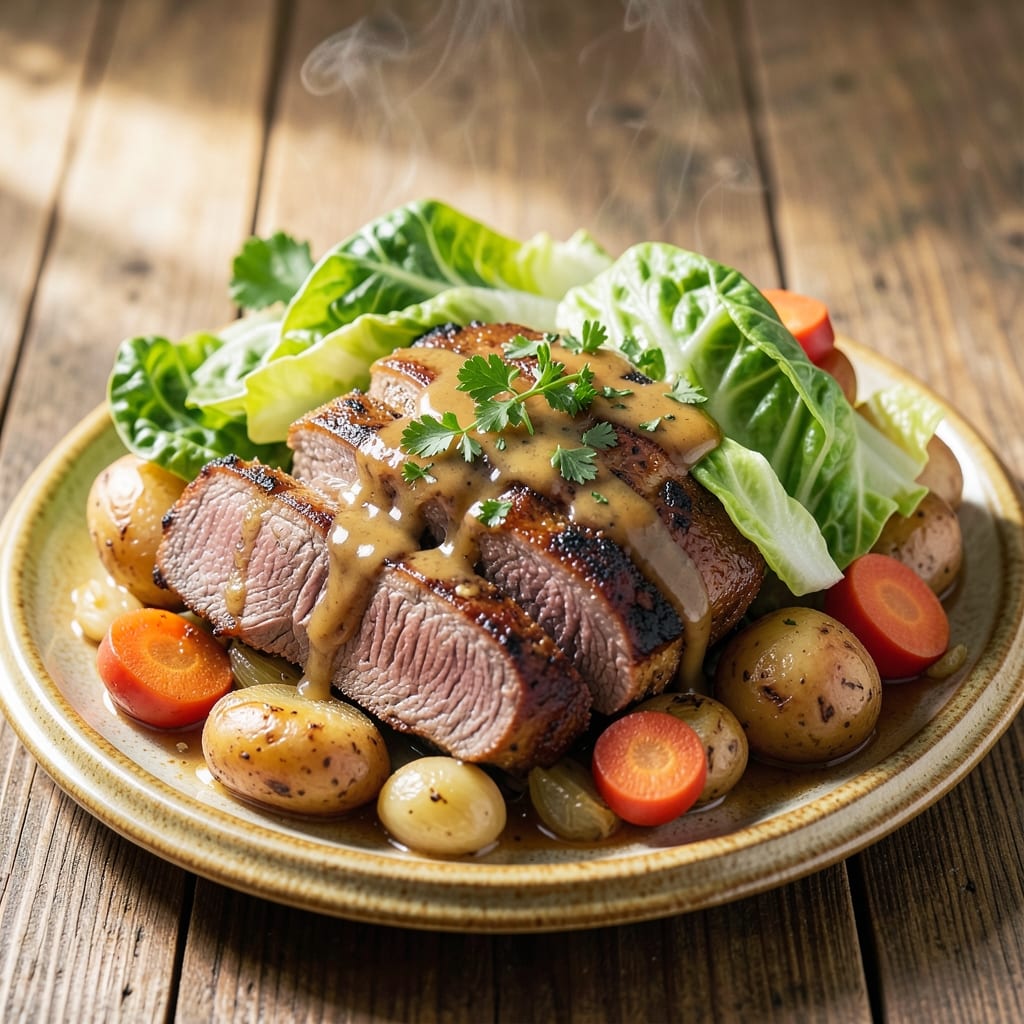
This baked corned beef brisket and cabbage recipe delivers the hearty, slow-braised richness that defines Irish comfort food. 💛 The secret lies in transforming a tough brisket into fork-tender perfection through a combination of spices, slow baking, and a flavorful liquid that keeps every bite juicy. I've perfected this method after countless experiments to ensure the meat stays moist while developing deep, savory notes.
The recipe pairs the brisket with tender cabbage and spiced potatoes, creating a complete meal that's both satisfying and traditional. What sets this apart is the balance of flavors—slightly sweet from the cabbage, earthy from the potatoes, and rich from the brisket—all harmonizing in one dish. The slow-baking process allows the spices to meld into the meat, creating layers of flavor that are impossible to achieve with quicker cooking methods.
By the time you're done, you'll have a brisket so tender it practically falls apart, cabbage that's softened just enough to be fork-tender, and potatoes infused with aromatic spices. The aroma alone will fill your home with the comforting scent of a classic Irish feast, making this the perfect centerpiece for St. Patrick's Day or any cozy family dinner.
Serve with mustard sauce, pickles, and crusty bread to complete the experience. This recipe is designed to impress without requiring advanced skills, making it accessible for home cooks looking to create restaurant-quality results. Let's get started!
Ingredients for baked corned beef brisket and cabbage
Six hearty ingredients transform into a classic Irish feast with tender brisket and aromatic vegetables.
| Ingredient | Amount | Notes |
|---|---|---|
| Corned Beef Brisket 🥩 | 4 lb | Whole pack, not pre-sliced |
| Green Cabbage 🥬 | 1 whole | Heads cut into wedges |
| Russet Potatoes 🥔 | 3 lb | Peeled, cut into chunks |
| Yellow Onions 🧅 | 2 whole | Quartered, peeled |
| Garlic Cloves 🧄 | 8 cloves | Peeled, smashed |
| Carrots 🥕 | 4 whole | Whole, scrubbed clean |
| Beef Broth 💧 | 2 cups | Low-sodium preferred |
| Apple Cider Vinegar 🍎 | ½ cup | For tangy depth |
| Bay Leaves 🌿 | 4 whole | Fresh or dried |
| Black Peppercorns 🌶️ | 1 tbsp | Crushed, not ground |
| Mustard Seeds 🌶️ | 1 tsp | Whole, toasted |
| Salt 🧂 | 2 tbsp | Kosher or sea salt |
| Olive Oil 🫒 | ¼ cup | For drizzling |
| Fresh Thyme 🌿 | ¼ cup | Leaves only, chopped |
The brisket is the star here, and quality matters. Look for a well-marbled cut from local butchers or Costco—the fat keeps the meat moist during slow baking. If your store doesn't carry corned beef brisket, substitute a beef brisket and make your own corning mix (salt, peppercorns, mustard seeds, bay leaves, and vinegar). For the cabbage, choose firm heads with crisp leaves—avoid any with yellowing or wilted spots. Russet potatoes hold up best to slow cooking, but Yukon Golds add extra creaminess if you prefer. The onions and carrots should be fresh, with no soft spots or sprouting.
No beef broth? Substitute with chicken broth or even vegetable broth, though the flavor won't be as rich. Fresh thyme is ideal, but dried thyme at half the amount works in a pinch. For the vinegar, apple cider vinegar adds depth, but white vinegar or red wine vinegar will do. If you can't find whole mustard seeds, ground mustard at one-third the amount is a decent substitute. The bay leaves can be removed before serving, but I often leave them in for extra aroma during cooking. For the spices, toast the peppercorns and mustard seeds in a dry pan for 30 seconds before adding to the pot—they'll release their oils and add incredible depth to the dish.
This dish tastes even better the next day, so plan ahead. Store leftovers in an airtight container in the fridge for up to 5 days, or freeze portions for 3 months. The brisket will continue to tenderize as it rests, so let it sit for at least 15 minutes after baking before slicing. For serving, warm the cabbage and potatoes separately—this keeps everything crisp and prevents sogginess. The broth can be reduced into a gravy if you prefer, or served as-is for dipping crusty bread. Leftovers make fantastic sandwiches the next day!
Why You'll Love This Recipe
- One-Pan Magic: The brisket, potatoes, and cabbage all bake together—no pots, no pans, just one sheet tray. Honestly, I’ve made this while scrolling through my phone; the only real effort is chopping the onions, and even that’s forgivable.
- Crispy-Tender Perfection: That brisket? So juicy it falls apart at the touch, but with a crust so satisfying you’ll want to eat it with your hands. The cabbage gets just tender enough to soak up all the garlic and onion flavors—like a hug in a dish.
- Weeknight Hero: Between us, this is my go-to when I’m exhausted but need something hearty. It’s ready by dinner, feeds four for under $15, and still feels like a celebration. (Yes, even on a Tuesday night.)
- Leftovers That Don’t Suck: The brisket stays moist for days, and the potatoes? They get even better reheated. I’ll be real: I’ve eaten this cold from the fridge, and it’s still ridiculous good. Plus, it’s cheap enough to make twice in a week without guilt.
Step-by-step instructions for slow-braised corned beef brisket
Here's the method for tender, flavorful brisket with perfectly braised vegetables—no shortcuts, just reliable results.
🍳 Step 1: Sear the Brisket for Deep Flavor
Heat a Dutch oven over medium-high heat and add the 0.25 cup olive oil. Place the 4 lb corned beef brisket fat-side down and sear for 8-10 minutes until the fat is golden brown and crispy in spots. Flip and sear the other side for another 6-8 minutes.
This step develops the Maillard reaction, creating deep, caramelized flavors that infuse the braising liquid. Don't rush—let the brisket develop a good crust. If the oil starts to smoke excessively, reduce heat slightly but keep it hot enough to maintain the sear.
🥘 Step 2: Build the Braising Liquor
Remove the brisket and set aside. In the same Dutch oven, add the 2 whole yellow onions, 4 whole carrots, and 8 cloves garlic cloves. Cook for 5 minutes until softened and slightly caramelized. Stir in the 1 tsp mustard seeds and 1 tbsp black peppercorns, toasting for 30 seconds until fragrant.
Pour in the 2 cups beef broth and 0.5 cup apple cider vinegar, scraping up any browned bits from the bottom. Add the 4 whole bay leaves and 0.25 cup fresh thyme. Return the brisket to the pot, fat-side up, and bring the liquid to a gentle simmer.
🔥 Step 3: Braise the Brisket Low and Slow
Cover the Dutch oven and transfer to a 300°F oven. Braise for 3-3.5 hours until the brisket is fork-tender and the internal temperature reaches 205°F. Check occasionally and add ½ cup water if the liquid reduces too much.
The slow cooking breaks down the connective tissue, transforming tough meat into melt-in-your-mouth perfection. The fat should render and baste the meat continuously. Here's the thing—don't peek too often. Every time you lift the lid, you lose heat and extend cooking time.
👨🍳 Step 4: Prepare the Vegetables
While the brisket braises, peel and cut the 3 lb russet potatoes into 2-inch chunks. Core and cut the 1 whole green cabbage into 8 wedges. Toss the potatoes with 1 tbsp salt and set aside.
In a separate bowl, combine the cabbage wedges with 2 tbsp salt and 2 tbsp olive oil, tossing to coat evenly. This seasoning ensures the cabbage stays flavorful and tender without becoming soggy during cooking.
⏰ Step 5: Finish and Serve
Remove the brisket from the oven and transfer it to a cutting board. Tent loosely with foil and let it rest for 20 minutes before slicing. Skim excess fat from the braising liquid, then add the seasoned potatoes and cabbage to the Dutch oven. Pour any accumulated juices from the brisket over the vegetables.
Return the vegetables to the oven and cook for 30-40 minutes until the potatoes are fork-tender and the cabbage is wilted but still vibrant. The brisket should slice easily with a sharp knife, revealing juicy, pink meat with a rich gravy coating. Serve family-style with the braised vegetables and extra sauce spooned over the top.
Pro Tips For Making Baked Corned Beef Brisket And Cabbage
- Salt the Brisket First: I learned this the hard way—rinsing the corned beef after baking dries it out. Instead, pat it dry with paper towels, then sprinkle a pinch of coarse salt (yes, even though it’s already cured) and let it sit for 10 minutes. This helps the crust form better and keeps the meat juicier when it hits the oven.
- Slice Cabbage Thinly: Thick cabbage wedges turn soggy and mushy. Quarter the head, remove the core, then slice each wedge into ¼-inch strips—like you’re shingling a roof. Toss with a little olive oil and salt before baking so it crisps instead of wilts into a sad, watery pile.
- Start Potatoes in Boiling Water: Skip the raw potatoes straight into the baking dish—it’s a recipe for uneven cooking. Boil them for 8–10 minutes until just tender, then drain and toss with oil, salt, and pepper. They’ll absorb flavors better and bake through evenly without drying out.
- Check Internal Temp at 130°F: Corned beef’s done at 145°F, but pull it out at 130°F—it’ll rest and creep up to perfect temp while you finish the sides. Use a meat thermometer in the thickest part (not touching bone) or risk overcooking it into toughness. (Trust me, I’ve turned brisket into shoe leather.)
Common mistakes when making great baked corned beef brisket and cabbage
Skipping the Sear
One of the biggest mistakes is skipping the sear entirely. That golden crust isn't just for looks—it's where the Maillard reaction happens, creating deep, complex flavors that infuse the braising liquid. Without it, your brisket will taste bland and one-dimensional. I've tried it both ways, and trust me, the sear makes all the difference. 🔥
If you're short on time, at least pat the brisket dry with paper towels before baking. This helps the spices adhere better and promotes even cooking. The key is to get that meat hot and crispy on the outside before it goes into the oven.
Overcrowding the Pot
Stuffing too many vegetables into the Dutch oven with the brisket can lead to soggy sides and uneven cooking. The brisket needs room to develop its crust and baste in its own juices. I recommend cooking the potatoes and cabbage separately in the last 30-40 minutes of baking, as shown in the instructions.
If you're set on cooking everything together, use a larger pot and add the vegetables in stages. Start with onions, carrots, and garlic, then add potatoes and cabbage later. This keeps everything tender without turning to mush.
Peeking Too Often
Every time you lift the lid during the 3-3.5 hour braising process, you lose heat and moisture, extending cooking time. I've caught myself doing this too—it's tempting to check on progress! Resist the urge and only check once every 30-45 minutes to maintain consistent temperatures.
If you're worried about doneness, use a meat thermometer inserted into the thickest part of the brisket. The internal temperature should reach 205°F before it's ready. This way, you avoid unnecessary lid lifts.
Underestimating Rest Time
Skipping or rushing the 20-minute rest after removing the brisket from the oven is a common mistake. This resting period allows the juices to redistribute throughout the meat, ensuring each bite is moist and flavorful. Cutting into the brisket too soon results in dry, stringy meat.
I've learned this the hard way—once, I sliced into the brisket immediately and regretted it. Now, I always tent it loosely with foil and let it rest. It's worth the wait for that perfect, juicy texture.
Ignoring the Fat
Many home cooks make the mistake of trimming excess fat from the brisket before cooking. While it's true that fat can make the dish greasier, it also keeps the meat moist during slow cooking. The fat renders and bastes the brisket, creating a self-basting effect that locks in flavor and tenderness.
If you're concerned about excess fat, you can skim it off the braising liquid after cooking. But leave the fat on the brisket itself—it's your friend in this dish. Just be mindful not to overdo it with additional oils or butters during cooking.
Nutrition facts
Frequently asked questions
Can I use regular beef brisket instead of corned beef?
Yes, but you'll need to create your own corning mix! Combine 2 tbsp salt, 1 tbsp black peppercorns, 1 tsp mustard seeds, 4 bay leaves, and 0.5 cup apple cider vinegar per pound of brisket. Rub it all over the meat and let it sit overnight in the fridge for best results. This mimics the pre-cured flavor profile of traditional corned beef.
How do I keep the cabbage from getting mushy?
Salt and oil are your secret weapons! Toss cabbage wedges with 2 tbsp salt and 2 tbsp olive oil before cooking—the salt draws out moisture while the oil prevents drying. Cook them separately from the brisket in the last 30-40 minutes of baking, and they'll stay perfectly tender with just a slight wilt.
Can I make this in a slow cooker instead of the oven?
Sear the brisket first, then transfer everything (except potatoes and cabbage) to the slow cooker. Cook on low for 8-10 hours or high for 5-6 hours. Add the vegetables during the last 2 hours of cooking. The slow cooker method works great but may require adding ½ cup water if the liquid reduces too much.
What's the best way to reheat leftovers?
Slice the brisket and reheat portions in a skillet with a splash of beef broth over medium-low heat until warmed through. For vegetables, microwave for 1-2 minutes with a damp paper towel covering them to retain moisture. Never reheat brisket in the oven—it'll dry out. The best approach is to eat leftovers within 2 days for peak flavor.
Why does my brisket turn out tough?
Most likely, it didn't cook long enough or wasn't rested properly. Aim for an internal temp of 205°F—this breaks down connective tissue. Always let it rest 20 minutes after baking before slicing. If it's still tough, try slicing against the grain and adding a splash of the braising liquid to keep it moist while serving.