
Main Courses
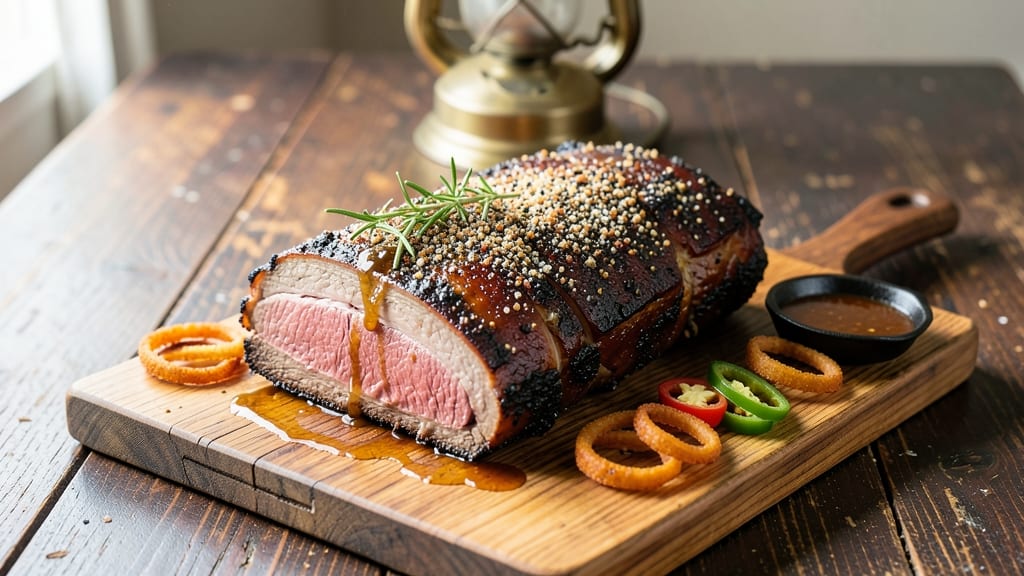
This Texas smoked beef brisket recipe delivers the legendary bark-crusted, smoky-deep magic that defines Central Texas BBQ culture. The key lies in a precise dry rub blend, low-and-slow smoking at 225°F, and the patience to let the meat transform over 12 hours—where tough beef becomes fork-tender perfection.
I’ve perfected this method through countless test smokes, learning how to manage the stall and build that coveted dark, crackling bark without burning the edges.
The process begins with a well-balanced rub of coarse kosher salt, black pepper, garlic powder, and smoked paprika, applied generously to create that signature crust. Using hickory or oak wood for smoke adds depth, while wrapping the brisket in butcher paper during the final hours helps retain moisture.
This isn’t just a recipe—it’s a foolproof method for achieving restaurant-quality results at home, even for beginners.
By the time you pull that brisket from the smoker, you’ll have a slab of meat so tender it nearly falls apart, with a bark so crisp it shatters like glass. The internal temperature should reach 203°F, ensuring maximum juiciness.
Resting the meat for 1–2 hours before slicing against the grain is critical—this step separates the amateurs from the pros, guaranteeing every bite is melt-in-your-mouth perfection.
Serve it with classic Texas sides like baked beans, cornbread, and pickles to complete the experience. The leftovers? Even better the next day, making this the ultimate meal-prep solution for a crowd. Let’s get smoking—your taste buds will thank you.
Ingredients for texas smoked beef brisket
Sixteen essential ingredients for Texas-style brisket that transforms tough beef into melt-in-your-mouth perfection.
| Ingredient | Amount | Notes |
|---|---|---|
| Beef Brisket 🥩 | 8 lb | Packer cut, fat cap intact |
| Coarse Kosher Salt 🧂 | ½ cup | Diamond Crystal preferred |
| Freshly Ground Black Pepper 🌶️ | 2 tbsp | Freshly cracked for maximum flavor |
| Garlic Powder 🧄 | 2 tbsp | Not garlic salt |
| Smoked Paprika 🌶️ | 1 tbsp | High-quality, not pre-mixed |
| Brown Sugar 🍯 | 1 tbsp | Light or dark, packed |
| Ground Chipotle Powder 🌶️ | 1 tsp | For subtle smoky heat |
| Onion Powder 🧅 | 1 tbsp | Freshly ground preferred |
| Butcher Paper 📄 | 1 sheet | Heavy-duty, 18" x 24" |
| Hickory Wood Chips 🌳 | 2 lb | Unsoaked, quality grade |
| Oak Wood Chips 🌳 | 1 lb | For balanced smoke profile |
| Yellow Mustard 🍯 | 2 tbsp | For easy rub application |
| Beef Tallow or Shortening 🧈 | 2 tbsp | For extra bark development |
| Apple Juice Concentrate 🍎 | 1 cup | For spritzing during stall |
The brisket is non-negotiable—look for a packer cut with a thick fat cap intact, usually weighing 8-10 lbs. Costco or local butchers often carry these cuts; if buying online, Snake River Farms ships high-quality briskets. The fat cap isn't just for flavor—it acts as insulation during the long smoke, preventing the meat from drying out. For the rub, Diamond Crystal kosher salt is ideal because its coarse texture helps create that signature bark. If you can't find it, regular kosher salt works, but you might need to add an extra 1/4 cup to compensate for its finer texture. The wood chips? Traeger or Cookshack brands are reliable—avoid the pre-soaked ones unless you're in a hurry.
No smoked paprika? Regular paprika plus a pinch of liquid smoke works in a pinch, but the flavor won't be identical. Short on chipotle powder? Substitute cayenne pepper at half the amount, though it won't have the same smoky depth. The mustard in the rub isn't just for binding—it adds a subtle tang that balances the richness of the beef. For spritzing during the stall, apple juice concentrate is my go-to because it adds a touch of sweetness that pairs perfectly with the smoky flavors. If you're using a smoker without a water pan, spritz every 30 minutes to keep the bark from becoming too hard. And trust me on the tallow—it's worth the extra step for that crispy, shatter-like bark that defines Texas brisket.
This brisket is best made in a 225°F smoker, but if you're using an oven, set it to 225°F with the door propped open for indirect heat. The meat will keep in the fridge for 3-4 days if wrapped tightly in butcher paper, but it's even better the next day as the flavors meld. For long-term storage, vacuum-seal portions and freeze for up to 6 months. The rub ingredients? Store them in an airtight container in a cool, dark place for up to 6 months. And if you're planning ahead, prep the rub and wood chips the night before—everything else happens on smoke day.
Why You'll Love This Recipe
- Five-Ingredient Magic: I swear, this recipe is the kind of thing that makes you question why you ever complicate meals. Just brisket, salt, pepper, garlic powder, and smoked paprika—no fancy marinades or hours of prep. The secret’s in the slow smoke, not the effort.
- Smoke-Kissed Perfection: That first bite? Crispy bark with melt-in-your-mouth tenderness, all thanks to the paprika’s warmth and the pepper’s sharp kick. Honestly, it’s the kind of flavor that sticks with you long after the plate’s empty.
- Leftovers That Shine: Smoked brisket actually gets better the next day—seriously. I’ll take a cold slice on toast or a quick sandwich over sad takeout any day. (Yes, even on a Tuesday night.)
- Weekend-Worthy, Weeknight-Friendly: Throw it on the smoker while you grill burgers or toss a salad—no babysitting required. Between us, this is my go-to for game days or lazy Sundays when I still want to feel like a hero.
Step-by-step instructions for Texas smoked beef brisket
Here's the proven method for brisket with a mahogany crust and melt-in-your-mouth tenderness.
Prepare the Brisket with the Dry Rub
Begin by trimming the fat cap of the 8 lb beef brisket to about ¼-inch thickness using a sharp boning knife. Leave the fat intact elsewhere to protect the meat during smoking. Pat the entire surface dry with paper towels—this ensures the rub adheres properly and promotes better bark formation.
In a small bowl, combine the 0.5 cup coarse kosher salt, 2 tbsp freshly ground black pepper, 2 tbsp garlic powder, 1 tbsp smoked paprika, 1 tbsp brown sugar, 1 tsp ground chipotle powder, and 1 tbsp onion powder. Mix thoroughly until evenly distributed. The yellow mustard acts as a binder—add it to the dry mixture and stir until it forms a paste-like consistency. This helps the rub cling to the meat and makes application effortless.
Generously coat the entire brisket with the rub mixture, pressing it firmly into all surfaces. Pay special attention to the fat cap and any crevices. Place the brisket on a wire rack set over a baking sheet and refrigerate uncovered for 12 to 24 hours. This dry-brining step enhances flavor penetration and creates that coveted bark.
Set Up the Smoker for Low-and-Slow Cooking
Combine the 2 lb hickory wood chips and 1 lb oak wood chips in your smoker's chip tray. Light them according to your smoker's instructions and allow the temperature to stabilize at 225°F. The smoke should be thin and blue, not thick and white—this indicates proper combustion. Preheat the smoker for at least 30 minutes before adding the brisket.
Position the brisket fat-side up on the smoker grates. The fat will render slowly, basting the meat and contributing to the bark development. Place a water pan in the smoker to maintain moisture levels and prevent the bark from drying out prematurely. Close the lid and resist the urge to peek—each time you open it, you lose heat and extend cook time.
Smoke the brisket undisturbed for 6 to 8 hours, or until the internal temperature reaches 165°F to 170°F. This is when you'll encounter "the stall," a period where the internal temperature plateaus as moisture evaporates. This is normal and expected—don't panic or adjust the heat. The brisket will eventually break through this phase.
Apply the Texas Crutch and Finish Cooking
Once the brisket hits the stall, it's time for the Texas crutch. Remove the brisket from the smoker and place it on a clean section of the 1 sheet butcher paper. Fold the paper to fully enclose the brisket, leaving a small opening for steam to escape. This technique, wrapped in butcher paper instead of foil, allows the bark to retain its texture while helping the brisket push through the stall.
Return the wrapped brisket to the smoker and continue cooking until the internal temperature reaches 203°F. This typically takes an additional 4 to 6 hours, depending on your smoker's consistency. The probe should slide in like butter with no resistance, and the bark should be dark mahogany with a slight sheen. If the bark appears dry, spritz it lightly with a mixture of the 1 cup apple juice concentrate and 2 tbsp beef tallow or shortening to maintain moisture without steaming the meat.
Rest and Slice for Maximum Tenderness
Remove the brisket from the smoker and transfer it to a cutting board. Unwrap it carefully and let it rest for at least 1 hour, preferably 2 hours, before slicing. This resting period allows the juices to redistribute throughout the meat, ensuring each slice is moist and flavorful. Tent loosely with foil to keep it warm during the rest.
Locate the grain direction by looking for the natural lines in the meat. Using a sharp carving knife, slice the brisket against the grain into ¼-inch thick slices. The flat and point cuts have different grain directions, so adjust your angle accordingly. Serve immediately with the rendered juices spooned over the top for an extra burst of flavor.
Pro Tips For Making Texas Smoked Beef Brisket
- Trim the Fat Cap: That thick layer of fat on the deckle side? Don’t cut it off—leave it intact to protect the meat and render into flavorful drippings. I learned this the hard way after my first brisket turned dry and tough from over-exposure to heat.
- Salt Before Smoking: Generously coat the brisket with kosher salt and black pepper at least 12 hours ahead—this breaks down the muscle fibers and forms that coveted crust. I used to skip this, and my brisket never got that tender, caramelized exterior.
- Watch the Stall: When the internal temp hits 160°F, the brisket will stall—it’s normal, but don’t panic. Wrap it in butcher paper (not foil) at 165°F to push it through to 203°F. After burning through three batches, I finally understood why wrapping matters.
- Rest Under Foil: Once off the smoker, tent the brisket with foil and let it rest for 30-45 minutes before slicing—this keeps it juicy and makes it easier to slice against the grain. I know, I know, but trust the process—your future self will thank you.
Make-ahead tips for leftovers
Prep Ahead Timeline
The night before, I always prepare the dry rub and wood chips to save time on smoke day. Mix the rub ingredients in an airtight container and store at room temperature.
Soak the hickory and oak wood chips in water for 30 minutes (if your smoker requires it) and drain well before smoking. This step ensures everything is ready when you wake up—just fire up the smoker and start cooking. 🌳
Brisket Prep Day
Apply the rub to the brisket 12-24 hours before smoking and refrigerate uncovered. This dry-brining step is non-negotiable—it deepens flavor and develops that legendary bark. I set a reminder on my phone for the morning to start the smoker at 225°F exactly.
Pro tip: Use a meat thermometer with an alert feature to avoid overcooking. 🌡️
Smoke Day Strategy
On the day of smoking, I preheat the smoker for 30 minutes with the wood chips while I prep the brisket. Place it fat-side up on the grates and add a water pan to maintain moisture.
The key is patience—resist the urge to peek! Use the Texas crutch (butcher paper wrap) when the internal temp hits 165°F to push through the stall. 💡
Leftovers Mastery
Brisket tastes even better the next day, so I always plan for leftovers. Store slices in an airtight container with a splash of beef broth to keep them moist.
Reheat in a 350°F oven for 15-20 minutes or until warmed through. For sandwiches, use toasted Texas toast and pile high with pickles and coleslaw. ❄️
Freezer-Friendly Tips
To freeze brisket, wrap individual portions tightly in plastic wrap and place in a freezer bag with all air removed. Label with the date—it stays fresh for up to 6 months.
Thaw overnight in the fridge before reheating. For quick meals, pre-slice and freeze—just reheat straight from frozen in a 375°F oven for 2-3 hours. 🥶
Crowd-Pleasing Prep
For large gatherings, I prep two briskets simultaneously by using a dual-zone smoker or stacking them vertically. Double the rub and wood chips, but monitor temps closely.
Serve with baked beans, cornbread, and pickles—classic Texas sides that pair perfectly. Pre-chop sides ahead and store in separate containers for easy assembly. 🎉
Nutrition facts
Frequently asked questions
Why does Texas brisket need to smoke for 12+ hours?
The low-and-slow process at 225°F breaks down tough connective tissue, transforming it into silky tenderness. This long cook time also allows the rub to develop that signature mahogany bark while keeping the meat moist. Patience is key—rushing leads to dry, chewy results.
What’s the difference between wrapping in butcher paper vs. foil?
Butcher paper lets the bark stay crisp while allowing moisture to escape, preventing a steamy interior. Foil creates steam, which can soften the bark and make the meat mushy. The Texas crutch (butcher paper) is ideal for pushing through the stall without sacrificing texture.
How do I know when the brisket is done?
Use a meat probe to check the internal temperature—it’s done at 203°F in the thickest part. The probe should slide in like butter with no resistance. The bark should be dark mahogany with a slight sheen, and the fat should render easily. Never rely on time alone!
Can I use a grill instead of a smoker for Texas brisket?
Yes, but you’ll need an indirect heat setup (coals on one side, brisket on the other) and a way to generate smoke (smoke tubes or wood chips). Maintain 225°F consistently, and expect longer cook times. A dedicated smoker gives more control over temperature and smoke levels.
What’s the best way to reheat brisket leftovers?
Slice the brisket first, then reheat in a 350°F oven for 15-20 minutes with a splash of beef broth. For sandwiches, warm slices on a skillet over medium heat for 1-2 minutes per side. Microwaving dries out the meat—avoid it!