
Main Courses
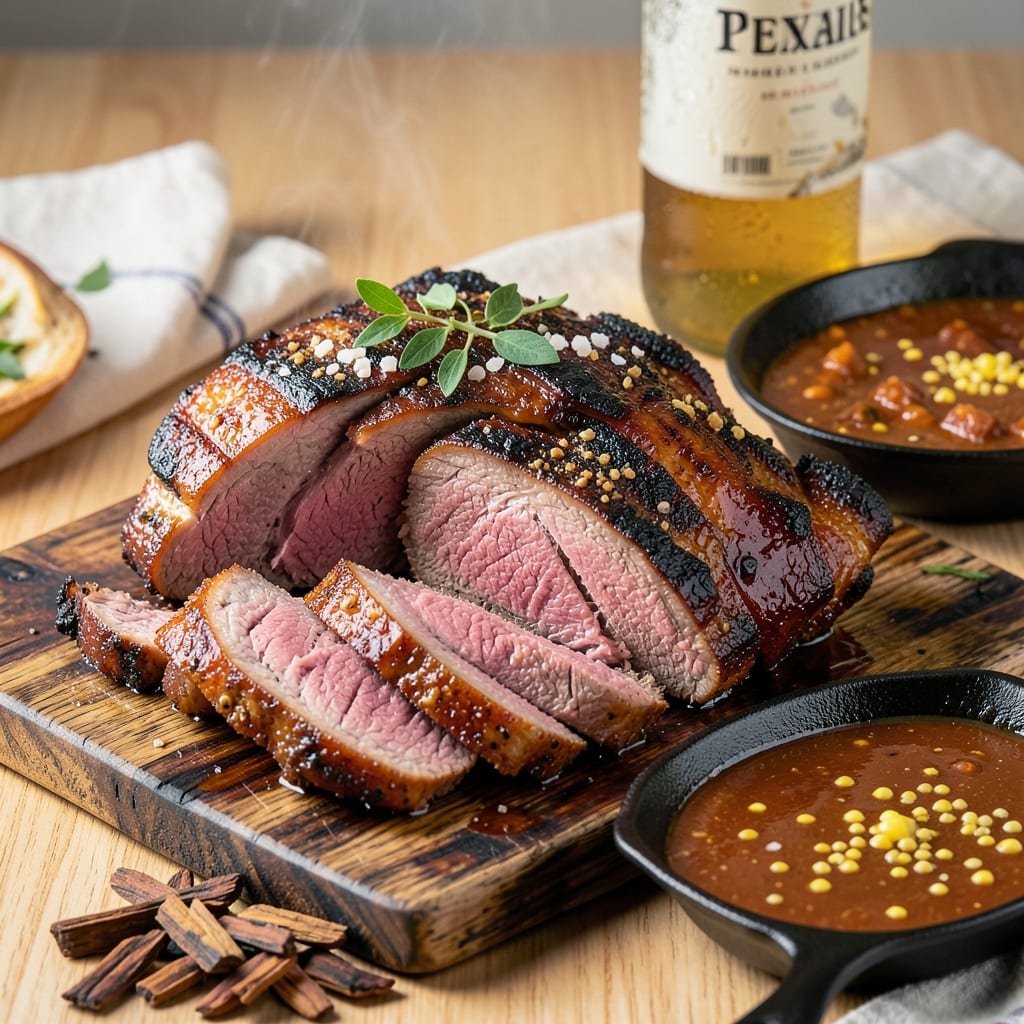
Texas style barbecue beef brisket isn't just a meal—it's an experience that transforms any backyard into a Central Texas smokehouse. 🔥 The secret lies in that first crackle of oak wood, the slow dance of smoke curling around the meat, and the patience required to let tough beef melt into tender perfection. I've spent years perfecting this recipe, learning from Texas pitmasters that great brisket isn't rushed—it's earned through time, heat, and the right blend of spices.
The process begins with a properly trimmed brisket, injected with a simple solution of spices and beer for moisture, then coated in a dry rub that clings like armor. We're talking 12-16 hours of smoking at 225°F, where the bark forms and the connective tissue dissolves into rich, velvety meat. The key is maintaining that steady temperature—no fluctuations—and knowing exactly when to wrap it in butcher paper to lock in moisture during the stall.
When it's done, you'll have meat so tender it practically falls apart at the touch, with a deep mahogany bark that's crispy on the outside and moist within. The aroma alone will have your neighbors showing up uninvited, and every slice will reveal that perfect pink center that separates home cooks from true pitmasters. This is the kind of brisket that makes people talk for weeks afterward.
Serve it sliced against the grain on toasted white bread with pickles, onions, and a side of creamy potato salad for the full Texas experience. The leftovers? Even better the next day, when the flavors have time to meld completely. Let's get started on your first perfect brisket.
Ingredients for barbecue beef brisket recipe texas style
Sixteen ingredients, twelve hours of patience, and one legendary Texas-style brisket.
| Ingredient | Amount | Notes |
|---|---|---|
| Packer Cut Beef Brisket 🥩 | 10 lb | Whole packer cut, fat cap intact |
| Oak Wood Chips 🌳 | 2 cups | Unsoaked, for smoker |
| Yellow Mustard 🍯 | ½ cup | For injection base |
| Light Beer 🍺 | 1 cup | Lager or pale ale preferred |
| Granulated Garlic 🧄 | 2 tbsp | For injection mix |
| Granulated Onion 🧅 | 2 tbsp | For injection mix |
| Coarse Kosher Salt 🧂 | 1 cup | Diamond Crystal preferred |
| Black Peppercorns 🌶️ | ½ cup | Freshly cracked |
| Smoked Paprika 🌶️ | ¼ cup | For dry rub |
| Ground Cumin 🌿 | 1 tbsp | Toasted for depth |
| Chili Powder 🌶️ | 1 tbsp | Medium heat |
| Butcher Paper 📄 | 1 sheet | For wrapping during stall |
| White Onions 🧅 | 2 whole | For serving, sliced |
| Dill Pickles 🥒 | 1 jar | For serving, sliced |
The brisket is non-negotiable—packer cut with that thick fat cap is what gives you that perfect bark and melt-in-your-mouth tenderness. Costco or your local butcher usually carries it whole, but if you're buying pre-trimmed, make sure it's at least 10 pounds. Oak wood chips are essential for that authentic Texas smoke flavor—Traeger or Cookshack brands work great. I always buy mine in bulk and store them in a sealed container to keep them dry. The fat cap should be about 1/4-inch thick—if it's too thin, ask for a different cut. And trust me, skimp on the brisket quality, and you'll regret it every time you slice into it.
No oak chips? Hickory is the next best thing, but it's got a stronger flavor that might overpower the beef. Running out of beer for the injection? Apple juice or even water works in a pinch, though the beer adds that subtle maltiness that Texas pitmasters swear by. For the dry rub, if you can't find smoked paprika, regular paprika plus a pinch of liquid smoke gets you close. The key is making sure everything is ground coarse enough to cling to the meat—no fine powders here. And if you're short on time, you can use pre-mixed brisket rub, but I've found Penzeys or Simply Organic spices make all the difference when mixed fresh. The butcher paper is crucial during the stall—regular parchment won't hold up to the heat and moisture.
This brisket tastes even better the next day, so plan ahead. Wrap it tightly in butcher paper and store it in the fridge for up to 5 days. For leftovers, slice it thin against the grain and reheat in the oven at 275°F until warm. The rub keeps in an airtight container for 3 months—make extra, you'll want it again. And if you're serving a crowd, double the batch. Trust me, you'll want seconds.
Why You'll Love This Recipe
- One-Pan Magic: I swear by this—just brisket, oak chips, and a splash of beer. No fancy gadgets, no stress. The smoky aroma fills the house while you sip that light beer you’re using anyway.
- Smoky-Garlic Bomb: That first bite? Crispy bark, tender meat, and a punch of garlic from the rub. The oak chips add this deep, woodsy richness that turns a simple cut into something unforgettable.
- Weeknight Crowd-Pleaser: Between us, this is my go-to for game day or lazy Sundays. It’s hearty enough for a big group but simple enough to make when I’m too tired to fuss. (Yes, even on a Tuesday night.)
- Leftovers That Don’t Suck: Honestly, the best part? The next-day sandwiches. Shred it, slather on mustard, and boom—crispy, juicy, no one will guess it’s yesterday’s dinner. Budget-friendly too—one brisket feeds us for days.
Step-by-step instructions for Texas style barbecue beef brisket
Here's how to transform a tough brisket into tender, smoky perfection with the right technique.
🔥 Step 1: Prepare the Injection Mix and Season the Brisket
In a bowl, whisk together the 0.5 cup yellow mustard, 1 cup light beer, 2 tbsp granulated garlic, and 2 tbsp granulated onion until fully combined. This mixture is your flavor bridge—it'll penetrate deep into the meat during the cook.
Next, make your dry rub by combining 1 cup coarse kosher salt, 0.5 cup freshly cracked black peppercorns, 0.25 cup smoked paprika, 1 tbsp ground cumin, and 1 tbsp chili powder in a bowl. I like to grind the peppercorns in a spice grinder right before mixing for maximum freshness. Pat the 10 lb packer cut beef brisket completely dry with paper towels—this ensures the rub sticks and the skin crisps beautifully.
🍳 Step 2: Inject and Apply the Dry Rub
Use a meat injector to push the mustard mixture deep into the brisket, working in a grid pattern about 1 inch apart. This step is crucial—it keeps the meat moist during the long cook. I like to inject about 20-30 percent of the mixture into each injection point, letting it soak in for 5-10 minutes before proceeding.
After injecting, generously coat the entire brisket with the dry rub, pressing it into every crevice. Don't be shy—you want that rub to cling like a second skin. Wrap the brisket tightly in plastic wrap and refrigerate for at least 12 hours (or up to 24 hours). This resting period allows the flavors to meld and the meat to relax, ensuring even cooking later.
🔥 Step 3: Smoke the Brisket Low and Slow
Preheat your smoker to 225°F using the 2 cups oak wood chips. Oak gives that classic Texas barbecue flavor without overpowering the meat. Place the brisket fat-side up on the smoker grates and close the lid. Here's the thing—resist the urge to peek. Every time you open the lid, you lose heat and moisture, adding 15-20 minutes to your cook time.
Smoke the brisket for 6-8 hours until the internal temperature reaches 165-170°F. You'll notice the temperature stall around 150°F, where the meat releases moisture and the probe reads wet. This is normal—don't panic. At this point, wrap the brisket tightly in the butcher paper to help it push through the stall and retain moisture.
⏰ Step 4: Push Through the Stall and Finish Cooking
Return the wrapped brisket to the smoker and continue cooking until the internal temperature hits 203°F. This usually takes another 4-6 hours, but trust the probe test over the thermometer—you're looking for a probe that slides in like butter with no resistance. The bark should be dark mahogany and crispy, with a beautiful smoke ring just beneath the surface.
Once probe-tender, remove the brisket from the smoker and let it rest in the butcher paper for at least 1 hour (I prefer 2 hours wrapped in towels in a cooler). This resting period allows the juices to redistribute, ensuring every slice is moist and flavorful. Real talk: Skipping this step means dry, tough meat.
🍽️ Step 5: Slice and Serve with Classic Sides
Unwrap the brisket and locate the grain direction—you'll see lines running through the meat. Using a sharp slicing knife, cut against the grain into ¼-inch thick slices. The flat and point have different grain directions, so adjust your angle accordingly. Serve immediately with sliced white onions and dill pickles on the side for that authentic Texas barbecue experience.
Each slice should be tender enough to pull apart with a gentle tug, with a dark, crispy bark on the outside and a beautiful pink smoke ring beneath. The meat should be juicy, not dry, and packed with smoky, spicy flavor. Enjoy your Texas-style barbecue brisket—this is the kind of dish that tastes even better the next day, so save leftovers for sandwiches!
Pro Tips For Making Barbecue Beef Brisket Recipe Texas Style
- CRANK THE HEAT FIRST: The first hour should be 250°F or higher—no wimping out. I learned this the hard way: slow starts mean tough meat and wasted time. Once the bark forms, drop to 225°F, but that initial sear locks in flavor and keeps the fat from turning to grease.
- DON’T SKIP THE BEER BATH: After the first 3 hours, wrap the brisket in butcher paper with a mix of light beer and yellow mustard. The beer adds depth (yes, even if you’re not a beer drinker), and the mustard cuts through the fat. I used to just use water—big mistake. The beer’s acidity tenderizes better than anything.
- WATCH THE GRAVY BOIL-OVER: When you’re basting with the beer-mustard mix, keep the heat low. I’ve seen people rush this and end up with a smoky mess all over their grill. A splash of cold water in the pan while basting keeps things controlled—no one wants to clean charred beer off their smoker.
- USE THE FAT CAP: Leave that thick layer of fat on top—it’s your best friend for moisture. After the first few hours, flip the brisket fat-side up and let it render slowly. I used to trim it off for looks, but now I just poke holes in it with a fork to help it melt into the meat. (Yes, it looks weird, but it works.)
Serving suggestions for this dish
Texas-Style Sides
No Texas brisket is complete without white bread and pickles—the holy trinity of Central Texas BBQ. I like to use Texas toast, thick-cut white bread lightly buttered and toasted until golden. The softness contrasts perfectly with the brisket's smoky bark. For pickles, go for classic dill pickles sliced into rounds—just a few on the side cut through the richness beautifully. 🥒
Onion Rings
Freshly sliced white onions add a sharp crunch and brightness to each bite. I always slice them ¼-inch thick and serve them warm—just a quick sauté in butter for 2-3 minutes on the grill. The caramelized edges add another layer of flavor that pairs perfectly with the brisket's smokiness.
Classic Potato Salad
Creamy potato salad is a must for soaking up those brisket juices. My go-to recipe uses red potatoes boiled until tender, mixed with mayonnaise, mustard, diced celery, and a pinch of paprika. I like to add a splash of apple cider vinegar for tang. Serve it chilled for that perfect contrast to the warm brisket.
Collard Greens
For a Southern touch, slow-cooked collard greens bring deep, earthy flavors to the table. Simmer 1 bunch collards, chopped, with 2 slices bacon, 1 onion, and 1 cup chicken broth for 1.5 hours until tender. A splash of hot sauce at the end adds just the right kick. These greens are hearty enough to stand up to the brisket.
Baked Beans
Sweet and smoky baked beans are a crowd-pleaser. Use 1 can navy beans, ½ cup BBQ sauce, ¼ cup brown sugar, and a pinch of smoked paprika. Bake at 350°F for 45 minutes until thick and caramelized. The beans' sweetness balances the brisket's smokiness, making every bite more satisfying.
Drink Pairings
For drinks, a cold light beer like Lone Star or Shiner Bock cuts through the richness perfectly. If you prefer wine, a crisp Sauvignon Blanc from Texas Hill Country adds a refreshing twist. For non-alcoholic options, sweet tea with a lemon wedge is a Southern staple that never disappoints. 🍺
Nutrition facts
Frequently asked questions
How do I know when my Texas brisket is done?
Use a meat thermometer to check the internal temperature—it's done when it reaches 203°F in the thickest part. The probe should slide in like butter with no resistance. Look for a dark mahogany bark and a beautiful pink smoke ring beneath the surface. The bark should be crispy but not burnt, and the meat should pull apart easily when sliced against the grain.
Can I use a grill instead of a smoker?
Yes, but you'll need to create smoke using wood chips in a smoker box or wrapped in foil. Maintain a consistent 225°F temperature by adjusting the vents. Grilling brisket requires more attention to temperature control—expect longer cook times and potential fluctuations that can affect tenderness. For best results, use a dedicated smoker or a pellet grill designed for low-and-slow cooking.
Why does my brisket turn out dry?
Dry brisket usually happens from overcooking, skipping the wrap during the stall, or not resting properly. Always wrap in butcher paper when the internal temp hits 165°F to retain moisture. Let it rest for at least 1 hour (preferably 2 hours) before slicing—this lets juices redistribute. Also, avoid cutting into it too soon after cooking. The stall is normal, but proper wrapping makes all the difference.
What's the difference between the flat and point cuts?
The brisket has two main parts: the flat (leaner, flatter muscle) and the point (fatter, more triangular). The flat cooks faster and is more tender, while the point needs more time to break down. For even cooking, separate them if possible—smoke the point first, then add the flat when it's closer to done. When slicing, cut against the grain in both sections for maximum tenderness.
How far ahead can I prepare the dry rub?
You can make the dry rub up to 3 months ahead and store it in an airtight container. The spices keep their potency much longer than fresh herbs. For the injection mix, prepare it the day before and store it in the fridge. The brisket itself should sit in the rub for at least 12 hours (up to 24 hours) for best flavor penetration. Plan ahead—this recipe rewards preparation!