
Snacks
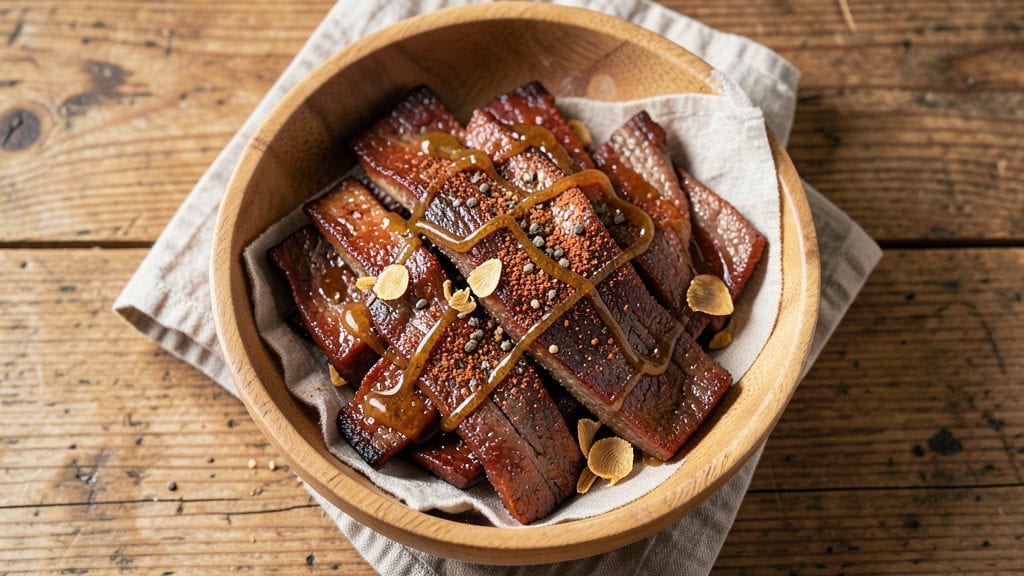
This no-sugar beef jerky recipe delivers chewy, spice-packed bites that satisfy cravings without the sugar crash. After years of perfecting the balance between flavor and texture, I’ve developed a method that uses natural seasonings and precise curing techniques to create jerky that’s as addictive as it is guilt-free.
The key lies in the marinade—where bold spices and acidity replace sugar entirely while preserving that classic jerky taste.
What sets this recipe apart is the attention to texture. Most no-sugar jerky ends up dry or tough, but this method ensures tender, chewy results by controlling the curing time and dehydration process.
You’ll need just 5 simple ingredients—high-quality beef, vinegar, spices, and a touch of Worcestershire sauce—and about 24 hours of hands-off time. The process is straightforward, but the flavor development is what transforms ordinary beef into restaurant-quality jerky.
By the time you’re done, you’ll have a batch of richly seasoned, deeply flavorful jerky that’s perfect for snacking, camping trips, or meal prep. Each bite delivers smoky, savory notes with a satisfying chew, all while keeping sugar levels at zero.
The best part? This recipe scales easily, so you can make a large batch and enjoy it for weeks without worrying about spoilage.
Whether you’re cutting sugar for health reasons or simply prefer bold flavors, this jerky proves you don’t need added sugar to create something extraordinary. Let’s get started on a batch that’ll have you reaching for the dehydrator instead of the store-bought aisle.
Ingredients for no sugar beef jerky
Five bold flavors and one key cut of beef transform into addictive, no-sugar jerky.
| Ingredient | Amount | Notes |
|---|---|---|
| Lean Beef Top Round Roast 🥩 | 2 lb | Thinly sliced against the grain |
| Apple Cider Vinegar 🍎 | ½ cup | Not white vinegar |
| Worcestershire Sauce 🍶 | 2 tbsp | High-quality, anchovy-free preferred |
| Smoked Paprika 🌶️ | 2 tbsp | For deep smoky flavor |
| Ground Black Pepper 🌶️ | 1 ½ tbsp | Freshly cracked for best flavor |
| Garlic Powder 🧄 | 1 tbsp | Freshly ground preferred |
| Onion Powder 🧅 | 1 tbsp | For subtle sweetness |
| Salt 🧂 | 1 ½ tsp | Kosher or sea salt |
| Ground Cayenne Pepper 🔥 | ½ tsp | Adjust for heat preference |
| Liquid Smoke 🔥 | ½ tsp | Optional for extra smokiness |
| Unsalted Butter 🧈 | 2 tbsp | For tenderizing beef |
The beef is everything—top round roast is lean and flavorful, but sirloin tip works too. Grab the thickest cut you can find at Costco or local butcher shops—they’ll slice it thin for you. If you’re slicing yourself, freeze the beef for 30 minutes first—it’s easier to handle. The thinner the slices, the quicker they’ll dry, but ¼-inch thick is perfect for chewy texture. Skip the pre-sliced jerky beef from the store—it’s usually too thin and dry.
No Worcestershire? Soy sauce plus a splash of balsamic vinegar gets you close. Short on smoked paprika? Regular paprika plus a pinch of liquid smoke works, but the smoky depth is worth hunting down. The cayenne is optional—leave it out if you’re sensitive to heat, but trust me, it’s what makes this jerky addictive. For extra richness, swap half the vinegar for red wine. And if you’re worried about texture, marinate the beef in the fridge for 12 hours before dehydrating—it makes all the difference.
This jerky keeps for 3-4 weeks in an airtight container at room temperature, or 6 months in the freezer. Store it in parchment-lined bags to prevent moisture. The first batch? You’ll eat it all before it spoils. Double the recipe—it’s that good. And if you’re dehydrating, 165°F for 4-6 hours is the sweet spot for chewy perfection. No dehydrator? An oven on low works too (just crack the door open).
Why You'll Love This Recipe
- Five-Ingredient Magic: I swear by this—just beef, vinegar, Worcestershire, smoked paprika, and pepper. That’s it. No measuring cups, no fancy tools, just slice, marinate, and dehydrate. Honestly, my kids think I’m some kind of jerky wizard.
- Smoky-Sweet Without Sugar: The apple cider vinegar cuts through the richness while the Worcestershire adds that deep, umami punch. Smoked paprika? It’s like a campfire in every bite—savory, slightly sweet, and addictive without a single gram of sugar.
- Snack Attack Ready: This stuff keeps for weeks in the fridge, so I always have it for road trips, gym bags, or when I’m too lazy to make a full meal. Pro tip: Toss it in salads or crumble it over tacos—game over.
- Budget-Friendly Protein: A single top round roast stretches into pounds of jerky. I make a batch every few months, and it’s cheaper than buying pre-packaged stuff. Plus, my wallet thanks me when I’m not grabbing overpriced snacks at the gas station.
Step-by-step instructions for no-sugar beef jerky
Here's how to transform lean beef into perfectly chewy, flavor-packed jerky without any added sugar.
Prep the Beef for Maximum Flavor
Begin by slicing the 2 lb lean beef top round roast against the grain into strips about ¼-inch thick. This is crucial—thinner slices cook faster and stay chewy. I like to use a sharp boning knife and work carefully to maintain even thickness throughout.
Place the sliced beef in a large bowl and add the 2 tbsp unsalted butter. The butter helps tenderize the lean meat while adding subtle richness. Use your hands to massage the butter into every strip, coating them evenly. This step ensures your jerky won't turn out tough or dry, even without sugar to retain moisture.
Create the Flavor-Packed Marinade
In a separate bowl, combine the 0.5 cup apple cider vinegar, 2 tbsp Worcestershire sauce, 2 tbsp smoked paprika, 1.5 tbsp ground black pepper, 1 tbsp garlic powder, 1 tbsp onion powder, 1.5 tsp salt, 0.5 tsp ground cayenne pepper, and 0.5 tsp liquid smoke. Stir vigorously until all the spices dissolve completely—this ensures even flavor distribution.
The apple cider vinegar acts as a natural tenderizer and preservative, while the smoked paprika and liquid smoke deliver that authentic jerky depth. The cayenne adds just enough heat to keep things interesting, and the Worcestershire sauce brings umami richness. This marinade does double duty as both flavor enhancer and moisture retainer.
Marinate the Beef Overnight
Pour the marinade over the beef strips in the bowl and mix thoroughly until every piece is coated. Cover the bowl with plastic wrap and refrigerate for at least 12 hours, but I recommend 24 hours for maximum flavor penetration. The longer it marinates, the more tender and flavorful your jerky will become.
Here's the thing—don't skip this step. The acid in the vinegar breaks down the muscle fibers, making the beef more tender and allowing the spices to infuse deeply. I've found that beef marinated for 24 hours develops the most complex flavor profile, with all the spices perfectly balanced.
Dry the Jerky Properly
Preheat your dehydrator to 160°F (or set your oven to 175°F with the door slightly ajar). Arrange the marinated beef strips in a single layer on the dehydrator trays, making sure they don't overlap. This ensures even drying and prevents soggy jerky.
Dry the beef for 4-6 hours, checking periodically. You'll know it's done when the jerky is no longer sticky to the touch and has a firm, leathery texture. It should bend but not break when you test a piece. The drying time varies based on humidity—if your kitchen is very dry, you might finish in 4 hours, while more humid conditions may require 6 hours.
Store and Enjoy
Once completely dry, let the jerky cool completely before storing. Transfer to an airtight container or resealable bag and keep in the refrigerator for up to 2 weeks or freeze for 3 months. The flavors will continue to develop and deepen over time, making this jerky taste even better after a few days.
Slice into bite-sized pieces and enjoy as a protein-packed snack. This no-sugar version delivers all the smoky, spicy satisfaction without the guilt. The lean beef stays chewy and flavorful, with the perfect balance of heat, smokiness, and umami from your carefully crafted marinade.
Pro Tips For Making No Sugar Beef Jerky
- Freeze First: Pop your beef slices in the freezer for 30 minutes before marinating—this tightens the fibers so they absorb the Worcestershire and vinegar like a sponge. I learned this the hard way when my jerky turned out chewy instead of tender.
- Thin Slices Only: Aim for ¼-inch thickness or less with your top round—any thicker and the center stays raw, any thinner and it dries out too fast. A sharp knife and steady hand make all the difference, especially if you’re slicing against the grain.
- Skip the Boil: Resist the urge to pre-cook the beef in water—it washes away the flavor you’re working so hard to build with smoked paprika and Worcestershire. Pat it dry after freezing, then marinate straight from the freezer for maximum flavor retention.
- Low and Slow Pays: Start your dehydrator or oven at 160°F (70°C) and keep it steady—rushing to 175°F (80°C) creates a tough exterior while leaving the middle undercooked. Check slices after 4 hours; they’re done when they’re dry but still pliable, not brittle.
Common mistakes when making this dish
Skipping the Butter
Using butter in the marinade is what keeps this jerky tender without sugar, but I’ve seen beginners skip it entirely. The butter coats the lean beef, preventing it from drying out too quickly during dehydration.
If you omit it, your jerky will turn tough and chewy in all the wrong ways. For a sugar-free alternative, use 2 tbsp olive oil—it won’t tenderize as well, but it’ll still help retain moisture. 🧈
Over-Marinating the Beef
While marinating for 24 hours is ideal, some people leave their beef in the fridge for 3-4 days thinking more time equals better flavor. This is a mistake—the acid in the vinegar will start breaking down the meat fibers too much, turning your jerky mushy.
Stick to the 12-24 hour window for perfect texture. If you need to prep ahead, marinate for 24 hours, then dehydrate immediately.
Uneven Slicing
Thin, even slices are critical for consistent drying, but I’ve seen home cooks slice some pieces ⅛-inch thick and others ½-inch thick. The thinner slices dry too fast and become brittle, while thicker ones stay raw inside.
Use a meat slicer or ask your butcher to slice against the grain to ¼-inch thickness. If you’re slicing by hand, freeze the beef first for 30 minutes to make it easier to control.
Dehydrating at Too High a Temp
Some folks crank their dehydrator to 190°F or higher to speed things up, but this causes the outside to dry too fast while the inside stays undercooked. The ideal temp is 160-165°F—this slow, even drying creates that perfect chewy texture.
If you’re using an oven, set it to 175°F with the door cracked open to allow moisture to escape. Overheating also risks burning the edges before the center dries.
Not Testing for Doneness
Many people pull their jerky out as soon as it looks dry, only to find it still sticky or undercooked. The real test is bending a piece—it should bend but not break. If it snaps, it’s overdone; if it’s flexible, it needs more time.
I recommend checking every 30 minutes after 3 hours of drying. Humidity plays a huge role here—if your kitchen feels damp, extend drying time by 1-2 hours. 🌡️
Storing Improperly
Some people store their jerky in regular plastic bags or containers without considering moisture. The key is an airtight container with parchment paper between layers to prevent condensation. If stored incorrectly, jerky can develop a film or grow mold within days.
For long-term storage, vacuum-seal your jerky to extend freshness to 6 months in the freezer. I also recommend labeling batches with the date—this jerky tastes best within 2-3 weeks of drying.
Nutrition facts
Frequently asked questions
Can I make this jerky without a dehydrator?
Use your oven set to 175°F with the door slightly cracked open. Arrange the beef strips on a wire rack over a baking sheet to allow air circulation. Check after 4 hours—it may take 6-8 hours total. The key is patience and keeping the temp low to prevent burning.
Why does my jerky turn out tough instead of chewy?
Tough jerky usually means the beef wasn't sliced thin enough against the grain or dried too quickly. Always slice to ¼-inch thickness and dehydrate at 160-165°F. The butter in the marinade also prevents toughness by keeping the meat tender. If it's still tough, try marinating for 24 hours instead of just 12.
What's the best way to add sweetness without sugar?
For natural sweetness, try 1 tsp stevia powder or 1 tbsp honey (if you're okay with trace amounts). Alternatively, add 1 tbsp unsweetened applesauce to the marinade. The vinegar and Worcestershire already provide depth, so you won't need much. Start with half the amount and adjust to taste.
How do I know when my jerky is fully cooked?
The jerky is done when it's dry to the touch, no longer sticky, and bends but doesn't break when you test a piece. It should feel firm like leather. If it's still flexible, continue drying for 30-60 more minutes. Overcooking can make it brittle, so check frequently after 3 hours of drying time.
Can I use ground beef instead of sliced roast beef?
Ground beef won't work for this recipe because it lacks the muscle structure needed for proper texture. The long muscle fibers in sliced beef create that signature chewy bite. If you're set on ground beef, try shaping it into small patties and dehydrating them—though the texture will be different. Stick with top round roast or sirloin tip for authentic results.