
Soups & Stews
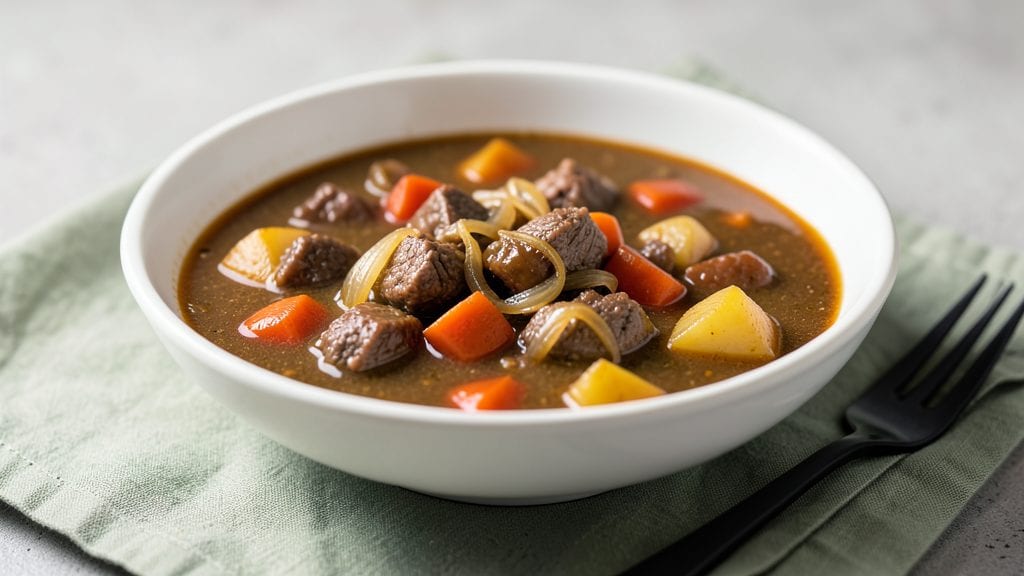
Crafting copycat Dinty Moore Beef Stew at home delivers that same slow-braised richness with deep, caramelized flavors you love from the can. The secret lies in browning beef chunks until deeply developed, then simmering them with tender vegetables and a rich, savory broth until everything melts together.
This isn’t just stew—it’s a hearty, comforting meal that tastes like a restaurant-quality dinner, perfect for cold evenings or game day gatherings.
What sets this recipe apart is the caramelized onions that form the flavor base, slowly building sweetness and depth as they cook. Unlike quick versions, this method requires patience—beef and vegetables simmer for hours until fork-tender, while the broth reduces to a thick, velvety consistency.
The result is a dish that’s rich, satisfying, and packed with layers of umami and warmth, just like the original.
By the time you’re done, you’ll have a pot of slow-braised beef stew with tender meat that falls apart at the touch, perfectly softened carrots and potatoes, and onions so sweet they’re almost candy-like.
The aroma alone will have everyone gathering around the table, and the first bite delivers that unmistakable Dinty Moore flavor—deep, savory, and impossible to resist.
This recipe serves six and can be made ahead, making it ideal for meal prep or feeding a crowd. The leftovers only get better as the flavors deepen over time. Ready to recreate this classic? Let’s get started with the ingredients and techniques that make it authentic.
Ingredients for copycat dinty moore beef stew
Sixteen ingredients transform into restaurant-quality slow-braised beef stew with caramelized depth.
| Ingredient | Amount | Notes |
|---|---|---|
| Chuck Roast 🥩 | 3 lb | Cut into 1.5-inch chunks, trimmed of fat |
| Yellow Onions 🧅 | 4 whole | Medium size, peeled and halved |
| Carrots 🥕 | 4 whole | Medium size, peeled and cut into chunks |
| Russet Potatoes 🥔 | 4 whole | Medium size, peeled and cut into chunks |
| Garlic Cloves 🧄 | 6 cloves | Peeled and lightly crushed |
| Beef Broth 💧 | 6 cups | Low-sodium preferred, homemade or high-quality |
| Tomato Paste 🍅 | 2 tbsp | Smooth, not chunky |
| Worcestershire Sauce 🍶 | 1 tbsp | Lea & Perrins preferred |
| Dry Red Wine 🍷 | ½ cup | Bold variety like Cabernet Sauvignon |
| Bay Leaves 🍃 | 2 whole | Fresh preferred, dried acceptable |
| Thyme Sprigs 🌿 | 4 whole | Fresh preferred, stems removed |
| Salt 🧂 | 2 tsp | Diamond Crystal kosher preferred |
| Black Peppercorns 🌶️ | 1 tsp | Freshly cracked, not ground |
| Olive Oil 🫒 | 2 tbsp | Extra-virgin, for caramelizing onions |
| Balsamic Vinegar 🍶 | 1 tbsp | For deglazing, aged variety |
The chuck roast is non-negotiable for authentic texture—Costco or local butcher sections carry the best cuts. Look for well-marbled meat with even distribution of fat throughout. Trader Joe's often has pre-cut chuck chunks, which saves significant time. For onions, yellow varieties caramelize best due to their natural sweetness. Avoid red or white onions, which can turn bitter during the long cooking process. The carrots and potatoes should be firm and free of soft spots, as they'll absorb flavors over hours of simmering. Fresh thyme and bay leaves elevate the dish beyond canned versions—Whole Foods or local farmers markets offer the best quality.
Substitutions must preserve umami depth. No red wine? Beef broth with an extra splash of balsamic vinegar replicates the acidity and richness. Worcestershire sauce unavailable? Soy sauce at half the amount provides a similar savory punch. For tomato paste, Trader Joe's squeeze tubes are ideal—they're convenient, last months, and avoid the metallic taste of canned varieties. If using dried thyme, reduce to one-third the amount of fresh. The balsamic vinegar can be swapped for red wine vinegar in a pinch, though the flavor profile will differ slightly. For a vegetarian adaptation, mushrooms and lentils can replace beef, though the texture and depth will vary significantly.
This stew improves with time—flavors meld for 24-48 hours in the fridge. Portion into airtight containers for up to 5 days of refrigerator storage, or freeze for 3 months in sealed bags. The caramelized onions can be made ahead and stored separately for 5 days in the fridge, saving time on cooking day. For reheating, use low heat to prevent curdling, and add a splash of broth if the stew thickens too much. The longer it simmers, the deeper the flavor—plan for at least 3 hours of active cooking time for optimal results.
Why You'll Love This Recipe
- Throw-It-Together Meal: The chuck roast doesn’t need fancy prep—just a quick sear and dump. I’ve made this with pre-chopped veggies from the store and still ended up with something hearty enough to feed my whole family.
- That Dinty Moore Magic: The slow simmer pulls all the flavors together—caramelized onions, tender beef, and just enough garlic to make your kitchen smell like a cozy diner. Honestly, the first bite always makes me wonder why I don’t make this more often.
- Leftovers That Beg for More: This stew only gets better the next day, and I’m not kidding. The potatoes soak up all that rich broth, and the beef gets even more fork-tender. I’ve reheated mine three times and still crave it.
- Budget-Friendly Crowd-Pleaser: A single chuck roast stretches to feed six, and the rest of the ingredients won’t break the bank. Between us, this is how I feed my college-aged kids without going broke—plus, they actually eat it.
Step-by-step instructions for slow-braised beef stew
Here's the method that delivers that signature Dinty Moore richness and depth.
Sear the Chuck Roast and Caramelize the Onions
Heat a large Dutch oven over medium-high heat until hot. Add the 2 tablespoons olive oil and swirl to coat. Working in batches if needed, add the 3 lb chuck roast cut into 1.5-inch chunks, trimmed of fat. Sear each piece for 2-3 minutes per side until deeply browned. This step develops the deep flavor that defines the stew.
Remove the browned meat and set aside. In the same pot, add the 4 whole yellow onions halved and the 6 cloves garlic cloves lightly crushed. Cook over medium heat for 15-20 minutes, stirring occasionally, until the onions are golden brown and caramelized. This slow process creates complex sweetness that forms the stew's foundation. The onions should be soft enough to pierce with a fork but still hold their shape.
Build the Stew Base with Wine and Broth
Deglaze the pot immediately after removing the onions by adding the 0.5 cup dry red wine. Scrape up any browned bits from the bottom with a wooden spoon, allowing the wine to simmer for 2-3 minutes until reduced by half. This step captures all the flavor locked in the fond.
Add the 2 tablespoons tomato paste and stir to combine. Pour in the 6 cups beef broth, then return the seared beef to the pot. Add the 2 whole bay leaves and 4 whole thyme sprigs, along with the 2 teaspoons salt and 1 teaspoon black peppercorns. Bring to a gentle simmer, then reduce heat to maintain a slow bubble just below boiling. Here's where the magic happens: the stew needs to cook undisturbed for 2 hours to develop its signature depth.
Add Vegetables and Simmer to Perfection
After the initial 2-hour simmer, add the 4 whole carrots cut into chunks and the 4 whole russet potatoes cut into chunks. Stir gently to submerge the vegetables. The stew should now have about 3-4 inches of liquid above the meat. If it looks too thin, you can reduce the heat slightly to prevent excessive evaporation.
Continue simmering for an additional 1 to 1.5 hours until the vegetables are fork-tender and the beef is easily pulled apart with a fork. The potatoes should be soft enough to collapse when pierced, and the carrots should be tender with just a slight bite. This slow cooking transforms the tough chuck roast into fork-tender perfection while developing the rich, caramelized flavors that make this stew legendary.
Finish with Worcestershire and Balsamic
Remove the 2 whole bay leaves and 4 whole thyme sprigs. Stir in the 1 tablespoon Worcestershire sauce and 1 tablespoon balsamic vinegar. Simmer for an additional 10 minutes to allow these ingredients to meld into the stew. The Worcestershire adds that signature umami depth while the balsamic contributes a subtle tang that balances the richness.
Taste and adjust seasoning if needed. The stew should be rich and flavorful with a perfect balance of sweetness from the caramelized onions, acidity from the balsamic, and umami from the Worcestershire. Serve immediately in deep bowls, allowing each guest to enjoy the hearty, comforting flavors of this classic slow-braised beef stew.
Pro Tips For Making Copycat Dinty Moore Beef Stew
- Brown the Roast Deep: I learned this the hard way—rushing the sear means flavorless stew. Sear the chuck roast in batches over medium-high heat until it’s dark brown on all sides, even if it takes 10 minutes. That crust locks in flavor and makes the whole dish taste richer.
- Salt the Onions First: Toss sliced yellow onions with a pinch of salt before cooking—it draws out moisture and keeps them from turning to mush. Skip this, and you’ll end up with soggy, flavorless chunks instead of sweet, caramelized bits.
- Add Potatoes Late: The recipe might say otherwise, but potatoes soak up broth like sponges. Add them only in the last 30 minutes of cooking, or they’ll turn to glue. If you’re impatient, cut them smaller—but don’t skip this step entirely.
- Deglaze with Beer: After browning the meat, don’t just splash in water—use the full 12 oz of beer called for. That’s not just liquid; it’s the backbone of the flavor. Scrape up every last bit of fond from the pot while you’re at it.
Essential equipment for perfect results
Dutch Oven
This is my non-negotiable piece of equipment for Dinty Moore-style beef stew. A 6-quart Dutch oven like the Le Creuset Signature or Lodge Cast Iron handles the searing, caramelizing, and slow simmering perfectly.
The thick walls distribute heat evenly, preventing hot spots that can burn your onions or scorch your wine reduction. I prefer cast iron for its natural non-stick properties and heat retention, but enameled versions are easier to clean. 🔥
Heavy-Bottomed Pot
If you don’t have a Dutch oven, a 5-6 quart heavy-bottomed pot like the All-Clad Stainless Steel works well. The key is avoiding thin, reactive metals that can alter flavors.
I’ve used my Calphalon Classic pot for years—just ensure it’s large enough to accommodate the beef chunks without overcrowding during searing. Overcrowding steams the meat instead of browning it, which is critical for that deep, caramelized flavor.
Meat Thermometer
A meat thermometer like the Thermoworks Smart Pro ensures your beef reaches the perfect internal temperature of 195°F for fork-tender results. I insert the probe into the thickest piece of meat during the final hour of simmering.
This prevents overcooking while guaranteeing the chuck roast breaks apart easily. For stews, I also monitor the broth temperature—it should never boil vigorously, as this can make the meat tough.
Wooden Spoon
A heat-resistant wooden spoon (I use Oxo Good Grips) is essential for stirring and scraping up flavorful browned bits from the pot. Wood won’t react with acidic ingredients like wine or tomato paste, and its flexibility helps gently coax caramelized onions without breaking them.
Avoid metal utensils during the caramelizing stage—they can scratch the pot and release harmful chemicals into your food.
Fine-Mesh Strainer
For straining the broth before adding vegetables, a fine-mesh strainer like the OXO Good Grips ensures you remove any herb stems or bay leaves without losing flavor. I also use it to drain excess liquid from potatoes if the stew becomes too thin.
Pro tip: Line the strainer with a cheesecloth for even finer filtration, which helps achieve that velvety consistency Dinty Moore stew is known for. ✨
Kitchen Timer
Timing is everything in slow-cooked stews, and a digital kitchen timer (I love the OXO Good Grips) keeps me on track. Set it for the 2-hour initial simmer, then another 1-1.5 hours after adding vegetables.
I also use it to remind myself to taste and adjust seasoning in the final 10 minutes. A timer prevents overcooking, which can turn tender beef into mush and make the broth watery.
Nutrition facts
Frequently asked questions
Why does this recipe use chuck roast instead of other beef cuts?
The chuck roast is ideal because its marbling and connective tissue break down beautifully during slow cooking, creating that signature fork-tender texture. Unlike leaner cuts, it stays juicy while developing deep, caramelized flavors.
Can I make this stew in a slow cooker instead of a Dutch oven?
Yes! Brown the beef in a skillet first, then transfer everything to a 6-quart slow cooker. Cook on low for 8 hours or high for 5-6 hours after adding vegetables. The wine and tomato paste should be added during the final 30 minutes to prevent overcooking.
How do I know when the beef is perfectly tender?
The beef is done when it reaches an internal temperature of 195°F and easily falls apart with a fork. For the best results, use a meat thermometer in the thickest piece during the final hour of simmering. If it's still tough, extend the cooking time by 30-60 minutes.
What if my stew turns out too thin or too thick?
For thin stew, simmer uncovered for 10-15 minutes to reduce the liquid. If it's too thick, stir in 1/2 cup beef broth at a time until you reach the desired consistency. Avoid adding water—it dilutes the flavor.
Can I make this recipe ahead of time?
This stew tastes even better the next day. Store it in an airtight container in the fridge for 3-4 days or freeze for 3 months. Reheat gently on the stove with a splash of broth to restore moisture. The flavors deepen over time!