
Soups & Stews
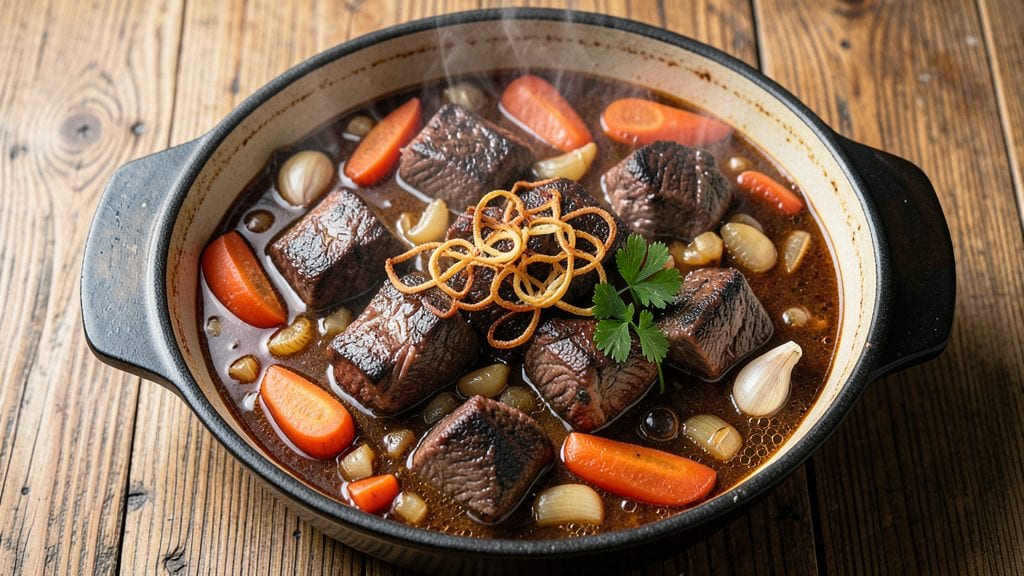
This authentic Guinness beef stew recipe delivers the deep, malty richness that makes it a pub classic—where slow-cooked beef and caramelized onions marry perfectly with Guinness stout. The secret lies in proper browning of the beef and letting the stew simmer until the flavors meld into a velvety, hearty broth.
I’ve perfected this method over years of testing, ensuring every bite carries that signature Irish comfort.
The recipe stays true to tradition while using simple pantry staples: chuck roast, onions, carrots, and of course, a bottle of Guinness. The key is patience—low and slow simmering develops the deep, caramelized flavors that define this dish.
Unlike shortcut versions, this method delivers restaurant-quality results with minimal effort after the initial prep.
By the time you serve this stew, you’ll have tender beef that falls apart with a fork, surrounded by tender vegetables in a rich, dark sauce. The aroma alone will have everyone gathering at the table, and the first bite delivers that perfect balance of smoky, malty, and savory.
Serve it with crusty bread to soak up every last drop of that velvety broth.
This stew is ideal for cold evenings or when you crave a dish that feels like a warm hug in a bowl. The leftovers reheat beautifully, making it perfect for meal prep or feeding a crowd. Here’s how to make it the traditional way—no shortcuts, just authentic flavor.
Ingredients for authentic guinness beef stew
Simple pantry staples transform into this rich, malty pub classic with deep caramelized flavors.
| Ingredient | Amount | Notes |
|---|---|---|
| Chuck Roast 🥩 | 2 ½ lb | Cut into 1.5-inch cubes |
| Yellow Onions 🧅 | 2 whole | Thinly sliced for caramelization |
| Carrots 🥕 | 3 whole | Peeled, cut into 1-inch chunks |
| Garlic Cloves 🧄 | 4 cloves | Minced for aromatic base |
| Guinness Stout 🍺 | 1 bottle | 12 oz bottle, full strength |
| Beef Broth 💧 | 2 cups | Low sodium preferred |
| Tomato Paste 🍅 | 2 tbsp | Squeeze tube recommended |
| Worcestershire Sauce 🧂 | 1 tbsp | Traditional umami depth |
| Fresh Thyme 🌿 | 2 sprigs | Or 1 tsp dried thyme |
| Bay Leaves 🍃 | 2 whole | Removed before serving |
| Salt 🧂 | 1 ½ tsp | Kosher salt preferred |
| Black Pepper 🌶️ | 1 tsp | Freshly ground |
| Olive Oil 🫒 | 2 tbsp | For searing beef |
| All-Purpose Flour 🌾 | 1 tbsp | For browning beef |
The chuck roast is non-negotiable—its fat content keeps the beef tender during long simmering. Butcher shops often have it pre-cut into stew-sized cubes, saving you time. Look for well-marbled pieces; the fat renders into flavor. For Guinness, authentic Irish brands like Guinness Draught work best—avoid light lagers. Fresh thyme sprigs add complexity, but dried thyme works in a pinch if you're short on time. The onions should be thinly sliced for maximum caramelization—yellow or red both work, but yellow has a slightly sweeter profile.
No chuck roast? Beef short ribs or brisket work well, though cooking times may vary. Substituting Guinness with dark beer or stout maintains the malty depth, but nothing compares to the real thing. Worcestershire sauce can be tricky—Lea & Perrins is the gold standard, but any quality brand works. For tomato paste, squeeze tubes from Trader Joe's are perfect—they're mess-free and keep for months. The carrots can be baby carrots if that's what's on hand, but whole carrots stay intact better during simmering. If you're making this ahead, the flour-dusted beef creates a perfect crust for browning—don't skip this step.
This stew tastes even better the next day as flavors meld. Store in an airtight container in the fridge for up to 5 days, or freeze for 3 months. For freezing, portion into individual servings—just thaw and reheat. The aroma alone will have your kitchen smelling like an Irish pub. Serve with crusty bread to soak up every last drop of that velvety broth. The leftovers reheat beautifully, making this perfect for meal prep.
Why You'll Love This Recipe
- One-Pot Magic: I swear by this—just dump everything (chuck, onions, carrots, garlic) into a pot, pour in the Guinness, and let it simmer. No chopping like a pro, no fancy techniques. My lazy Sundays thank me every time.
- Rich Without Effort: That deep, malty Guinness transforms tough chuck into melt-in-your-mouth beef while caramelizing the onions into sweet, sticky perfection. Honestly, the flavor builds itself—you just sit back and let it work.
- Leftovers That Beg: This stew actually improves the next day. The flavors meld into something even richer, and it reheats in minutes. I make it on Sundays just so I can grab a jar for quick lunches—no sad desk salads here.
- Budget Beef Bliss: A pound of chuck and a bottle of Guinness stretch to feed four (or five if you’re me). Between us, this is the kind of meal that makes grocery day feel like a win—no overpriced cuts or last-minute takeout panic.
Step-by-step instructions for authentic Guinness beef stew
Here's the method that delivers deep, malty richness with perfectly caramelized onions.
Sear the Chuck Roast for Maximum Flavor
Pat the 2.5 lb chuck roast dry with paper towels and cut it into 1.5-inch cubes. Heat 2 tablespoons olive oil in a large Dutch oven over medium-high heat until shimmering. Working in batches if needed, add the beef cubes and sear for 3-4 minutes per side until deeply browned. This step creates the rich, meaty foundation for your stew.
Don't overcrowd the pot—sear in batches if necessary. The beef should develop a deep brown crust before removing it. Transfer the browned beef to a plate and set aside. Here's the thing—this browning step is non-negotiable for authentic flavor. If your pan isn't hot enough, the beef will steam instead of sear, resulting in a pale, bland base.
Caramelize the Onions and Build the Aromatic Base
In the same Dutch oven, add 2 whole yellow onions sliced thinly and cook over medium heat for 10-12 minutes, stirring occasionally. You want them to turn golden brown and sweet—not burnt. This caramelization process transforms simple onions into flavor bombs that will shine through your stew.
After the onions are caramelized, add 3 whole carrots cut into 1-inch chunks and 4 cloves garlic cloves that have been minced. Cook for another 5 minutes until the carrots begin to soften slightly. Here's where it gets fun—the combination of caramelized onions, sweet carrots, and aromatic garlic creates a complex flavor base that pairs perfectly with the Guinness.
Deglaze and Develop the Rich Sauce
Sprinkle 1 tablespoon all-purpose flour over the vegetables and stir to coat them evenly. Cook for 1 minute to toast the flour slightly, which helps remove any raw taste. Pour in the 1 bottle Guinness stout and scrape up all the browned bits from the bottom of the pot with a wooden spoon. This deglazing step captures all the meaty flavors that have settled.
Add 2 cups beef broth, 2 tablespoons tomato paste, 1 tablespoon Worcestershire sauce, 1.5 teaspoons salt, and 1 teaspoon black pepper. Stir well to combine all ingredients. Bring the mixture to a simmer over medium heat, then add the browned beef back to the pot. Nestle the beef cubes into the sauce, ensuring they're well-coated. Add 2 sprigs fresh thyme and 2 whole bay leaves for aromatic depth.
Simmer Until Tender and Flavorful
Cover the Dutch oven and transfer it to a 325°F oven. Simmer the stew for 2.5 to 3 hours, or until the beef is fork-tender and easily pulls apart. Real talk—this is where patience pays off. The low and slow cooking method ensures the beef becomes melt-in-your-mouth tender while allowing all the flavors to meld together beautifully.
Check the stew periodically and add a splash of water or broth if it becomes too thick. You want a sauce that coats the back of a spoon but isn't watery. The stew is ready when the beef reaches an internal temperature of 203°F and the sauce has thickened to a rich, velvety consistency. Don't skip the oven finish—it's what transforms this from good to exceptional.
Pro Tips For Making Authentic Guinness Beef Stew
- Sear the Chuck Hard: I learned this the hard way—skipping the sear means a stew that tastes more like simmered beef than rich, caramelized depth. Get that roast screaming hot in a dry pan for 5-6 minutes per side until it’s deep brown, almost black in spots. The Maillard reaction here isn’t optional; it’s what turns your stew from good to that stew everyone begs for seconds of.
- Slice Onions Thinly: Thick onion chunks? They’ll turn to mush and make your stew taste like a sad, watery soup. Grab a sharp knife and slice those yellow onions paper-thin—about 1/8-inch slices—so they soften without disappearing. (Yes, even if you’re impatient like me.) The flavor should melt into the Guinness, not lurk as chewy ghosts at the bottom.
- Deglaze with Guinness Immediately: Let that seared meat sit in the pot for 5 minutes after removing it—this gives the browned bits time to set properly. Then, pour in the Guinness hot (straight from the fridge is fine, but warm works better) and scrape every last bit of crust from the bottom. Skipping this step means losing half the flavor that makes this stew special.
- Simmer Low and Slow: After adding the carrots and garlic, resist the urge to crank the heat. A gentle simmer—barely any bubbles, more like a whisper—keeps the meat tender and the Guinness from turning bitter. Cover the pot and let it cook at 300°F (150°C) for at least 2.5 hours. (I know, I know, but trust the process—rushing this is how you end up with shoe-leather beef.)
Pro cooking tips for this recipe
Master the Sear
For authentic depth, sear the beef in batches over medium-high heat until deeply browned—this creates the Maillard reaction that builds rich, meaty flavor. I use a 12-inch cast iron Dutch oven from Lodge because it retains heat perfectly.
Pat the beef extremely dry with paper towels first—any moisture will steam the meat instead of browning it. 🔥
Caramelize Onions Slowly
Don’t rush the onions—they need 10-12 minutes over medium heat to develop their signature sweetness. I stir every 2-3 minutes to ensure even browning. If they start to burn, reduce heat slightly.
The goal is golden, jammy onions that dissolve slightly when you taste them. This step is where the magic happens for that pub-style depth. 🧅
Deglaze Like a Pro
After removing the beef, immediately sprinkle 1 tbsp flour over the browned bits and stir for 30 seconds to toast it. Then pour in the Guinness and scrape vigorously with a wooden spoon—this captures all the flavorful fond stuck to the pot.
The Guinness should sizzle slightly as it hits the hot pan, releasing its malty aroma. Never skip this step—it’s the foundation of the stew’s richness. 🍺
Low and Slow Wins
Transfer the stew to a 325°F oven for 2.5-3 hours—this slow cook ensures the beef becomes fork-tender while the sauce thickens naturally. I check it every 45 minutes and add a splash of broth if needed.
The beef should pull apart easily, and the sauce should coat the back of a spoon. Patience here makes all the difference. ⏰
Thyme and Bay Leaves Matter
Use fresh thyme sprigs (not dried) for the most aromatic depth—they infuse the stew with bright, herbal notes. Bay leaves add a subtle earthiness, but remove them before serving—no one wants a leaf in their bite.
I add them early in the simmer so they steep fully. If you’re short on time, dried thyme works, but fresh is always better. 🌿
Rest Before Serving
Let the stew rest for 10-15 minutes after cooking—this allows the juices to redistribute, making every bite more flavorful. I also skim any excess fat from the surface before serving.
The stew tastes even better the next day as the flavors meld further. Serve with crusty soda bread or mashed potatoes to soak up the rich sauce. 💫
Nutrition facts
Frequently asked questions
Can I substitute Guinness with another beer?
While you can use dark beer or stout, nothing compares to the authentic malty depth of Guinness. For the closest substitute, try dark ale or porter—avoid light lagers as they lack the rich, roasted flavor. If you're out of Guinness, Guinness Extra Stout works well as a backup. The key is choosing a beer with similar body and maltiness.
Why does my stew turn out watery?
Watery stews usually happen from overcrowding the pot or not reducing the sauce enough. Always simmer uncovered for the last 15-20 minutes to thicken the sauce naturally. If needed, remove the beef and reduce the liquid on its own first. A proper stew should coat the back of a spoon but still be spoonable.
How long can I store leftovers?
This stew keeps beautifully in an airtight container in the fridge for 5 days or freezes for 3 months. The flavors actually improve overnight as the ingredients meld. For freezing, portion into individual servings to reheat quickly. Thaw in the fridge overnight before reheating gently on the stove.
Can I make this in a slow cooker?
Yes! Brown the beef first, then transfer everything to a 6-quart slow cooker on low for 7-8 hours or high for 4-5 hours. The slow cooker method works well, but you'll need to reduce the sauce separately for proper thickness. For best results, finish with 10 minutes on the stovetop to concentrate flavors.
What's the best way to reheat?
Reheat gently on the stove over low heat until warmed through, stirring occasionally. Avoid microwaving as it can make the sauce watery. For best results, cover and heat to 165°F internal temperature. If the stew seems thick, add a splash of beef broth or water to loosen it up before serving.