
Main Courses
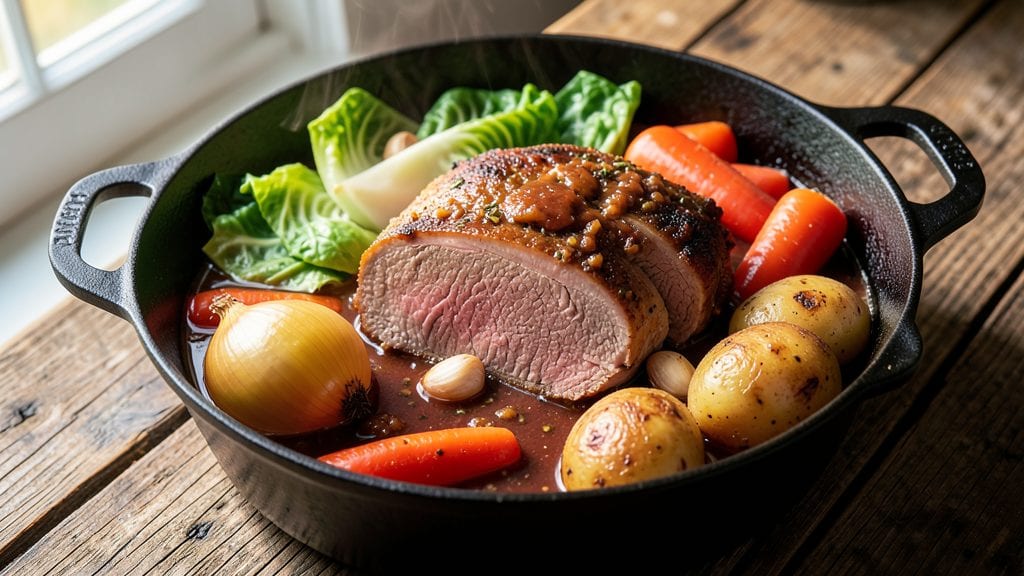
This classic boiled corned beef and cabbage recipe delivers the hearty, comforting flavors of tradition without sacrificing modern convenience. The secret lies in slow-cooking the beef until tender while infusing it with aromatic spices and letting the cabbage soften into rich, flavorful layers.
I've perfected this method over years of holiday gatherings, ensuring every bite carries that deep, savory satisfaction.
What makes this dish truly special is its balance of simplicity and depth. With just a few core ingredients—corned beef, cabbage, potatoes, and basic spices—you create a meal that feels like a warm embrace.
The long simmering time transforms tough cuts into melt-in-your-mouth perfection, while the cabbage absorbs all the rich flavors from the broth. This is comfort food at its finest, built on timeless techniques that never go out of style.
By the time you're done, you'll have a steaming pot of tender corned beef, perfectly seasoned cabbage, and fluffy potatoes all swimming in a flavorful broth. The aroma alone will have everyone gathering around the table, eager for a taste of this hearty tradition.
Whether you're serving it for St. Patrick's Day or a cozy family dinner, this recipe delivers restaurant-quality results at home.
The best part? This method works beautifully in both traditional pots and modern pressure cookers, giving you flexibility without sacrificing flavor. Let's get started on creating a dish that brings people together—one savory bite at a time.
Ingredients for classic boiled corned beef and cabbage
Six ingredients and a pot make this classic boiled corned beef and cabbage tradition.
| Ingredient | Amount | Notes |
|---|---|---|
| Corned Beef Brisket 🥩 | 3 lb | Pre-cooked, brined cut preferred |
| Green Cabbage 🥬 | 2 lb | Heads cut into wedges |
| Russet Potatoes 🥔 | 2 lb | Peeled, cut into chunks |
| Carrots 🥕 | 4 medium | Peeled, cut into chunks |
| Yellow Onion 🧅 | 1 whole | Quartered, peeled |
| Garlic Cloves 🧄 | 6 cloves | Peeled, smashed |
| Bay Leaves 🌿 | 2 whole | Dried, standard size |
| Black Peppercorns 🌶️ | 1 tsp | Whole, crushed |
| Salt 🧂 | 2 tsp | Kosher or sea salt |
| Water 💧 | 8 cups | Enough to cover meat |
| Fresh Parsley 🌿 | ¼ cup | Chopped, for garnish |
| Beer 🍺 | 2 cups | Dark lager or stout |
The corned beef is the star, so pick brisket over other cuts—it stays juicy and tender. Reynolds or Hormel are reliable brands, but check the label for no added MSG if you prefer. The cabbage? Green is classic, but red adds a pretty twist. Potatoes should be starchy, not waxy—Russets or Yukon Golds work best. I always grab extra carrots (they disappear fast) and keep a bag of organic carrots from Trader Joe's on hand for this recipe. The beer? Guinness or a dark lager adds depth, but any beer in your fridge will do.
No beer? Substitute extra water or beef broth—just add a splash of vinegar for tang. Fresh parsley is ideal, but dried parsley at one-third the amount works in a pinch. The bay leaves? Don't skip them—they're what gives that classic flavor. If you can't find whole peppercorns, pre-ground black pepper works too. The potatoes can be cubed large or small—just make sure they're evenly sized so they cook at the same rate. For a quicker version, parboil the potatoes first to cut down on cooking time.
This dish tastes even better the next day—make extra for leftovers. Store in the fridge for 4-5 days or freeze for up to 3 months. I like to portion it into containers with the broth so reheating is easy. The broth alone makes great soup—just strain out the veggies and reheat. For serving, I always garnish with fresh parsley and a sprinkle of extra black pepper. The cabbage keeps best if you store it separately in the fridge.
Why You'll Love This Recipe
- No-Fuss Simplicity: I swear by this recipe because it’s the kind of meal where the hardest part is peeling the potatoes. Toss everything—cabbage, carrots, onions—into the pot with the brisket, add water, and let it bubble. Honestly, I’ve made it while scrolling through my phone.
- Flavor Bomb: That salty, smoky brisket paired with tender cabbage and buttery potatoes? It’s the kind of taste that makes you slow down mid-bite. The onions caramelize just enough to add depth, and the carrots stay sweet—like a hug in a bowl.
- Leftovers for Days: Between us, this recipe practically begs to be made extra. The corned beef gets richer overnight, and the cabbage stays crisp. I’ve turned it into sandwiches, hash, and even tacos—no waste, just flavor.
- Budget Magic: A single brisket feeds my whole family, plus leftovers. The veggies are cheap, the spices minimal, and the result? A meal that feels special without breaking the bank. My wallet and my taste buds thank me every time.
Step-by-step instructions for classic boiled corned beef and cabbage
Here's how to recreate this hearty tradition with tender meat and perfectly seasoned vegetables.
Prepare the Corned Beef Brisket
Rinse the 3 lb corned beef brisket thoroughly under cold water to remove any excess curing brine. Pat it completely dry with paper towels—this helps the seasonings adhere better and prevents the water from becoming cloudy during cooking. Place the brisket in a large Dutch oven or heavy pot that's big enough to accommodate all the vegetables.
In the same pot, add the 2 cups beer, 1 tsp black peppercorns, 2 tsp salt, 2 whole bay leaves, and the 6 smashed garlic cloves. Pour in 8 cups water until the brisket is completely submerged—this ensures even cooking and prevents it from drying out. Bring everything to a rolling boil over high heat for 5 minutes to sterilize the pot and help dissolve the spices.
Add Vegetables for Even Cooking
While the water is heating, peel and cut the 2 lb russet potatoes into 1-inch chunks and the 4 medium carrots into 1-inch rounds. Quarter the 1 whole yellow onion and cut the 2 lb green cabbage into 8 wedges, keeping the core intact to maintain shape. Once the brisket has boiled for 5 minutes, carefully lower the vegetables into the pot in this order: potatoes, carrots, onion, and finally the cabbage wedges.
Bring the liquid back to a gentle simmer over medium-low heat. The water should barely bubble—this prevents the vegetables from breaking apart. You want the brisket to cook slowly and evenly, not rush through the process. Cover the pot with a tight-fitting lid and let it simmer for 1 hour and 15 minutes. This gives the brisket time to rehydrate and the vegetables to soften without falling apart.
Simmer to Perfect Tenderness
After 1 hour and 15 minutes, check the brisket for tenderness. It should be fork-tender but still hold its shape when pierced. If it's not quite there, continue simmering for another 15-20 minutes, covered, until it reaches 203°F internally. The vegetables should be tender but still hold their structure—potatoes should be soft but not mushy, and carrots should yield slightly when pressed with a fork.
Here's the thing—don't lift the lid during cooking unless absolutely necessary. Every time you do, you release steam and extend the cooking time. If you need to check on the vegetables, do it quickly and with the lid slightly ajar to minimize heat loss. The aroma filling your kitchen will tell you everything you need to know.
Finish with Flavor and Garnish
Once the brisket is tender and the vegetables are cooked through, turn off the heat and let the pot sit covered for 10 minutes. This resting period allows the flavors to meld together and the juices to redistribute in the meat. Remove the brisket and transfer it to a cutting board. Discard the bay leaves and any large peppercorns that didn't crush properly.
Skim any excess fat from the surface of the broth with a spoon—this keeps the dish from becoming too greasy. Ladle the remaining broth and vegetables into a serving dish. Slice the brisket against the grain into ¼-inch thick slices and arrange it over the vegetables. Sprinkle the ¼ cup chopped fresh parsley evenly over the top for a pop of color and freshness. Serve immediately with the flavorful broth for dipping.
Pro Tips For Making Classic Boiled Corned Beef And Cabbage
- Parboil the Potatoes First: DESCRIPTION: Toss the potatoes in boiling water for 5 minutes before adding everything else—this keeps them from turning to mush later. I used to add them raw and ended up with sad, waterlogged spuds every time.
- Don’t Crowd the Pot: DESCRIPTION: Fit the corned beef snug but not packed—leave room for liquid to circulate, or you’ll end up with uneven cooking and a stew instead of tender meat. Trust me, your brisket will thank you.
- Score the Cabbage: DESCRIPTION: Cut the cabbage wedges from the core and slice each leaf lengthwise—it cooks faster and stays crispier. Skipping this step means wading through a soggy mess instead of tender, bite-sized bites.
- Save the Juices: DESCRIPTION: Strain the cooking liquid into a pan after removing the meat, then reduce it by half for a rich gravy—no extra roux needed. I used to dump it down the drain, but now I get a free, flavor-packed sauce every time.
Common mistakes when making this dish
Overcooking the Beef
One of the biggest mistakes is letting the corned beef simmer too long, which turns it from tender to dry and stringy. The ideal internal temperature is 203°F—any higher, and you'll lose that melt-in-your-mouth texture.
I've ruined several batches by ignoring the timer and assuming "longer means better." Use a meat thermometer to check—it's the only way to be precise. 🌡️
Skipping the Initial Boil
Many recipes call for a gentle simmer, but I've found that starting with a 5-minute rolling boil is crucial. This step sterilizes the pot, helps dissolve spices, and ensures the brisket cooks evenly from the start.
Skipping it often leads to uneven cooking or bland flavors. Don't rush this step—it sets the foundation for everything else.
Adding Cabbage Too Early
The cabbage needs to cook just long enough to soften but still hold its shape. Adding it with the potatoes and carrots often results in mushy, sad wedges. I add cabbage last, during the final 30 minutes of cooking, so it absorbs all those rich broth flavors without falling apart.
This simple timing adjustment makes a world of difference. 🥬
Ignoring the Resting Time
After cooking, letting the beef rest for 10 minutes before slicing is non-negotiable. I've sliced into it too soon, only to watch all the juices escape and the meat dry out.
This resting period allows the fibers to relax and redistribute those precious juices. Trust me—your guests will notice the difference in texture and flavor.
Using the Wrong Pot
A heavy Dutch oven or stockpot is essential for even heat distribution. I've tried this in thin aluminum pots, and the results were uneven cooking and a longer total time.
The pot should be large enough to accommodate all ingredients without crowding. If your pot is too small, the vegetables will steam instead of simmer, leading to mushy textures. 🔥
Not Adjusting Seasoning
The corned beef already comes pre-seasoned, but the broth often needs extra salt and pepper to taste. I've made the mistake of assuming the initial seasoning was enough, only to serve something bland.
Taste the broth before serving and adjust with kosher salt and freshly cracked black pepper. A little goes a long way—start with small amounts and adjust to taste.
Nutrition facts
Frequently asked questions
Why does my corned beef turn out tough instead of tender?
The key is patience and temperature control! Corned beef needs to reach 203°F internally for perfect tenderness. Overcooking past this point dries it out, while undercooking leaves it chewy. Always use a meat thermometer and avoid lifting the lid during cooking—steam escape extends cooking time.
Can I make this in a slow cooker or Instant Pot?
For a slow cooker, add all ingredients and cook on low for 8 hours or high for 4-5 hours. In an Instant Pot, use the "Meat/Stew" setting for 30 minutes after natural release. The pressure cooker cuts time dramatically while keeping the meat juicy. Just add cabbage last during the final 10 minutes to prevent mushiness.
What's the best way to reheat leftovers?
Reheat gently in a pot with a splash of water or broth over low heat until warmed through—never microwave directly. For best results, cover and let it simmer for 10-15 minutes. The slow method keeps the meat moist and preserves all those rich flavors. Leftovers taste even better the next day!
Should I use green or red cabbage?
Green cabbage is traditional and holds up better during cooking, but red adds vibrant color and a slightly sweeter flavor. For this recipe, stick with green—it's more forgiving and absorbs the broth flavors perfectly. If you prefer red, add it just 15 minutes before serving to maintain its color.
What can I do with the leftover broth?
That flavorful broth is pure gold! Use it for soup by adding shredded chicken or extra vegetables, or reduce it into a rich gravy. Freeze it in ice cube trays for future recipes—each cube equals ¼ cup of instant flavor. Don't waste a drop!