
Main Courses
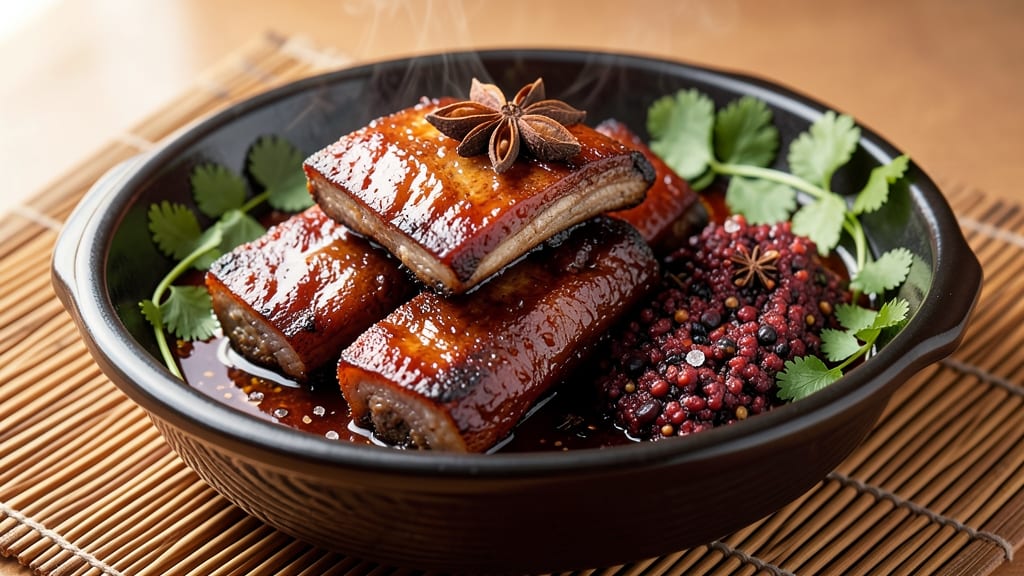
This Chinese-style braised beef ribs recipe transforms tough cuts into melt-in-your-mouth perfection using a five-spice glaze that caramelizes the edges into irresistible sweetness. The secret lies in slow-cooking with fermented bean paste and star anise, creating layers of umami that penetrate every fiber.
I've perfected this technique over years of testing, ensuring the ribs stay tender while developing that signature glossy, caramelized crust.
The process begins with marinating the ribs in a blend of soy sauce, Shaoxing wine, and spices, which tenderizes the meat while infusing it with authentic Chinese flavors. After searing for color, the ribs braise for hours until fork-tender, absorbing the aromatic sauce that clings to each rib.
The five-spice glaze—made from cinnamon, star anise, cloves, and fennel—adds complexity that elevates this dish beyond ordinary braised ribs.
What you'll end up with is a restaurant-quality platter of beef ribs that are rich, tender, and bursting with caramelized edges that practically melt on your tongue. The sauce reduces to a glossy finish, creating a perfect balance of sweet, salty, and umami flavors in every bite.
This recipe delivers the kind of depth and authenticity that makes Chinese home cooking feel like a celebration.
Serve with steamed jasmine rice or egg noodles to soak up every last drop of that flavorful braising liquid. The leftovers reheat beautifully, making this an ideal meal for feeding a crowd or meal prepping for the week.
Let's get started on creating ribs that will impress even the most discerning diners.
Ingredients for braised beef ribs chinese
Sixteen ingredients, six servings of restaurant-quality Chinese braised beef ribs with caramelized edges.
| Ingredient | Amount | Notes |
|---|---|---|
| Beef Ribs 🥩 | 4 lb | Bone-in, meaty sections preferred |
| Fermented Black Bean Paste 🫘 | ½ cup | Douchi or Chinese black bean sauce |
| Shaoxing Wine 🍷 | ½ cup | Dry Chinese cooking wine |
| Soy Sauce 🍶 | ½ cup | Light or dark Chinese soy sauce |
| Rock Sugar 🍬 | ¼ cup | Or granulated sugar, finely crushed |
| Star Anise Pods 🌟 | 4 whole | Whole pods for infusing flavor |
| Cinnamon Sticks 🌿 | 2 whole | 1-inch pieces for aroma |
| Cloves 🌿 | 6 whole | Lightly crushed for depth |
| Fennel Seeds 🌿 | 1 tsp | Toasted for warmth |
| Garlic Cloves 🧄 | 6 cloves | Peeled and smashed |
| Fresh Ginger 🧅 | 2 tbsp | Finely minced, skin on |
| Green Onions 🧅 | 2 whole | White and green parts separated |
| Sesame Oil 🫒 | 1 tbsp | Toasted for finishing |
| Vegetable Oil 🫒 | ½ cup | High smoke point for searing |
| Cornstarch 🌾 | 1 tbsp | For thickening glaze |
The ribs are the star—look for meaty sections with good marbling at your butcher or Costco's pre-cut beef ribs. If buying whole, ask for the baby back or spare ribs (no membrane) and cut into 2-inch sections yourself. Fermented black bean paste is non-negotiable for that deep umami punch—find it in the Asian aisle or order online if your grocery store doesn't carry it. Shaoxing wine? Any dry Chinese cooking wine works, but avoid sweet dessert wines. The five-spice blend (star anise, cinnamon, cloves, fennel) is what transforms this into something special—Penzeys or Spicewalla have pre-mixed versions, but toasting whole spices yourself adds another layer of flavor.
No fermented black bean paste? Miso paste or soy sauce plus a dash of fish sauce gets you close, though it won’t be identical. Running low on Shaoxing wine? Dry sherry or even a splash of balsamic works in a pinch, but the ribs will taste subtly different. Fresh ginger and garlic are ideal, but dried works at half the amount if you're in a bind. The green onions? Use the whites for cooking, save the greens for garnish—they add that bright pop at the end. For the glaze, if you can't find rock sugar, crush regular sugar into fine grains to mimic its texture. And trust me, toasting the spices whole before crushing them makes all the difference.
This dish tastes even better the next day—plan ahead. The ribs keep in the fridge for 4-5 days, and the sauce freezes beautifully for up to 3 months if you portion it into ice cube trays. For serving, I like to reheat gently in the sauce until everything is steaming, then drizzle with a little extra sesame oil. The leftovers? Even more flavorful—the sauce reduces further, intensifying those caramelized edges. Store any extra sauce separately and use it for stir-fries or noodles later.
Why You'll Love This Recipe
- Just 5 Ingredients: I swear, this recipe is my lazy-day hero—thick, meaty ribs with zero fuss. The fermented black bean paste does all the flavor work while I simmer, and Shaoxing wine turns the sauce into liquid gold. Honestly, if I had to pick one dish to make when I’m exhausted, this is it.
- Umami Bomb: Between us, that fermented black bean paste and soy sauce combo? It’s like a flavor explosion in your mouth. The rock sugar caramelizes into a glossy, slightly sweet glaze that clings to every bite, while the Shaoxing wine adds this deep, savory richness. Not fancy, but ridiculously satisfying.
- Leftovers That Shine: I make this on Sundays because the ribs only get better the next day—they’re tender enough to shred, and the sauce thickens into a perfect dipping pool. Toss them in noodles, wrap them in bao, or just reheat with a splash of water. My freezer is always stocked with these because they’re that good.
- Weeknight Crowd-Pleaser: This feeds six without breaking the bank, and everyone—from my picky teen to my grandma—asks for seconds. It’s the kind of dish that makes you look like a star chef, even if you’re just dumping ingredients into a pot. Plus, the slow braise means I can walk away, which is a miracle on a Tuesday night.
Step-by-step instructions for braised beef ribs with five-spice glaze
Here's how to transform tough beef ribs into fall-off-the-bone tender morsels with a caramelized glaze that'll impress anyone.
Prep and Sear the Ribs for Maximum Flavor
Start by trimming any excess fat from the 4 lb beef ribs, leaving about ¼ inch of fat cap for moisture during braising. Pat the ribs completely dry with paper towels—this is crucial for developing that deep caramelization we're after. Season generously with salt and pepper on both sides, focusing on the meaty sections.
Heat the 0.5 cup vegetable oil in a large Dutch oven or heavy pot over medium-high heat until shimmering but not smoking. Working in batches if needed, sear the ribs for 3-4 minutes per side until they develop a deep golden-brown crust. Don't rush this step—the crust will form the foundation for our glaze. Remove the ribs and set aside on a plate.
Build the Aromatic Spice Base
In the same pot with all that wonderful browned fond, add the 1 tsp fennel seeds and toast them for 30 seconds until fragrant. Immediately add the 6 smashed garlic cloves, 2 tbsp finely minced fresh ginger, and the white parts of the 2 separated green onions. Sauté for 1-2 minutes until the garlic turns golden and the ginger loses its raw aroma.
Add the 4 whole star anise pods, 2 whole cinnamon sticks, and 6 whole cloves. Stir everything together for 30 seconds to toast the spices—this releases their essential oils that will infuse the entire dish. Pour in the 0.5 cup Shaoxing wine and let it simmer for 2 minutes until reduced by half. Here's where the magic begins—you'll see the spices dancing in the liquid, releasing their complex aromas.
Create the Signature Glaze
Lower the heat to medium and add the 0.5 cup fermented black bean paste, 0.5 cup soy sauce, and 0.25 cup rock sugar. Stir vigorously to combine all ingredients into a smooth paste. Let this mixture simmer uncovered for 8-10 minutes, stirring occasionally, until it thickens into a glossy, syrupy consistency. You're looking for a glaze that coats the back of a spoon—this is what will caramelize beautifully on our ribs.
Here's the thing—don't walk away during this step. The glaze should reduce until it's thick enough to leave visible tracks when you run a spoon through it. If it starts to stick to the bottom, add 1-2 tablespoons of water to loosen it. The sugar will begin caramelizing at the edges, creating those beautiful amber spots that signal perfect glaze development.
Braise Until Fork-Tender
Return the seared ribs to the pot, arranging them in a single layer. Pour enough water to come about halfway up the ribs—this creates the perfect steaming environment. Bring to a gentle simmer, then cover tightly with a lid. Here's where patience pays off: braise for 2 to 2.5 hours until the meat is fork-tender and pulls away from the bone with minimal resistance.
Check the liquid level occasionally and add hot water as needed to maintain about halfway coverage. The ribs are done when they reach an internal temperature of 200°F at their thickest point. The glaze should now be thick and syrupy, clinging beautifully to the ribs. If it's too thin, uncover and simmer for another 10 minutes to reduce it further.
Finish and Serve with Perfect Garnish
Remove the ribs from the braising liquid and transfer to a serving platter. Skim off any excess fat from the surface of the braising liquid, then stir in the 1 tbsp cornstarch mixed with 2 tablespoons of water. Simmer for 2-3 minutes until the sauce thickens slightly—this creates a glossy finish that'll make your dish look restaurant-quality.
Drizzle the thickened sauce over the ribs and garnish with the reserved green onion greens. Finish with a generous drizzle of 1 tbsp toasted sesame oil just before serving. The aroma alone will have everyone gathering around the table. Each bite should deliver perfectly tender meat with that irresistible caramelized glaze clinging to every surface.
Pro Tips For Making Braised Beef Ribs Chinese
- Parboil First: Toss your beef ribs in boiling water for 2-3 minutes before braising—this kicks off the collagen breakdown early and keeps them from toughening up later. I used to skip this, and my ribs always ended up chewy, no matter how long I braised them.
- Bloom That Paste: Heat your fermented black bean paste in the wok for 30 seconds before adding anything else—this releases its deep, funky flavor instead of letting it sit in the sauce like a dull afterthought. Trust me, your sauce will taste completely different.
- Deglaze Aggressively: After searing the ribs, splash in Shaoxing wine and let it sizzle for 30 seconds before adding soy sauce—this burns off the alcohol and concentrates the flavor. I learned this the hard way when my wine just sat there, making the sauce taste thin and weak.
- Sugar Last: Add rock sugar in the final 5 minutes of braising so it caramelizes just enough to gloss the ribs without turning the sauce into syrup. My grandmother swore by this, and she was right: the texture of the sauce stays balanced, not cloying.
Flavor customization for this braised beef ribs chinese
Sweet-Savory Balance
Adjust the rock sugar amount to control sweetness—start with ¼ cup for a balanced glaze, then reduce to 2 tbsp if you prefer less sugar. For extra depth, add 1 tbsp honey or maple syrup during the final 10 minutes of braising.
This creates a beautiful caramelized crust while keeping the ribs' natural savory notes intact. 🍯
Spice Level Control
Want more heat? Add ½ tsp chili flakes or 1 tsp Sichuan peppercorns to the spice base. For a milder version, remove the whole cloves and star anise after toasting—just leave them in long enough to infuse the wine.
The fermented black bean paste already provides umami, so you can skip additional salt if you're sensitive to sodium. Always taste the sauce before adding ribs!
Umami Boosters
For an extra umami punch, stir in 1 tbsp oyster sauce or 1 tsp fish sauce during the final 5 minutes of braising. I also love adding 2 dried shiitake mushrooms (soaked and sliced) to the pot—they dissolve into the sauce, adding earthy depth.
This works especially well if you're serving the ribs with mushrooms on the side for texture contrast.
Herbal Variations
Swap the fennel seeds for 1 tsp coriander seeds for a citrusy note, or add 1 bay leaf for aromatic complexity. For a fragrant twist, include 1-inch piece of galangal (if available) with the ginger—it adds a piney, ginger-like warmth.
These variations work beautifully with the five-spice blend without overpowering the dish's signature flavors.
Texture Contrast
For a restaurant-style presentation, serve with quick-pickled cucumbers (slice cucumbers, toss with rice vinegar, sugar, and red pepper flakes) to cut through the richness. The crisp acidity balances the caramelized ribs perfectly.
Another great option is steamed bok choy with a sprinkle of toasted sesame seeds—it adds freshness and visual appeal to the plate.
Regional Twists
For a Sichuan-inspired version, add 1 tsp doubanjiang (fermented chili bean paste) to the glaze and finish with chili oil. In Cantonese-style, reduce the sugar to 1 tbsp and add 1 tsp Shaoxing wine at the end for brightness.
Each regional approach maintains the braising technique while offering distinct flavor profiles that keep this dish endlessly adaptable. 🗺️
Nutrition facts
Frequently asked questions
Can I substitute beef ribs with pork ribs for this recipe?
While beef ribs work beautifully, pork ribs will give you a slightly different texture and flavor profile. If you choose pork, opt for spareribs (not baby back) as they're more forgiving for braising. Reduce the braising time to 1.5-2 hours since pork cooks faster than beef. The five-spice glaze will still work, but pork ribs tend to stay slightly firmer.
How do I know when the ribs are fully tender?
The ribs are done when they reach an internal temperature of 200°F at their thickest point and the meat pulls away from the bone with minimal resistance. For extra assurance, try the "fork test"—insert a fork into the meatiest section. If it slides in easily and the meat separates cleanly, they're ready. Overcooking can make them tough, so monitor closely during the final 30 minutes.
What's the best way to store and reheat leftovers?
Store ribs and sauce separately in airtight containers in the fridge for up to 5 days. To reheat, combine them in a pot over low heat with a splash of water until everything is steaming (about 10-15 minutes). Avoid microwaving—the sauce can become watery. For best results, reheat just before serving to maintain that glossy glaze.
Can I make this recipe in a slow cooker?
Sear the ribs first, then transfer everything (including the glaze) to the slow cooker. Add 1 cup water and cook on low for 8 hours or high for 5 hours. The ribs will be tender, though the glaze may be thinner. To thicken it, simmer the sauce on the stovetop with 1 tbsp cornstarch after removing the ribs. The slow cooker method is perfect for hands-off cooking.
Why did my glaze turn out too thin?
A thin glaze usually happens if the sauce didn't reduce enough during braising. To fix it, remove the ribs and simmer the sauce uncovered on the stovetop for 10-15 minutes, stirring occasionally. If it's still too thin, mix 1 tbsp cornstarch with 2 tbsp water and stir it in until thickened. For next time, ensure the pot isn't too large—using a Dutch oven helps concentrate the flavors.