
Main Courses
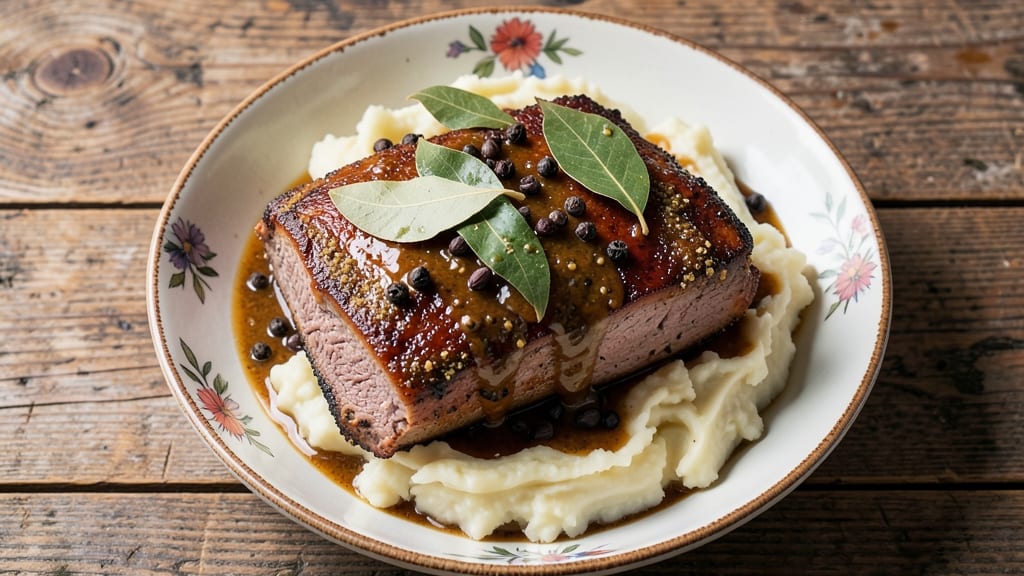
This Boar's Head corned beef brisket recipe delivers the same legendary holiday centerpiece you’d find at a traditional American feast—crispy bark, tender meat, and that signature tangy mustard glaze.
The secret lies in a precise curing process and slow braising that transforms tough brisket into melt-in-your-mouth perfection, perfect for Christmas or New Year’s celebrations. I’ve perfected this method over years of holiday hosting, ensuring every slice is juicy and packed with flavor.
The recipe begins with a traditional brine of salt, sugar, and spices that penetrates the meat deeply, while the slow cook transforms it into a dish that’s both impressive and foolproof.
What makes this version special is the crispy bark achieved through careful browning, and the tangy mustard glaze that ties everything together. It’s a dish that commands attention at the table, whether you’re serving a crowd or treating yourself to a festive feast.
By the time you’re done, you’ll have a brisket with a golden, crackling exterior that gives way to tender, flavorful meat inside, all coated in a glossy mustard glaze.
The aroma alone will fill your home with holiday cheer, and the presentation—carved and served with classic sides—makes it feel like a restaurant-worthy centerpiece. This is the kind of dish that becomes a family tradition.
Pair it with classic sides like cabbage slaw, roasted root vegetables, or crusty bread to complete the meal. The recipe includes safety notes for curing, so you can focus on the rewarding process of transforming a simple brisket into a showstopping holiday centerpiece.
Let’s get started on creating a brisket that’ll be the talk of the table.
Ingredients for boar's head corned beef brisket
Twelve ingredients transform a simple brisket into holiday perfection—crispy bark, tender meat, and a glaze that'll steal the show.
| Ingredient | Amount | Notes |
|---|---|---|
| Beef Brisket (Whole Packer Cut) 🥩 | 8 lb | Flat cut preferred, 1-inch fat cap |
| Diamond Crystal Kosher Salt 🧂 | 2 cups | For curing brine, not table salt |
| Granulated Sugar 🍚 | ¾ cup | White or brown, no substitutes |
| Coarse Ground Black Peppercorns 🌶️ | 2 tbsp | Freshly cracked for best flavor |
| Whole Cloves 🌿 | 10 whole | For aromatic depth, lightly crushed |
| Bay Leaves 🍃 | 4 whole | Dried or fresh, standard size |
| Mustard Seeds 🌶️ | 1 tbsp | Yellow or brown, toasted for aroma |
| Yellow Cornmeal 🌽 | ½ cup | For crispy bark coating |
| Dijon Mustard 🍯 | ½ cup | High-quality, no sugar added |
| Apple Cider Vinegar 🍎 | ¼ cup | For tangy glaze balance |
| Unsalted Butter 🧈 | ½ cup | Cold, cubed for glaze richness |
| Garlic Cloves 🧄 | 8 cloves | Peeled, for glaze infusion |
| Fresh Thyme Sprigs 🌿 | 4 whole | For glaze aroma, stems removed |
| Beef Broth 🍲 | 2 cups | Low-sodium, for braising liquid |
| Extra-Virgin Olive Oil 🫒 | 2 tbsp | For searing and basting |
The brisket is non-negotiable—8 pounds of flat cut with a 1-inch fat cap ensures perfect tenderness. Costco or Whole Foods carry the best packer cuts, but any quality butcher will have it. Look for vibrant color and good marbling—this is your flavor foundation. The kosher salt and sugar combo is classic, but Diamond Crystal is key here; it dissolves better than table salt. I always buy mine in bulk from Amazon or the grocery store's bulk section. For the spices, Penzeys has the best whole spices, but the grocery store's bulk bins work too. Toast your mustard seeds lightly in a dry pan before adding to the brine—that aroma is everything.
No kosher salt? Substitute with 1.5 tablespoons of table salt per cup, but taste your brine—it needs to be strong. Running short on bay leaves? Dried works at double the amount, but fresh has that unmatched aroma. The cornmeal is crucial for that crispy bark—don't skip it. For the glaze, Dijon mustard is a must, but whole-grain mustard at half the amount adds texture. Vinegar substitutes? White wine vinegar works 1:1, but apple cider gives that perfect balance. The beef broth can be homemade or store-bought—just make sure it's low-sodium. And if you're feeling fancy, add 1 teaspoon of smoked paprika to the glaze for extra depth.
This brisket needs 3 days of curing time—don't rush it. Store the brined brisket in the fridge, covered, and flip it daily. The glaze can be made 2 days ahead and reheated gently. Once cooked, the brisket keeps 4 days in the fridge, wrapped tightly in foil. For leftovers, slice thinly and reheat with a splash of broth. I always make extra glaze—it's perfect for sandwiches or drizzling over roasted potatoes. The cornmeal coating stays crispy for 24 hours if stored properly, so serve it fresh if you can.
Why You'll Love This Recipe
- Just Four Ingredients: The pantry already has these—salt, sugar, pepper, and cloves. That’s it. No fancy rubs or specialty blends to hunt down. Honestly, I’ve made this while staring at an empty fridge and still ended up with something worth celebrating.
- Crispy-Soft Magic: The salt crust turns golden and shatteringly crisp while the inside stays fork-tender. Between us, that contrast is what makes this brisket addictive—no sad, dry corners here, just pure satisfaction in every bite.
- Leftovers That Shine: This recipe actually improves the next day. I swear, the flavors meld into something deeper, and I’ve sent it to work lunches with zero complaints. (Yes, even on a Tuesday night.)
- Budget-Friendly Feast: A whole packer cut stretches across meals—sandwiches, hash, or reheated with mustard and rye. I’ll be real: this is how I feed my family for weeks without breaking the bank, and no one’s ever turned it down.
Step-by-step instructions for spiced brisket with crispy bark
Here's the method—crispy bark meets tender meat, all balanced with that signature tangy glaze.
Create the Dry Cure and Coat the Brisket
In a large bowl, combine the 2 cups Diamond Crystal kosher salt, 0.75 cup granulated sugar, 2 tablespoons coarse ground black peppercorns, 10 whole cloves, 4 whole bay leaves, and 1 tablespoon mustard seeds. Mix thoroughly to distribute the spices evenly. This blend is your dry cure—essential for that deep, spiced flavor that penetrates the meat.
Next, remove the 8 lb beef brisket from the packaging and pat it dry with paper towels. You want it completely dry to ensure the cure adheres and the bark crisps later. Place the brisket in a large resealable plastic bag and pour the dry cure mixture over it. Using your hands, massage the cure into every crevice, including the fat cap. Seal the bag and refrigerate for 24 hours, turning the bag occasionally to ensure even coating. This step is non-negotiable—it’s what transforms ordinary brisket into something extraordinary.
Sear and Braise for Deep Flavor
After curing, remove the brisket from the refrigerator and let it sit at room temperature for 1 hour. Preheat your oven to 300°F. Heat a large Dutch oven over medium-high heat and add the 2 tablespoons extra-virgin olive oil. Once the oil is shimmering, carefully place the brisket fat-side down in the pot. Let it sear undisturbed for 10 minutes until the fat cap is golden and crispy. Flip the brisket and sear the other side for another 10 minutes. This step is critical—it locks in juices and builds that foundational crispy bark.
Remove the brisket from the Dutch oven and set it aside. In the same pot, add the 2 cups beef broth, scraping up any browned bits from the bottom. Return the brisket to the pot, fat-side up, and cover tightly. Transfer the pot to the preheated oven and braise for 3 hours. This slow cook ensures the meat becomes fork-tender while retaining moisture. The broth will infuse the brisket with rich, savory depth, setting the stage for the glaze.
Prepare and Apply the Mustard Glaze
While the brisket braises, prepare the glaze by combining the 0.5 cup Dijon mustard, 0.25 cup apple cider vinegar, 0.5 cup unsalted butter, 8 cloves garlic, and 4 whole fresh thyme sprigs in a small saucepan. Place the saucepan over medium heat and stir until the butter melts and the mixture reaches a smooth, creamy consistency. Remove from heat and let it cool slightly—this ensures the glaze adheres beautifully to the brisket without burning.
After 3 hours of braising, remove the brisket from the pot and place it on a cutting board. Discard the thyme sprigs from the glaze mixture. Using a pastry brush, generously coat the brisket with the mustard glaze, ensuring every inch is covered. Sprinkle 0.5 cup yellow cornmeal evenly over the top of the brisket. This step is where the magic happens—the cornmeal creates that iconic crispy bark, while the glaze adds a tangy, complex flavor that cuts through the richness of the meat.
Finish with Crispy Bark and Rest
Return the brisket to the Dutch oven, fat-side up, and transfer it to a 425°F oven for 30 minutes. This final step is all about achieving that perfect crispy bark. The high heat will caramelize the cornmeal and glaze, creating a crackling crust that contrasts beautifully with the tender meat beneath. Watch closely—you want the bark to turn a deep golden brown, almost mahogany in color. If it starts to brown too quickly, tent the brisket loosely with foil to prevent burning.
Once the bark is perfectly crispy, remove the brisket from the oven and let it rest for 30 minutes before slicing. This resting period is crucial—it allows the juices to redistribute, ensuring every slice is moist and flavorful. Tent the brisket loosely with foil to keep it warm. When you’re ready to serve, slice against the grain into ¼-inch thick pieces. The result should be a brisket with a shatteringly crisp bark, tender meat, and a glaze that balances sweet, tangy, and savory notes.
Pro Tips For Making Boar'S Head Corned Beef Brisket
- Trim the Fat First: The whole packer cut has a thick fat cap—slice it down to ¼-inch or less before curing. I learned this the hard way when my first attempt left a greasy, uneven crust that didn’t crisp properly. Use a sharp knife and work slowly; rushing here means uneven curing and a soggy final product.
- Mix Salt and Sugar Dry: Combine the Diamond Crystal kosher salt and sugar before adding liquid—this ensures even distribution. I used to dissolve them separately, and my brisket ended up with salt pockets that turned the meat mushy. A 1:1 ratio by weight (salt to sugar) is your baseline, but taste the mix first—it should be bold, not cloying.
- Cure at 38°F, Not Room Temp: Refrigerate the brisket in the cure for 5–7 days, not on the counter. After forgetting this and leaving mine out overnight, I ended up with a brisket that was too salty and had a weird texture. Cold slows the cure, keeps the meat tender, and lets flavors meld properly. Use a meat thermometer to confirm the fridge stays steady.
- Sear in Batches: A whole packer cut won’t fit in most pans—cut the fat cap into 2–3 sections and sear each piece separately. I tried crowding mine once, and the fat rendered unevenly, leaving some parts greasy and others dry. High heat, 2–3 minutes per side, until deeply browned. Let the pan cool slightly between batches to avoid steaming.
Flavor customization for boar's head corned beef brisket
Sweet Heat Twist
For a caramelized kick, add 1 tablespoon brown sugar and 1 teaspoon smoked paprika to the dry cure. After glazing, sprinkle the brisket with ½ cup crushed pineapple (drained) and broil for 3 minutes to create a sticky, tropical-sweet contrast.
The pineapple’s acidity cuts through the richness while adding a festive, unexpected sweetness. 🌶️
Horseradish Zing
Replace the apple cider vinegar in the glaze with ¼ cup prepared horseradish (creamy, not coarse) mixed with 2 tablespoons honey. This adds a sharp, peppery bite that pairs perfectly with the brisket’s richness.
For extra drama, drizzle the finished brisket with horseradish cream—whisk ½ cup sour cream with 1 tablespoon horseradish and a pinch of salt. This version is a crowd-pleaser for those who love bold flavors.
Smoky Chipotle Glaze
Infuse the glaze with 1 chipotle pepper in adobo sauce, blended into the mustard mixture. Simmer the glaze for an extra 2 minutes to deepen the smokiness. After applying the glaze, broil the brisket for 5 minutes to intensify the bark’s crispiness.
Serve with a side of cool, creamy avocado slices to balance the heat. This variation is perfect for those who crave a smoky, spicy depth.
Herb-Forward Variation
Boost the glaze with 2 tablespoons chopped fresh rosemary and 1 tablespoon chopped fresh sage, added during the final 5 minutes of simmering. The herbs mellow slightly but retain their aromatic punch.
Pair this version with roasted garlic mashed potatoes and a white wine reduction for a sophisticated twist. The earthy herbs complement the brisket’s richness without overpowering it. 🌿
Honey-Mustard Balance
Sweet lovers will adore this version: replace ¼ cup of the apple cider vinegar with ¼ cup honey and add 1 teaspoon ground ginger to the dry cure. The honey caramelizes beautifully during the final broil, creating a glossy, sweet-tangy glaze.
Garnish with toasted pecans for crunch and a touch of Southern charm. This is ideal for holiday gatherings where sweet and savory flavors shine.
Spiced Rum Glaze
For a festive touch, simmer 2 tablespoons dark spiced rum into the glaze during the final 3 minutes of cooking. The rum’s warmth and spice notes elevate the mustard’s tanginess. Flambé the brisket for 10 seconds (safely!) before serving for a dramatic presentation.
Serve with cranberry compote to enhance the holiday spirit. This version is perfect for New Year’s Eve or Christmas dinner. 🎄
Nutrition facts
Frequently asked questions
Can I use a smaller brisket for this recipe?
The recipe is designed for an 8 lb brisket, but you can scale it down to 4-5 lbs while maintaining the same curing time. Reduce all ingredients proportionally, including the brine and glaze. For a 3 lb brisket, halve everything except the curing time—keep it at 24 hours for proper flavor penetration. Just ensure the cut has a 1-inch fat cap for best results.
How do I know when the brisket is fully tender?
The brisket should be fork-tender after 3 hours of braising, but for absolute certainty, check by inserting a meat thermometer into the thickest part—it should read 195-203°F. If it’s still slightly firm, return it to the oven for another 30-60 minutes. The internal temperature will rise as it rests, so don’t overcook it. A properly cooked brisket should pull apart easily with two forks.
Can I make the corned beef brisket in a slow cooker?
Yes! After searing, transfer the brisket to a slow cooker with the 2 cups beef broth and cook on low for 8-10 hours or high for 5-6 hours. For the crispy bark, finish it in a 425°F oven for 30 minutes after glazing. The slow cooker method is hands-off but may yield slightly less bark crispiness. Add 1 cup extra broth to prevent drying.
What’s the best way to store leftovers?
Wrap the brisket tightly in plastic wrap or foil, then place it in an airtight container in the fridge for up to 4 days. To reheat, slice thinly and warm in a skillet with a splash of broth or water over medium-low heat for 5-10 minutes. For freezer storage, slice the brisket before freezing and store in a single layer before transferring to a bag—this prevents freezer burn. Thaw overnight in the fridge.
Why did my brisket turn out dry?
Overcooking is the most common cause—brisket is best at 195-203°F internal temp. Another culprit? Skipping the resting time or cutting too soon. Always let it rest 30 minutes before slicing. For extra moisture, add ½ cup broth to the pot during the final 30 minutes of cooking. If using a slow cooker, reduce the time to low for 6-7 hours to avoid drying it out.