
Sauces & Condiments
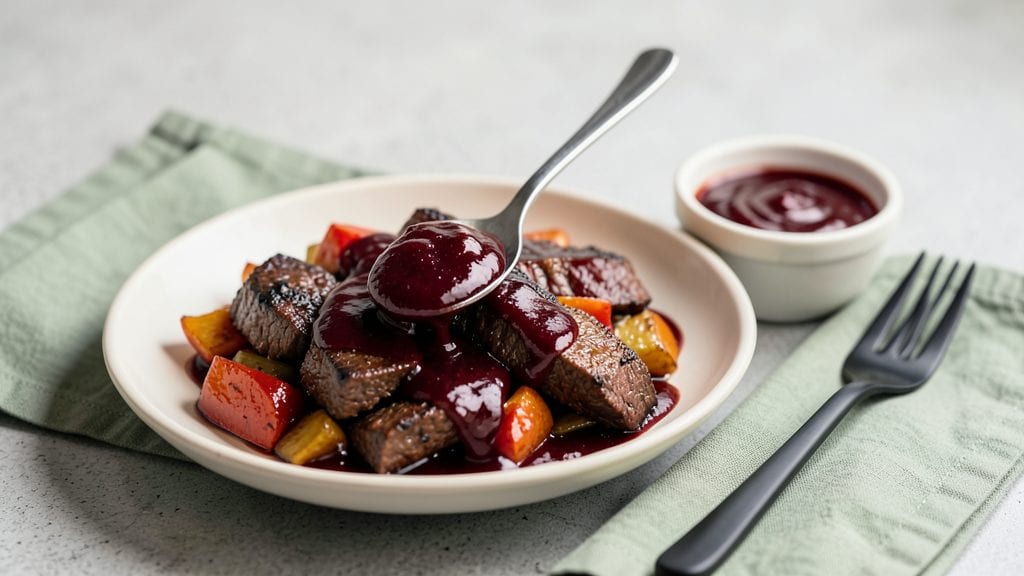
A beef short rib sauce transforms ordinary dishes into restaurant-worthy meals with its deep, complex flavors and velvety texture. This red wine reduction captures all the umami richness from slow-cooked ribs while adding a glossy, caramelized crust that clings beautifully to meat, potatoes, or pasta.
I developed this sauce after years of experimenting with braising liquids, and it consistently delivers that perfect balance of richness and acidity.
The secret lies in the combination of red wine, beef stock, and a touch of tomato paste—each ingredient playing a crucial role in building depth. A 30-minute reduction concentrates the flavors into a glossy, slightly thickened sauce that coats every bite.
The umami crust forms when you finish with a quick deglaze, creating pockets of caramelized goodness that elevate even the simplest proteins.
What you'll end up with is a deep red sauce that's rich yet balanced, with layers of savory, slightly sweet, and tangy notes. It's the kind of sauce that makes weeknight dinners feel special, turning basic roasted vegetables or mashed potatoes into a gourmet experience.
The best part? It keeps well in the fridge for up to five days, so you can make a batch and use it all week.
Perfect for drizzling over beef short ribs, searing into steak, or spooning onto grilled vegetables. This sauce is your secret weapon for adding restaurant-quality depth to home-cooked meals without the fuss. Let's get started on creating it.
Ingredients for beef short rib sauce
Nine ingredients. One game-changing sauce. Restaurant magic in your kitchen.
| Ingredient | Amount | Notes |
|---|---|---|
| Dry Red Wine 🍷 | 1 cup | Bold, dry variety like Cabernet Sauvignon |
| Beef Stock 🥩 | 2 cups | Homemade or high-quality store-bought |
| Tomato Paste 🍅 | 1 tbsp | Squeeze tube or canned, unsweetened |
| Shallots 🧅 | 2 whole | Minced, or sub with 2 tbsp onion |
| Garlic Cloves 🧄 | 4 cloves | Peeled, minced or pressed |
| Fresh Thyme Leaves 🌿 | ¼ cup | Stems removed, or 1 tbsp dried thyme |
| Black Peppercorns 🌶️ | 1 tsp | Freshly cracked or ground |
| Sea Salt 🧂 | 1 ½ tsp | Kosher or fine grain preferred |
| Unsalted Butter 🧈 | 2 tbsp | Cold, cubed for finishing |
| Balsamic Vinegar 🍶 | 1 tbsp | For balancing acidity |
The red wine is non-negotiable here—it's the soul of this sauce. Cabernet Sauvignon or Merlot work best, but whatever bold, dry red you've got open will do. For beef stock, homemade is ideal, but a good-quality store-bought like Kitchen Basics or Pacific Foods works in a pinch. The tomato paste might seem small, but it adds that caramelized depth that makes this sauce sing. I always grab the squeeze tube version from Trader Joe's—no waste, keeps forever. Shallots add sweetness without overpowering, but if you're out, onion works perfectly. Fresh thyme is ideal, but dried at one-third the amount gets you close.
No red wine? Beef broth with a splash of balsamic bridges the gap. Want more richness? Add 1 tbsp of brandy or cognac with the wine. The butter at the end is crucial—it creates that velvety finish and helps emulsify the sauce. If you're worried about it separating, whisk it in slowly. For a quicker version, use 1 tbsp of olive oil instead, but the butter gives that restaurant-quality sheen. The balsamic vinegar might seem like an afterthought, but it brightens the whole thing—don't skip it!
This sauce tastes even better the next day as flavors meld. Store it in a glass jar in the fridge for up to 5 days, or freeze portions for 3 months. I always make a double batch—one for immediate use, one to freeze. The sauce thickens as it cools, so if it's too stiff, just whisk in a splash of warm water. Perfect for drizzling over short ribs, searing into steak, or spooning onto mashed potatoes—every bite feels special.
Why You'll Love This Recipe
- Pantry Magic: I swear by this sauce because it’s the kind of thing you can make with stuff already in your cupboard—no last-minute grocery runs needed. That bottle of red wine you’ve been saving? Perfect. A can of tomato paste? Already there. The magic happens in the simmer.
- Deep Umami Bomb: The moment the wine reduces and the shallots caramelize? Pure flavor payoff. That rich beef stock and tomato paste combo gives it a depth that turns simple proteins—pasta, roasted veggies, even grilled chicken—into something restaurant-worthy.
- Weeknight to Dinner Party: Between us, this sauce is my secret for impressing guests without stress. Toss it over steak for a fancy night in, or drizzle it on mashed potatoes for a cozy Sunday. It’s the one sauce that works just as hard for a lazy Tuesday as it does for a holiday feast.
- Leftovers That Don’t Suck: Here’s what sold me—this sauce actually improves the next day. The flavors meld even more, and it reheats like a dream. I make a double batch, freeze half, and still reach for it when I’m too tired to cook. Budget-friendly? Absolutely. Lazy-approved? Even more so.
Step-by-step instructions for beef short rib sauce
Here's how to build a rich, velvety sauce with deep wine notes and umami depth.
Build the Umami Base
Heat a large, heavy-bottomed saucepan over medium heat. Add the 2 whole shallots and 4 cloves garlic cloves, cooking until the shallots soften and turn translucent—about 5 minutes. You'll smell their sweetness intensify as they cook down.
Stir in the 1 tbsp tomato paste and cook for another 2 minutes, stirring constantly. This step develops the sauce's foundation—don't rush it. The tomato paste will deepen the color and add a subtle sweetness that balances the wine's acidity later.
Add the 1 tsp black peppercorns and 1.5 tsp sea salt, crushing the peppercorns slightly with the back of a spoon. Toast them for 30 seconds until fragrant—this releases their essential oils and amplifies their flavor. Remove the peppercorns after toasting (strain them out later if preferred).
Deglaze with Red Wine
Pour in the 1 cup dry red wine and scrape up any browned bits from the bottom of the pan using a wooden spoon. This deglazing step captures all the concentrated flavor you've built so far. Let the wine simmer for 3-4 minutes until it reduces by about half and the alcohol smell dissipates.
Here's the thing—don't walk away. The wine needs constant attention to prevent burning. You'll see the liquid darken and thicken slightly as it reduces. This is where the sauce's depth of flavor begins to develop.
Add the 2 cups beef stock and bring to a gentle simmer. Stir in the 0.25 cup fresh thyme leaves and let the mixture cook uncovered for 15 minutes. You want the sauce to reduce by about one-third—this concentrates the flavors and creates that luxurious, velvety texture.
Finish with Butter and Vinegar
Reduce the heat to low and stir in the 2 tbsp unsalted butter, one tablespoon at a time. The butter should melt completely and coat the back of a spoon, creating a glossy sheen. This adds richness and helps emulsify the sauce.
Add the 1 tbsp balsamic vinegar and simmer for another 2-3 minutes. The vinegar brightens the sauce and cuts through the richness of the butter. Taste and adjust seasoning with additional salt if needed—this sauce should be rich but balanced, with bright acidity.
For the final touch, strain the sauce through a fine-mesh sieve into a clean saucepan to remove any thyme stems or shallot bits. The texture should be smooth and velvety, with a deep red color that shimmers in the light. Serve immediately over beef short ribs or use to elevate any hearty dish.
Pro Tips For Making Beef Short Rib Sauce
- Sweat the Shallots: DESCRIPTION: Don’t rush this step—cut shallots into even ¼-inch slices and cook them in the pot until they’re translucent and just starting to turn golden. I used to skip to the garlic too fast, and the sauce would always taste raw. A splash of wine here helps dissolve those bits, but only if they’re properly softened first.
- Deglaze Aggressively: DESCRIPTION: After browning the ribs, immediately pour in the red wine and scrape the fond off the pot with a wooden spoon—every last bit. That’s where the flavor lives. I learned this the hard way when I let the pot sit too long; the fond turned bitter, and the sauce lost depth.
- Bloom the Tomato Paste: DESCRIPTION: Cook the tomato paste in the pot for at least 3 minutes before adding stock. This caramelizes the sugars slightly, giving the sauce a richer, deeper base. I was skeptical until I tried it—now it’s non-negotiable for me.
- Simmer, Don’t Boil: DESCRIPTION: Once the stock is added, keep the sauce at a gentle simmer—tiny bubbles breaking the surface, not a rolling boil. Boiling evaporates the wine’s alcohol too fast and can make the sauce taste harsh. Lower the heat if needed; patience here makes all the difference.
Essential equipment for great beef short rib sauce
Heavy-Bottomed Saucepan
This is my non-negotiable first tool—a 5-quart stainless steel saucepan with a thick base like the All-Clad Stainless Steel Saucepan. The heavy bottom prevents hot spots that can burn your sauce, while the stainless steel ensures even heat distribution.
I’ve tried thinner pans, and they just don’t cut it for this reduction. For budget-friendly options, the Cuisinart MultiClad Pro is a great alternative.
Wooden Spoon
A long-handled wooden spoon (I use OXO Good Grips) is essential for stirring without scratching your pan. Wood handles heat well and won’t react with acidic ingredients like metal can.
Plus, the long handle keeps your knuckles safe from the heat while you deglaze and reduce. Avoid plastic spoons—they can melt under prolonged heat.
Fine-Mesh Sieve
For a silky-smooth sauce, you’ll need a fine-mesh sieve to strain out thyme stems and shallot bits. My go-to is the Nordic Ware Strainer, which has a tight weave that catches even the smallest particles.
If you don’t have one, a cheesecloth works in a pinch, but it requires more effort to press out all the liquid. Pro tip: Wet the sieve before straining to help separate the sauce from solids.
Kitchen Thermometer
While not strictly necessary, a candy or sauce thermometer (like the Thermoworks Thermapen) helps you monitor the reduction process. Aim for a gentle simmer around 185°F—this ensures the sauce reduces evenly without boiling over.
I’ve found that keeping the heat at medium-low after adding stock is key to achieving that perfect velvety consistency. Without a thermometer, just watch for small bubbles and occasional swirling—never a full boil.
Whisk for Emulsification
A balloon whisk (I love the Meridian stainless steel whisk) is perfect for incorporating the butter at the end. Whisking in small batches ensures the sauce emulsifies smoothly, creating that glossy finish.
If you whisk too aggressively, you might over-aerate the sauce, so go slow and steady. A fork works in a pinch, but it won’t give you the same control or reach.
Glass Storage Jar
Once your sauce is ready, store it in a glass jar with an airtight lid—I recommend Le Parfait glass jars for their durability and seal. Glass won’t absorb flavors like plastic can, and the airtight lid keeps the sauce fresh for up to 5 days in the fridge.
For longer storage, transfer to freezer-safe glass containers and freeze for up to 3 months. Label your jars with the date to track freshness!
Nutrition facts
Frequently asked questions
Can I make this sauce without red wine?
Replace the 1 cup red wine with 1 cup beef broth plus 1 tbsp balsamic vinegar for acidity. The sauce will still develop rich umami flavors, though the depth of wine notes will differ. For extra richness, add 1 tbsp brandy or cognac with the broth.
How do I fix a sauce that's too thick or separated?
If the sauce is too thick, whisk in 1-2 tbsp warm water or beef stock until smooth. For separation, stir in 1 tbsp cold butter or 1 tsp cornstarch slurry while whisking gently. The butter helps re-emulsify, while the cornstarch binds the sauce. Always reheat gently over low heat.
What's the best way to reheat leftover sauce?
Gently reheat over low heat in a saucepan, stirring constantly to prevent scorching. For a smoother texture, add 1 tbsp water or broth per ½ cup sauce to loosen it. Never microwave—it can break the sauce's velvety consistency. If needed, finish with a pat of cold butter for shine.
Can I use this sauce for other proteins besides beef?
Yes! This sauce pairs beautifully with lamb chops, venison, or even grilled chicken thighs. The wine and thyme notes complement gamey meats, while the richness works well with pork. For seafood, reduce the cooking time slightly to avoid overpowering delicate flavors like salmon or scallops.
Why does my sauce taste flat or lack depth?
Flat flavor usually means insufficient reduction or missing umami layers. Try adding 1 tsp soy sauce or ½ tsp fish sauce for depth, or reduce the sauce longer (up to 20 minutes) to concentrate flavors. Toasting the shallots and garlic longer (up to 8 minutes) also builds more caramelization and complexity.