
Main Courses
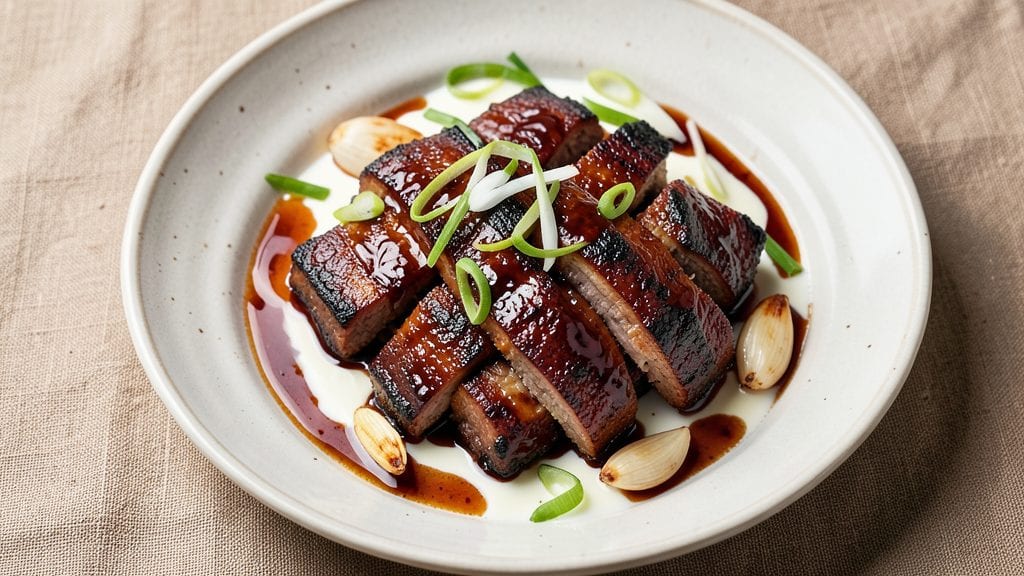
This Asian braised beef short ribs recipe transforms tough cuts into melt-in-your-mouth tenderness with a rich, silky glaze that clings to every bite. The secret lies in marinating the ribs overnight with soy sauce, ginger, and garlic—a process that infuses deep umami flavor before the slow braise.
I developed this method after years of experimenting with different Asian braising techniques, and it consistently delivers restaurant-quality results at home.
The beauty of this recipe is in its patience: ribs simmer for hours in a fragrant broth of wine, coconut milk, and aromatics until they fall apart effortlessly. The sauce reduces to a glossy, slightly sweet glaze that coats the meat and adds layers of complexity.
What you end up with is a dish that's hearty enough for a family dinner but elegant enough for a special occasion.
This braised beef pairs perfectly with steamed jasmine rice to soak up every last drop of that velvety sauce, or serve alongside quick-pickled vegetables for a balance of textures and flavors.
The aroma alone—warm spices mingling with caramelized edges—will have everyone gathering around the table. Let's create a dish that feels like a hug in every bite.
Once you master this technique, you'll find endless variations: swap in sake for wine, add star anise for warmth, or finish with a sprinkle of sesame seeds for extra depth.
The possibilities are as endless as the satisfaction of serving a dish this rich and comforting. Ready to slow-cook your way to perfection?
Ingredients for asian braised beef short ribs
Pantry staples meet restaurant-quality flavors in this slow-cooked masterpiece.
| Ingredient | Amount | Notes |
|---|---|---|
| Beef Short Ribs 🥩 | 3 lb | Bone-in, 2-3 inches thick |
| Soy Sauce 🍶 | ½ cup | High-quality, low-sodium preferred |
| Garlic Cloves 🧄 | 6 cloves | Peeled and smashed |
| Fresh Ginger 🌿 | ½ cup | Grated, peeled |
| Coconut Milk 🥥 | 1 can (13.5 oz) | Full-fat, not light |
| Red Wine 🍷 | 1 cup | Dry, bold variety |
| Beef Broth 💧 | 2 cups | Low-sodium preferred |
| Brown Sugar 🍯 | ¼ cup | Light or dark |
| Sesame Oil 🫒 | 1 tbsp | Toasted, for finishing |
| Cornstarch 🌾 | 1 tbsp | For thickening sauce |
| Green Onions 🧅 | ¼ cup | Sliced, for garnish |
| Salt 🧂 | 1 ½ tsp | Kosher or sea salt |
| Black Pepper 🌶️ | 1 tsp | Freshly ground |
| Star Anise 🌟 | 2 whole | Optional, for depth |
| Jasmine Rice 🍚 | 2 cups | Uncooked, for serving |
The ribs are the star—look for bone-in cuts with good marbling at the butcher counter. Costco or local markets often have the best selection. If you're buying pre-cut, check for even thickness (about 2-3 inches). The more fat, the better—it renders down into flavor. For extra tenderness, ask for chuck short ribs if your butcher offers them. Fresh ginger and garlic? Farmers markets have the most vibrant, but grocery store staples work too—just make sure they're firm with no bruises.
No red wine? Dry sherry or extra beef broth works in a pinch. Coconut milk too expensive? Heavy cream at half the amount gives richness, though you'll lose that subtle sweetness. Star anise is optional but adds warmth—skip it if you're sensitive to licorice notes. The brown sugar caramelizes beautifully, but honey or maple syrup can swap in. For the sesame oil, toasted is key—regular won't have that nutty depth. And if you're short on cornstarch, arrowroot powder works too.
Marinated ribs keep 2 days in the fridge—use that time to prep other sides. The braised ribs reheat beautifully; just add a splash of broth and simmer 10 minutes. Sauce freezes well for 3 months—portion it out in ice cube trays for easy use. I always make double batches because leftovers taste even better the next day. The rice? Cook it ahead and keep warm—steaming baskets are perfect for this.
Why You'll Love This Recipe
- One-Pot Magic: I swear by this recipe on busy nights—the ribs go straight from fridge to pot, no chopping, no fuss. Just brown them, toss in the garlic, ginger, and soy sauce, then let the coconut milk work its magic while you do dishes.
- Umami Bomb: That first bite? Rich, caramelized beef with a deep soy-ginger punch, then a velvety coconut finish. Honestly, the balance of salty, spicy, and creamy hits every time—no guessing if it’s "good enough."
- Leftovers That Shine: The flavor actually improves the next day—better than takeout, I promise. I portion it into rice bowls for lunch or reheat slices for sandwiches. (Yes, even my picky teenager asks for seconds.)
- Budget Crowd-Pleaser: Short ribs are cheaper than steak but taste like a splurge, and this recipe stretches them over rice or noodles. Between us, it’s my go-to for game nights—everyone raves, and I spend half as much as I would at a restaurant.
Step-by-step instructions for Asian braised beef short ribs
Here's my foolproof method for tender, fall-off-the-bone ribs with a rich, glossy glaze.
Prepare the Beef Short Ribs
Pat the 3 lb beef short ribs completely dry with paper towels—this helps the seasoning adhere and creates better browning later. In a large bowl, combine 1.5 teaspoons salt, 1 teaspoon black pepper, 6 cloves garlic cloves (peeled and smashed), and 0.5 cup fresh ginger (grated). Rub this mixture all over the ribs, pressing it into the meat and coating every surface. Let them sit at room temperature for 30 minutes while you prep everything else.
This resting time allows the seasoning to penetrate deeply, ensuring each bite is packed with flavor. Don't skip this step—it makes a noticeable difference in the final texture and taste. I like to place the ribs on a wire rack set over a baking sheet to prevent any excess liquid from pooling underneath.
Sear the Ribs for Maximum Flavor
Heat a large Dutch oven or heavy pot over medium-high heat until it's very hot. Add the seasoned ribs in a single layer, working in batches if needed, and sear for 3-4 minutes per side until they develop a deep golden-brown crust. This step is crucial—it locks in juices and builds that rich, caramelized foundation for the braise.
Once all the ribs are seared, remove them and set aside. You'll notice the bottom of the pot has browned bits—don't scrape them out yet. These flavorful fond bits will dissolve into the sauce later. Reduce the heat to medium and add 1 cup red wine, scraping up those browned bits with a wooden spoon as you pour. Let the wine simmer for 3-4 minutes until it reduces by half, intensifying its flavor.
Build the Braising Liquid
Add 2 cups beef broth, 0.5 cup soy sauce, 0.25 cup brown sugar, and 2 whole star anise to the pot. Stir everything together and bring to a gentle simmer. Return the seared ribs to the pot, making sure they're mostly submerged in the liquid. Cover with a tight-fitting lid and transfer to the oven preheated to 300°F. Here's the thing—braising is all about patience. Cook for 2.5 to 3 hours until the ribs are fork-tender and slide off the bone easily.
About halfway through cooking, check the liquid level. If it's reduced too much, add ½ cup hot water to maintain adequate coverage. The ribs are done when they're so tender that a skewer glides through them with minimal resistance. This low-and-slow method breaks down the connective tissue, transforming tough cuts into melt-in-your-mouth perfection.
Finish with Coconut Milk and Glaze
Once the ribs are tender, remove them from the pot and set them aside. Strain the braising liquid through a fine-mesh sieve into a clean saucepan, discarding the star anise. Return the liquid to medium heat and whisk in 1 can (13.5 oz) coconut milk and 1 tablespoon cornstarch mixed with 2 tablespoons water. Simmer for 5-7 minutes until the sauce thickens to a glossy consistency that lightly coats the back of a spoon.
Return the ribs to the sauce and simmer for another 2-3 minutes to absorb the flavors. Just before serving, drizzle with 1 tablespoon sesame oil and sprinkle with 0.25 cup sliced green onions. The sesame oil adds a beautiful aroma and nutty depth, while the green onions provide a fresh contrast to the rich braise.
Serve with Jasmine Rice
Cook 2 cups jasmine rice according to package instructions—it should be fluffy and slightly sticky to soak up the delicious sauce. To serve, arrange the braised ribs over the rice, spooning generous amounts of the silky sauce over the top. Each bite should deliver tender meat with a perfect balance of sweet, savory, and umami flavors from the complex braising liquid.
For an extra touch, garnish with additional sliced green onions and serve with steamed vegetables or a simple cucumber salad. The contrast of cool, crisp vegetables against the warm, rich ribs makes this dish even more satisfying. Leftovers keep well in the refrigerator for up to 4 days, and the flavors actually deepen as they sit.
Pro Tips For Making Asian Braised Beef Short Ribs
- BLANCH THE RIB BONES: Drop the raw ribs in boiling water for 30 seconds before braising—this loosens the collagen and makes them tender faster. I learned this the hard way after forgetting and ending up with chewy ribs that needed hours more cooking.
- GRATE GINGER FINE: Use a microplane or fine grater for ginger—no chunks, no muddled paste. It dissolves smoothly into the coconut milk and adds depth without texture issues. My grandmother swore by this, and she was right: lazy grating = flavor hiding.
- DEGLAZE WITH COCONUT MILK: After browning the ribs, add a splash of coconut milk to the pot before anything else. It lifts all the fond off the bottom, giving the sauce instant richness. Skip this, and you’ll be scraping burnt bits for 10 minutes.
- SIMMER LOW AND COVERED: Once the liquid reaches a boil, turn the heat to the lowest setting that keeps a gentle simmer—no peeking! High heat ruins the collagen breakdown, and uncovered pots evaporate the coconut milk too fast. (Yes, even if you’re impatient like me.)
Dietary considerations for this dish
Gluten-Free Adaptations
This recipe naturally accommodates gluten-free diets by using gluten-free soy sauce—brands like Kikkoman Gluten-Free Tamari or San-J Tamari work perfectly. Simply swap the regular soy sauce for a 1:1 ratio.
The braising process remains unchanged, so your ribs stay tender and flavorful. Always check labels on star anise, broth, and other ingredients to ensure they're certified gluten-free. 🌱
Low-Sodium Options
For a lower-sodium version, use low-sodium beef broth and reduce the soy sauce to ¼ cup (or omit it entirely). Boost umami with 1 tablespoon fish sauce or 1 teaspoon MSG (if tolerated) to compensate for the salt.
The ribs will still develop deep flavor—just with less sodium. Taste the sauce before serving and adjust with extra soy sauce if needed.
Dairy-Free Considerations
The recipe is already dairy-free, but if you're using coconut milk substitutes, opt for full-fat coconut cream (like Goya) for richness. Avoid non-dairy creams with additives that might alter the sauce's texture. The sesame oil and green onions remain the perfect finishing touches without any dairy interference. 🥥
Protein Swaps
For a pork alternative, use bone-in pork shoulder (cut into 2-inch chunks) with the same marinade and braising time. For chicken, swap in bone-in chicken thighs (skin-on for moisture) and reduce cooking time to 1.5 hours.
The sauce ratios stay identical—just adjust cooking times based on the protein's density. Always monitor for doneness!
Vegetarian Adaptations
While beef is the star, you can create a vegetarian version using extra-firm tofu or mushrooms (like shiitake or portobello). Press tofu for 30 minutes to remove excess water, then marinate and braise with the same sauce (reduce soy sauce to ¼ cup).
For mushrooms, use 1.5 lbs sliced thickly and braise for 1 hour instead of 3. The texture won't be identical, but the sauce shines!
Nutrition facts
Frequently asked questions
Why do I need to marinate the beef short ribs overnight?
The overnight marinade is key for breaking down tough fibers and infusing deep flavor. The soy sauce, ginger, and garlic work together to tenderize the meat while creating a flavor base that becomes even more complex during braising. Skipping this step can leave your ribs tougher and less flavorful.
Can I use a slow cooker instead of the oven?
Transfer all ingredients to a slow cooker and cook on low for 7-8 hours or high for 4-5 hours. The ribs will still become fork-tender, though the sauce may be slightly thinner. For extra richness, finish by simmering on the stovetop for 10 minutes to thicken the sauce before serving.
What's the best way to tell when the ribs are fully cooked?
Ribs are done when they're fork-tender and pull away from the bone with minimal resistance. Insert a skewer—the meat should glide through easily. If the ribs aren't tender after 3 hours, extend cooking by 30 minutes and check again. Never rush this step, as it's what transforms tough meat into melt-in-your-mouth perfection.
How can I make the sauce thicker or thinner?
For a thicker sauce, mix 1 tablespoon cornstarch with 2 tablespoons water and stir into the simmering liquid. For a thinner sauce, add ¼ cup hot water or broth and simmer for 2-3 minutes to blend. Always taste as you go—adjust gradually to avoid over-thickening or diluting the flavor.
What are the best sides to serve with this dish?
Jasmine rice is ideal for soaking up the sauce, but you can also serve with steamed bok choy, quick-pickled cucumbers, or miso soup. For a heartier meal, add roasted sweet potatoes or stir-fried greens. The contrast of textures and temperatures makes each bite even more satisfying.