
Snacks
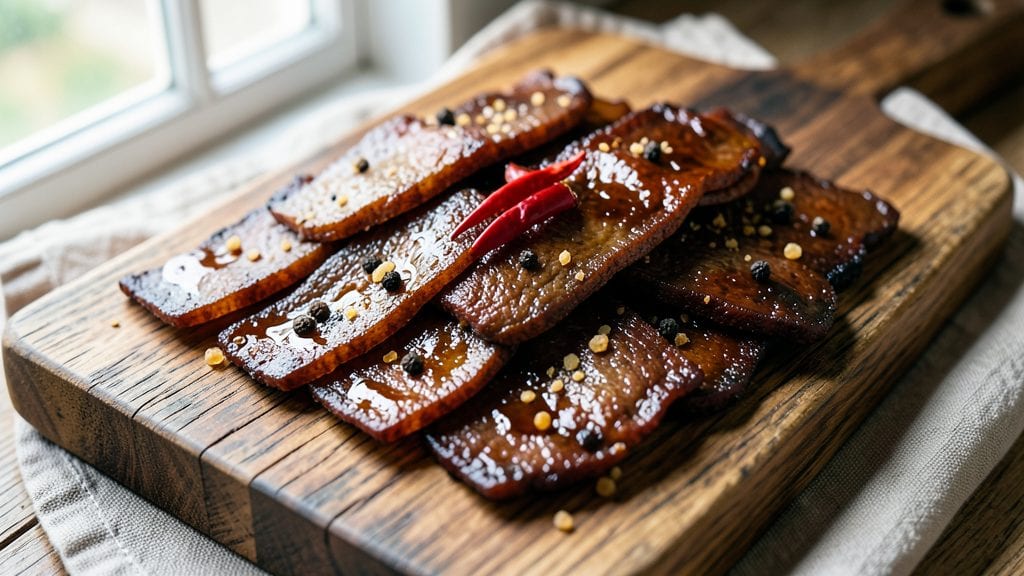
Making beef liver jerky in a dehydrator transforms a nutrient-dense but polarizing ingredient into a bold, umami-packed snack that rivals traditional beef jerky. The key lies in proper preparation—thin, even slices, precise marinating, and controlled dehydration to preserve texture while eliminating moisture.
I’ve perfected this method after years of experimentation, ensuring every bite delivers that rich, meaty satisfaction without the gamey aftertaste.
This recipe prioritizes lean protein and intense flavor through a simple yet effective marinade of soy sauce, Worcestershire, and spices, which tenderizes the liver while building depth. Unlike store-bought versions, this method avoids additives, focusing instead on natural dehydration at 160°F for 6–8 hours—critical for safety and texture.
The result? A snack that’s crispy on the outside, chewy inside, and packed with iron and B vitamins.
Whether you’re a jerky purist or a health-conscious snack seeker, this dehydrator method delivers restaurant-quality results at home—no smoker required. The process is straightforward but demands attention to detail, especially when handling raw liver.
With proper slicing and dehydration, you’ll end up with a batch that’s ready to pack for hikes, office lunches, or late-night cravings. Let’s get started.
For those new to liver jerky, I recommend starting with a small batch to test your dehydrator’s performance. Traditional methods often relied on salt curing, but modern dehydrators allow for faster, more precise control over moisture levels.
Store finished jerky in an airtight container for up to 2 weeks—or freeze for longer shelf life. The umami kick is worth every step.
Ingredients for beef liver jerky dehydrator
Lean protein meets bold umami through precise marinating and dehydration control.
| Ingredient | Amount | Notes |
|---|---|---|
| Beef Liver 🥩 | 1 ½ lb | Fresh, grass-fed preferred |
| Soy Sauce 🍶 | ½ cup | Low-sodium preferred for balance |
| Worcestershire Sauce 🥫 | 2 tbsp | Lea & Perrins brand recommended |
| Brown Sugar 🍚 | ¼ cup | Light or dark variety |
| Garlic Powder 🧄 | 1 tbsp | Freshly ground preferred |
| Black Peppercorns 🌶️ | 1 tbsp | Coarsely crushed, not powdered |
| Ground Cinnamon 🌿 | ½ tsp | Ceylon preferred for subtle warmth |
| Smoked Paprika 🌶️ | ½ tsp | Kalamata preferred for depth |
| Salt 🧂 | 1 ½ tsp | Diamond Crystal kosher preferred |
| Lemon Juice 🍋 | 2 tbsp | Freshly squeezed, organic preferred |
| Extra-Virgin Olive Oil 🫒 | 1 tbsp | For tenderizing, high-quality |
The beef liver is the foundation—grass-fed options from trusted butchers yield the cleanest flavor and optimal texture. Look for vibrant, deep-red cuts without yellowing or bruising, which indicates freshness. If working with whole livers, trim excess fat and connective tissue for even slicing. Costco and Whole Foods often carry high-quality beef liver in their specialty meat sections. For best results, slice the liver ¼-inch thick against the grain using a sharp knife or mandoline—consistency is critical for uniform dehydration. If you're unsure about handling raw liver, wear gloves and clean all surfaces thoroughly afterward.
Substitutions are limited due to liver's unique profile, but Worcestershire sauce can be replaced with 1 tbsp soy sauce plus 1 tsp fish sauce for umami depth. The brown sugar acts as a tenderizer, but if unavailable, 1 tsp honey or maple syrup works in a pinch. For heat preferences, adjust smoked paprika (up to 1 tsp) or add ½ tsp cayenne for spice. If you lack a dehydrator, an oven set to 160°F with the door slightly ajar mimics the process—just monitor closely to prevent over-drying. The lemon juice and olive oil combination is non-negotiable; they prevent bitterness and enhance moisture retention during dehydration.
Marinated liver keeps in the fridge for up to 24 hours before dehydration, though shorter marinating (4–6 hours) yields firmer texture. Store finished jerky in airtight containers or vacuum-sealed bags for 2 weeks at room temperature or 3 months in the freezer. For portability, portion into resealable snack bags—perfect for hikes or office lunches. If jerky develops a slight sheen, it's still safe; simply pat dry before storing. Rehydrate in warm water for 10 minutes if desired, though the dehydrated version retains its signature chew.
Why You'll Love This Recipe
- No-Fuss Prep: I swear, this takes less time than waiting for a coffee order at Starbucks. Slice the liver thin, toss it in a bowl with soy sauce, Worcestershire, and garlic powder, then let it sit while you fold laundry or scroll through memes—no fancy techniques, just hands-off magic.
- Umami Bomb: That combo of Worcestershire and soy sauce? It’s like a flavor explosion in your mouth. The brown sugar caramelizes just enough to balance the richness of the liver, and the garlic powder gives it this addictive kick that makes people ask, “What’s in this?”
- Hiker’s Secret Weapon: Between us, this is my go-to for camping trips, road trips, or just keeping snacks handy. It’s lightweight, packs a protein punch, and won’t spoil—perfect for when you’re too busy to eat but still need fuel. (Yes, even on a Tuesday night.)
- Budget Protein Power: Liver is cheap, and this recipe stretches it far. A single batch feeds me for days, and the leftovers? I vacuum-seal them and stash them in the freezer for when I’m too tired to cook. No waste, all flavor—basically free money in snack form.
Step-by-step instructions for beef liver jerky using a dehydrator
Transforming beef liver into shelf-stable jerky requires precision in preparation and dehydration.
Prepare the Beef Liver for Maximum Safety and Texture
Begin by trimming all visible fat and connective tissue from the 1.5 lb beef liver using a sharp boning knife. This ensures even cooking and prevents any bitter flavors from developing during dehydration. Cut the liver into ¼-inch thick slices against the grain for optimal texture—thinner slices dehydrate faster and yield a more tender final product.
Place the sliced liver in a large bowl and add 1 tablespoon extra-virgin olive oil. Massage the oil into the meat with your hands, ensuring each slice is evenly coated. This step tenderizes the liver and helps distribute the marinade evenly. Let the liver sit at room temperature for 15 minutes while you prepare the marinade.
Create the Umami-Rich Marinade with Precision
In a medium bowl, whisk together 0.5 cup soy sauce, 2 tablespoons Worcestershire sauce, 0.25 cup brown sugar, 1 tablespoon garlic powder, 1 tablespoon coarsely crushed black peppercorns, 0.5 teaspoon ground cinnamon, 0.5 teaspoon smoked paprika, and 1.5 teaspoons salt. The crushed peppercorns add a subtle heat, while the cinnamon and smoked paprika contribute depth without overpowering the liver's natural richness.
Add the 2 tablespoons lemon juice to the marinade and stir well. The acidity helps tenderize the liver and balances the sweetness of the brown sugar. Pour the marinade over the oiled liver slices, ensuring each piece is fully submerged. Cover the bowl and refrigerate for at least 4 hours, or ideally overnight. This extended marination ensures maximum flavor penetration and safety.
Pre-Treat for Optimal Dehydration and Safety
After marination, remove the liver slices from the refrigerator and pat them dry with paper towels to remove excess moisture. This step is critical—excess liquid on the surface can lead to uneven drying or even spoilage during dehydration. Arrange the slices on a clean, dehydrator-safe tray in a single layer, ensuring they don’t overlap. Overlapping pieces will trap moisture and prevent proper drying.
Preheat your dehydrator to 160°F—this temperature is ideal for safely dehydrating meat while preserving texture. Place the tray in the dehydrator and run for 30 minutes to begin the drying process. Check the slices after this initial period; they should feel slightly tacky but not wet. If any slices appear overly moist, return them to the dehydrator for an additional 15 minutes before proceeding.
Dehydrate to Perfect Texture and Shelf Stability
Continue dehydrating the liver slices at 160°F for 8 to 10 hours, depending on your dehydrator’s efficiency and the thickness of your slices. The jerky is ready when it is completely dry to the touch, with no moisture remaining on the surface. To test, gently bend a piece—it should snap rather than bend, indicating proper dehydration. If any slices remain flexible, return them to the dehydrator for an additional 1 to 2 hours.
For added safety and preservation, you may choose to lightly brush the fully dehydrated jerky with a thin layer of extra-virgin olive oil using a pastry brush. This step enhances shelf life and adds a subtle richness. Allow the jerky to cool completely before storing in an airtight container or vacuum-sealed bag. Properly stored, this jerky will keep for up to 3 months in a cool, dry place.
Pro Tips For Making Beef Liver Jerky Dehydrator
- Trim Thin, Not Perfect: Slice liver to ¼-inch thickness—any thicker and it’ll dry unevenly, any thinner and it’ll turn to dust. I learned this the hard way when my first batch crumbled like stale crackers. Use a sharp knife and steady hand; no need for fancy cuts, just consistent slices.
- Marinate Overnight, Not Rush: Let the liver soak in the soy, Worcestershire, and brown sugar mix for at least 12 hours—the acid and sugar break down fibers and deepen flavor. I used to skip this and wondered why my jerky tasted flat. Cover it and refrigerate; no need to overthink the marinade.
- Pre-Dry Before Dehydrating: Pat the liver bone-dry with paper towels after marinating—moisture trapped in the meat slows dehydration and risks spoilage. I was skeptical until I tried it; now my jerky dries in 8-10 hours instead of 14. Skip this, and you’re fighting the dehydrator the whole time.
- Start Hot, Then Drop Temp: Begin dehydrating at 160°F for the first 2 hours to kill bacteria, then lower to 145°F for the rest. After burning three batches at steady low heat, I realized higher initial temps guarantee safety without overcooking. Monitor closely—liver dries fast.
Troubleshooting your beef liver jerky dehydrator
Uneven Drying Spots
If your jerky has dry edges but moist centers, it’s likely due to uneven slice thickness or overlapping pieces during dehydration. I’ve found that ¼-inch slices are ideal—use a mandoline slicer for consistency.
Place slices 1 inch apart on dehydrator trays to ensure even airflow. If you notice uneven drying mid-process, rotate trays halfway through for balanced results. 🌡️
Gamey Aftertaste Persists
The soy sauce and Worcestershire marinade should mask any liver bitterness, but if it lingers, extend the marinating time to overnight or add 1 extra tablespoon of lemon juice to the mix.
For stronger flavor, try 1 teaspoon of fish sauce in place of some soy sauce. Always use fresh, high-quality beef liver—older cuts develop stronger flavors. 🥩
Jerky Sticks Together
This usually happens when slices aren’t fully dry before storage. Let your jerky cool completely in the dehydrator before transferring to containers. If pieces stick together after dehydration, spread them on a wire rack for 30 minutes to air-dry further.
Store in parchment-lined containers to prevent moisture buildup. For extra prevention, brush with olive oil after dehydration—it creates a protective barrier. 💡
Dehydrator Overheating
If your dehydrator struggles to maintain 160°F, check for airflow blockages or overcrowding. I recommend using Excalibur dehydrators for consistent temperature control. If your model overheats, reduce the temperature to 150°F and extend drying time by 1-2 hours.
Never exceed 165°F, as this can cook the jerky instead of dehydrating it properly. 🔥
Shrinking Too Much
Excessive shrinkage often means over-dehydration. Test for doneness by bending a piece—it should snap, not bend. If your jerky is crumbling, it’s been dried too long.
For thicker slices, reduce dehydrator time to 6-7 hours. Store in airtight containers to lock in moisture and prevent further drying. 🌟
Storage Issues (Mold or Spoilage)
If your jerky develops mold or spoils quickly, it likely wasn’t fully dehydrated or was stored improperly. Always ensure jerky is bone-dry before storage. Use vacuum-sealed bags for long-term storage (up to 3 months) or airtight glass containers for shorter periods.
Keep jerky in a cool, dark place—never in the fridge, as moisture buildup can ruin it. ❄️
Nutrition facts
Frequently asked questions
Why does beef liver jerky taste different from traditional beef jerky?
Beef liver has a naturally rich, slightly metallic flavor that requires careful marinating to balance. The soy sauce and Worcestershire combo creates umami depth, while lemon juice and brown sugar mask gamey notes. Unlike lean beef, liver contains more iron and B vitamins, which contribute to its distinct taste profile. The key is marinating for at least 4 hours (overnight is best) to fully tenderize and infuse flavor.
Can I make this jerky without a dehydrator?
Yes! Use an oven set to 160°F with the door slightly ajar for airflow. Place slices on a wire rack over a baking sheet and dehydrate for 6-8 hours, checking frequently. For a smoker alternative, cook at 165°F for 4-5 hours with indirect heat. The goal is consistent low heat—never exceed 170°F to prevent cooking instead of drying.
How do I know when the jerky is fully dehydrated?
The jerky is ready when it’s bone-dry to the touch and snaps when bent (not flexible). Test by gently pressing a slice—no moisture should remain. At 160°F, this typically takes 8-10 hours, but thicker slices may need 12 hours. If unsure, extend drying by 1 hour rather than risking spoilage. For extra safety, store in vacuum-sealed bags to prevent moisture absorption.
Is beef liver jerky safe to eat raw?
No—raw liver can contain harmful bacteria like salmonella. Proper dehydration at 160°F+ kills pathogens. Always use fresh, high-quality liver and marinate for at least 4 hours to enhance safety. Store finished jerky in airtight containers (or freeze for 3 months) to maintain shelf stability. When in doubt, reheat jerky to 165°F before eating.
Can I add other meats to this recipe?
While this recipe is optimized for liver, you can blend it with lean beef or venison for milder flavor. Use a 50/50 mix and marinate for 6-8 hours to balance textures. Avoid fatty cuts (like pork) as they don’t dehydrate evenly. For a liver-only batch, stick to the ¼-inch slices and 160°F setting for consistent results.