
Desserts
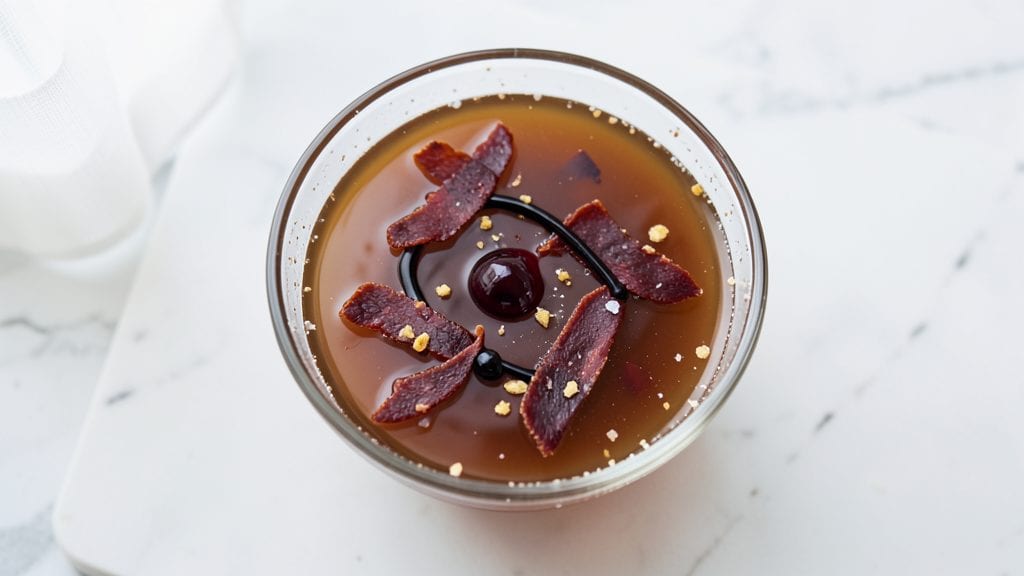
Transforming beef broth into this beef gelatin jello recipe bridges the gap between savory and sweet in a way that feels both nostalgic and innovative.
The process begins with reducing rich beef broth to intensify its umami depth, then blending it with gelatin for that signature wobble—creating a dessert that's surprisingly sophisticated yet simple to execute. This fusion technique draws inspiration from traditional Asian desserts where protein-rich ingredients often take center stage.
The beauty of this recipe lies in its versatility and efficiency—ready in just 30 minutes with minimal active time. You'll start by simmering the broth until deeply concentrated, then carefully dissolving gelatin to achieve that perfect set without graininess.
The result is a silky, protein-packed dessert that holds its shape yet melts luxuriously on the tongue, offering a satisfying contrast to traditional fruit-based jello.
What makes this dish truly special is how it elevates ordinary gelatin into something restaurant-worthy. The beef-infused flavor transforms an everyday dessert into an elegant centerpiece, perfect for impressing guests or adding a unique twist to holiday menus.
The texture is where the magic happens—crisp edges when chilled properly, paired with a velvety interior that's impossible to resist.
While this recipe works beautifully as a standalone dessert, it also shines as a sophisticated garnish for savory dishes or a protein boost in smoothies when warmed. The possibilities are endless, making it a creative addition to any dessert repertoire.
Let's get started on creating this unexpected fusion dessert that blends comfort and innovation seamlessly.
Ingredients for beef gelatin jello
Rich umami meets delicate texture in this protein-packed gelatin fusion dessert.
| Ingredient | Amount | Notes |
|---|---|---|
| Beef Broth 🥩 | 4 cups | High-quality, low-sodium preferred |
| Unflavored Gelatin Powder 🧴 | 2 tbsp | Type A or B, fine granular |
| Granulated Sugar 🍬 | ½ cup | Superfine preferred for smooth texture |
| Vanilla Extract 🌿 | 1 tsp | Pure, high-quality vanilla |
| Salt 🧂 | ¼ tsp | Diamond Crystal kosher preferred |
| Cold Water 💧 | ½ cup | Chilled for proper gelatin activation |
| Honey 🍯 | 2 tbsp | Raw, local preferred for depth |
| Ground Cinnamon 🌶️ | ½ tsp | Freshly ground for aroma |
| Orange Zest 🍊 | 1 tsp | Fresh, finely grated |
| Heavy Cream 🥛 | ¼ cup | Full-fat for luxurious texture |
| Edible Gold Leaf 🍃 | 1 sheet | Optional, for decorative finish |
The foundation begins with high-quality beef broth—look for brands like Kettle & Fire or Imagine for deeply concentrated flavor. Avoid anything with added preservatives or excessive sodium, as these can interfere with the gelatin's setting properties. For an extra layer of depth, consider reducing homemade beef broth by half before using. The unflavored gelatin powder should be fine-granulated (Type A or B) for smooth dissolution—Great Lakes or Rouxbe are reliable brands. If you're using powdered gelatin, ensure it's completely dissolved in the cold water before mixing with hot broth to prevent clumping.
No vanilla extract? Almond extract at half the amount provides a similar depth, though the flavor profile shifts subtly. Substituting honey for sugar requires adjusting the ratio—use three-quarters the amount of honey and reduce the liquid slightly to compensate for its moisture content. For a citrus-forward variation, swap orange zest for lemon zest or lime zest, though the acidity may require an additional pinch of baking soda to neutralize. The heavy cream can be replaced with coconut cream for a dairy-free option, though the texture will be slightly lighter. If you're avoiding gelatin entirely, agar-agar at double the weight can be used, though the texture will differ significantly.
This dessert must be chilled for at least 4 hours to set properly, ideally in a shallow dish lined with parchment paper for easy removal. Store leftovers in an airtight container for up to 5 days in the refrigerator, though the texture may weaken after 3 days. For a longer shelf life, portion into silicone molds and freeze for up to 3 months. When reheating, warm gently in a water bath to maintain the delicate structure. The edible gold leaf, if used, should be applied just before serving to preserve its visual appeal.
Why You'll Love This Recipe
- I’ll be real: this costs next to nothing to make, but it feels indulgent. A big batch of broth stretches into multiple servings, and the gelatin is dirt cheap. Suddenly, you’ve got a dessert that tastes like a restaurant treat without the price tag—or the mess.
- Five-Ingredient Magic: I swear, this recipe is one of those "how did I not think of this sooner?" moments. Just broth, sugar, vanilla, and a sprinkle of gelatin—no fancy gadgets, no last-minute store runs. The gelatin dissolves while you heat the broth, and boom, you’ve got a set-it-and-forget-it dessert that feels fancy.
- Rich Without the Guilt: Honestly, the flavor is what blows me away. That deep umami from the beef broth? It’s like a grown-up version of Jell-O, but with actual depth. A pinch of salt and a whisper of vanilla make it taste like a hug from your grandma’s kitchen—except it’s way easier to make.
- Weeknight Hero: Between us, this is my go-to when I need something sweet but don’t have the energy for baking. It sets in hours, so I can prep it for breakfast the next morning or pack it in little jars for lunch. (Yes, even on a Tuesday night.)
Step-by-step instructions for beef gelatin jello
Precision and patience transform simple ingredients into a luxurious, protein-rich dessert.
Bloom the Gelatin for Maximum Strength
In a medium bowl, sprinkle the 2 tablespoons unflavored gelatin powder evenly over the 0.5 cup cold water. This prevents clumping and ensures even distribution. Let it bloom for 10 minutes at room temperature while you prepare the remaining ingredients. You'll see the granules absorb moisture and swell—this activation step is critical for achieving a firm, wobbly texture without graininess.
Here's the thing—don't rush this step. Under-bloomed gelatin creates weak, fragile gels that may collapse later. If your kitchen is humid, reduce blooming time slightly to 8 minutes to prevent premature hydration. Keep the bloomed mixture at room temperature until ready to use; cold temperatures will inhibit proper activation.
Create the Flavor Base
In a separate saucepan, combine the 4 cups beef broth, 0.5 cup granulated sugar, 2 tablespoons honey, 0.25 teaspoon salt, 0.5 teaspoon ground cinnamon, and 1 teaspoon orange zest. Heat over medium-low heat until the mixture reaches 180°F, stirring occasionally to dissolve the sugar completely. The sugar should fully incorporate without graininess—this prevents crystallization in your final dessert.
Simmer for 5 minutes until the aroma becomes rich and complex, with notes of caramelized beef and citrus. Remove from heat and let cool to 110°F—this temperature is crucial for proper gelatin incorporation. If you proceed with hot liquid, you'll deactivate the gelatin completely. Use a candy or instant-read thermometer for accuracy; visual cues alone aren't reliable for this precise temperature.
Combine and Set the Gelatin Mixture
With the bloomed gelatin mixture still at room temperature, gently whisk it into the warm broth mixture until fully dissolved and smooth. Add the 1 teaspoon vanilla extract and 0.25 cup heavy cream, stirring constantly for 2 minutes to ensure even distribution. The heavy cream adds luxurious mouthfeel while maintaining the protein structure.
Pour the mixture into a 4-cup mold or shallow dish, smoothing the surface with a spatula. Cover with plastic wrap pressed directly against the surface to prevent skin formation. Refrigerate for 4 hours or until completely set—you'll know it's ready when the center holds its shape when gently shaken. For a firmer texture, extend chilling to 6 hours. This extended setting time develops the characteristic wobble without becoming rubbery.
Finish with Decorative Elegance
Once fully set, carefully unmold the gelatin by running a warm knife around the edges. If using the 1 sheet edible gold leaf, apply it immediately after unmolding while the surface is still slightly tacky. The gold leaf will adhere best to the chilled but not frozen surface. Work quickly—gold leaf loses adhesion as it warms to room temperature.
Slice into 4 equal portions using a hot, damp knife for clean cuts. The knife should glide through the gelatin smoothly without tearing. Serve immediately for the perfect wobble, or store covered in the refrigerator for up to 3 days. The texture will firm up further as it sits, but the wobble will return when brought to room temperature for 10-15 minutes before serving.
Pro Tips For Making Beef Gelatin Jello
- Bloom the Gelatin First: I learned this the hard way—just tossing powdered gelatin into hot broth makes it clump like lumpy glue. Instead, sprinkle the gelatin over ¼ cup cold water in a bowl, let it sit for 5 minutes until it turns translucent and puffs up, then whisk it smooth before adding to the broth.
- Use Cold Broth for Clarity: Hot broth dissolves gelatin unevenly, leaving cloudy spots. After heating your beef broth, let it cool to just warm (you should be able to hold your finger in it for 5 seconds) before mixing in the bloomed gelatin. The result? Silky, restaurant-quality texture instead of murky blobs.
- Salt the Broth Early: Adding salt at the end makes your gelatin taste flat. Dissolve the salt (and sugar) directly into the cold water you’re blooming the gelatin in—it distributes evenly and lets the flavors meld while the mixture cools. Trust me, your first bite will taste noticeably richer.
- Strain Twice for Smoothness: Skip this, and you’ll get gritty bits from the broth or undissolved gelatin powder. First strain the hot broth through a fine-mesh sieve, then strain the cooled gelatin mixture again. It’s extra work, but the difference between a wobbly mess and a perfect set is huge—your future self will thank you.
Troubleshooting great beef gelatin jello
Grainy Texture Issues
If your gelatin turns grainy, the most likely culprit is improperly dissolved gelatin or sugar crystallization. Always bloom the 2 tbsp gelatin powder in 0.5 cup cold water for 10 minutes before mixing—this prevents clumping.
For the sugar, dissolve it completely in the warm broth by heating to 180°F and stirring constantly. If you notice grains after setting, gently reheat the mixture to 160°F (just below boiling) and strain through a fine-mesh sieve before pouring into molds. 🧴
Weak or Collapsed Gel
A weak or collapsed gelatin usually means the gelatin wasn't activated properly or the mixture cooled too quickly. First, ensure your bloomed gelatin was at room temperature before mixing—cold gelatin won't set correctly.
Second, never pour the mixture into cold molds; pre-chill your dish in the freezer for 10 minutes before adding the gelatin. For extra strength, use 2.5 tbsp gelatin powder instead of 2 tbsp, or add 1 tbsp unflavored powdered milk to stabilize the structure.
Skin Formation on Surface
That unsightly film on top happens when moisture evaporates during chilling. The fix? Cover your gelatin with plastic wrap pressed directly against the surface to create an airtight seal. For added insurance, place a second layer of wrap over the first.
If you notice skin forming during the 4-hour chilling time, gently reheat the surface with a hairdryer on low for 30 seconds, then re-cover and return to the fridge. The key is maintaining complete surface contact with the wrap.
Broth Flavor Too Mild
If your beef gelatin lacks depth, you likely didn't reduce the broth enough. For maximum umami, reduce your 4 cups beef broth by half before using in the recipe—this concentrates the flavor without altering the texture. I recommend using a heavy-bottomed saucepan and simmering uncovered until reduced by 50%.
For an extra boost, add 1 tsp soy sauce or ½ tsp fish sauce to the reduced broth before mixing with the gelatin. The soy sauce adds complexity without overpowering the delicate dessert.
Setting Too Slowly
Cold refrigerators or improper gelatin activation can delay setting. First, verify your fridge temperature is at 38-40°F—many modern fridges run colder, which slows gelatin formation. Second, ensure your bloomed gelatin was at room temperature when mixed.
For faster results, chill the mixture in an ice bath for 5 minutes after pouring into molds, then transfer to the fridge. If you're still waiting longer than 5 hours, your gelatin may be expired—check the package date, as old gelatin loses its setting power.
Uneven Setting in Molds
Uneven edges or centers that don't set properly usually mean inconsistent cooling. Always use molds that conduct heat evenly—I recommend silicone molds or glass dishes with smooth sides. Before pouring, run your molds under hot water and dry completely to remove any condensation.
For large batches, divide the mixture between multiple molds to ensure even cooling. If you notice one section setting faster, it's likely touching a colder part of the fridge—rotate molds halfway through chilling for uniform results. ❄️
Nutrition facts
Frequently asked questions about beef gelatin jello
Can I substitute beef broth with chicken or vegetable broth?
The beef flavor is key to this recipe, but you can use chicken broth for a lighter taste or vegetable broth for a vegetarian version. For best results, reduce the broth by half to concentrate the flavor. If using vegetable broth, add 1 tsp soy sauce or ½ tsp fish sauce to mimic umami depth.
Why does my gelatin turn out rubbery instead of wobbly?
Rubbery texture usually means over-chilling or using too much gelatin. Always chill for 4-6 hours (not overnight) and use exactly 2 tbsp gelatin for this recipe. For extra wobble, add 0.25 cup heavy cream—it softens the final texture. If it's still too firm, let it sit at room temperature for 10 minutes before serving.
How can I make this dessert look more elegant for guests?
Use silicone molds with intricate designs for clean shapes, or layer with edible gold leaf for a luxurious finish. For color contrast, add 1 tsp beet juice or food coloring to the broth before setting. Serve on a chilled glass plate with a dusting of cinnamon or orange zest for visual appeal.
Can I make this ahead of time for a party?
Prepare the mixture up to 24 hours ahead and store in an airtight container in the fridge. When ready to serve, unmold and let it sit at room temperature for 15 minutes to restore the wobble. For longer storage, freeze in portions for up to 3 months. Thaw overnight in the fridge before serving.
What if I don't have gelatin powder?
You can use agar-agar as a substitute, but the texture will be firmer. Use 1.5 tsp agar-agar per 1 cup liquid and boil it with the broth instead of blooming. For a dairy-free option, replace the heavy cream with coconut cream. The flavor remains the same, but the mouthfeel will differ slightly.