
Main Courses
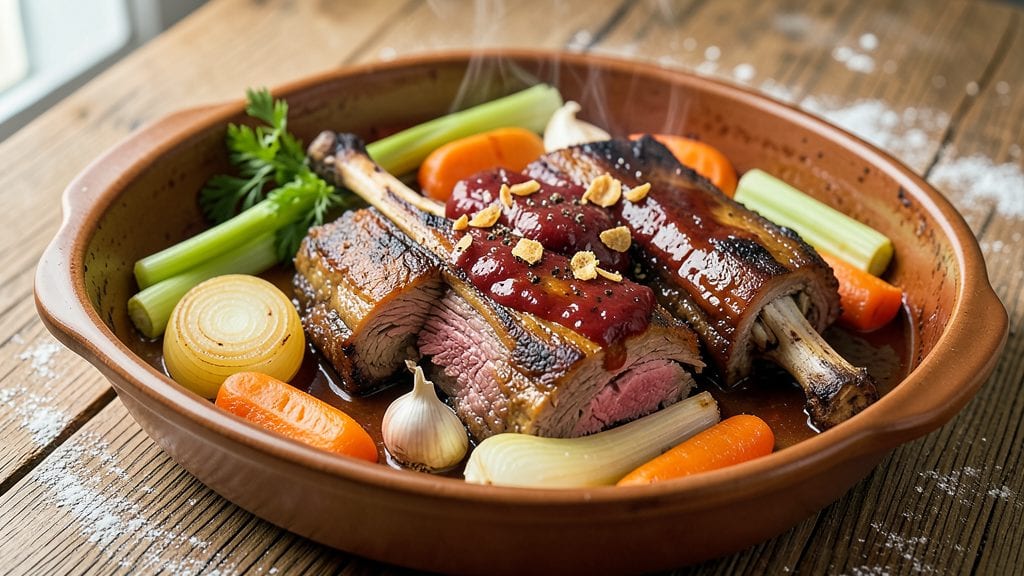
Mastering beef chuck short ribs with bone-in requires patience and precision—two things that pay off with a caramelized crust and melt-in-your-mouth tenderness. 🔥 I learned this technique from my Nonna’s old cookbook, where she’d slow-braise ribs until the bones fell away from the meat, leaving behind a rich, velvety sauce.
The key lies in the balance of searing and braising, a method that transforms tough cuts into something luxurious.
This recipe delivers restaurant-quality results without requiring fancy equipment. You’ll start with a high-heat sear to develop deep, meaty flavors, followed by a slow braise that breaks down collagen into a silky sauce.
The bone-in method adds extra richness, as marrow infuses the liquid over hours of cooking, creating depth no store-bought sauce can match. It’s a process worth the time—every step builds toward that perfect bite.
By the end, you’ll have ribs so tender they nearly dissolve, encased in a glossy, caramelized crust that crackles with every cut. The sauce clings to the meat like a second skin, packed with umami and a hint of smokiness from the slow cook.
Serve with crusty bread to soak up every last drop, or pair it with roasted root vegetables for a complete meal. This is comfort food elevated to fine dining.
Whether you’re cooking for a weekend dinner or meal prepping for the week, this method scales beautifully. The ribs stay flavorful even reheated, making them perfect for leftovers. Let’s get started—your taste buds will thank you.
Ingredients for beef chuck short ribs bone in
Four pounds of beef chuck short ribs and a handful of pantry staples transform into restaurant-quality comfort.
| Ingredient | Amount | Notes |
|---|---|---|
| Beef Chuck Short Ribs 🥩 | 4 lb | Bone-in, 2-3 ribs per pound |
| Yellow Onion 🧅 | 1 whole | Chopped, medium size |
| Carrot 🥕 | 2 whole | Chopped, medium size |
| Celery Stalks 🌿 | 3 whole | Chopped, medium size |
| Garlic Cloves 🧄 | 6 cloves | Peeled, roughly chopped |
| Tomato Paste 🍅 | ½ cup | Smooth, not chunky |
| Dry Red Wine 🍷 | 1 cup | Bold variety like Cabernet |
| Beef Broth 💧 | 2 cups | Low-sodium preferred |
| Olive Oil 🫒 | 2 tbsp | Extra-virgin for searing |
| Unsalted Butter 🧈 | 2 tbsp | For sauce finishing |
| Fresh Thyme 🌿 | 2 sprigs | Or 1 tsp dried thyme |
| Fresh Rosemary 🌿 | 1 sprig | Or 0.5 tsp dried |
| Bay Leaves 🍃 | 2 whole | Remove before serving |
| Salt 🧂 | 1 ½ tsp | Kosher or sea salt |
| Black Peppercorns 🌶️ | 1 tsp | Freshly cracked |
The ribs are the star—bone-in chuck delivers that unmatched richness and tenderness. Butcher sections or pre-cut packages work, but look for ribs with good marbling and a bright red color. I always grab mine from Costco when they're on sale, but any reputable grocery store's meat counter will have them. If you're buying a whole packer cut, ask your butcher to separate the ribs for you—it saves time later. The bone-in method is worth it; those marrow bones infuse the sauce with deep flavor during the slow cook. For best results, let the ribs sit at room temperature for 30 minutes before searing (that's when they develop the perfect crust).
No red wine? Beef broth with a splash of balsamic vinegar works just as well—trust me, you won't miss it. Fresh thyme and rosemary are ideal, but dried herbs at one-third the amount get you close in a pinch. The tomato paste can be the squeeze tube kind from Trader Joe's—it's perfect for this recipe and lasts forever. For the broth, low-sodium is key so you can control the seasoning. If you're using a bouillon cube, cut it in half—most are way too salty. The butter at the end? Full-fat is non-negotiable here—it adds that silky richness to the sauce that no other fat can match.
This isn't a recipe you'll want to reheat straight from the fridge—let everything come to room temperature first. The ribs reheat beautifully in their sauce, so I always make extra. Portion into containers with sauce and they'll keep for 4-5 days in the fridge, or 3 months frozen. The sauce actually gets better the next day as all the flavors meld together. For serving, I like to arrange the ribs on a platter with their sauce spooned over the top, then garnish with fresh thyme sprigs. The crust will be perfect—crispy on the outside, tender on the inside, with that bone marrow sauce clinging to every bite.
Why You'll Love This Recipe
- Same recipe, different vibes: quick weeknight dinner or showstopper for guests. Serve with crusty bread for casual, or plate it fancy with mashed potatoes for company. Honestly, it’s the one dish that does it all.
- One-Pot Magic: I swear by this—just toss the ribs, chopped veggies (onion, carrot, celery), and garlic into one pot, add broth, and let it do the work. No chopping boards left sticky, no extra pans to wash.
- Flavor Explosion: That crispy bone-in crust gives way to melt-in-your-mouth beef—like a hug in your mouth. The garlic and carrot sweetness balance the richness, and the celery adds this earthy depth I can’t get enough of.
- Weeknight to Dinner Party: Same recipe, different vibes: quick weeknight dinner or showstopper for guests. Serve with crusty bread for casual, or plate it fancy with mashed potatoes for company. Honestly, it’s the one dish that does it all.
Step-by-step instructions for slow-braised beef chuck short ribs
This method transforms tough ribs into melt-in-your-mouth perfection with rich caramelized crusts.
🔥 Step 1: Sear the Ribs Until Deeply Browned
Pat the 4 lb beef chuck short ribs dry with paper towels—this ensures maximum crispiness. Heat 2 tbsp olive oil in a heavy Dutch oven over medium-high heat until shimmering. Arrange the ribs in a single layer, bone-side down, and sear undisturbed for 8-10 minutes until deeply browned and crust forms.
Flip each rib and sear the other side for another 8-10 minutes. Here's the thing—don't crowd the pan. If needed, work in batches to avoid steaming instead of searing. The goal is that beautiful mahogany crust that holds up through the long braise.
👨🍳 Step 2: Build the Flavor Base with Aromatics
Remove the ribs from the pot and set aside. In the same Dutch oven, add 2 tbsp unsalted butter and let it melt completely. Add the chopped 1 whole yellow onion, 2 whole carrots, and 3 whole celery stalks, cooking for 5 minutes until softened. Stir in the 6 cloves garlic cloves and cook for 30 seconds until fragrant.
Here's where the magic starts: Add the 0.5 cup tomato paste and cook for 2 minutes, stirring constantly. This creates a rich, concentrated base that prevents the sauce from turning watery later. Sprinkle in the 1.5 tsp salt and 1 tsp black peppercorns right away for even distribution.
🍳 Step 3: Deglaze and Simmer the Ribs
Pour in the 1 cup dry red wine, scraping up all those browned bits from the bottom of the pot—this is where all the flavor lives. Let it simmer for 3 minutes until reduced by half. Add the 2 cups beef broth, 2 sprigs fresh thyme, 1 sprig fresh rosemary, and 2 whole bay leaves, then return the ribs to the pot.
Bring to a gentle simmer, cover, and transfer to a 325°F oven. Braise for 3 hours, flipping the ribs halfway through. You'll know they're ready when they're fork-tender and the sauce has thickened into a glossy glaze. The ribs should be falling off the bone with just slight resistance.
⏰ Step 4: Finish with Caramelized Crust
Remove the ribs from the oven and increase the heat to medium-high. Uncover the pot and let the sauce reduce for 10-15 minutes, stirring occasionally, until it coats the back of a spoon. The sauce should be syrupy and concentrated—this is what creates that signature caramelized crust.
Return the ribs to the pot just to heat through for 2-3 minutes, spooning the reduced sauce over them generously. The crust should be sticky and glossy, clinging beautifully to each rib. Remove the bay leaves before serving—no one wants to bite into one by accident.
Pro Tips For Making Beef Chuck Short Ribs Bone In
- Sear Until Blackened: Don’t just brown those ribs—get them deep brown, almost black in spots. I used to stop at a light sear, and the final dish never had that rich, caramelized depth. A cast-iron skillet on high heat for 3-4 minutes per side makes all the difference, especially with chuck ribs and their fat cap.
- Chop Veggies Unevenly: Skip the perfect dice—roughly chop onions, carrots, and celery into ½-inch chunks. This mimics the texture of a well-made mirepoix and prevents the veggies from turning to mush while the ribs cook. (Yes, even if it looks messy.)
- Deglaze Aggressively: After searing the ribs, don’t just splash in liquid—scrape up those browned bits with a wooden spoon first. Those bits are flavor bombs, and skipping this step means losing half the depth in your sauce. A splash of red wine or broth works, but scrape like you’re cleaning a pan.
- Braise Low and Slow: 275°F isn’t just a suggestion—it’s the magic number for chuck ribs. I learned this after a batch turned out tough because I rushed to 325°F. Cover the pot, keep it steady, and let the collagen melt into the sauce over 3 hours. Patience here guarantees tender meat.
Common mistakes when making this dish
Overcrowding the Pan
Nutrition facts
Frequently asked questions
Why do bone-in chuck short ribs taste better than boneless?
The bone-in method infuses the meat with rich marrow flavors during braising, creating a deeper, more complex sauce. The bone also helps retain moisture and adds natural gelatin that thickens the sauce beautifully. It's like getting a double dose of umami and texture!
Can I make this recipe in a slow cooker instead of oven?
Sear the ribs first, then transfer everything to your slow cooker. Cook on low for 7-8 hours or high for 4-5 hours, then finish with the sauce reduction on the stovetop. The texture will be slightly different but still delicious and tender.
How do I know when the ribs are fully cooked?
They're done when they're fork-tender with just slight resistance (about 3 hours at 325°F). The meat should separate easily from the bone, and the sauce should coat the back of a spoon when reduced. A meat thermometer should read 195-203°F in the thickest part.
What's the best way to reheat leftovers?
Reheat ribs with their sauce in an oven at 300°F for 20-30 minutes, covered with foil. Never microwave—it makes the sauce watery. For extra crispiness, broil for 2-3 minutes at the end. The sauce will thicken again beautifully.
Can I substitute beef broth with something else?
Yes! Use a mix of 1 cup water + 1 cup tomato juice or 1 cup chicken broth + ½ cup red wine. For extra richness, add 1 tbsp soy sauce or 1 tsp Worcestershire sauce. The key is maintaining the liquid balance while keeping the umami flavor profile.