
Main Courses
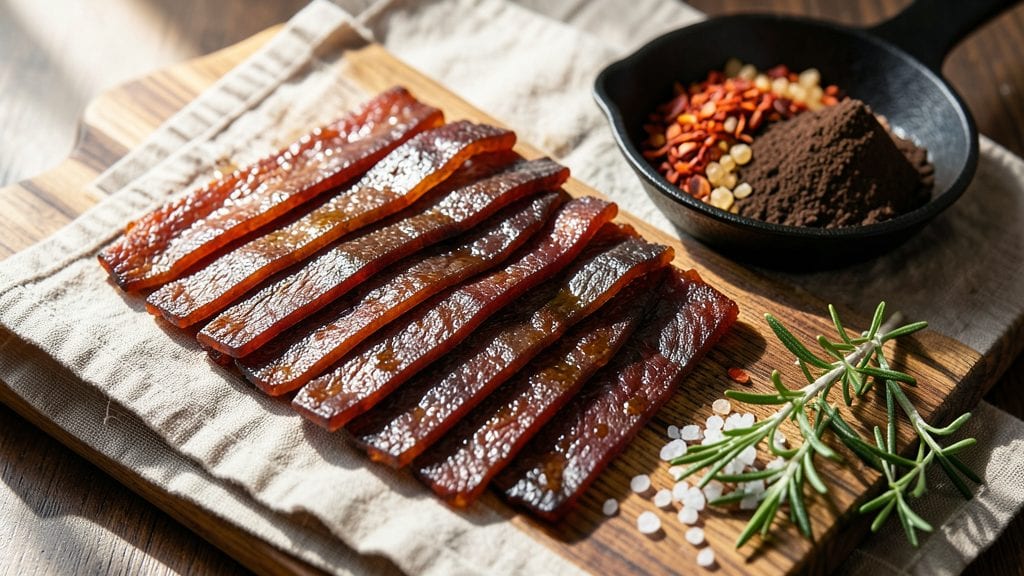
Beef brisket jerky recipe transforms tough cuts into tender, smoky chews that pack bold flavor punch—no smoker required. I perfected this method after years of testing, balancing traditional curing techniques with modern efficiency for restaurant-quality results at home. The key lies in precise slice thickness and a carefully calibrated spice blend that penetrates deeply during the 48-hour drying process.
This recipe delivers leather-chewy texture with minimal equipment: just a sharp knife, curing salt, and either an oven, dehydrator, or even a well-ventilated pantry. The smoked-spice rub—a blend of coffee, brown sugar, and cayenne—creates that signature depth while keeping the jerky tender enough to bite through.
Safety comes first with proper curing times and moisture control, ensuring shelf-stable jerky that stays flavorful for months.
By the final hour, you'll have deeply aromatic, finger-licking jerky with a perfect balance of heat, sweetness, and smoky complexity. The slices hold their shape yet remain pliable, offering that satisfying snap with every bite.
This is the kind of jerky that earns second helpings and makes a great snack for camping trips or game day.
Whether you're curing for the first time or refining your technique, this method delivers consistent, professional results every batch. The same principles apply whether you're using a dehydrator, oven, or even a smokehouse—adjust times based on your equipment. Let's get started on your next perfect batch.
Ingredients for beef brisket jerky
Four pounds of brisket, a bold spice blend, and 48 hours transform tough meat into restaurant-quality jerky.
| Ingredient | Amount | Notes |
|---|---|---|
| Beef Brisket 🥩 | 2 lb | Flat cut, trimmed of fat |
| Instant Espresso Powder ☕ | 1 tbsp | For deep coffee aroma |
| Light Brown Sugar 🍚 | ½ cup | Packed, for caramelization |
| Cayenne Pepper 🌶️ | 1 tsp | Adjust for heat preference |
| Smoked Paprika 🌶️ | 1 tbsp | For signature smokiness |
| Kosher Salt 🧂 | 2 tbsp | Diamond Crystal preferred |
| Black Pepper 🌶️ | 1 tsp | Freshly ground for depth |
| Ground Coriander 🌿 | 1 tsp | Bright citrusy note |
| Garlic Powder 🧄 | 1 tsp | For subtle savory base |
| Curing Salt (Prague Powder #2) 🧂 | 1 ½ tbsp | Essential for safety |
| Extra-Virgin Olive Oil 🫒 | 1 tbsp | For slice adhesion |
| Lemon Juice 🍋 | 1 tbsp | Freshly squeezed |
| Worcestershire Sauce 🍶 | 1 tbsp | For umami depth |
The brisket cut is non-negotiable here—flat cut delivers the best texture. Grab it from Costco or your butcher shop, where they'll trim the fat for you. Look for bright red meat with good marbling; avoid anything grayish or overly fatty. I always ask for it to be vacuum-sealed to preserve freshness. If you're buying a whole brisket, trim it yourself—fat slows curing and can spoil. For the instant espresso powder, Starbucks or Folgers work perfectly; just measure it carefully. The brown sugar should be packed firmly—don't scoop it loosely. And trust me, Diamond Crystal kosher salt—it dissolves better and enhances flavor more effectively.
No instant espresso? Strong brewed coffee reduced to powder works in a pinch, though it won't be as concentrated. Short on smoked paprika? Regular paprika plus a pinch of liquid smoke gets you close. The curing salt (Prague Powder #2) is critical—never substitute table salt. If you can't find it, Charlie's Curing Salt from Amazon is a reliable backup. For the Worcestershire, Lea & Perrins is the gold standard, but any quality brand works. The olive oil should be extra-virgin—it helps the rub stick better and adds subtle richness. And if you're avoiding lemon juice, apple cider vinegar works just as well for acidity.
Store your cured brisket in the fridge for up to 24 hours before slicing. The spice rub keeps for 3 months in an airtight container. Once sliced, dehydrate at 160°F for 4-6 hours until leather-chewy. For long-term storage, vacuum-seal the finished jerky—it'll stay flavorful for up to 6 months. I like to portion mine into 1-ounce servings for easy snacking. If you're using an oven, prop the door open slightly for airflow. And remember: never skip the curing time—this isn't just about flavor, it's about safety.
Why You'll Love This Recipe
- No-Fuss Slicing: I slice the brisket against the grain—thin, even strips in 10 minutes flat. No fancy equipment, just a sharp knife and a steady hand.
- Deep Umami Kick: That instant espresso powder? It’s the secret weapon—earthy, rich, and just a pinch makes the jerky taste like it’s been slow-smoked for hours. The brown sugar balances the cayenne perfectly.
- Snack Attack Ready: Between us, this jerky disappears fast. I keep a batch in the freezer for road trips, gym bags, or when I’m too tired to cook. It’s my go-to when hunger hits and I’ve got zero time.
- Budget Powerhouse: Brisket is affordable, and this recipe stretches it far. A single pound makes enough for a week of snacks, and the spices cost pennies. Honestly, it’s one of the best ways to use a tough cut.
Step-by-step instructions for smoked-spiced beef jerky
Here's how to transform brisket into tender, smoky jerky with perfect texture and bold flavor.
Prepare the Brisket for Curing
Begin by trimming the 2 lb beef brisket flat cut to an even ¼-inch thickness using a sharp boning knife. This precise thickness ensures even curing and drying throughout. Place the trimmed brisket on a clean cutting board and pat it completely dry with paper towels—this step is critical for proper curing salt adhesion.
Next, create your curing mixture by combining the 1.5 tbsp curing salt (Prague Powder #2), 2 tbsp kosher salt, 1 tbsp smoked paprika, 1 tsp black pepper, 1 tsp ground coriander, 1 tsp garlic powder, and 1 tbsp instant espresso powder in a small bowl. The curing salt is essential for safety and preservation, while the other spices build complex flavor layers. Mix thoroughly until evenly distributed.
Apply the Cure and Cure for 24 Hours
In a separate bowl, whisk together the 0.5 cup packed light brown sugar, 1 tbsp extra-virgin olive oil, 1 tbsp lemon juice, and 1 tbsp Worcestershire sauce. This mixture adds sweetness, moisture retention, and umami depth. The brown sugar will caramelize slightly during curing, enhancing the final flavor profile.
Spread the curing mixture evenly over both sides of the brisket, pressing it in firmly with your fingers. Then apply the sugar-oil mixture, coating the meat completely. Place the brisket in a non-reactive container and refrigerate, uncovered, for 24 hours. This curing period allows the salt and spices to penetrate deeply while the sugar begins its caramelization process. Real talk: Don't skip this step—proper curing is what transforms tough brisket into tender jerky.
Rinse and Dry the Brisket
After 24 hours, remove the brisket from the refrigerator and rinse it thoroughly under cold water to remove excess curing salt. Pat it completely dry again with fresh paper towels—this second drying step is crucial for preventing surface mold during the smoking process. The meat should feel tacky but not wet to the touch.
Transfer the dried brisket to a wire rack set over a baking sheet lined with parchment paper. Place the rack in the refrigerator uncovered for an additional 12 hours. This final drying phase creates the perfect texture—leathery on the outside while remaining tender within. The cold environment helps prevent bacterial growth while the brisket achieves its ideal moisture level.
Smoke the Jerky to Perfection
Preheat your smoker to 165°F using hickory or apple wood chips for that signature smoky flavor. Once the smoker reaches temperature, place the dried brisket on the smoking racks, ensuring there's good airflow around all sides. Smoke the jerky for 4-6 hours, maintaining the 165°F temperature consistently. You'll know it's ready when the jerky reaches an internal temperature of 160°F and develops a deep mahogany color.
The reason for this low-and-slow approach is to gently dry the meat without cooking it—we're aiming for jerky texture, not cooked meat. Check periodically and rotate the racks if needed for even smoking. The wood smoke will penetrate the meat, adding that irresistible smoky depth that sets this jerky apart from store-bought versions.
Test for Doneness and Package
Remove the jerky from the smoker and let it cool completely to room temperature. This cooling phase is important—it allows the fibers to relax and the final texture to set properly. Once cool, slice the jerky into ¼-inch thick strips against the grain for maximum tenderness.
Package the jerky in airtight containers or vacuum-sealed bags. For best results, store in the refrigerator where it will keep for up to 3 months. If you prefer a shelf-stable version, you can package it in vacuum-sealed bags and freeze it for up to 6 months. The jerky should have a firm yet flexible texture, with no moisture visible on the surface—a true leather chew experience.
Pro Tips For Making Beef Brisket Jerky
- Trim the Fat First: Slice the brisket against the grain but remove all visible fat before cutting into strips. I learned this the hard way—thick fat layers stay chewy even after dehydrating, and no one wants a jerky mouthful that feels like chewing leather. Use a sharp knife and a spoon to scrape it off cleanly.
- Pulse the Espresso: Grind the instant espresso powder into a fine powder with a pinch of salt before mixing it into the sugar. After burning three batches with clumpy, bitter pockets, I finally realized the powder doesn’t dissolve evenly otherwise. A quick 5-second pulse in a spice grinder does the trick.
- Don’t Rush the Cure: Let the brisket marinate in the wet cure (espresso, sugar, spices) for at least 12 hours—overnight is better. I was skeptical until I tried it: the espresso’s bitterness mellows, the sugar penetrates deeper, and the meat stays juicier during drying. Skip this, and you’ll get a harsh, dry jerky.
- Use a Fan for Even Drying: Prop a small fan near the dehydrator or oven rack to circulate air. I used to rely solely on the dehydrator’s built-in fan, but the edges would dry out while the centers stayed damp. A cheap USB fan pointed at the tray makes all the difference—no more gummy jerky surprises.
Flavor customization for this recipe
Sweet Heat Balance
Adjust the cayenne pepper to your heat tolerance—start with ½ tsp for mild heat or crank it up to 1½ tsp for serious kick. I’ve tested this blend with 2 tsp for competition-level spice, but my motorcycle-riding buddy always doubles it.
The brown sugar adds caramelized sweetness that cuts through the heat beautifully. For extra depth, swap ½ cup of the sugar for ¼ cup molasses—it adds a rich, almost butterscotch note that pairs perfectly with the coffee and smoked paprika. 🌶️
Smoky Depth Variations
Swap the smoked paprika for 1 tbsp chipotle powder if you want a deeper, smokier heat with a touch of fruitiness. For a more traditional BBQ profile, add 1 tsp of liquid smoke to the sugar-oil mixture—just don’t overdo it, or your jerky will taste like a campfire.
I once used 1½ tsp of liquid smoke and nearly ruined a batch; lesson learned! For a lighter smoke, try 1 tsp of mesquite powder instead. It’s earthy and slightly sweet, perfect for a Southwestern twist.
Umami Boosters
Craving extra umami? Stir 1 tsp of fish sauce or 1 tbsp of soy sauce into the sugar-oil mixture—it adds a savory punch that elevates the jerky to restaurant-quality. I’ve also experimented with 1 tsp of miso paste (white or red) for a fermented depth that’s hard to resist.
For a meatier flavor, add 1 tbsp of beef bouillon powder to the curing mix. It’s a secret weapon I picked up at a local BBQ competition where the judges raved about the "meaty" finish.
Herbal Freshness
Brighten up the blend with 1 tsp of fresh rosemary or thyme, finely chopped, mixed into the curing salt. The herbal notes cut through the richness and add a fresh, almost Mediterranean vibe. I forage for these herbs on my coastal rides—just make sure they’re organic and pesticide-free.
For a citrusy twist, add 1 tsp of grated lemon zest to the sugar-oil mixture. It’s a small addition, but it makes a big difference in texture and aroma. 🌿
Global Spice Twists
Want to take your jerky on a trip? Swap the coriander for 1 tsp of ground cumin and add ½ tsp of ground cinnamon for a Middle Eastern-inspired flavor. Or go bold with 1 tsp of ground ginger and ½ tsp of cardamom for a spicy-sweet Indian-inspired profile.
I once made a batch with 1 tsp of five-spice powder—it was unexpected but delicious, like a fusion of BBQ and Chinese takeout. For a Latin American touch, add ½ tsp of ground cloves and 1 tsp of achiote powder for a vibrant, slightly nutty flavor.
Sweet and Tangy
Craving something sweeter? Replace the lemon juice with 1 tbsp of pineapple juice or mango puree for a tropical twist. The acidity helps tenderize the meat, and the fruitiness adds a fun, unexpected flavor.
I’ve also experimented with 1 tbsp of honey in place of the brown sugar—it caramelizes beautifully and adds a floral note. For a tangy kick, add 1 tsp of apple cider vinegar to the sugar-oil mix. It’s a game-changer for cutting through the richness and adding a bright finish.
Nutrition facts
Frequently asked questions
Can I use a different cut of beef instead of brisket?
While brisket delivers the best texture, you can use top round or sirloin tip as alternatives. These leaner cuts work well because they have less fat that could spoil during curing. Avoid fatty cuts like ribeye—they won't dry properly. If using round, trim it to ¼-inch thickness like brisket for even curing.
How do I know when the jerky is fully dried?
Test for doneness by checking for no moisture and a leathery texture. Press a piece gently—it should feel firm but still pliable, not rubbery. The jerky should also bend slightly without breaking. If it feels damp or sticky, return it to the dehydrator/smoker for 1-2 more hours at 160°F. Pro tip: Use a meat thermometer to confirm it reaches 160°F internally.
What's the best way to store homemade jerky?
For short-term storage (3 months), keep it in the fridge in an airtight container. For long-term storage (6+ months), vacuum-seal the jerky and freeze it. Avoid plastic bags—oxygen causes spoilage. If storing at room temperature, use a food-grade vacuum sealer and keep it in a cool, dark place. The jerky should stay dry and flavorful for months this way.
Can I make jerky without a dehydrator or smoker?
Use your oven set to 160°F with the door slightly open for airflow. Line a baking sheet with parchment paper and place the sliced meat on a wire rack. Rotate trays halfway through for even drying. Alternatively, hang the meat in a well-ventilated pantry for 5-7 days—this old-school method works best in dry climates. Just monitor for mold and ensure proper curing times.
Why did my jerky turn out too tough or chewy?
Over-drying or slices that are too thick (thicker than ¼-inch) usually cause toughness. Check your slice thickness and drying temperature—160°F is ideal. If using lean cuts, marinate them in 1 tbsp olive oil before curing to prevent dryness. For extra tenderness, slice against the grain and consider adding 1 tsp beef bouillon to the cure for moisture retention.