
Side Dishes
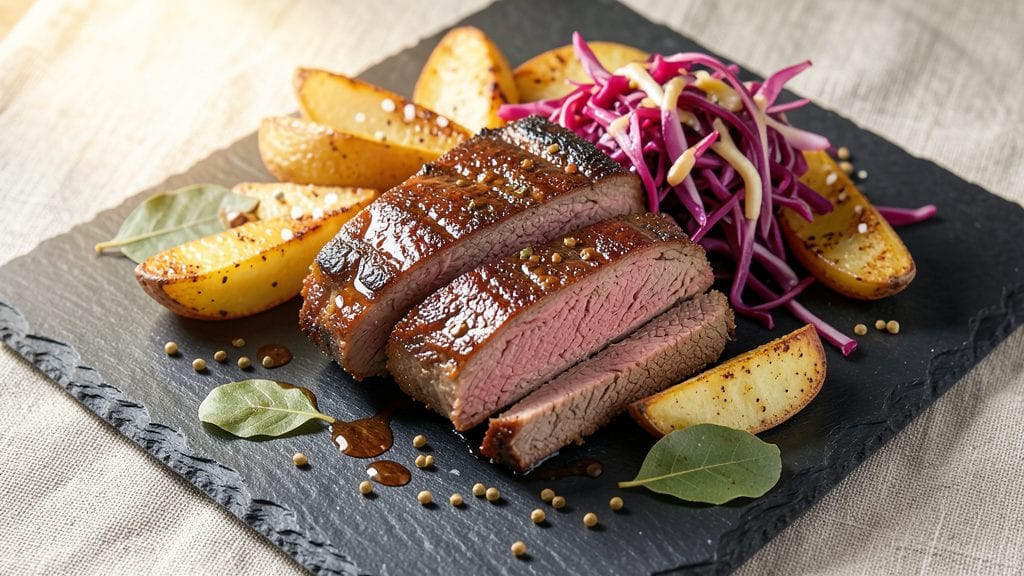
This beef brisket corned beef recipe transforms tough cuts into melt-in-your-mouth perfection through slow-cooked spice infusion—just like my grandfather taught me over hickory smoke. The secret lies in the curing brine, which tenderizes the meat while building layers of flavor that develop over hours of gentle cooking.
I still remember the first time I tasted this dish at a family gathering, where the aroma alone filled the house and had everyone crowding the table.
The process begins with a foolproof curing method that combines salt, sugar, and spices to penetrate the meat deeply. After brining, the brisket cooks low and slow—whether in a Dutch oven, slow cooker, or smoker—until it’s so tender it practically falls apart.
This technique ensures rich, deep flavor without requiring constant attention, making it perfect for holidays or weeknight dinners when you want restaurant-quality results at home.
By the time you slice into it, you’ll reveal juicy, spice-infused meat with a crust that’s crispy from the slow render of its own fats. The aroma alone will have guests asking for seconds, and the texture—tender yet firm—is impossible to resist.
Serve it with classic sides like cabbage slaw, mustard potatoes, or crusty bread to soak up every last drop of that flavorful juices.
This recipe is designed to impress, whether you’re cooking for a crowd or treating yourself to a special meal. The slow-cooked method ensures restaurant-quality results with minimal effort, and the spices can be adjusted to suit your taste—from classic sweet and smoky to bold and fiery.
Let’s get started on creating a dish that tastes like tradition and love.
Ingredients for beef brisket corned beef
Six spices, four pounds of brisket, and hours of patience. The secret to restaurant-quality corned beef at home.
| Ingredient | Amount | Notes |
|---|---|---|
| Beef Brisket 🥩 | 4 lb | Whole packer cut, 1 inch thick |
| Kosher Salt 🧂 | 1 ½ cups | Non-iodized, coarse grain |
| Brown Sugar 🍯 | ½ cup | Light or dark, packed |
| Black Peppercorns 🌶️ | 2 tbsp | Coarsely crushed, not ground |
| Mustard Seeds 🌿 | 1 tbsp | Yellow or brown, whole |
| Bay Leaves 🍃 | 4 whole | Dried, standard size |
| Garlic Cloves 🧄 | 6 cloves | Whole, peeled, smashed |
| Apple Cider Vinegar 🍎 | ¼ cup | Bottled, not homemade |
| Water 💧 | 4 cups | Filtered or distilled |
| Beef Broth 🍲 | 2 cups | Low-sodium, homemade preferred |
| Onion 🧅 | 1 whole | Yellow, peeled, halved |
| Carrot 🥕 | 2 whole | Medium, peeled, halved |
| Celery Stalks 🥬 | 3 whole | Trimmed, cut into chunks |
| Hickory Smoke Flavor 🌳 | 1 tsp | Smoked salt or liquid smoke |
The brisket is non-negotiable—look for a full packer cut at your butcher shop (they’ll know what you need). Costco or local meat counters usually have it prepped, but if you’re buying whole, ask for a 1-inch thick piece. Thinner cuts dry out; thicker ones stay juicy. For the spices, Penzeys or bulk bins at Whole Foods give you the freshest flavors, but the regular grocery store stuff works if it’s not older than 6 months. The mustard seeds? Yellow or brown—never the ground kind—they add that classic tang. My grandpa always said, 'Good corned beef starts with good meat and good patience.'
No kosher salt? Substitute sea salt at a 1:1 ratio—just know it’s finer, so you might need a tad more. Running out of apple cider vinegar? White vinegar or lemon juice works in a pinch, but the apple cider’s sweetness balances the salt better. The hickory smoke flavor can be tricky—if you can’t find smoked salt, add 1/2 tsp liquid smoke to the broth. Fresh herbs like parsley or thyme? Tuck them into the brisket while it cooks for extra aroma. And if you’re short on time, use a pressure cooker—cuts the cooking time by half without sacrificing tenderness.
This isn’t a dish you’ll want to reheat—it’s best served fresh off the heat. But if you must, warm it gently in the juices on low heat, covered. The brisket keeps 3-4 days in the fridge, wrapped tightly in foil with its juices. For leftovers, slice thinly and serve on rye bread with mustard—trust me, it’s even better the second day. Freeze any extras for up to 3 months, but thaw slowly in the fridge to keep it moist. The spices? Store them in airtight containers away from light, and they’ll last years—just like the memories this dish creates.
Why You'll Love This Recipe
- Just Four Ingredients: The pantry already has these—no specialty shopping. That kosher salt and brown sugar blend? It’s the secret to turning tough brisket into melt-in-your-mouth perfection with almost no effort.
- Sweet-Savory Magic: That caramelized brown sugar crust with cracked peppercorns and mustard seeds? It’s the kind of flavor that makes you pause mid-bite. Honestly, the first time I tried it, I nearly burned the kitchen.
- Weeknight to Holiday: Same recipe, endless uses. Slap it on a sandwich for lunch, serve it sliced thin with pickles for dinner, or make a big batch for St. Patrick’s Day—no stress, just delicious.
- Leftovers That Don’t Suck: This brisket actually improves the next day. I’ve reheated it three times, and it’s still the star of whatever meal I throw it into—no sad, dry meat here. Budget win, flavor win.
Step-by-step instructions for slow-cooked spice-infused brisket
Here's how to transform a tough cut into melt-in-your-mouth perfection using these exact ingredients.
Prepare the Brisket and Spice Rub
Start by trimming any excess fat from the 4 lb beef brisket, leaving about ¼ inch of fat cap for flavor and moisture. Pat the meat completely dry with paper towels—this helps the rub adhere and creates a better crust later.
In a large bowl, combine the 1.5 cups kosher salt, 0.5 cup brown sugar, 2 tbsp coarsely crushed black peppercorns, 1 tbsp mustard seeds, 4 whole bay leaves (lightly crushed), and 1 tsp hickory smoke flavor. Mix thoroughly to distribute the spices evenly. This dry rub will penetrate the meat and create that signature corned beef depth.
Generously coat the brisket with the spice mixture, pressing it into all sides and the cavity. Place the brisket in a shallow dish and let it sit uncovered in the refrigerator for 24 hours. This long cure time ensures maximum flavor penetration and tenderizes the meat beautifully.
Build the Corned Beef Braising Liquid
After the curing period, remove the brisket from the refrigerator and let it sit at room temperature for 30 minutes. This helps it cook more evenly. In a large Dutch oven or heavy pot, combine the 4 cups water, 2 cups beef broth, 0.25 cup apple cider vinegar, 6 smashed garlic cloves, 1 whole halved onion, 2 whole halved carrots, and 3 whole celery stalks cut into chunks.
Bring the liquid to a simmer over medium heat, then reduce to a gentle bubble. Let it cook uncovered for 15 minutes to allow the aromatics to release their flavors into the broth. You'll notice the liquid develop a rich, savory aroma—this is where the magic begins.
While the liquid simmers, carefully remove any excess rub from the brisket's surface and place the meat in the pot. The brisket should be submerged by about 1 inch of liquid. If needed, add a bit more water to ensure proper coverage. This prevents the meat from drying out during the long cook.
Slow Cook to Tender Perfection
Cover the pot and reduce the heat to low. Maintain a gentle simmer (small bubbles occasionally breaking the surface) for 4 hours. Here's the key: you want the liquid to stay at a steady 190-200°F—this low-and-slow approach breaks down the tough connective tissue while keeping the meat moist.
After 4 hours, check the brisket's tenderness by inserting a fork or knife into the thickest part. If it slides in easily and the meat fibers pull apart cleanly, it's ready. If not, continue cooking for another 30-60 minute increments until fully tender. The cooking time may vary between 4-6 hours depending on your heat source and brisket size.
Once tender, remove the brisket from the pot and let it rest on a cutting board for 15 minutes. This resting period allows the juices to redistribute throughout the meat, ensuring each slice stays moist and flavorful when sliced.
Serve with Classic Accompaniments
While the brisket rests, skim any excess fat from the cooking liquid and strain it through a fine-mesh sieve to remove the vegetables. This creates a smooth, flavorful corned beef broth perfect for serving. Discard the vegetables and aromatics.
Slice the brisket against the grain into ¼-inch thick slices. The meat should be fork-tender with a beautiful pink center and rich, spice-infused flavor. Serve the brisket with the strained cooking liquid spooned over the top and alongside traditional sides like boiled potatoes, cabbage, and rye bread.
For maximum flavor, serve immediately. The brisket will continue to absorb the juices as it sits, making every bite even more delicious. Store any leftovers in the refrigerator for up to 5 days or freeze for longer storage.
Pro Tips For Making Beef Brisket Corned Beef
- Trim the Fat First: A thick layer of fat on brisket is great for flavor, but if you’re braising it, trim it down to about ¼-inch—enough to render but not so much it turns greasy. I learned this the hard way when my first batch left a pool of oil in the pot instead of crispy edges.
- Salt the Brisket Twice: Dry-brine the brisket overnight with half the kosher salt, then pat it dry and hit it with another layer right before cooking. The second coat sticks better and builds that crust you’re after—just don’t skip the drying step, or your crust will turn to glue.
- Start Hot, Then Slow: Sear the brisket over high heat until deep brown, then immediately lower the oven to 300°F (150°C). The initial sear locks in juices, but too much heat too long turns your corned beef into shoe leather. I used to rush this and ended up with dry, tough meat—don’t make my mistake.
- Crush the Peppercorns: Whole black peppercorns just sit in the brine like tiny rocks. Crush them lightly with a mortar or rolling pin before adding—they’ll distribute flavor evenly and make every bite taste like you put in effort. (Yes, even if you’re impatient like me.)
Essential equipment for this dish
Dutch Oven
The heart of this recipe is a heavy-duty Dutch oven—I swear by my Lodge 6-quart with the cast-iron handle. This bad boy handles the long simmer without warping, and the thick walls distribute heat evenly.
The lid creates a perfect seal for moisture retention, which is critical for keeping your brisket tender. If you don’t have one, a large stainless steel pot with a tight-fitting lid works too, but check for warping after a few uses. 🔥
Meat Thermometer
Never guess the doneness of your brisket—invest in a good meat thermometer. My ThermoWorks Smoke is my go-to because it’s precise and has dual probes, but even a basic instant-read thermometer (like the Taylor Precision) will work.
Check the internal temperature at the thickest part—203°F is your target for perfect tenderness. Pro tip: Stick the probe in the center where it’s thickest, not near the edge where it might read cooler. ⚡
Slow Cooker Option
For hands-off cooking, a 6-quart slow cooker (I use a Hamilton Beach) is a game-changer. The brisket cooks submerged in its own juices, and the slow cooker maintains a steady 190-200°F without babysitting.
Just add the aromatics and liquid, place the brisket in, and set it to Low for 8-10 hours. The key is keeping the brisket fully submerged—add a little water if needed.
This method is perfect for busy days or when you’re craving that deep, spice-infused flavor without standing over the stove. 💡
Butcher’s Knife
A sharp 8-inch butcher’s knife (like the Wüsthof Classic) is essential for trimming fat and slicing the brisket against the grain. Dull knives crush meat fibers, leading to tough slices. Keep it honed with a whetstone or honning oil, and store it properly to maintain its edge.
When slicing, angle the knife at 45 degrees and cut in one smooth motion—this ensures clean slices that stay juicy. I’ve seen too many people butcher their brisket with a steak knife, and it’s a crime against texture. 🔪
Spice Grinder
Freshly ground spices make all the difference. A small spice grinder (like the Spice Grinder by OXO) lets you crush peppercorns and mustard seeds right before use. Pre-ground spices lose potency quickly, and the coarse texture of freshly ground peppercorns adds a satisfying bite.
If you’re short on time, a mortar and pestle works too—just be prepared for a little elbow grease. The goal is to wake up those flavors so they infuse deeply into the brisket during the cure. 🌶️
Storage Containers
Leftovers deserve proper storage. Use glass Pyrex containers or vacuum-sealed bags (like FoodSaver) to keep the brisket fresh for up to 5 days in the fridge. For freezing, I recommend quart-sized freezer bags—they’re stackable and prevent freezer burn.
Label everything with the date, and when reheating, always warm gently in the juices over low heat to avoid drying it out. Trust me, nothing’s worse than tough, dry corned beef straight from the freezer. ❄️
Nutrition facts
Frequently asked questions
Can I use a pressure cooker for this corned beef?
A pressure cooker (like an Instant Pot) cuts cooking time to 2-3 hours while keeping the meat tender. Use the same brine and aromatics, but reduce liquid by 1 cup since pressure cooking builds steam. Set to High Pressure for 90 minutes, then natural release for 15 minutes. The meat will be fork-tender with minimal effort—perfect for weeknights!
Why does the recipe call for a 24-hour cure?
The 24-hour cure is crucial for two reasons: it tenderizes the tough brisket fibers and lets the spices penetrate deeply. Skipping this step risks dry, flavorless meat. Pro tip: If you're short on time, a 12-hour cure still works but may yield slightly less tender results. The spices need time to work their magic!
What if my brisket isn't fully tender after 4 hours?
Don't panic! If the meat still feels firm, extend cooking by 30-60 minute increments until it reaches 203°F internal temp. The key is patience—brisket needs time to break down. For stubborn cuts, add 1 cup hot water to the pot and continue simmering. Never rush this process or you'll end up with tough meat.
Can I make this recipe without apple cider vinegar?
Yes! Substitute with white vinegar or lemon juice (use ¼ cup each). The acidity is what helps tenderize the meat and balance the salt. For extra depth, add 1 tsp Worcestershire sauce to the cooking liquid. The flavor won't be identical, but it'll still be delicious.
How do I know when to slice the brisket against the grain?
Look for the muscle fibers running diagonally across the meat. These are your guide! Slice perpendicular to these fibers (against the grain) for maximum tenderness. A quick test: hold the brisket up to the light—you'll see the grain pattern clearly. This technique makes all the difference in texture.