
Soups & Stews
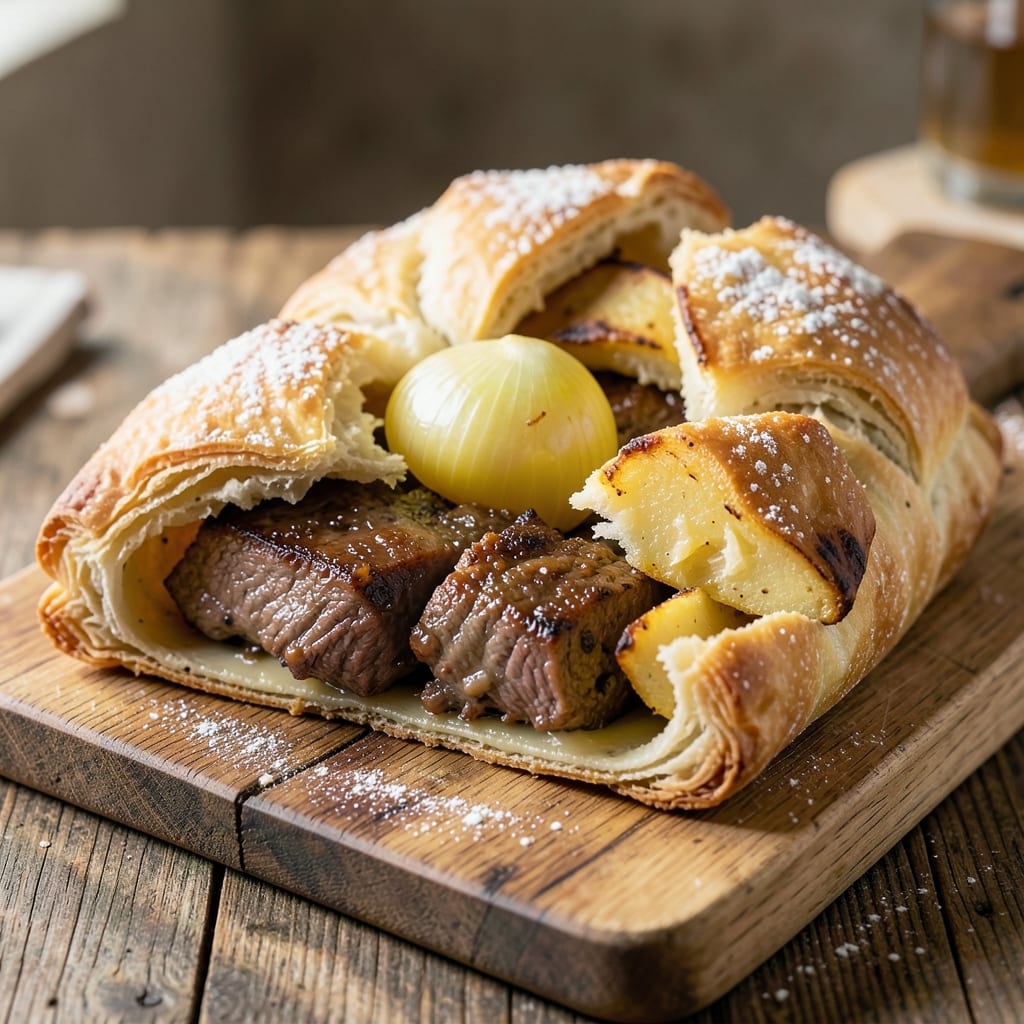
This beef and potato pasty recipe delivers the flaky, golden crust and hearty filling that makes it a British classic. 💛 The secret lies in a well-seasoned beef and potato mixture encased in a buttery, layered dough that bakes up tender yet crisp. I've perfected this recipe to stay true to its Cornish roots while making it approachable for home cooks—no special equipment required.
The filling is where the magic happens: tender chunks of beef slow-cooked with potatoes, onions, and a blend of herbs that create deep, savory flavors. The dough, made with flour, lard, and a touch of salt, forms a sturdy yet delicate shell that holds everything together during baking. What sets this recipe apart is the foolproof folding technique that ensures an even bake and crispy edges.
By the time it emerges from the oven, you'll have a pasty with a golden-brown, flaky crust that peels back to reveal tender meat and potatoes infused with rich, herby flavors. The crust stays crisp while the filling remains juicy—a perfect balance that makes every bite satisfying. This dish is hearty enough for a family dinner but simple enough to make on a weeknight.
Serve it warm with a side of pickled vegetables or a simple green salad for a complete meal. The leftovers reheat beautifully, making this an excellent make-ahead option. Let's get started on creating your own taste of Cornwall at home.
Ingredients for beef and potato pasty
The heart of this British classic lies in tender beef, hearty potatoes, and a buttery, flaky crust.
| Ingredient | Amount | Notes |
|---|---|---|
| Lean Beef Chuck Roast 🥩 | 1 ½ lb | Cut into 1-inch cubes |
| Russet Potatoes 🥔 | 2 lb | Peeled, cut into 1-inch chunks |
| Yellow Onions 🧅 | 2 whole | Medium, finely chopped |
| Lard 🧈 | ½ cup | Cold, for dough making |
| All-Purpose Flour 🌾 | 3 cups | Plus 2 tbsp for dusting |
| Salt 🧂 | 1 ½ tsp | Diamond Crystal preferred |
| Black Peppercorns 🌶️ | ½ tsp | Freshly ground |
| Dried Thyme 🌿 | 1 tsp | Or 1 tbsp fresh |
| Dried Parsley 🌿 | 1 tsp | Finely chopped |
| Butter 🧈 | 2 tbsp | Cold, for crust brushing |
| Water 💧 | ½ cup | Cold, for dough |
| Beef Stock 🍲 | ½ cup | Homemade or quality store-bought |
For the beef, chuck roast delivers the best texture—lean enough to stay tender but with enough fat for flavor. Costco or local butchers often have it pre-cut, but if buying whole, look for good marbling. The potatoes should be firm and starchy; Russets or Yukon Golds work perfectly. If your lard is warm, chill it for 30 minutes before using—cold lard creates flakier layers. For the flour, King Arthur or Gold Medal brands hold up best to the folding process. The thyme and parsley? Penzeys or bulk bins have the freshest dried herbs, but check the expiration date—old spices lose their punch.
No lard? Vegetable shortening works in a pinch, but it won't give you that authentic pasty flavor. Short on beef stock? Water with 1 tsp beef bouillon gets you close. The onions can be swapped for leeks if you prefer, but they'll add a slightly sweeter note. If your flour is old (over 3 months), toast it lightly in a dry pan for 2 minutes to refresh it. The butter for brushing? Use European-style butter—it has higher fat content and gives a richer flavor. For the beef, if you can't find chuck, chuck-flank blend is the next best thing, but trim any large fat chunks.
The dough keeps best in the fridge for 2 days wrapped tightly in plastic. The filling can be prepped ahead and stored for 1 day before baking. For make-ahead pasties, assemble completely, wrap tightly, and freeze for up to 3 months. When ready to bake, thaw overnight in the fridge. The crust stays crisp for 3 days if stored properly, but the filling reheats best within 2 days. To revive stale pasties, wrap in foil and warm at 350°F for 10 minutes.
Why You'll Love This Recipe
- One-Pan Magic: I swear by this—no chopping boards, no extra pans. Just slice the potatoes, dice the onions, and pile it all into one sheet pan before baking. The lard crusts the edges just enough to make cleanup a breeze.
- Rich, Rustic Depth: That beef chuck roast gets tender and juicy while the potatoes crisp up like a golden hug. The onions caramelize right into the mix—no extra sauce needed. Honestly, the first bite makes me wonder why I ever bought takeout.
- Lunchbox Hero: Between us, this is my go-to for meal prep. Bake a big batch, slice it up, and pack it for work. Cold pasties are solid, but reheated? They’re even better—crispy again, filling, and no one complains about leftovers.
- Budget-Friendly Powerhouse: A whole roast and a bag of potatoes stretch for days. I’ll be real: this feeds four for under $15, and the flavors are so satisfying, no one misses the fancy stuff. Plus, the lard crust keeps it from drying out—perfect for stretching meals.
Step-by-step instructions for beef and potato pasty
Master the art of a rustic pasty with this foolproof method for a flaky crust and tender filling.
👨🍳 Step 1: Prepare the Filling
In a large bowl, combine the 1.5 lb lean beef chuck roast cut into 1-inch cubes, 2 lb russet potatoes cut into 1-inch chunks, and 2 whole yellow onions finely chopped. This rough chop ensures even cooking and proper texture in the finished pasty.
In a separate small bowl, mix together 1.5 tsp salt, 0.5 tsp freshly ground black peppercorns, 1 tsp dried thyme, and 1 tsp dried parsley. Sprinkle this seasoning blend evenly over the meat and potato mixture, massaging it in with your hands to distribute completely. The seasoning should coat every surface of the filling.
Add 0.5 cup beef stock to the bowl and toss everything together until the liquid is absorbed. The filling should look moist but not soupy—this ensures it stays juicy during baking. Set aside while you prepare the dough.
🍳 Step 2: Make the Lard Dough
In a large mixing bowl, combine 3 cups all-purpose flour and 1.5 tsp salt. Make a well in the center and add the 0.5 cup cold lard. Using a pastry cutter or your fingers, work the lard into the flour until you achieve a crumbly texture with pea-sized fat pieces remaining.
Add 0.5 cup cold water gradually, mixing just until the dough begins to come together. Avoid overworking it—this dough should be firm but not sticky. Turn it out onto a lightly floured surface and knead gently for 1-2 minutes until smooth. The dough should be cool to the touch and hold together when pressed.
Here's the thing—this dough needs to be cold for a flaky crust. If it feels warm, chill it in the refrigerator for 15 minutes before proceeding. The cold fat will create those beautiful layers when baked.
🥘 Step 3: Assemble the Pasty
Divide the dough into two equal pieces. On a floured surface, roll one piece into a 12-inch circle about ⅛-inch thick. Transfer it to a parchment-lined baking sheet. This will be your bottom crust.
Spread the prepared filling evenly over the dough, leaving a 1-inch border around the edges. This border is crucial—it prevents the filling from leaking out during baking. Brush the edges with 2 tbsp cold butter to help seal the pasty when you fold it.
Roll out the second dough piece into another 12-inch circle. Place it over the filling, pressing gently to seal the edges. Use a fork to crimp the edges together, creating a decorative pattern while ensuring a good seal. Cut a few small slits in the top crust to allow steam to escape—this prevents the pasty from bursting in the oven.
🔥 Step 4: Bake to Golden Perfection
Preheat your oven to 400°F. Place the assembled pasty on the prepared baking sheet and bake for 45-50 minutes until the crust is deep golden brown and the filling is bubbling through the slits. The pasty is done when the crust sounds hollow when tapped and the internal temperature reaches 190°F.
Don't be tempted to open the oven during baking—this causes the crust to lose steam and become tough. If the top browns too quickly, tent it loosely with foil after 30 minutes to prevent over-browning while the filling finishes cooking.
Let the pasty rest for 10 minutes before serving. This resting time allows the filling to set slightly, making it easier to slice and preventing juices from spilling out. Serve warm with a simple green salad or crusty bread.
Pro Tips For Making Beef And Potato Pasty
- Parboil Potatoes First: Russets hold moisture like a miser with rent money—unless you blanch them 5 minutes in boiling water before adding to the filling. This keeps them tender without turning to mush later, and you’ll thank me when you’re not scooping up gluey potato sludge.
- Crust Needs Lard, Not Butter: I used to swap lard for butter in the pastry, and the crust turned out like a sad, greasy cracker. Lard stays firm when chilled and gives that flaky, golden bite. Use cold lard straight from the fridge—no need to soften it, just cut it into the flour like you’re making doughnuts.
- Salt the Beef Early: Chuck roast is forgiving, but if you salt it after browning, you’ll end up with a pasty that tastes like it was seasoned in the last 10 minutes. Salt the meat 1–2 hours ahead and let it sit in the fridge—this guarantees even flavor penetration, not just surface salt.
- Sear the Onions Low and Slow: Onions caramelize best when they’re not fighting for space. Cook them on medium-low heat for 15–20 minutes, stirring occasionally, until they’re deep brown and jammy. High heat burns them before they soften, and you’ll be left with bitter, undercooked bits in your filling.
Flavor customization for this beef and potato pasty
Herb Variations
Swap the classic thyme and parsley for other dried herbs to create unique flavor profiles. Try 1 tsp rosemary and ½ tsp sage for an earthy twist that pairs beautifully with the beef. For a more aromatic touch, use 1 tsp marjoram and ½ tsp oregano, which add a subtle citrus note. I love adding ½ tsp smoked paprika for a gentle smokiness that enhances the crust’s flavor. 🌿
Spice Level Boost
For heat lovers, add ½ tsp cayenne pepper or 1 tsp crushed red pepper flakes to the filling. If you prefer a slow-building heat, try ½ tsp Aleppo pepper—it’s less harsh than cayenne but still delivers a warm kick. For a balanced spice blend, mix ½ tsp cayenne with ½ tsp brown sugar to mellow the heat slightly. Just be mindful: too much spice can overpower the delicate crust.
Umami Enhancers
Elevate the savory depth with umami-rich ingredients. Stir in 1 tbsp soy sauce or 1 tsp Worcestershire sauce into the beef stock before mixing with the filling. For a deeper flavor, add 1 tbsp tomato paste or 2 tbsp finely chopped mushrooms (like cremini or shiitake) to the filling. I also recommend a pinch of MSG (½ tsp) if you’re not sensitive to it—it amplifies the meaty taste without altering the texture. 💡
Sweet and Tangy Twist
Balance the richness with a touch of sweetness or acidity. Fold in 2 tbsp finely chopped apples (like Granny Smith) or 1 tbsp apple cider into the filling for a subtle sweetness that cuts through the beef’s richness. For tang, add 1 tbsp pickle juice (from a dill pickle) or 1 tsp balsamic vinegar to brighten the flavors. These additions work especially well if you’re serving the pasty with a sharp mustard or horseradish sauce.
Cheese Additions
For a modern twist, sprinkle ½ cup shredded sharp cheddar or Gruyère over the filling before sealing the pasty. The cheese melts into the filling, adding a creamy, rich layer that contrasts with the crisp crust. If you love blue cheese, try ¼ cup crumbled Gorgonzola—it adds a bold, tangy punch that pairs surprisingly well with the beef. Just be sure to distribute it evenly so every bite gets a flavor boost. 🧀
Nutrition facts
Frequently asked questions
Can I make this pasty without lard?
Yes! If you don't have lard, substitute with ½ cup vegetable shortening or ½ cup cold butter (though lard gives the most authentic flavor and flakiness). For a dairy-free option, use ½ cup coconut oil that's been chilled until firm. The dough will still work, but the texture may be slightly less tender.
How do I prevent the filling from leaking out?
Leave a 1-inch border of dough around the edges and brush it with 2 tbsp cold butter before sealing. When folding, press the edges firmly together with a fork to create a tight seal. If you notice any gaps during baking, use a bit of extra dough to patch them immediately.
Can I make mini pasties instead of one large one?
Divide the dough into 8 equal pieces and roll each into a 6-inch circle. Use about ¼ of the filling per mini pasty. Bake at 400°F for 25-30 minutes until golden. Mini pasties are perfect for appetizers or lunchboxes and freeze beautifully.
Why did my pasty turn out soggy?
Soggy crusts usually happen from overfilling or not preheating the oven properly. Ensure your filling is moist but not wet (it should hold together when pressed). Also, always preheat the oven to 400°F and avoid opening the oven door during baking. If the top browns too quickly, tent with foil after 30 minutes.
What's the best way to reheat leftovers?
Wrap slices in foil and reheat at 350°F for 10-15 minutes until warmed through. For extra crispiness, place in a 400°F oven for 5-7 minutes after reheating. Microwaving works in a pinch (30 seconds), but it makes the crust soft. Store leftovers in an airtight container for up to 3 days.