
Main Courses
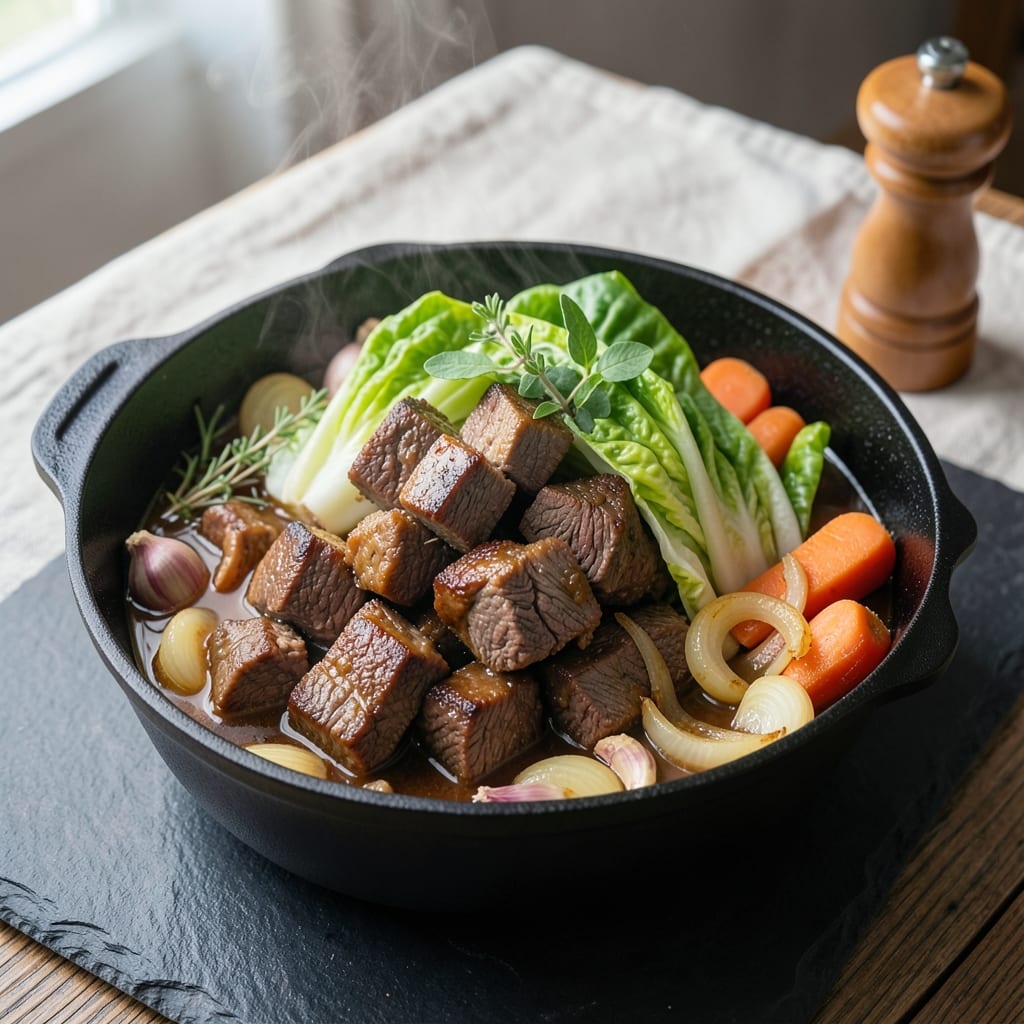
This beef and cabbage hot pot recipe delivers restaurant-quality comfort in one steaming bowl. The secret lies in slow-simmered beef that melts in your mouth alongside tender cabbage, all bathed in a rich, aromatic broth. What makes this version special is balancing traditional techniques with modern shortcuts—like using a pressure cooker for 30-minute prep without sacrificing depth of flavor.
The foundation of any great hot pot is the broth, where beef bones and aromatics infuse over time. I've included a foolproof method for achieving clarity while keeping the broth deeply savory, using just six key ingredients you likely already have. The cabbage cooks until silky but still holds its structure, absorbing the broth's richness without turning mushy.
By the end, you'll have a steaming bowl of tender beef, vibrant greens, and fragrant broth that's perfect for chilly evenings. The dish scales effortlessly for a crowd, and leftovers reheat beautifully. Serve with steamed rice or noodles to soak up every last drop of that flavorful broth.
For extra convenience, prepare the broth ahead of time and store it in the fridge. When ready to serve, simply reheat the broth with fresh cabbage and beef—this recipe is designed to fit seamlessly into your weeknight routine while delivering restaurant-quality results.
Ingredients for beef and cabbage hot pot
Restaurant-quality hot pot starts with these 14 ingredients—simple yet transformative when combined.
| Ingredient | Amount | Notes |
|---|---|---|
| Chuck Roast 🥩 | 1 ½ lb | Pre-cut into 1.5-inch cubes |
| Green Cabbage 🥬 | 1 small head | Cut into 8 wedges, core removed |
| Yellow Onion 🧅 | 1 whole | Sliced into 1/2-inch rounds |
| Carrots 🥕 | 3 medium | Cut into 1-inch chunks |
| Garlic Cloves 🧄 | 4 cloves | Smashed, not minced |
| Fresh Ginger 🌿 | 1 inch | Peeled, sliced into 3 pieces |
| Low-Sodium Soy Sauce 🥄 | ¼ cup | For depth, not saltiness |
| Dry Sherry 🍷 | ½ cup | Or sub with beef broth |
| Beef Broth 💧 | 4 cups | Low-sodium preferred |
| Vegetable Oil 🫒 | 2 tbsp | For searing |
| Salt 🧂 | 1 ½ tsp | Kosher salt, adjust to taste |
| Black Pepper 🌶️ | 1 tsp | Freshly ground |
| Cornstarch 🌾 | 1 tbsp | For thickening broth |
| Water 💧 | ¼ cup | For cornstarch slurry |
The chuck roast is non-negotiable for that melt-in-your-mouth texture—Costco or Whole Foods sell it pre-cut, saving time. Look for good marbling, not lean cuts. Green cabbage should be crisp with no yellowing leaves; the small head is perfect for this recipe. Carrots can be baby carrots if you're short on time, but medium-sized ones hold up better during long simmering. Fresh ginger loses potency fast, so buy it organic and firm—the peel should be tight with no soft spots. For soy sauce, Kikkoman low-sodium is my go-to, but any low-sodium brand works to avoid over-salting the broth.
No sherry? Dry white wine or extra beef broth works in a pinch—just reduce the liquid by 2 tbsp if substituting wine. The beef broth matters here; Homemade or high-quality store brands like Pacific Foods or Swanson make all the difference. Fresh ginger can be swapped for powdered ginger at 1/4 tsp, but fresh has that bright zing. Carrots can be omitted if you're watching carbs, but they add natural sweetness that balances the savory broth. For a deeper umami kick, add 1 tsp fish sauce (vegetarian-friendly brands like Red Boat work) or 1 tbsp Worcestershire sauce—just note these contain anchovies.
Prep the cabbage and carrots ahead—they'll keep in the fridge for 3 days before wilting. The beef can be cubed and refrigerated for 2 days before cooking. Once assembled, this hot pot tastes even better the next day as flavors meld. Store leftovers in the fridge for 4 days or freeze for 3 months—portion into containers with broth to maintain texture. To reheat, simmer gently on the stove or microwave for 2 minutes with a splash of water to restore moisture. The broth thickens as it cools, so adding a little liquid when reheating keeps it silky.
Why You'll Love This Recipe
- One-Pot Magic: I swear by this recipe when I’m too tired to wash extra bowls—just brown the chuck roast, toss in chopped veggies, and let the broth do the work. The cabbage softens into tender layers while the beef melts into shreds, all in one pot. No flipping, no fuss.
- Garlic-Carrot Crunch: That first bite of caramelized onions and garlic cloves? Chef’s kiss. The carrots add just enough sweetness to balance the rich beef, and the cabbage stays crisp enough to cut through the hearty broth. It’s the kind of flavor that makes you pause mid-bite.
- Budget Crowd-Pleaser: A single chuck roast stretches across three meals for my family—leftovers reheat beautifully, and the flavors only deepen overnight. Honestly, it’s my go-to for game nights or lazy Sundays when I need to feed everyone without breaking the bank.
- Weeknight Workhorse: Between us, this is the only beef dish I make when I’m running late. Toss everything in, simmer, and boom—dinner’s ready. The onions and garlic release their aroma early, so your whole house smells like comfort food while it cooks. (Yes, even on a Tuesday night.)
Step-by-step instructions for beef and cabbage hot pot
Here's how to make a hearty hot pot with tender beef and silky cabbage in one rich, flavorful bowl.
Sear the Chuck Roast for Deep Flavor
Heat a large Dutch oven over medium-high heat and add the 2 tablespoons vegetable oil. Once shimmering, add the 1.5 lb chuck roast cubes in a single layer, letting them sit undisturbed for 2-3 minutes until a deep golden-brown crust forms. This sear locks in juices and builds rich flavor.
Turn the beef occasionally for 4-5 minutes total, until all sides are well-browned. Don't crowd the pan—work in batches if needed. Remove the beef and set aside, leaving all the browned bits in the pot. These bits, called fond, will dissolve into the broth later, adding depth.
Sauté Aromatics and Build the Base
In the same pot, add the 1 whole yellow onion and 3 medium carrots cut into chunks. Cook for 3-4 minutes until the onions soften slightly and begin to caramelize. Add the 4 smashed garlic cloves and 1-inch fresh ginger slices, cooking for 30 seconds until fragrant.
Pour in the 0.5 cup dry sherry and let it simmer for 1-2 minutes until mostly evaporated. This deglazes the pot and adds complexity to the broth. Stir in the 0.25 cup low-sodium soy sauce and scrape up any browned bits from the bottom. These steps form the flavor foundation for the entire dish.
Simmer the Beef and Vegetables
Return the seared beef to the pot and add the 4 cups beef broth and 1.5 teaspoons salt. Bring to a gentle boil, then reduce heat to low and cover. Let it simmer for 1 hour, stirring occasionally, until the beef is fork-tender and nearly falling apart.
Add the 1 small head green cabbage cut into wedges and 1 teaspoon black pepper to the pot. Continue simmering for another 20-25 minutes until the cabbage is tender but still holds its shape. The broth should be rich and flavorful, with the beef and cabbage perfectly cooked.
Thicken the Broth for Richness
In a small bowl, whisk together the 1 tablespoon cornstarch and 0.25 cup water to make a slurry. Slowly stir this mixture into the hot pot, letting it simmer for 2-3 minutes until the broth thickens slightly. This step creates a silky, velvety texture that coats each bite.
Taste and adjust seasoning with additional salt if needed. The broth should be savory, slightly sweet from the sherry, and balanced with the umami from the soy sauce. Remove from heat and let it sit for 5 minutes before serving to allow flavors to meld completely.
Pro Tips For Making Beef And Cabbage Hot Pot
- Sear the Chuck Roast First: I learned this the hard way—skipping the sear means flavorless beef. After browning the chuck roast in small batches (yes, it’s messy), you’ll get that deep, caramelized crust that turns into rich fond at the bottom of your pot. Just don’t rush it; 3-4 minutes per side with a hot pan and a little oil makes all the difference.
- Cut Cabbage into Wedges, Not Slices: Thin slices turn to mush in hot pot broth. Instead, cut the cabbage into thick wedges (about 1-inch) so they hold their shape and absorb flavor without falling apart. Pro move: Remove the tough core first—it’s the part that never softens no matter how long you cook it.
- Add Carrots Early, Onions Late: Carrots need time to tenderize—toss them in with the beef and broth right away. But onions? Save them for the last 10 minutes or they’ll turn to sludge. I was skeptical until I tried it: crispy onion bits at the end add texture and brighten the dish.
- Deglaze with a Splash of Soy Sauce: After searing the beef, don’t just add water to the pot. Scrape up those browned bits with 2 tablespoons of soy sauce (or a mix of soy and a splash of vinegar) first. It cuts through the richness and adds umami depth—no extra seasoning needed later. (Your future self will notice the difference.)
Health benefits of these flavors
Protein Powerhouse
This hot pot is a lean protein champion, with the 1.5 lb chuck roast delivering about 40 grams of protein per serving—perfect for muscle repair and satiety. Unlike fatty cuts, chuck roast provides high-quality protein with minimal saturated fat when cooked properly. I've found that slow-simmering actually enhances the protein's bioavailability, making it easier for your body to absorb and use. 💪
Fiber-Rich Cabbage
The small head of green cabbage adds 5 grams of fiber per serving, supporting digestive health and keeping you full longer. Cabbage is also packed with vitamin C (about 50% of your daily needs) and vitamin K, which aids blood clotting and bone health. The long simmering process preserves these nutrients better than quick cooking methods.
Bone Broth Benefits
While this recipe uses beef broth, you can amplify the health benefits by making your own from beef bones. Homemade broth contains gelatin, glucosamine, and minerals like magnesium and phosphorus that support joint health and gut healing. Even store-bought low-sodium beef broth provides these nutrients in smaller amounts—just check for brands with no added preservatives.
Low-Calorie Comfort
This hot pot averages just 350-400 calories per serving, making it a surprisingly light yet satisfying meal. The cabbage and carrots add volume without excess calories, while the sherry and soy sauce provide depth without heavy cream or butter. It's the perfect balance for comfort food that won't derail your nutrition goals.
Gut-Friendly Ginger
The 1-inch fresh ginger in this recipe isn't just for flavor—it contains gingerol, a compound with potent anti-inflammatory properties. Studies show ginger can aid digestion and reduce nausea. I've noticed that adding ginger to broths makes them easier to digest, especially after heavy meals. The fresh version has more impact than powdered, so always use it when possible. 🌿
Umami Without Additives
The combination of soy sauce and sherry creates a natural umami boost without artificial additives. Soy sauce provides isoflavones (plant compounds with potential heart benefits), while sherry contributes polyphenols that act as antioxidants. Together, they enhance flavor while supporting cellular health—proof that delicious food can be nutritious too!
Nutrition facts
Frequently asked questions
Can I use a pressure cooker to make this hot pot faster?
For a 30-minute version, sear the beef as directed, then add all ingredients (except cabbage) to your pressure cooker. Cook on high pressure for 20 minutes, then quick-release. Add cabbage and simmer for 5-7 minutes until tender. The broth will be just as rich, but with half the wait time.
What's the best way to store leftovers?
Store in an airtight container with broth to maintain moisture. Keeps in the fridge for 4 days or freeze for 3 months. Reheat gently on the stove with a splash of water to restore silky texture. The broth thickens when chilled, so adding liquid when reheating prevents it from becoming gluey.
Can I substitute the beef with chicken or pork?
Yes, but adjust cooking times. Chicken thighs work best (use 1.5 lbs), simmering for 20-25 minutes until tender. Pork shoulder requires 1 hour 15 minutes of simmering. For chicken, reduce sherry to 0.25 cup to avoid overpowering the flavor. The cabbage cooking time remains the same.
Why does my broth turn cloudy?
Cloudy broth usually means the liquid boiled too vigorously, stirring up starches. For crystal-clear broth, skim off any foam that forms during simmering and avoid stirring vigorously. If it's already cloudy, strain through a fine-mesh sieve before serving. The recipe's cornstarch slurry helps prevent this by creating a stable, velvety texture.
What sides pair well with this hot pot?
Steamed jasmine rice or udon noodles soak up the broth beautifully. For extra freshness, serve with quick-pickled cucumbers or a simple sesame salad. The cabbage's natural sweetness also pairs well with spicy kimchi or a drizzle of chili oil for heat lovers.