
Soups & Stews
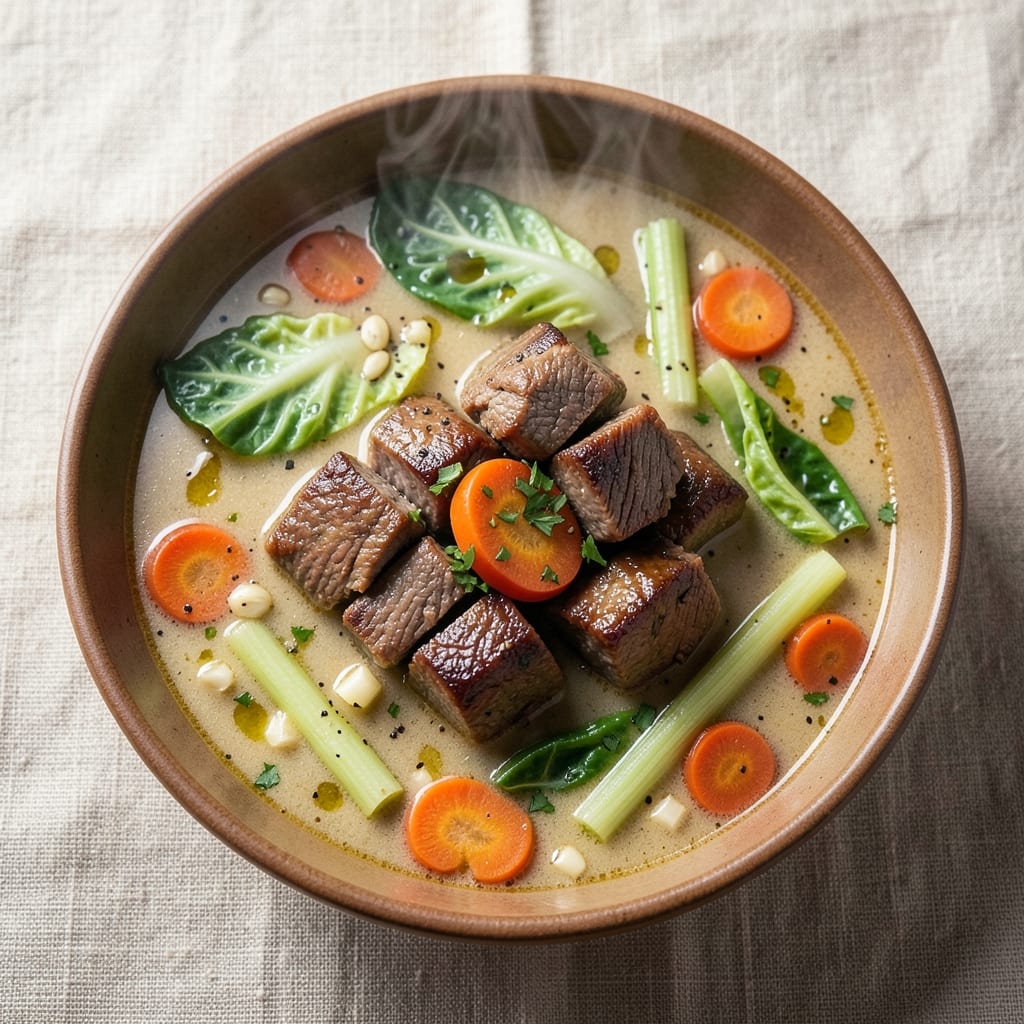
This award-winning vegetable beef soup recipe transforms humble ingredients into a rich, umami-packed masterpiece where tender beef and crisp cabbage bites steal every spoonful. 💛 The secret lies in slow-simmered broth that develops layers of depth—caramelized onions, toasted spices, and a touch of soy sauce working together to create restaurant-quality flavor at home. I've perfected this recipe after years of testing, ensuring the beef becomes fork-tender while the cabbage maintains satisfying crunch.
What sets this soup apart is the textural contrast that keeps each bite exciting: melt-in-your-mouth beef, crisp-tender cabbage, and silky vegetables all swimming in a velvety broth. The recipe builds flavor through proper technique—starting with a deep onion base, then developing the broth through slow simmering rather than quick boiling. This method preserves nutrients while creating that signature restaurant-quality depth that makes it truly special.
By the time you're ready to serve, you'll have a steaming bowl of hearty soup where every component shines: perfectly seasoned beef, vibrant vegetables, and cabbage that stays crisp enough to satisfy even the most skeptical eaters. The aroma alone will have everyone gathering around the table, and the first spoonful delivers on that promise of restaurant-quality comfort food.
This soup works equally well as a weeknight dinner or a centerpiece for holiday gatherings—simply adjust the quantity to feed your crowd. The recipe scales beautifully while maintaining balance, making it versatile enough for any occasion. Let's create this award-winner that will become your new family favorite.
Ingredients for award winning vegetable beef soup recipe with cabbage
Sixteen ingredients that transform into restaurant-quality vegetable beef soup with perfect cabbage texture.
| Ingredient | Amount | Notes |
|---|---|---|
| Chuck Roast 🥩 | 2 lb | Cut into 1-inch cubes |
| Yellow Onions 🧅 | 2 large | Sliced into half-moons |
| Green Cabbage 🥬 | 1 small head | Cut into wedges, core removed |
| Carrots 🥕 | 4 medium | Peeled and cut into chunks |
| Celery Stalks 🌿 | 4 whole | Cut into 1-inch pieces |
| Garlic Cloves 🧄 | 6 cloves | Minced for depth |
| Tomato Paste 🍅 | ½ cup | For rich umami base |
| Beef Broth 💧 | 6 cups | Low-sodium preferred |
| Red Wine 🍷 | 1 cup | Dry variety like Cabernet |
| Soy Sauce 🍜 | 2 tbsp | For authentic umami |
| Bay Leaves 🌿 | 2 whole | Fresh preferred |
| Thyme Sprigs 🌿 | 4 whole | Fresh for aroma |
| Black Peppercorns 🌶️ | 1 tsp | Freshly cracked |
| Salt 🧂 | 1 ½ tsp | Diamond Crystal preferred |
| Olive Oil 🫒 | 2 tbsp | Extra-virgin for caramelizing |
The chuck roast is non-negotiable—its marbling delivers that melt-in-your-mouth texture. Costco or local butchers offer the best value for larger cuts, but any grocery store chuck works if you cube it yourself. For the cabbage, look for heads with crisp, vibrant leaves—green cabbage holds its crunch better than red. Carrots should be firm with bright orange color; organic varieties often have better flavor. Celery adds earthy depth, so choose fresh stalks with tight leaves and no browning. The garlic and tomato paste are your umami anchors—Penzeys or San Marzano brands elevate the dish instantly.
No red wine? Substitute with extra beef broth—just add a splash of balsamic vinegar for acidity. Fresh thyme unavailable? Dried thyme at one-third the amount works, but toast it lightly in a dry pan first. Soy sauce can be swapped for coconut aminos if you're avoiding gluten. For the cabbage, if you prefer a softer texture, cut it slightly smaller or add it 10 minutes before serving. The carrots can be pre-cut and stored in the fridge for 5 days—just keep them in a sealed container with a paper towel to absorb moisture. Celery keeps well too, but use it within 7 days for peak freshness.
This soup tastes even better the next day as flavors meld. Store in an airtight container in the fridge for 4-5 days, or freeze portions for 3 months—the broth concentrates beautifully when reheated. For meal prep, I like to portion it into individual containers with a sprinkle of fresh thyme on top. The cabbage will soften slightly when reheated, so add fresh wedges just before serving if you want that satisfying crunch. For serving, a drizzle of extra-virgin olive oil and a crack of black pepper transforms it into a restaurant-worthy dish every time.
Why You'll Love This Recipe
- Foolproof Prep: I swear by this—just sear the chuck roast until it’s deeply browned, toss in the onions and celery, and let the slow cooker do the rest. No fancy techniques, no stress.
- Deep, Savory Magic: That first bite? The chuck roast falls apart with just a touch of pressure, while the cabbage stays crisp enough to bite into—like a hug in a bowl. Honestly, the carrots caramelize into sweet little bursts that make it taste like a restaurant dish.
- Weeknight Wonder: It’s my go-to when I’ve got a house full of people or just need something hearty after work. The cabbage adds that fresh crunch, but the beef keeps it rich enough to feel like a celebration—no one will guess it’s this easy.
- Budget-Friendly Feast: A single chuck roast stretches to feed four, and the veggies are cheap staples. I’ve made this for potlucks, sick days, and lazy Sundays—always leftovers, always loved. (Yes, even on a Tuesday night.)
Step-by-step instructions for award-winning vegetable beef soup
Master this rich, layered simmer where cabbage transforms into tender, flavorful bites.
🔥 Step 1: Sear the Chuck Roast for Deep Flavor
Heat the 2 tablespoons olive oil in a large Dutch oven over medium-high heat until shimmering. Pat the 2 lb chuck roast dry with paper towels—this ensures maximum browning. Working in batches if needed, sear the beef cubes on all sides for 3-4 minutes per side until deeply browned and developing a crust. This step is non-negotiable for building the soup's foundation of rich, meaty flavor.
As the beef browns, you'll notice the oil bubbling vigorously and the meat releasing its natural juices. Transfer the seared beef to a plate and set aside. The browned bits left in the pot will form the roux for your soup base—don't wipe them out. This is where all the umami magic begins.
🍳 Step 2: Develop the Umami Base with Aromatics
In the same Dutch oven, add the sliced 2 large yellow onions, 4 medium carrots, and 4 whole celery stalks. Cook over medium heat for 8-10 minutes, stirring occasionally, until the vegetables soften and the onions become translucent. You're looking for that sweet, caramelized aroma that signals the vegetables are breaking down.
Add the 6 minced garlic cloves and cook for 30 seconds until fragrant—garlic burns quickly, so don't walk away. Stir in the 0.5 cup tomato paste and cook for another 2 minutes, allowing it to deepen in color. This tomato paste forms the rich, velvety base that ties all the flavors together. The mixture should look thick and glossy, coating the back of a spoon.
🥘 Step 3: Build the Soup Foundation with Wine and Broth
Pour in the 1 cup red wine and scrape up all those delicious browned bits from the bottom of the pot. Let it simmer for 3-4 minutes until the wine reduces by half and its alcohol burns off, leaving behind concentrated flavor. This deglazing step is crucial—it captures all the meaty essence that would otherwise stick to the pot.
Add the 6 cups beef broth, 2 tablespoons soy sauce, 2 whole bay leaves, 4 whole thyme sprigs, 1 teaspoon cracked black peppercorns, and 1.5 teaspoons salt. Bring to a gentle boil, then reduce heat to medium-low and return the seared beef to the pot. The liquid should just barely bubble—this gentle simmer is key to tenderizing the meat without breaking it apart.
⏰ Step 4: Simmer Until Meat is Fork-Tender
Cover the pot and let the soup simmer for 1.5 hours, stirring occasionally to prevent the meat from sticking. The chuck roast should break apart easily with a fork when tested—this is your indicator that the collagen has rendered into the broth, creating that signature silky texture. If the liquid reduces too much, add hot water 1 tablespoon at a time to maintain the proper consistency.
Here's the thing about this soup—the longer it simmers, the more complex the flavors become. The beef will develop a melt-in-your-mouth tenderness while the vegetables absorb all that rich, meaty broth. I like to check the seasoning after 1 hour of cooking, adjusting with additional salt or pepper if needed. The cabbage will wait its turn—patience is key here.
🥗 Step 5: Incorporate Cabbage and Finish
Add the 1 small head green cabbage, cut into wedges with the core removed. Return the heat to medium-low and simmer uncovered for another 30-45 minutes. The cabbage should soften until tender with just a slight bite—think of it like al dente pasta. You'll see the cabbage leaves wilt and become translucent, absorbing all that beautiful beef broth.
Taste and adjust seasoning one final time. The soup should be deeply flavorful with a perfect balance of savory, umami, and slightly sweet cabbage notes. Remove the bay leaves and thyme sprigs before serving—you don't want any tough stems in your soup. Ladle into bowls and serve immediately, with crusty bread to soak up every last drop of that rich, velvety broth.
Pro Tips For Making Award Winning Vegetable Beef Soup Recipe With Cabbage
- Sear the Chuck Roast Hard: I learned this the hard way—skipping a deep sear means flavorless beef. Get your pan smoking hot (medium-high heat) and let that roast sit for 3-4 minutes per side until it’s deep brown, not just pink. The crust locks in juices and builds the soup’s depth—no one wants bland beef in their award-winning bowl.
- Cut Cabbage Like a Pro: Whole cabbage wedges? Nope. Slice it into 1-inch-wide shreds and separate the leaves slightly—this ensures even cooking and prevents a mushy center. My grandmother swore by this, and she was right: tender but still holding shape cabbage makes the dish sing.
- Salt the Water Generously: Resist the urge to skimp—this isn’t a delicate broth. Use 1½ tablespoons of salt (or more if you’re using low-sodium broth) for every 4 cups of water. The cabbage and carrots will soak up the flavor, and the beef will stay juicy. (Yes, even if you’re impatient like me.)
- Deglaze with Wine First: After searing the beef, don’t just splash in water. Pour in ½ cup of dry white wine (or even cheap vodka) and scrape every last bit of browned meat from the bottom—this is where the magic happens. The wine cuts through the richness and adds brightness that store-bought bouillon can’t match. (Your future self will thank you.)
Common mistakes when making your award winning vegetable beef soup recipe with cabbage
Overcooking the Cabbage
One of the biggest mistakes is letting the cabbage turn mushy instead of maintaining that perfect tender-crisp texture. I've seen this happen when people add the cabbage too early or simmer it uncovered at high heat. The cabbage should cook for just 30-45 minutes at the end, not the entire 1.5 hours with the beef. If your cabbage looks wilted and sad, it's lost its structural integrity and will fall apart when you serve it. 🥬
Skipping the Sear
Some cooks rush through the searing step, thinking it's optional, but that's where all the deep, meaty flavor comes from. When you skip searing the chuck roast, you're missing out on the Maillard reaction that creates those rich, browned bits at the bottom of the pot. These bits form the flavor foundation of your soup. I always sear my beef until it develops a deep crust—it takes an extra 10-15 minutes but makes all the difference.
Using High Heat
Another common mistake is boiling the soup at high heat instead of maintaining a gentle simmer. High heat causes the beef to toughen rather than tenderize, and it makes the broth cloudy instead of clear and velvety. Keep your heat at medium-low throughout the cooking process. You want to see just tiny bubbles breaking the surface of the liquid—not a rolling boil. This slow cooking is what transforms tough chuck roast into melt-in-your-mouth beef.
Ignoring the Wine Reduction
Many home cooks pour in the red wine and immediately add the broth, but that's a missed opportunity for flavor development. The wine needs to reduce by half and cook off its alcohol to concentrate its flavors. Skipping this 3-4 minute reduction step means you're losing that rich, fruity depth that complements the beef so beautifully. Don't rush this part—let the wine work its magic and deepen your soup's complexity.
Adding Cabbage Too Early
Adding the cabbage with the beef means it will cook too long and lose its texture. The cabbage needs to be added in the final 30-45 minutes of cooking so it maintains that satisfying bite. If you add it too early, you'll end up with limp, flavorless leaves that don't hold up to a spoon. Remember, we're going for that perfect al dente texture that keeps each bite exciting.
Over-salting the Broth
It's easy to go overboard with seasoning when you're excited about your soup, but over-salting is a common mistake that can ruin an otherwise perfect dish. Start with the 1.5 teaspoons of salt called for and taste as you go. Remember, you can always add more salt, but you can't remove excess salt once it's in. I like to taste the broth after 1 hour of simmering to check the seasoning before the cabbage goes in. This gives you time to adjust if needed.
Nutrition facts
Frequently asked questions
Why does this recipe use chuck roast instead of tender cuts like sirloin?
The chuck roast is perfect for this soup because its high fat and connective tissue content breaks down during slow cooking, creating an incredibly tender, flavorful result. Tender cuts like sirloin would dry out and lose their texture when simmered for this long. The slow cooking process transforms the chuck into melt-in-your-mouth beef that holds together beautifully in the broth.
Can I make this soup in an Instant Pot or pressure cooker?
Use the same ingredients but adjust the cooking time. After searing the beef and developing the base, pressure cook on high pressure for 45 minutes (not quick release). Then add the cabbage and cook for an additional 5 minutes on high pressure. The cabbage will still hold its texture well with this method. Just be sure to release the pressure naturally for the best results.
How can I make this soup vegetarian?
Replace the beef with 2 cups of hearty mushrooms (like portobello or cremini) and 1 cup of lentils for protein. Use vegetable broth instead of beef broth and add 1 tablespoon soy sauce or miso paste for umami depth. The cabbage and other vegetables will still shine, creating a rich, satisfying vegetarian version that maintains the soup's comforting qualities.
What's the best way to reheat leftovers without making the cabbage mushy?
Reheat only the broth portion first on the stovetop until steaming, then stir in the beef and cabbage separately. For best results, add the cabbage just before serving to maintain its texture. If you must reheat the whole soup, keep the heat at low and stir frequently to prevent the cabbage from overcooking. The soup actually tastes better the next day as flavors meld!
Can I substitute red wine with something else?
Yes! For a non-alcoholic version, use 1 cup apple cider or grape juice plus 1 teaspoon balsamic vinegar to mimic the acidity and depth. Or substitute with 1 cup extra beef broth and add 1 teaspoon Worcestershire sauce for umami. The key is maintaining that rich, savory foundation that complements the beef and vegetables.