
Main Courses
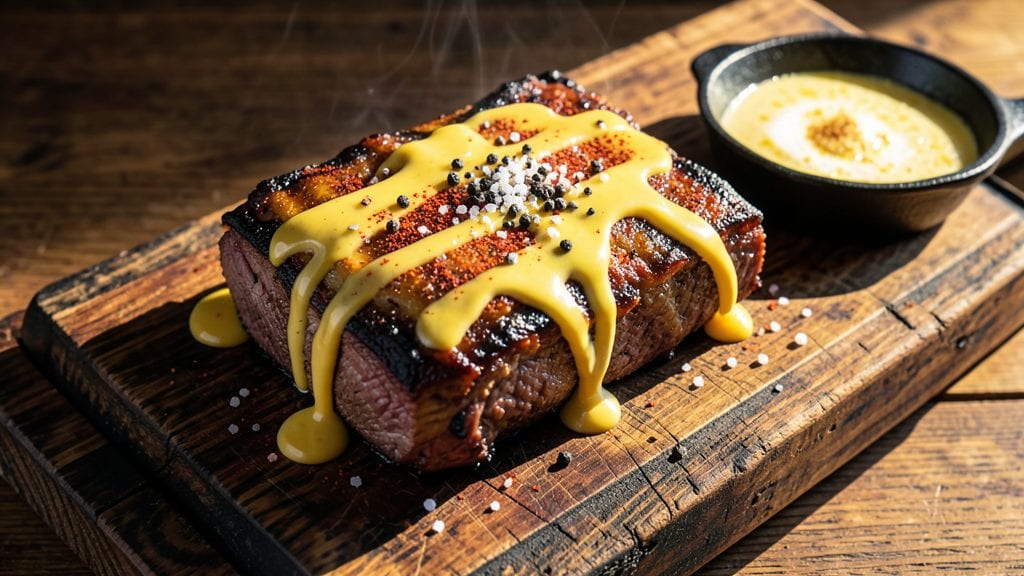
Mastering Texas-style smoked beef brisket means achieving that legendary dark bark that cracks when you slice and meat so tender it practically falls apart with a touch. This recipe delivers the perfect balance of smoky flavor and melt-in-your-mouth texture through precise low-and-slow techniques that transform tough beef into restaurant-quality results.
The key lies in patience—letting the brisket cook for 12 to 16 hours at a steady 225–250°F while developing that signature crust that’s both crisp and rich.
What sets this method apart is the attention to detail in every phase—from the dry rub that creates the bark to the spritzing that keeps the surface moist without steaming the meat.
I’ve perfected this technique over countless smoker sessions, ensuring the brisket stays juicy inside while developing that irresistible outer layer. The result? A brisket that’s foolproof for beginners but refined enough for pitmasters, with a flavor profile that’s unmistakably Texas.
Once you’ve reached the perfect internal temperature and rested the meat properly, you’ll be left with slices that shred effortlessly, releasing juices that make every bite worth the wait. Serve it with classic Texas sides like white bread, pickles, and baked beans to complete the experience.
This isn’t just a recipe—it’s a game-changer for anyone looking to elevate their smoking skills.
The beauty of this method is its versatility—whether you’re feeding a crowd or meal prepping for the week, the brisket holds up beautifully. Let’s get started on creating a dish that’s as rewarding to make as it is to eat.
Ingredients for texas style smoked beef brisket
Twelve essential ingredients transform tough beef into legendary Texas-style brisket with signature bark and melt-in-your-mouth tenderness.
| Ingredient | Amount | Notes |
|---|---|---|
| Beef Brisket (Packer Cut) 🥩 | 10 lb | Whole packer cut, fat cap intact |
| Yellow Mustard 🍯 | ½ cup | For spritzing during smoke |
| Coarse Kosher Salt 🧂 | ½ cup | Diamond Crystal preferred |
| Black Peppercorns 🌶️ | ¼ cup | Freshly cracked, coarse grind |
| Smoked Paprika 🌶️ | ¼ cup | High-quality, not sweet |
| Garlic Powder 🧄 | 2 tbsp | Freshly ground preferred |
| Onion Powder 🧅 | 2 tbsp | Not onion salt |
| Ground Cumin 🌿 | 1 tbsp | Toasted for depth |
| Chili Powder 🌶️ | 1 tbsp | Medium heat preferred |
| Cayenne Pepper 🔥 | 1 tsp | Adjust for heat tolerance |
| Granulated Sugar 🍚 | 1 tbsp | For bark development |
| Apple Juice Concentrate 🍎 | 1 tbsp | For spritzing, diluted |
| Unsalted Butter 🧈 | ½ cup | Cold, cubed for basting |
| Fresh Thyme Leaves 🌿 | ¼ cup | Chopped, for finishing |
| Wood Chips (Hickory/Oak) 🌳 | 4 lb | Soaked 1 hour minimum |
The packer cut brisket is non-negotiable—its thick fat cap creates the signature bark while keeping the meat juicy. Source from a reputable butcher or Costco's pre-cut packer brisket for consistency. Look for vibrant red color and visible marbling; avoid anything with grayish hues or excessive lean. For wood chips, hickory dominates Texas style, but oak adds subtle sweetness—Traeger or Cookshack brands are reliable. The yellow mustard acts as a binder during spritzing, preventing the rub from washing off while keeping the surface moist. Never skip the fat cap—it's what creates that legendary crust.
Substitutions require precision: no packer cut? Use flat cut with extra time (18+ hours), but expect less bark. No smoked paprika? Swap for equal parts sweet paprika plus 1 tsp liquid smoke, but taste first. Mustard allergy? Use apple juice concentrate diluted with water (1:1) instead. For the rub, Penzeys spices deliver consistent quality, but store-bought brands work if fresh (within 6 months). Fresh thyme is ideal for finishing, but dried at half the amount suffices. The butter basting is critical—use European-style unsalted butter (like Plugrá) for higher smoke point and richer flavor. Never use margarine or salted butter.
Store prepped rub in an airtight container for up to 6 months in a cool, dark place. The brisket itself should rest 2 hours at room temperature before smoking, then 1 hour after cooking. Spritz every 90 minutes during the smoke to maintain moisture without steaming. Leftover brisket reheats beautifully—sliced thin and pan-seared or shredded for tacos. Portion into vacuum-sealed bags for 3 months frozen storage. The wood chips can be reused once dried, but fresh batches yield superior flavor. Always discard any unused portion of the apple juice concentrate after opening.
Why You'll Love This Recipe
- Smoke in Minutes: I swear, the packer cut brisket is forgiving—no fancy trimming, just a quick rub of salt, peppercorns, and smoked paprika. You’re talking real Texas shortcuts here: toss it on the smoker, let it do the work, and walk away.
- Mustard Magic: That yellow mustard isn’t just for show—it cuts through the richness, leaving you with a balance that’s dangerously good. The smoky paprika ties it all together, but honestly? The mustard makes this brisket sing.
- Leftovers Heaven: Between us, this recipe makes way more than you’ll eat in one sitting. The next day? Even better—shred it for tacos, sandwiches, or just reheat slices straight from the fridge. (Yes, even on a Tuesday night.)
- Budget Beast: A packer cut brisket stretches across meals without breaking the bank. I’ve fed six people for under $20, and the leftovers? Still a hit. That’s Texas efficiency right there.
Step-by-step instructions for Texas style smoked beef brisket
Mastering this brisket technique delivers a perfect balance of deep bark and melt-in-your-mouth tenderness.
Prepare the Brisket and Rub
Begin by trimming the fat cap of the 10 lb Beef Brisket (Packer Cut) to about ¼-inch thickness using a sharp boning knife. Preserve the fat cap's integrity to protect the meat during smoking. Pat the brisket dry with paper towels, ensuring no moisture remains—this is critical for developing that signature Texas-style bark.
In a medium bowl, combine the 0.5 cup Coarse Kosher Salt, 0.25 cup Black Peppercorns (freshly cracked), 0.25 cup Smoked Paprika, 2 tbsp Garlic Powder, 2 tbsp Onion Powder, 1 tbsp Ground Cumin, 1 tbsp Chili Powder, 1 tsp Cayenne Pepper, 1 tbsp Granulated Sugar, and 1 tbsp Apple Juice Concentrate. Mix thoroughly until the spices are evenly distributed. Apply the rub generously to all sides of the brisket, pressing firmly so it adheres well. Let the seasoned brisket rest at room temperature for 1 hour before smoking—this ensures even cooking and maximizes flavor penetration.
Set Up the Smoker and Smoke the Brisket
Soak the 4 lb Wood Chips (Hickory/Oak) in water for at least 1 hour to prevent flare-ups. Preheat your smoker to 225°F using the soaked wood chips. Place a water pan inside the smoker to maintain moisture and aid in the bark formation. Once the smoker reaches the target temperature and you see steady, thin blue smoke, place the brisket fat-side up on the grill grate. Close the lid and resist the urge to open it—each time you peek, you risk losing heat and extending cook time.
Smoke the brisket undisturbed for 6-8 hours, or until the internal temperature reaches 165-170°F. This is when you'll encounter "the stall," a normal phase where the temperature plateaus as moisture evaporates. The bark should be dark and beginning to crack slightly, indicating it's developing properly. During this time, spritz the brisket every 90 minutes with a mixture of 0.5 cup Yellow Mustard and 1 tbsp Apple Juice Concentrate (diluted with 1 cup water) to keep the surface moist and enhance bark formation.
Wrap and Finish the Brisket
When the brisket hits the stall, it's time to wrap it. Remove the brisket from the smoker and wrap it tightly in pink butcher paper (not aluminum foil). This technique, known as the "Texas crutch," helps push the brisket through the stall while preserving the bark. Return the wrapped brisket to the smoker and continue cooking until the internal temperature reaches 200-205°F, which typically takes an additional 4-6 hours. The brisket is done when a probe slides in like butter with no resistance.
Once the brisket reaches the target temperature, remove it from the smoker and let it rest for at least 1 hour, wrapped in the butcher paper. This resting period allows the juices to redistribute, ensuring each slice is tender and moist. During this time, melt the 0.5 cup Unsalted Butter in a small saucepan over low heat and stir in the 0.25 cup Fresh Thyme Leaves. Keep the butter warm for basting.
Rest and Serve
After resting, unwrap the brisket and locate the grain direction—you'll see lines running through the meat. Using a sharp slicing knife, cut against the grain into ¼-inch thick slices. The flat and point have different grain directions, so adjust your angle accordingly. Serve the brisket immediately, basting each slice with the warm thyme butter for added richness.
Each slice should have a dark, crackling bark on the outside and a beautiful pink smoke ring just beneath. The meat should be so tender it practically falls apart with a gentle tug, delivering a perfect balance of smoky, spicy, and sweet flavors. Serve with classic sides like creamy coleslaw, cornbread, and baked beans for a complete Texas-style meal.
Pro Tips For Making Texas Style Smoked Beef Brisket
- Trim the Fat Cap: That thick layer of fat on the brisket isn’t just for show—it’s your moisture shield. Trim it down to about ¼-inch thick on top, but leave the edges intact. I learned this the hard way when I over-trimmed and ended up with dry meat. The fat renders slowly, keeping the brisket juicy as it smokes.
- Mustard First, Salt After: Slather that yellow mustard on before you hit the smoker—it’s your smoke adhesive. But here’s the catch: don’t salt the brisket until after it’s been smoking for 2-3 hours. The mustard will burn if you salt it first, and nobody wants a bitter crust. (Yes, even if you’re impatient like me.)
- Watch the Probe, Not the Clock: Texas brisket isn’t about hours—it’s about internal temp. Pull it at 203°F in the thickest part of the flat, not the point. I used to guess and always overcooked it until I started trusting the probe. The flat should be tender enough to slice with a fork, but the point can hold its shape.
- Spritz Like a Pro: Skip the water—it dilutes the flavor. Use a 50/50 mix of apple cider vinegar and beef broth, spritzed every 90 minutes. The acid cuts through the fat, and the broth keeps things moist without making the bark soggy. I was skeptical until I tried it, and now it’s non-negotiable.
Flavor customization for this recipe
Spice Level Control
Adjust the heat by tweaking the cayenne pepper—start with ½ tsp for mild, 1 tsp for medium, or 1.5 tsp for bold Texas-style heat. I often reduce cayenne to ½ tsp when serving families or guests who prefer milder flavors.
For extra kick, add 1 tsp chipotle powder to the rub for smoky heat. 🌶️
Sweet-Smoky Balance
Enhance the sweetness by increasing the granulated sugar to 2 tbsp for a deeper caramelized bark. For a fruity twist, add 1 tbsp brown sugar and 1 tsp cinnamon to the rub. I’ve also experimented with 1 tbsp molasses in the spritz for a richer, almost barbecue-sauce-like finish. 🍯
Herb Variations
Swap thyme for rosemary (½ cup chopped) for an earthy aroma, or add 1 tbsp dried oregano to the rub for a Mediterranean-inspired brisket. Fresh cilantro leaves (chopped) tossed on top before serving add a bright contrast to the smoky meat. 🌿
Wood Chip Alternatives
For a sweeter profile, use 100% oak wood chips instead of hickory. A 50/50 hickory-oak blend offers a balanced smoky-sweet flavor. I’ve also tried pecan wood (soaked) for a nutty undertone—just reduce cook time by 30-60 minutes since it burns faster. 🌳
Wet Rub Option
Turn the dry rub into a wet rub by mixing 2 tbsp apple juice concentrate and 1 tbsp yellow mustard into the spice blend. Brush this onto the brisket before smoking for a glossy, sticky bark that’s easier to slice.
The wet rub also helps the spices adhere better to the meat. 🍎
Finishing Touches
Add crushed red pepper flakes to the thyme butter for a final heat boost. A drizzle of hot honey (mix ½ cup honey + 1 tsp cayenne) elevates the dish to next-level flavor. For a tangy kick, serve with pickled jalapeños on the side. 🔥
Nutrition facts
Frequently asked questions
How do I know when the brisket is done?
Use a meat thermometer to check the internal temperature—it's ready when it reaches 200-205°F in the thickest part (not touching bone). The bark should be dark and crackling, and the probe should slide in like butter with no resistance. This typically takes 12-16 hours total at 225-250°F.
Should I wrap my brisket in foil or butcher paper?
Use pink butcher paper—it's the Texas crutch that preserves bark while pushing the brisket through the stall. Wrap tightly when internal temp hits 165-170°F, then return to the smoker until 200-205°F. Foil creates steam and can make the bark soggy.
Why does my brisket turn out dry?
Most common causes: opening the smoker too often, cooking past 205°F, or not resting long enough. Always smoke at 225-250°F, wrap at the stall, and rest 1 hour before slicing. The 1 tbsp sugar in the rub helps retain moisture by promoting bark formation.
Can I use a different cut of beef?
For best results, stick with the packer cut (whole brisket with fat cap). The flat cut works but lacks the fat for proper bark. If you must substitute, use chuck roast (longer cook time) or short ribs, but expect different textures. Never use lean cuts like sirloin—they won't develop the same tenderness.
How far ahead can I prep the rub?
Mix the dry rub up to 6 months ahead and store in an airtight container. For wet rub (mustard/apple juice version), prep it 1 day ahead and refrigerate. The brisket itself should rest 1 hour at room temp before smoking—never skip this step for even cooking.