
Sauces & Condiments
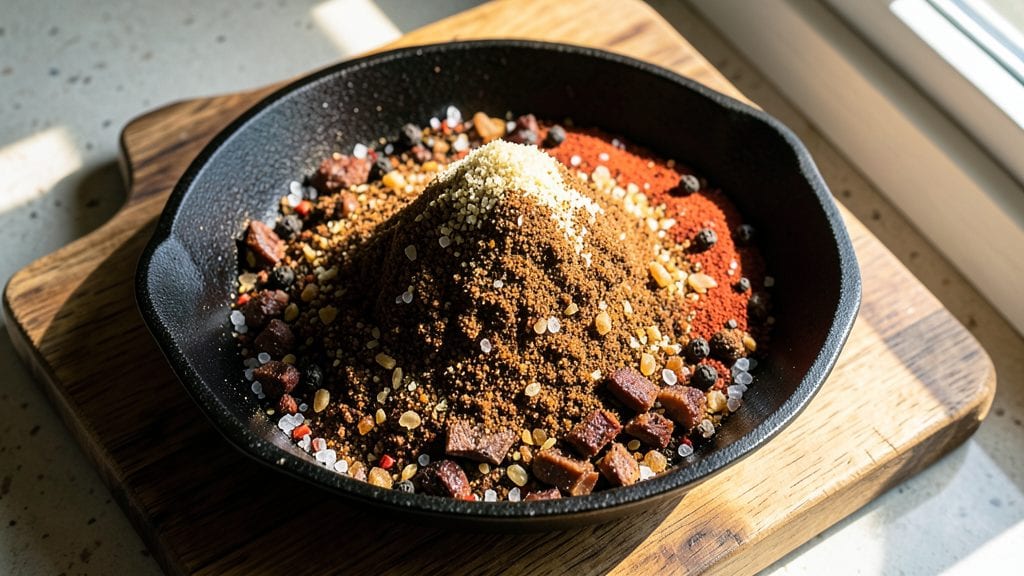
Creating the perfect Texas beef brisket starts with a dry rub that delivers bold Cajun-chili heat and develops that coveted smoky bark. This seasoning blend transforms tough brisket into tender, flavor-packed perfection by locking in moisture while building a deep, complex crust.
I developed this recipe after years of perfecting the balance between heat, sweetness, and smokiness—critical for that signature Texas BBQ flavor.
The foundation of this dry rub is a precise mix of coarse salt, black pepper, smoked paprika, and cayenne, which creates the signature heat and smokiness. Adding brown sugar caramelizes during cooking, forming that irresistible dark bark while balancing the spice.
The blend is designed to be versatile enough for different brisket preferences—whether you want extra heat, a touch of sweetness, or a deeper smoky profile. Each tablespoon of this rub delivers restaurant-quality flavor without overwhelming the natural beef taste.
What makes this dry rub special is its ability to penetrate the meat deeply while forming a flavorful crust that develops over hours of cooking. The spices don’t just sit on the surface—they infuse into the brisket, creating layers of flavor in every bite.
This blend is perfect for both smokers and ovens, ensuring consistent results whether you’re cooking low and slow or using a high-heat method. Once you try this, your brisket will never taste the same again.
Store the dry rub in an airtight container for up to three months, making it a staple for all your BBQ adventures. For variations, adjust the cayenne for heat levels or add a teaspoon of mustard powder for tanginess.
The key is experimenting while keeping the core balance of salt, spice, and sweetness intact. Let’s get seasoning!
Ingredients for texas beef brisket dry rub
Nine simple spices transform brisket into Texas BBQ perfection every time.
| Ingredient | Amount | Notes |
|---|---|---|
| Coarse Kosher Salt 🧂 | 4 tbsp | Diamond Crystal preferred for flakiness |
| Smoked Paprika 🌶️ | 2 tbsp | High-quality for authentic smokiness |
| Black Peppercorns 🌶️ | 1 ½ tbsp | Freshly cracked for bold flavor |
| Cayenne Pepper 🔥 | 1 tbsp | Adjust for desired heat level |
| Light Brown Sugar 🍚 | 2 tbsp | Turbinado for better caramelization |
| Garlic Powder 🧄 | 1 tsp | Freshly ground preferred |
| Onion Powder 🧅 | 1 tsp | For depth of flavor |
| Ground Mustard 🌿 | ½ tsp | Optional for tangy kick |
| Ground Cumin 🌿 | ½ tsp | Toasted for richer aroma |
| Dried Thyme 🌿 | ½ tsp | French preferred for earthiness |
The salt is non-negotiable—Diamond Crystal gives you those perfect flaky crystals that cling to the meat. Penzeys or bulk bins at Whole Foods carry the best smoked paprika for that authentic smoky depth. If you're buying whole peppercorns, toast them lightly in a dry pan first—that extra step makes all the difference. The brown sugar should be turbinado or light brown (none of that white stuff), because it caramelizes better and gives that signature dark bark. I always double-check my spices for freshness—if they smell like dust, toss 'em.
Running low on cayenne? Red pepper flakes at half the amount works in a pinch. No garlic powder? Fresh minced garlic at double the volume (so 2 tsp minced = 1 tsp powder). The mustard is optional but adds a nice tang—Dijon-style powdered mustard works best if you want to keep it dry. For extra smokiness, swap half the smoked paprika for liquid smoke (1/4 tsp), but don't go overboard. And if you're feeling adventurous, add a pinch of ground coriander for a Middle Eastern twist that still works with brisket.
This rub keeps 6-12 months in an airtight container in a cool, dark place—just like your grandma's spice rack. I like to portion mine into small jars with parchment paper between uses so it stays fresh longer. For brisket, use about 2 tbsp per pound of meat, patted dry. The rub will last through multiple cooks—just store the leftover jar in the freezer if you're not using it within a month. Trust me, you'll want to make extra.
Why You'll Love This Recipe
- Five-Ingredient Magic: I swear by this combo—just salt, paprika, pepper, cayenne, and sugar. No fancy blends, no guesswork. Honestly, my pantry already has these, so I’m always ready for brisket day.
- Smoky-Sweet Obsession: That smoked paprika and brown sugar team up for a crust so addictive you’ll want to eat it by the spoonful. Between us, the first bite makes every hour of slow cooking worth it.
- Tailgate to Tuesday: Perfect for game day crowds or a lazy Sunday supper. I’ve used it on whole briskets, sliced for sandwiches, and even tossed it on steaks—works every time.
- Leftovers That Shine: Brisket tastes even better the next day, and this rub keeps it juicy. I’ll be real: my freezer’s always stocked with wrapped portions because reheating is just as good as fresh.
Step-by-step instructions for Texas beef brisket dry rub
Here's how to blend this bold, heat-packed rub that transforms brisket into smoky perfection.
Prepare Your Workspace and Tools
Start by gathering all your ingredients and tools on a clean workspace. I like to use a large mixing bowl that can comfortably hold all 4 tablespoons of coarse kosher salt, 2 tablespoons of smoked paprika, and the remaining spices without spilling. A fine-mesh strainer or sifter comes in handy for evenly distributing the rub later, but a whisk works too.
Freshly crack the 1.5 tablespoons of black peppercorns using a mortar and pestle or a dedicated pepper grinder. This makes a noticeable difference in flavor compared to pre-ground pepper. The aroma alone will tell you when it's ready—you should smell that fresh, sharp pepper punch. Set aside the cracked peppercorns for the next step.
Combine Dry Ingredients Thoroughly
In your mixing bowl, start by adding the 4 tablespoons of coarse kosher salt. This is your base—it helps other flavors adhere to the meat and promotes that coveted bark. Next, add the 2 tablespoons of smoked paprika and 1 tablespoon of cayenne pepper. These two ingredients bring that signature Cajun-chili heat and deep smokiness that makes this rub so special.
Now it's time for the supporting cast: sprinkle in the 2 tablespoons of light brown sugar, 1 teaspoon of garlic powder, 1 teaspoon of onion powder, 0.5 teaspoon of ground mustard, 0.5 teaspoon of ground cumin, and 0.5 teaspoon of dried thyme. The sugar will caramelize during smoking, creating that beautiful dark bark, while the mustard adds a subtle tang that balances the heat.
Whisk Until Uniform and Fragrant
Using a whisk, stir the mixture vigorously for about 2-3 minutes until it's completely uniform in color and texture. You should see no more distinct clumps of any single ingredient—this ensures even flavor distribution on your brisket. As you whisk, take a moment to inhale the aroma. That's the moment when you know you're on the right track—it should smell like a perfect blend of smoky, spicy, and slightly sweet notes.
If you're using a sifter, transfer the mixture to it now. Gently tap the sifter over the bowl to create a fine, even dusting. This texture is crucial—it helps the rub stick to the meat better and creates that perfect crust during smoking. The rub should look like a rich, deep red-brown color with flecks of black pepper throughout.
Store for Future Use or Apply Immediately
Transfer the finished rub to an airtight container. I prefer glass jars with tight-sealing lids—they keep the spices fresh and preserve that just-mixed aroma. Store it in a cool, dark place for up to 3 months, or in the refrigerator for even longer shelf life. If you're planning to use it right away, let it sit at room temperature for 10-15 minutes before applying to the brisket—this helps the flavors meld slightly for maximum impact.
When you're ready to use it, apply the rub generously to all sides of your brisket, pressing it firmly into the meat so it adheres well. Let it sit uncovered in the refrigerator for at least 1 hour (or up to 24 hours) before smoking. This resting period allows the rub to penetrate the meat and develop those deep, complex flavors that make Texas brisket legendary.
Pro Tips For Making Texas Beef Brisket Dry Rub
- Grind Your Own Spices: I learned this the hard way—store-bought pre-ground spices lose potency fast. For smoked paprika and black peppercorns, pulse them fresh in a spice grinder or mortar and pestle right before mixing. The cayenne? Toast it lightly in a dry pan for 30 seconds first—it deepens the heat without overpowering.
- Salt the Night Before: Don’t rush this. Apply the rub at least 12 hours ahead (overnight is ideal) so the coarse kosher salt has time to work its magic into the meat. The sugar will caramelize better, and the crust will form like armor. Trust me, your brisket will taste like it’s been curing for days.
- Watch the Sugar Burn: Light brown sugar is your friend, but too much heat turns it into bitter ash. After searing the brisket, move it to indirect heat immediately—don’t let it sit on a hot surface. If the rub starts smoking, lower the temp or wrap it in foil for 10 minutes to cool things down.
- Use a Meat Thermometer: I used to guess, and that’s how you end up with dry, tough brisket. For point, aim for 195–203°F internal temp—probe the thickest part, not the edge. Pull it when it hits 195°F, tent with foil, and let it rest. The carryover heat will push it to perfection in 30–60 minutes.
Pro cooking tips for perfect results
Salt First Principle
The 4 tablespoons of coarse kosher salt is the foundation of this rub—it’s not just seasoning, it’s a flavor enhancer that helps other spices cling to the meat and promotes that coveted dark bark.
I always use Diamond Crystal because its flaky crystals create better texture and adhesion than table salt. Apply the salt first, then add the rest of the rub in layers, pressing it firmly into every crevice of the brisket. This ensures even flavor distribution and prevents clumping during cooking. 🧂
Smoke and Heat Balance
The 2 tablespoons of smoked paprika and 1 tablespoon of cayenne pepper create the signature Texas BBQ heat and smokiness, but the key is balancing them with the 2 tablespoons of brown sugar. The sugar caramelizes during cooking, forming that irresistible dark crust while mellowing the cayenne’s sharpness.
For extra depth, I toast the spices in a dry pan for 1-2 minutes before mixing—this enhances their aromas and makes the rub even more potent. 🌶️
Fresh vs. Ground Spices
Using freshly cracked black peppercorns (instead of pre-ground pepper) makes a world of difference—it retains more oils and flavor. If you’re short on time, toast the whole peppercorns in a dry skillet for 30 seconds until fragrant, then grind them immediately.
For garlic and onion powders, I prefer freshly ground versions (like Penzeys brand) over store-bought blends, which often lose potency. The 0.5 teaspoon of ground mustard adds a subtle tang that rounds out the heat, so don’t skip it if you want that authentic Texas touch. 🧄
Rub Application Technique
Don’t just sprinkle the rub—press it into the meat firmly with your hands or a rubber spatula. This ensures it adheres well and penetrates the surface.
For extra adhesion, I like to pat the brisket dry with paper towels first, then apply the rub in two layers: one immediately after mixing, and another 1 hour before smoking. This double-coating maximizes flavor development.
Let the rubbed brisket rest uncovered in the fridge for at least 1 hour (up to 24 hours) to let the spices work their magic. ⏳
Smoker vs. Oven Adaptations
For smokers, maintain a steady 225-250°F temperature to let the rub develop slowly. If using an oven, wrap the brisket in butcher paper after the first 2 hours to trap moisture and enhance bark formation.
The rub works equally well on both methods, but smoking takes 6-8 hours while oven cooking requires 4-5 hours at 275°F. Always monitor internal temperature—aim for 195-203°F for tender perfection. 🔥
Troubleshooting Common Issues
If your rub isn’t sticking, add 1 teaspoon of cornstarch to the mix—it helps bind the spices. For uneven bark, brush the brisket with apple cider vinegar before applying the rub to promote better caramelization.
If the heat level is too intense, reduce the cayenne to 0.5 tablespoon and add 0.5 teaspoon of ground coriander for a milder, earthier profile. The rub’s versatility means it can handle these adjustments without losing its core flavor. 💡
Nutrition facts
Frequently asked questions
Can I make this dry rub without smoked paprika?
Swap 1 tablespoon of smoked paprika for 1/2 teaspoon of liquid smoke plus 1 tablespoon of regular paprika for a similar smoky depth. For extra intensity, add 1/4 teaspoon of chipotle powder instead of cayenne. The key is maintaining the same 2 tablespoons total of paprika-equivalent for proper bark formation.
How much rub should I use per pound of brisket?
Use about 2 tablespoons of rub per pound of brisket for optimal flavor penetration and bark development. For extra crispy bark, increase to 2.5 tablespoons per pound and apply in two layers: first immediately after mixing, then again 1 hour before cooking. Always pat the meat dry first to help the rub adhere better.
Can I adjust the heat level in this rub?
Yes! For milder heat, reduce the cayenne to 0.5 tablespoon and add 0.5 teaspoon ground coriander for earthy balance. For extra kick, increase cayenne to 1.5 tablespoons and add 0.5 teaspoon crushed red pepper flakes. Always adjust gradually—you can't remove excess heat once it's mixed!
How long can I store this dry rub?
Store in an airtight container in a cool, dark place for up to 6 months. For maximum freshness, keep it in the refrigerator where it'll stay potent for 12 months. If you notice the spices losing aroma or taste flat, it's time to make a fresh batch. The salt helps preserve the blend longer, but spices still degrade over time.
Can I use this rub on other meats besides brisket?
This rub works beautifully on pork shoulder, ribs, or even chicken thighs! For poultry, reduce the cayenne to 0.5 tablespoon to avoid overpowering the meat. For beef ribs, use 1.5 tablespoons per pound and apply extra attention to the bone sides. The sugar content makes it particularly good for pork, creating that signature caramelized crust.