
Main Courses
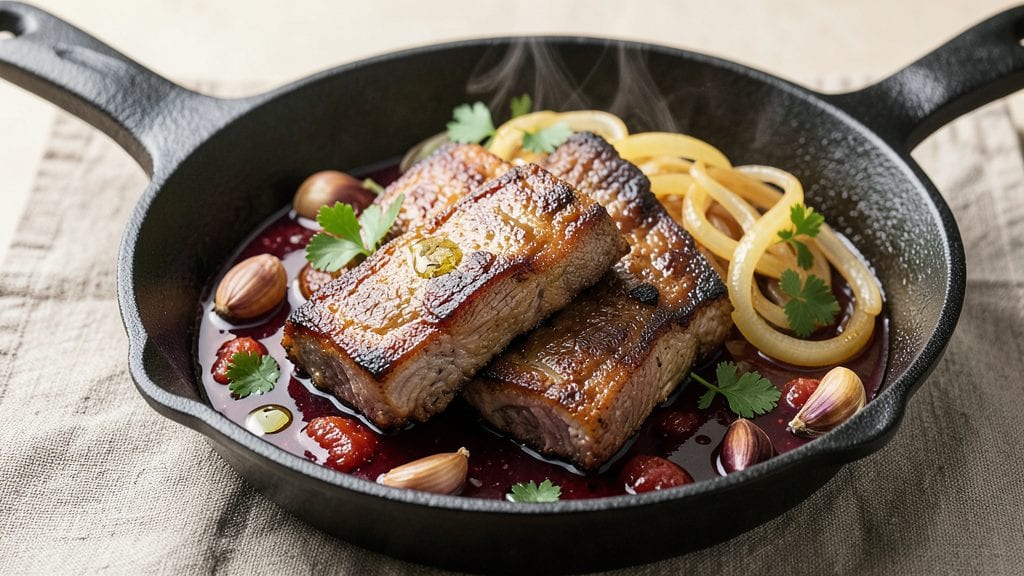
Transforming tough beef short ribs into melt-in-your-mouth perfection on the stovetop is one of those cooking victories that makes every effort worthwhile. This recipe delivers restaurant-quality results with just a Dutch oven and patience—no oven required.
I developed it during a particularly chilly Boston winter when I needed comfort food that didn't require turning on the oven, and it's been my go-to ever since.
The secret lies in slow, gentle braising that breaks down collagen-rich connective tissue while building deep, caramelized flavors through a fond.
You'll start with a quick sear to develop that rich brown crust, then simmer the ribs in just enough liquid to create a velvety sauce that clings to every bite.
The result is tender meat that practically falls apart at the touch of a fork, all wrapped in a sauce so flavorful it deserves its own bowl.
What you'll end up with is a dish that feels luxurious but requires only basic technique and about 3 hours of hands-off time. The ribs emerge fork-tender with a glossy, caramelized surface, and the sauce reduces to a perfect consistency—thick enough to coat but still silky.
This is the kind of meal that turns weeknight dinners into special occasions, even when you're cooking in a tiny kitchen.
Serve with creamy mashed potatoes or roasted root vegetables to soak up every last drop of that rich braising liquid. The leftovers reheat beautifully too, making this an ideal make-ahead option for busy schedules. Let's get cooking—your taste buds will thank you.
Ingredients for stove top beef short ribs
Fourteen ingredients. Three hours. One unforgettable braise that transforms tough ribs into melt-in-your-mouth luxury.
| Ingredient | Amount | Notes |
|---|---|---|
| Beef Short Ribs 🥩 | 3 lb | Bone-in, 2-2.5 inches thick |
| Yellow Onion 🧅 | 1 whole | Chopped, medium size |
| Garlic Cloves 🧄 | 6 cloves | Smashed, skin on |
| Red Wine 🍷 | 1 ½ cups | Dry, bold variety |
| Beef Broth 💧 | 2 cups | Low-sodium preferred |
| Tomato Paste 🍅 | 2 tbsp | Smooth, not chunky |
| Fresh Thyme 🌿 | ¼ cup | Leaves only, stems removed |
| Fresh Rosemary 🌿 | ¼ cup | Needles only, chopped |
| Olive Oil 🫒 | 2 tbsp | Extra-virgin for richness |
| Balsamic Vinegar 🍷 | 1 tbsp | For depth of flavor |
| Kosher Salt 🧂 | 1 ½ tsp | Adjust to taste |
| Ground Black Pepper 🌶️ | 1 tsp | Freshly cracked |
| Bay Leaves 🍃 | 2 whole | For aromatic depth |
| Worcestershire Sauce 🍶 | 1 tbsp | For umami punch |
The ribs are the star—look for bone-in cuts with good marbling. Costco or your local butcher shop usually have the best selection, often pre-cut for convenience. If buying whole, ask for 2-2.5 inch thick slices—thinner cuts will dry out. The red wine matters too; Cabernet Sauvignon or Merlot work best, but whatever's open in your fridge will do. For the beef broth, low-sodium versions like Kitchen Basics or Annie's keep the flavors balanced without extra salt. Fresh herbs? Penzeys or the grocery store's produce section usually have the best quality—just make sure the thyme and rosemary smell vibrant, not wilted.
No red wine? Beef broth plus a splash of balsamic vinegar works in a pinch. Fresh thyme and rosemary? Dried works at one-third the amount, but fresh is ideal. The tomato paste can be swapped for 1 cup crushed tomatoes if you prefer, though it adds more liquid. Worcestershire sauce missing? Soy sauce or fish sauce adds umami, but Worcestershire gives that classic braising depth. For the onions, yellow or red both work—just chop them consistently so they cook evenly. And trust me on the bone-in ribs—they stay juicier than boneless cuts during the long cook.
This braise tastes even better the next day, so make extra. Store leftovers in the fridge for 4-5 days or freeze for 3 months—the flavors deepen over time. Reheat gently in the sauce to keep everything moist. I like to portion mine into individual containers so I can grab a meal straight from the fridge. The sauce freezes beautifully too—just skim off any solidified fat before reheating. And if you're making this ahead for a party, keep it warm in a slow cooker on low heat.
Why You'll Love This Recipe
- No Chopping Chaos: I swear by this recipe because you only need to dice one onion and smash a few garlic cloves—no fancy knife work, just a big pot and 15 minutes of hands-off time. The ribs practically melt into tender perfection while you sip your wine (because yes, you’re drinking the same one you’re cooking with).
- Wine-Infused Magic: That red wine isn’t just for show—it deepens the sauce into something rich and velvety, like a hug in a bowl. The beef broth ties it all together, but honestly? The garlic and onions caramelize into a flavor bomb that makes every bite worth the wait.
- Leftovers That Shine: This recipe doubles as tomorrow’s lunch without effort. Reheat the ribs in their sauce, toss with mashed potatoes or crusty bread, and suddenly you’ve got a restaurant-worthy meal that costs half the price. (Yes, even on a Tuesday night.)
- Budget-Friendly Luxury: Short ribs feel fancy, but this method keeps it simple and affordable. A few pounds of meat stretch across multiple meals, and the pantry staples (onion, garlic, broth) mean no last-minute grocery runs. It’s comfort food that doesn’t break the bank.
Step-by-step instructions for stove top beef short ribs
Here's how to transform tough short ribs into tender, fall-off-the-bone perfection on your stovetop.
Sear the Short Ribs for Deep Flavor
Heat a large Dutch oven over medium-high heat until very hot. Add 2 tablespoons olive oil and let it shimmer for 1 minute. Working in batches if needed, add the 3 lb beef short ribs in a single layer. Press down gently on each rib with a spatula to ensure even contact with the pan.
Sear for 3-4 minutes per side until the ribs develop a deep mahogany crust. You'll know they're ready when they release easily from the pan. Transfer the seared ribs to a plate and set aside. If the oil starts smoking before all ribs are seared, reduce the heat slightly but keep it hot for proper browning.
Build the Aromatic Base
In the same Dutch oven, add the chopped yellow onion and cook for 5-6 minutes until softened and beginning to caramelize. Add the 6 smashed garlic cloves (skin on) and cook for 30 seconds until fragrant. Stir in the 2 tablespoons tomato paste and cook for 1 minute to deepen its flavor.
Here's where the magic happens: pour in the 1.5 cups red wine and scrape up all the browned bits from the bottom of the pan with a wooden spoon. This caramelized fond is packed with flavor that will infuse into your ribs. Let the wine simmer for 3-4 minutes until reduced by half, then stir in the 2 cups beef broth and 1 tablespoon balsamic vinegar.
Season and Simmer the Ribs
Return the seared ribs to the Dutch oven, along with any accumulated juices. Add the 0.25 cup fresh thyme, 0.25 cup fresh rosemary, 2 whole bay leaves, 1.5 teaspoons kosher salt, 1 teaspoon ground black pepper, and 1 tablespoon Worcestershire sauce. Bring everything to a gentle simmer over medium-low heat.
Cover the Dutch oven and let the ribs simmer gently for 2 hours. The key here is patience—you want the ribs to cook slowly so they become fork-tender without drying out. Check occasionally and add 2-3 tablespoons hot water if the liquid reduces too much. The ribs are done when they easily slide off the bone with a fork and the meat is meltingly tender.
Reduce the Sauce for Maximum Flavor
Once the ribs are tender, carefully remove them from the Dutch oven and transfer them to a serving platter. Place the platter over a warm oven-safe dish to catch any juices. Increase the heat to medium-high and simmer the cooking liquid uncovered for 10-12 minutes until it reduces by about half and thickens slightly.
The sauce should now coat the back of a spoon with a glossy sheen. If it's too thin, continue reducing it further. If it's too thick, whisk in 1-2 tablespoons hot water to reach your desired consistency. Taste and adjust seasoning with additional salt or pepper if needed. The sauce should be rich, slightly tangy, and perfectly balanced.
Serve with the Flavorful Sauce
Slice the ribs against the grain into ½-inch thick pieces and arrange them on a serving platter. Spoon the reduced sauce over the top and serve immediately. The ribs should be fork-tender with a beautiful mahogany crust, and the sauce should cling to each bite with its deep, complex flavors.
For an extra touch, garnish with additional fresh thyme or rosemary sprigs. These short ribs make a stunning centerpiece for any dinner, especially when paired with creamy mashed potatoes or crusty bread to soak up that delicious sauce. The slow cooking process ensures every bite is melt-in-your-mouth tender with layers of flavor from the caramelized fond.
Pro Tips For Making Stove Top Beef Short Ribs
- SEAR THE RIB BONES: I learned this the hard way—skipping the sear means flavorless broth. Get your pan screaming hot (medium-high) and lay those ribs bone-side down first. Let them sit undisturbed for 3-4 minutes until deep brown crust forms. That’s where the Maillard magic happens, and it’s non-negotiable for rich, caramelized flavor in your finished dish.
- SWEAT ONIONS LOW AND SLOW: Crowding the pan turns onions into sad, watery mush. Use half the onions you think you need, slice them evenly, and cook them on medium-low heat for 8-10 minutes. Stir occasionally—just enough to keep them moving without sticking. If they’re browning too fast, pull the pan off the heat for a minute. Golden, jammy onions make all the difference.
- DEGLAZE WITH WINE IMMEDIATELY: That browned-on goodness? Don’t scrape it out—deglaze right after removing the ribs. Pour in the red wine and let it bubble for 2-3 minutes before adding broth. The wine’s acidity cuts through the fond, pulling every last bit of flavor into your sauce. Skip this, and you’re basically throwing away free flavor.
- SIMMER COVERED, THEN UNCOVERED: Start with the lid on for the first 45 minutes—this keeps the ribs tender and the broth from evaporating too fast. After that, uncover and let it reduce slightly. The last 15 minutes uncovered concentrates the sauce and lets those ribs develop a glossy sheen. Sounds weird, but it works: tender meat with a sauce that clings instead of pools.
Wine and beer pairings for this stove top beef short ribs
Bold Red Wine Pairings
For these rich, caramelized short ribs, reach for a bold red wine that can stand up to the deep flavors. I always turn to a Cabernet Sauvignon from Napa Valley—its dark fruit notes and firm tannins complement the ribs' caramelized crust beautifully.
If you prefer something slightly fruitier, a Malbec from Argentina brings juicy plum and blackberry flavors that cut through the richness. 🍷
Pro tip: Let the wine breathe for 10-15 minutes before serving to open up its aromas. If you're using the same red wine you braised the ribs in, opt for a different bottle—this ensures you're tasting the wine's true character, not just the braising flavors.
A Syrah from the Rhône Valley also works wonders, with its peppery notes adding an extra layer of complexity.
Craft Beer Complements
If wine isn't your thing, a dark amber ale or stout can be a fantastic match. I love pairing these ribs with a Boston-style IPA—the hoppy bitterness balances the richness of the braise while the malt sweetness enhances the caramelized fond.
For something smoother, try a Belgian dubbel like Allagash Dark Ale, which offers caramel and chocolate notes that harmonize perfectly. 🍺
For a lighter option, a honey brown ale like Newcastle Brown Ale provides just enough malt sweetness to complement the sauce without overpowering the dish. The subtle caramel flavors in the beer mirror the natural sweetness developed in the braising process.
If you're feeling adventurous, a smoked porter adds an intriguing smoky dimension that pairs surprisingly well with the ribs' deep, savory notes.
White Wine Surprise
Don't dismiss white wine—some bold options can work beautifully. A Chardonnay with noticeable oak aging, like a California or Burgundy, brings buttery notes that pair surprisingly well with the ribs' richness.
The acidity cuts through the fat, while the oak adds depth. For something lighter, a Viognier with its floral and stone fruit notes can be a refreshing contrast. 🍷
If you're using a white wine in the braise (like a Sauvignon Blanc with a splash of balsamic), serve it chilled alongside a full-bodied red for a fun contrast. The acidity in the white wine will cleanse your palate between rich bites of ribs.
I once paired these ribs with a Riesling from Germany—its slight sweetness and tangy acidity were a revelation with the caramelized sauce.
Non-Alcoholic Options
For those skipping alcohol, a sparkling grape juice like Martinelli's Sparkling adds a festive touch without the boozy kick. The bubbles help cleanse your palate between bites, just like a glass of champagne. For something more substantial, try a ginger beer—the spicy kick complements the ribs' richness beautifully. 🍹
Herbal iced teas, especially those with hibiscus or rosehip, provide a floral contrast that pairs surprisingly well with the deep flavors of the braise. If you're serving this at a gathering, offer a sparkling water with citrus slices—the acidity and effervescence balance the dish perfectly.
I've even seen people enjoy these ribs with a cold brew coffee for a unique, slightly bitter contrast that works surprisingly well.
Nutrition facts
Frequently asked questions
Can I use boneless beef short ribs for this recipe?
While you can technically use boneless ribs, they won't yield the same melt-in-your-mouth results. The bone helps retain moisture during the long cook, and the bone-in version has more connective tissue that breaks down beautifully. If you must use boneless, reduce the cooking time by about 20-30 minutes to prevent dryness. The sauce will still be delicious, but the texture won't be quite as luxurious.
What if I don't have a Dutch oven?
No Dutch oven? No problem! Use a heavy-bottomed pot with a tight-fitting lid—think cast iron or even a large stainless steel pot. The key is to keep the heat consistent and prevent burning. If your pot isn't heavy, reduce the heat slightly to avoid scorching the fond. A 6-quart pot should work for 3 lbs of ribs, but leave extra room for the sauce to reduce properly.
How do I know when the ribs are done?
Your ribs are ready when they're fork-tender and slide off the bone with minimal resistance. Insert a fork into the thickest part of a rib—it should feel like butter melting. If the meat still has some chew, return them to the pot for another 15-20 minutes of covered simmering. The sauce should also coat the back of a spoon when reduced, indicating the ribs have absorbed enough flavor.
Can I make this recipe ahead of time?
This dish tastes even better the next day. Store the ribs and sauce in an airtight container in the fridge for up to 4 days. Reheat gently on the stovetop over low heat, adding a splash of water or broth if the sauce thickens too much. For leftovers, I like to portion them into individual containers so I can grab a meal straight from the fridge—just reheat in the sauce for maximum flavor.
What's the best way to serve these ribs?
These ribs shine with classic comfort food pairings. Creamy mashed potatoes or buttery egg noodles soak up the rich sauce beautifully. For a lighter option, roasted root vegetables like carrots and parsnips add a touch of freshness. Don't forget crusty bread—it's perfect for mopping up every last drop. Serve with a bold red wine (like Cabernet Sauvignon) or a dark amber ale for the ultimate pairing experience.