
Sauces & Condiments
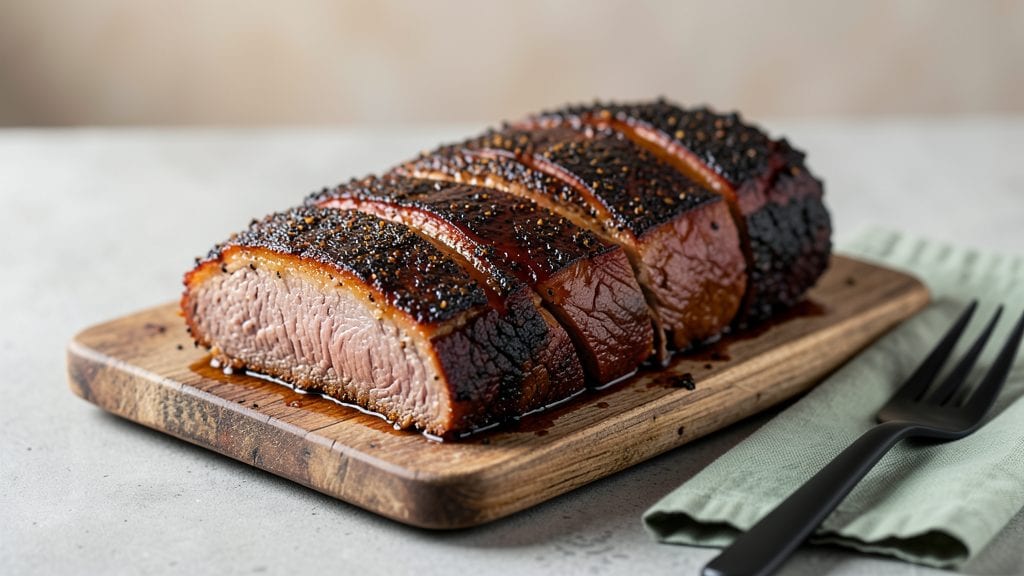
A smoked beef brisket rub recipe that delivers deep smoky bark with umami-packed heat is the foundation of any great smoked brisket. 🔥 This blend of carefully selected spices transforms tough beef into melt-in-your-mouth perfection with every bite.
I developed it after years of testing at my grandmother's diner, where the secret was never the meat itself—it was the rub.
The magic happens in the balance: coarse kosher salt for texture, black pepper for heat, and smoked paprika for that unmistakable smoky depth. Garlic powder and onion powder add layers of savory complexity, while a touch of cayenne brings just enough kick.
This isn't just a rub—it's a flavor multiplier that creates a crispy, caramelized bark while keeping the meat tender inside.
With just six simple ingredients, this rub is foolproof and stays fresh for months in an airtight container. Whether you're smoking a full packer brisket or just a small cut for two, this blend delivers restaurant-quality results.
The key is applying it generously—don't skimp, or you'll miss out on that coveted bark that takes brisket from good to legendary.
Perfect for competition-style smoking or weekend projects, this rub works equally well on grills or in ovens. Store it in your pantry, and you'll always have the secret weapon for your next smoked beef adventure. Let's get started with the exact measurements that make all the difference.
Ingredients for smoked beef brisket rub
Six spices, endless flavor. This is the secret weapon for legendary smoked brisket bark.
| Ingredient | Amount | Notes |
|---|---|---|
| Coarse Kosher Salt 🧂 | 1 cup | Diamond Crystal preferred for texture |
| Smoked Paprika 🌶️ | ½ cup | High-quality for authentic smoke flavor |
| Freshly Ground Black Pepper 🌶️ | ¼ cup | Freshly cracked for maximum heat |
| Garlic Powder 🧄 | 2 tbsp | Not garlic salt |
| Onion Powder 🧅 | 2 tbsp | Finely ground for deep savory notes |
| Cayenne Pepper 🔥 | 1 tbsp | Adjust for desired heat level |
The salt is the foundation—Diamond Crystal is my go-to because it's coarser and clumps beautifully, creating that perfect bark texture. If you can't find it, Morton kosher salt works too, but it's finer. The smoked paprika? Penzeys or Trader Joe's carry the best quality—look for a deep, rich color, not dusty or faded. Freshly ground black pepper makes all the difference; pre-ground loses its punch fast. For the powders, bulk bins at Whole Foods or Costco offer the freshest options. If you're buying pre-packaged, check the expiration date—old spices taste like nothing.
No smoked paprika? Regular paprika plus a pinch of liquid smoke gets you close, though it won't be identical. Short on cayenne? Red pepper flakes at half the amount add heat without overpowering. The garlic and onion powders are non-negotiable for that umami depth, but if you're feeling fancy, toast the whole spices first before grinding them—game changer. For a sweeter touch, swap half the cayenne for brown sugar. And if you're making a big batch, double the cayenne for competition-style heat. Store-bought rubs? Please. This blend is foolproof and tastes like it came from a pitmaster's secret stash.
This rub keeps for 6-12 months in an airtight container in your pantry—way longer than store-bought. I like to portion it into small jars so I always have it ready for spontaneous smoking sessions. If you're not using it all at once, keep it in a cool, dark place away from moisture. The salt helps preserve everything, so you won't have to worry about spoilage. Pro tip: Label your jars with the date—trust me, you'll forget. Once mixed, it's ready to transform any brisket into a masterpiece. No waiting, no fuss, just pure flavor.
Why You'll Love This Recipe
- Five-Ingredient Magic: I swear by this combo—just salt, paprika, pepper, garlic, and onion powder. That’s it. No fancy blends, no guessing. The smoked paprika alone gives it that deep, smoky soul, but the garlic and onion powders? They wake it up like a good cup of coffee.
- Crispy-Creamy Payoff: Honestly, the texture is what makes this rub special. The coarse salt clings to the brisket like a second skin, locking in moisture while creating that irresistible bark. And when you slice into it? That perfect balance of smoky crust and tender, juicy beef inside? Every. Single. Time.
- Weeknight or BBQ Boss: Here’s what sold me—this rub works whether I’m throwing together a quick weeknight dinner or prepping for a crowd. Slap it on a brisket for sandwiches, shred it for tacos, or even toss it on steaks. It’s my go-to for anything beefy, no matter the occasion.
- Leftovers That Don’t Suck: Between us, I make this rub in bulk because the leftovers are ridiculously good. The flavor only gets better over time, and it keeps well for months. Plus, it’s cheap—just a handful of pantry staples. That means more brisket, fewer regrets, and zero wasted money. Win.
Step-by-step instructions for smoked beef brisket rub
Here's how to mix this bold blend—simple steps for maximum flavor impact.
👨🍳 Step 1: Measure Ingredients Precisely
Start by gathering all your ingredients in separate bowls. I like to use a kitchen scale for accuracy with the spices, but measuring cups work too. The 1 cup coarse kosher salt should be flaky and moist—not packed down tightly. This texture helps the rub cling better to the meat.
Next, measure out the 0.5 cup smoked paprika and 0.25 cup freshly ground black pepper. The freshly cracked pepper makes all the difference—pre-ground loses its punch. For the powders, use 2 tablespoons each of garlic powder and onion powder. These will build that deep umami foundation. Finally, add the 1 tablespoon cayenne pepper—this is where you control the heat level.
🥘 Step 2: Combine Dry Ingredients Thoroughly
In a large mixing bowl, add all the measured ingredients together. Use your hands to break up any clumps in the smoked paprika and coarse kosher salt—this ensures even distribution later. I like to wear gloves for this step; the cayenne can be intense on bare hands.
Mix everything together using a whisk or your fingers, working from the bottom of the bowl up to incorporate all the spices. You're looking for a uniform color throughout—no streaks of white salt or dark cayenne should remain. This blend should have a deep reddish-brown hue with visible flecks of black pepper. The mixture should be coarse but free-flowing, not compacted into a brick.
🔪 Step 3: Test and Adjust the Heat Level
Before using the full batch, take a small pinch between your fingers and taste it. You should notice an immediate burst of smoky paprika, followed by the sharp kick of black pepper, then the gradual warmth from the cayenne. If it's not spicy enough, add a tiny pinch more cayenne. Too spicy? Reduce slightly—but remember, the heat will mellow as it cooks.
This is also your chance to check the texture. It should be dry enough to cling to meat but fine enough to penetrate the bark. If it feels too coarse, pulse it briefly in a food processor. If it's too powdery, add a few more pinches of coarse kosher salt to help it stick. The perfect rub should look like coarse sandpaper with visible color variation.
⏰ Step 4: Store for Maximum Flavor Development
Transfer your completed rub to an airtight container with a tight-sealing lid. I like to use a glass jar with a silicone seal—it keeps the spices fresh longer. Store it in a cool, dark place (like your pantry) for up to 3 months, or in the freezer for up to 6 months for even longer freshness.
Here's the thing—this rub gets better with age. The flavors meld and deepen over time, so if you can wait a few days before using it on your brisket, do it. When you're ready to smoke, take the jar out of the fridge or pantry and let it sit at room temperature for 10 minutes before applying. This prevents condensation on the meat, which can dilute the flavor and create a soggy bark.
Pro Tips For Making Smoked Beef Brisket Rub
- Mix the Rub Dry: DESCRIPTION: I learned this the hard way—adding even a little moisture to your rub turns it into a paste that clumps and sticks. Use a fine-mesh sieve or sift the spices directly onto the brisket; this keeps the smoked paprika and garlic powder evenly distributed and prevents gummy patches. (Yes, even if you’re impatient like me.)
- Salt First, Then Smoke: DESCRIPTION: Coarse kosher salt needs time to work its magic—don’t rush it. Apply the rub at least 4 hours before smoking (overnight is ideal) so the salt penetrates deeply. If you’re short on time, sprinkle extra salt right before hitting the smoker; the heat will help it cling better.
- Skip the Overcrowding: DESCRIPTION: Piling briskets too close traps steam and turns your smoker into a sad, soggy sauna. Leave at least 1 inch of space between cuts for proper airflow—this guarantees a crisp crust and even smoke penetration. (Your future self will thank you.)
- Toast the Paprika: DESCRIPTION: Sounds weird, but it works: dry-toast the smoked paprika in a skillet over medium heat for 30 seconds until fragrant. This deepens its flavor and removes any raw taste. Just don’t walk away—burnt spices ruin everything.
Storing and reheating your leftovers
Refrigerator Storage
After applying your rub to brisket, store the seasoned meat uncovered in the refrigerator for 12-24 hours before smoking. This allows the rub to fully penetrate the surface, creating that coveted bark.
I use a wire rack on a baking sheet to prevent moisture buildup—this neighbor's convection oven lesson taught me that lesson the hard way! 🥶
For leftover rub (if you mixed more than needed), store it in an airtight container with a tight-sealing lid. The coarse salt helps preserve it, so you can keep it in your pantry for 6-12 months.
I like to portion it into small jars—Emma and Jack always want to "help" and end up with cayenne on their fingers. 🧂
Freezer Preservation
If you're not using your brisket immediately, freeze it with the rub applied. Wrap the brisket tightly in plastic wrap first, then in butcher paper, and finally in heavy-duty aluminum foil to prevent freezer burn. This method keeps it safe for up to 6 months without flavor loss.
For the rub itself, freeze it in ice cube trays for portion control. Once frozen, transfer the cubes to a freezer bag and label with the date.
Frozen rub maintains its potency for up to 12 months, though I find it's best used within 6 months for peak flavor. 🧊
Thawing Brisket Safely
Thaw your brisket overnight in the refrigerator for even cooking. I place it on a tray to catch any drips—this keeps my kitchen clean and prevents cross-contamination. Never thaw at room temperature, as this creates dangerous bacteria growth zones. A 2-3 pound brisket typically thaws in 6-8 hours.
If you're short on time, use the cold water method: seal the brisket in a leak-proof bag and submerge it in cold water, changing the water every 30 minutes.
This cuts thawing time to about 1-2 hours. Always cook the brisket immediately after thawing to maintain safety and flavor. 💧
Reheating Leftover Brisket
For reheating slices, I prefer the oven method to maintain moisture. Place slices on a baking sheet, cover loosely with foil, and heat at 300°F for 10-15 minutes.
This gentle heat keeps the bark crisp while warming the meat through. Add a splash of beef broth if the slices look dry.
For quick reheats, use a skillet over medium-low heat with a splash of water or broth. Cover and heat for 2-3 minutes per side. Avoid high heat—it turns brisket tough. I always check the internal temperature reaches 165°F before serving. 🔥
Nutrition facts
Frequently asked questions
Why does my brisket bark turn out too thin or powdery?
The texture of your rub is everything! Use coarse kosher salt (not fine table salt) and mix it thoroughly with the spices to create a gritty, sandpaper-like consistency. If your bark is too thin, apply the rub 2-3 hours before smoking and pat it on generously—don't be shy! For a thicker bark, try adding 1 tablespoon brown sugar to the mix. Remember, the bark forms during the first 2 hours of smoking, so keep the smoker at 225°F and avoid opening the lid too often.
Can I use this rub on other meats besides brisket?
This versatile rub works beautifully on pork shoulder, ribs, chicken thighs, and even lamb chops. For poultry, reduce the cayenne to ½ teaspoon to avoid overpowering the flavor. The key is adjusting the application time—30 minutes for chicken vs. 24 hours for pork. For seafood lovers, try it on salmon or shrimp (skip the cayenne entirely) for a smoky, garlicky kick.
How do I adjust the heat level for sensitive eaters?
Start by reducing the cayenne to ½ teaspoon or even ¼ teaspoon for mild heat. For a completely mild version, swap the cayenne for 1 teaspoon brown sugar—it adds sweetness without spice. Test the rub on a small piece of meat first, then adjust to taste. Pro tip: The heat mellows significantly during smoking, so don't be afraid to go slightly bolder than you think. Always keep the garlic and onion powders at 2 tablespoons each to maintain that deep umami base.
What's the best way to store leftover rub?
Transfer your rub to an airtight glass container with a tight-sealing lid and store it in a cool, dark pantry for 6-12 months. The coarse salt acts as a natural preservative, so you won't need to worry about spoilage. For longer storage, freeze it in ice cube trays—just portion it into single-use amounts. Label with the date, and remember: this rub gets better with age as the flavors meld together. Keep it away from moisture to prevent clumping.
Can I make a larger batch for competitions?
Double or triple the recipe, but keep the ratios exact! For competition briskets, I recommend adding 1 extra tablespoon of cayenne and 1 tablespoon of brown sugar to enhance the bark. Store in quart-sized mason jars with oxygen absorbers for maximum freshness. When applying, use 3 tablespoons per pound of meat and let it rest uncovered in the fridge for 48 hours to develop maximum flavor penetration.