
Main Courses
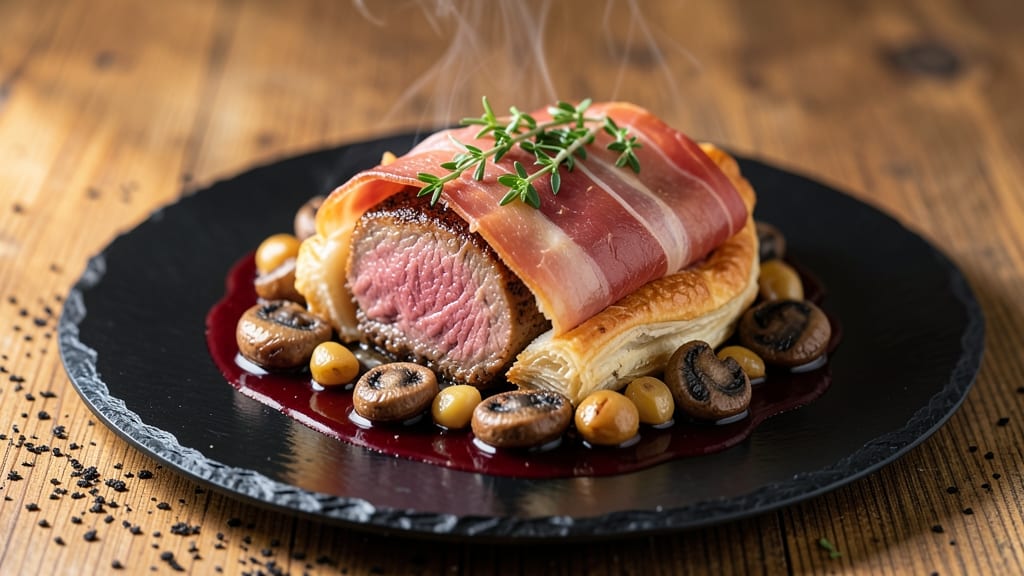
Mastering Jamie Oliver’s Beef Wellington transforms a weeknight dinner into a showstopping centerpiece that rivals high-end restaurants. The secret lies in balancing tender beef, rich mushroom duxelles, and perfectly wrapped puff pastry—each element playing its part in this iconic dish.
I’ve refined this recipe over years of testing, ensuring the crust stays golden while the filling remains juicy and flavorful.
What sets this recipe apart is the mushroom duxelles, a finely chopped mixture of mushrooms, shallots, and herbs that forms the heart of the Wellington. Paired with prosciutto-wrapped beef fillet and encased in buttery puff pastry, every bite delivers layers of umami, savory depth, and delicate pastry crispness.
The key is precision—searing the beef to lock in juices, wrapping it securely, and baking until the pastry turns a stunning golden brown.
This method delivers restaurant-quality results with a simpler approach than you might expect. While traditional recipes call for homemade puff pastry, this version uses store-bought for convenience without sacrificing flavor or texture.
The dish bakes in just 25–30 minutes at 400°F, making it ideal for special occasions or when you want to impress guests with minimal fuss.
Serve with a bold red wine reduction or roasted vegetables to complement the rich flavors. Whether you’re a seasoned home cook or new to this classic, this recipe ensures a perfect, foolproof Wellington every time. Let’s get started on creating your masterpiece.
Ingredients for jamie oliver beef wellington
Fourteen ingredients, one showstopper. Restaurant-quality Wellington starts with these essentials.
| Ingredient | Amount | Notes |
|---|---|---|
| Beef Tenderloin 🥩 | 1 ½ lb | Center-cut, trimmed of fat |
| Prosciutto di Parma 🍖 | 6 oz | Thinly sliced, high-quality |
| Mushrooms 🍄 | 1 lb | Cremini or button, finely chopped |
| Shallots 🧅 | 4 whole | Finely minced, about 0.5 cup |
| Garlic Cloves 🧄 | 4 cloves | Finely minced, fresh preferred |
| Fresh Thyme Leaves 🌿 | ¼ cup | Finely chopped, stems removed |
| Fresh Parsley Leaves 🌿 | ¼ cup | Finely chopped, for garnish |
| Dijon Mustard 🍯 | 2 tbsp | High-quality, smooth texture |
| Unsalted Butter 🧈 | ½ cup | Cold, cut into small pieces |
| Puff Pastry 🍞 | 1 sheet | Store-bought, thawed if frozen |
| Diamond Crystal Kosher Salt 🧂 | 1 tsp | For seasoning, fine grain |
| Freshly Ground Black Pepper 🌶️ | ½ tsp | Freshly cracked, preferred |
| Egg 🥚 | 1 whole | For egg wash, beaten |
| Dry White Wine 🍷 | ½ cup | For deglazing, optional |
The beef is non-negotiable—center-cut tenderloin ensures tenderness, and trimming the fat keeps it clean for wrapping. Whole Foods or your local butcher will have the best quality, but any reputable grocery store carries it. Look for even grain and vibrant color. The prosciutto? Prosciutto di Parma is ideal, but high-quality Italian dry-cured ham works too. Avoid the pre-sliced deli ham—it’s too salty and won’t hold up. For the mushrooms, cremini or button are perfect, but shiitake adds extra depth if you’re feeling fancy. Finely chop them—this isn’t the time for chunky bits.
No Dijon mustard? Whole-grain mustard thinned with a splash of water works in a pinch, but the smooth texture of Dijon is key here. The herbs—thyme and parsley—must be fresh. Dried won’t cut it; the aroma is essential for that restaurant-quality flavor. Short on time? Pre-minced garlic and shallots from the jar save steps, but fresh is always better. The puff pastry can be store-bought—Pepperidge Farm or Dufour are reliable brands. If your prosciutto is extra-salty, skip adding salt to the duxelles. And if you’re worried about the wine, beef broth works just as well—just deglaze with it instead.
The duxelles keeps for 3 days in the fridge, wrapped tightly in plastic. The wrapped Wellington can be prepped ahead and refrigerated for up to 24 hours before baking, which is a lifesaver for special occasions. If you’re making it ahead, let it sit at room temperature for 30 minutes before baking. The prosciutto and pastry are best used within 2 days of purchase, so plan accordingly. And if you have leftovers? Slice and reheat gently—it’s even better the next day.
Why You'll Love This Recipe
- Minimal Chopping Required: The prosciutto slices themselves while you’re busy with the mushrooms—no knife skills needed. I swear, those shallots take two minutes to dice, and the garlic? Just peel and smash. Jamie’s method turns fussy prep into a breeze.
- Prosciutto Magic: That salty-sweet prosciutto wrapped around the beef? It’s the secret weapon. One bite and you’ll understand why I now buy it in bulk—it melts into the crust and makes the whole dish taste like a fancy restaurant’s secret.
- Weeknight to Dinner Party: Same recipe, different occasions. Toss it in the oven for a lazy Sunday, then scale it up for guests. The mushrooms soak up all the garlic flavor, so even if you’re not a mushroom lover, you’ll be hooked. (Yes, even on a Tuesday night.)
- Leftovers That Don’t Suck: Cold slices the next day? Still rich and tender, with the prosciutto adding a salty kick. I pack it in lunches or reheat thin pieces in a pan—no sad, dry beef here. Budget win: tenderloin stretches farther than you’d think.
Step-by-step instructions for Jamie oliver's beef Wellington
Here's how to build this showstopper with a perfectly seared crust and tender heart.
Prepare the Mushroom-Duxelles Filling
Heat a large skillet over medium-high heat and melt the 0.5 cup unsalted butter. Add the 1 lb mushrooms and cook for 8-10 minutes until they release their moisture and begin to brown. This is where the magic happens—the mushrooms should be almost dry when finished.
Add the 4 whole shallots and 4 cloves garlic cloves, cooking for another 5 minutes until the shallots soften and turn translucent. Stir in the 0.25 cup fresh thyme leaves and 2 tbsp Dijon mustard, cooking for 2 more minutes. The mixture should be finely textured and completely dry—this is your duxelles. Let it cool completely before using.
Real talk: Don't rush this step. The duxelles needs to be bone-dry to prevent a soggy Wellington. If it looks too wet, cook it uncovered for another 5 minutes to evaporate excess moisture. You're aiming for a consistency similar to coarse sand.
Season and Assemble the Beef
Pat the 1.5 lb beef tenderloin dry with paper towels—this is critical for a good sear. Season both sides generously with 1 tsp diamond crystal kosher salt and 0.5 tsp freshly ground black pepper, pressing the seasoning into the meat. Let it sit at room temperature for 30 minutes while you prepare the rest.
Spread the cooled mushroom-duxelles evenly over the entire surface of the beef, creating a thick but even layer. This is your flavor barrier that will keep the meat juicy. Then carefully arrange the 6 oz prosciutto di parma over the mushroom layer, slightly overlapping the slices to create a complete covering.
Here's the thing—don't be tempted to skimp on the prosciutto. It adds that essential salty contrast and helps bind everything together. The prosciutto should completely cover the mushroom layer with minimal gaps.
Wrap and Chill the Wellington
Roll the beef tightly in plastic wrap, starting from one end and working toward the other, creating a compact log shape. This prevents the filling from spilling out during chilling. Place it seam-side down on a plate and refrigerate for at least 2 hours, or preferably overnight.
The chilling step is non-negotiable. It allows the flavors to meld and the beef to relax, ensuring even cooking. I like to chill mine overnight—this is when the magic really happens as the juices redistribute throughout the meat.
When you're ready to cook, remove the Wellington from the fridge and let it sit at room temperature for 30 minutes. This final step ensures even cooking from edge to center.
Prepare the Puff Pastry Wrapper
Preheat your oven to 400°F. Unfold the 1 sheet puff pastry and place it on a floured surface. Roll it out to about 12x10 inches, just enough to wrap around your beef log with about 1 inch overhang on all sides.
Brush the entire surface of the pastry with the beaten 1 whole egg, creating an even wash. This egg wash will give you that beautiful golden-brown crust. Place the chilled beef log in the center of the pastry and carefully fold the sides inward, sealing the edges tightly. Brush any exposed pastry with more egg wash.
This is the moment that matters: use a sharp knife to score the top of the pastry in a decorative diamond pattern. This not only looks impressive but also allows steam to escape, preventing a soggy crust. Place the Wellington seam-side down on a parchment-lined baking sheet.
Bake to Golden Perfection
Bake the Wellington for 35-40 minutes until the pastry is deep golden brown and the internal temperature reaches 125°F. The beef will continue cooking as it rests, reaching perfect medium-rare doneness. Don't cut into it immediately—this is where patience pays off.
Let the Wellington rest for 15 minutes before carefully slicing. The juices need time to redistribute, ensuring each bite is moist and flavorful. When you're ready to serve, garnish with the 0.25 cup fresh parsley leaves and any optional pan drippings reduced with 0.5 cup dry white wine.
Each slice should reveal a beautifully seared crust encasing perfectly pink beef surrounded by the rich mushroom-duxelles. The prosciutto should be just crisp enough to add that salty crunch. Serve with red wine sauce or roasted vegetables for the full experience.
Pro Tips For Making Jamie Oliver Beef Wellington
- Trim the Prosciutto Thin: Jamie’s recipe calls for prosciutto, but don’t just tear it—roll it out with a rolling pin or meat mallet until it’s paper-thin. Thick slices won’t crisp properly, and you’ll end up with soggy bits under the pastry. I learned this the hard way after a dinner party where half the prosciutto stayed chewy.
- Sear the Beef Hard: Get that tenderloin screaming hot in a dry pan before adding butter—no crowding, and let it develop a deep crust. I used to rush this, and the result was always pale, greasy beef. Push it to a rich brown, even if it takes 5 minutes per side.
- Salt the Shallots Wrong: Finely dice those shallots, then toss them in a pinch of salt and let them sit for 10 minutes before cooking. This draws out moisture, so they sauté faster and sweeter. Skipping this step means you’re fighting steam instead of caramelization.
- Skip the Raw Mushroom Test: Don’t worry about perfect mushroom doneness before baking—they’ll finish cooking under the pastry. Overcooking them first makes the filling dry. Sear them just until golden, then pile them in raw. The heat from the pastry will do the rest.
Regional styles of this jamie oliver beef wellington
British Classic
This dish originated in London’s Claridge’s Hotel in the early 19th century, where it was created to honor the Duke of Wellington. The original version used fillet of beef wrapped in puff pastry, but modern adaptations like Jamie’s include the mushroom duxelles and prosciutto for extra depth.
The British version often features Yorkshire pudding as a side—a perfect pairing to soak up the rich juices. 🍽️
French Influence
While the British perfected the pastry technique, the French brought the mushroom duxelles to the table. This finely chopped mushroom mixture, traditionally made with wild mushrooms, adds a luxurious texture and earthy flavor.
In French kitchens, the Wellington is often called "Filet en Croûte" and served with a red wine reduction or béarnaise sauce. The French also emphasize proper resting times—critical for juicy beef.
American Twist
Across the pond, American chefs often simplify the dish by using store-bought puff pastry (like Pepperidge Farm) and swapping prosciutto for smoked ham or even bacon for a smoky kick. Some versions incorporate spinach or caramelized onions into the duxelles for extra richness.
The American style leans toward bold sides like mashed potatoes or roasted Brussels sprouts to balance the richness. 🌟
Japanese Modernization
Japanese restaurants have reimagined the Wellington with umami-packed fillings, like adding shitake mushrooms or dashi-infused butter to the duxelles. Some versions even include truffle oil or yuzu zest for a bright, citrusy contrast.
The pastry is often thinner and more delicate, baked at higher temperatures for a crispier finish. This style pairs beautifully with miso-glazed vegetables or sake-infused red wine sauce.
Australian Adaptation
Down under, the Wellington gets a local touch with ingredients like wattleseed (a native Australian spice) mixed into the duxelles or beef broth reduced with Vegemite for a savory depth. Some chefs use kangaroo meat instead of beef for a leaner, gamey twist.
The Aussie version often serves the dish with grilled lamb chops or barbecued vegetables for a festive, outdoor-inspired meal. 🔥
Vegetarian Fusion
For a plant-based take, some chefs replace the beef with portobello mushrooms or seitan, wrapped in the same pastry and stuffed with walnut duxelles (made from finely chopped walnuts, mushrooms, and herbs).
The prosciutto is swapped for smoked tofu or tempeh, and the dish is served with truffle aioli or roasted root vegetables. This version keeps the Wellington’s iconic structure while making it accessible to all diets. 🌱
Nutrition facts
Frequently asked questions
Can I make this Wellington ahead of time?
Assemble the Wellington (including the pastry wrap) up to 24 hours ahead and refrigerate it uncovered on a wire rack. This prevents sogginess. Bring it to room temperature for 30 minutes before baking. The flavors actually deepen overnight, and the pastry stays crisp.
What's the secret to a crispy pastry crust?
Three things:
- Egg wash (brush generously but evenly),
- Scoring (cut decorative patterns to release steam), and
- High heat (bake at 400°F on the middle rack). Avoid overworking the pastry—handle it gently when wrapping. A light dusting of flour on your work surface also helps prevent sticking.
Can I substitute prosciutto with something else?
Yes! Use smoked ham (like Black Forest ham) or bacon for a smoky alternative. For a vegetarian version, wrap with thinly sliced smoked tofu or tempeh. Just reduce the salt in your duxelles since cured meats are already salty. The prosciutto adds that signature salty contrast that balances the richness.
Why did my Wellington turn out dry?
Most likely, you didn't rest the beef properly. Let it sit at room temperature for 30 minutes before baking, and always rest for 15 minutes after baking. Another common mistake is overcooking—the beef should reach 125°F internal temp (it'll rise to 130°F while resting). If your duxelles was too wet, the pastry can steam instead of crisp.
How do I make the mushroom duxelles extra flavorful?
Add 1 tsp soy sauce or 1 tbsp balsamic vinegar to the mushrooms while cooking for depth. For umami, stir in 1 tsp fish sauce (trust me, it disappears!). A pinch of smoked paprika or truffle salt also elevates the flavor. Always cook the mushrooms until completely dry—this is non-negotiable for texture.