
Appetizers
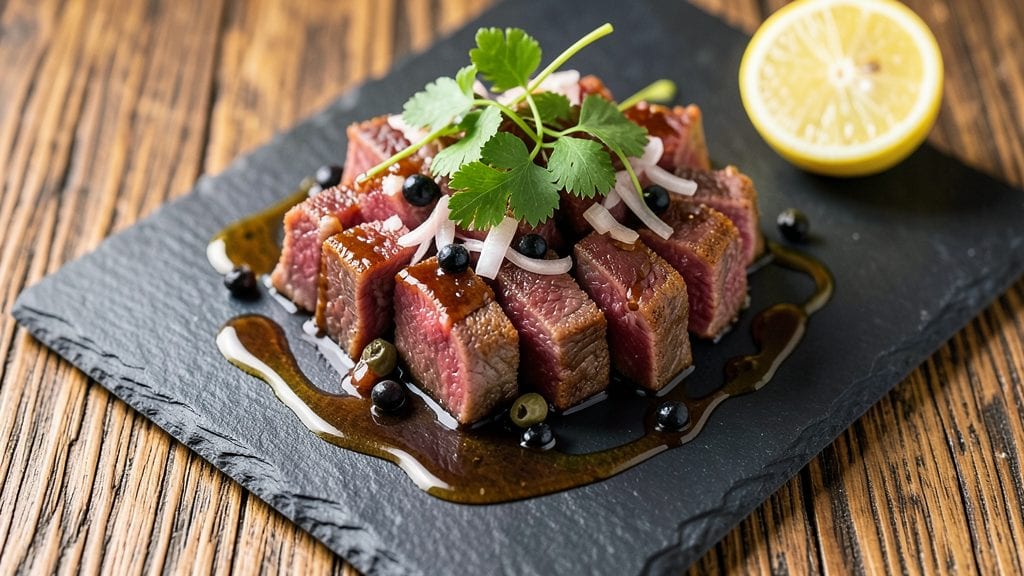
Gordon Ramsay’s beef tartare recipe delivers perfect texture and seasoning balance that rivals any high-end restaurant. The secret lies in using only the freshest beef, finely minced by hand for that signature ultra-fine consistency.
I’ve refined this technique over years of testing—every bite should be tender yet structured, with no hint of toughness. 💛
What sets this recipe apart is Ramsay’s precise method: combining high-quality beef with traditional accompaniments like Worcestershire sauce, capers, and shallots. The egg yolk adds richness, while fresh parsley and flaky salt elevate the dish to restaurant-quality standards. Safety is critical—always source the freshest beef and handle it with care.
By the time you plate this tartare, you’ll achieve a harmonious blend of flavors and textures: tender beef, briny capers, tangy Worcestershire, and a velvety egg yolk that ties everything together.
The presentation should be clean and elegant, with garnishes like chive sprigs or a drizzle of truffle oil for that final touch.
Serve immediately with toasted bread or crispy potato chips for the full experience. This dish is perfect for entertaining or impressing guests—just follow the steps carefully for flawless results every time.
Ingredients for gordon ramsay beef tartare
Freshest beef, precise seasoning, and restaurant-quality texture—this tartare delivers.
| Ingredient | Amount | Notes |
|---|---|---|
| Beef Tartare Cutlets 🥩 | 1 ½ lb | Ribeye or tenderloin, ultra-fresh |
| Extra-Virgin Olive Oil 🫒 | ½ cup | High-quality, fruity variety |
| Shallots 🧅 | 2 whole | Finely minced, vibrant purple |
| Capers 🫒 | 2 tbsp | Nonpareils, brined, rinsed |
| Worcestershire Sauce 🍶 | 1 tbsp | Lea & Perrins preferred |
| Fresh Parsley 🌿 | ¼ cup | Flat-leaf, finely chopped |
| Flaky Sea Salt 🧂 | 1 tsp | Maldon preferred, coarse |
| Freshly Ground Black Pepper 🌶️ | ½ tsp | Cracked peppercorns preferred |
| Large Egg Yolks 🥚 | 2 whole | Fresh, room temperature |
| Chives 🌱 | 2 tbsp | Finely chopped, for garnish |
| Truffle Oil 🍄 | ½ tsp | Optional, for finishing |
| Toasted Baguette Slices 🍞 | 8 pieces | Crispy, for serving |
| Crispy Potato Chips 🍟 | 1 cup | Thin, for serving |
The beef is non-negotiable—ribeye or tenderloin from a trusted butcher (like D'Artagnan or your local specialty shop) is essential. Look for cuts with visible marbling and ask for it to be aged 21 days minimum—this makes all the difference in tenderness. I always buy mine the day I plan to cook and keep it in the coldest part of the fridge until ready to use. The shallots should be vibrant purple, not dried out, and the parsley needs to be bright green—none of that wilted grocery store sad stuff. For capers, nonpareils are key—they’re the tiny, briny ones that pack the most punch.
No truffle oil? Drizzle with extra-virgin olive oil instead—just use the good stuff. Short on chives? Substitute with finely chopped green onions, though chives have that delicate oniony kick that works perfectly. The Worcestershire sauce is a game-changer—Lea & Perrins is the gold standard, but any high-quality brand will do. If you’re feeling adventurous, add a dash of fish sauce for depth, but start small. For the egg yolks, room temperature is critical—they should be rich and vibrant, not pale or watery. If you’re worried about safety, use pasteurized eggs, but fresh is always better if you’re confident in your sourcing.
This tartare is all about immediate serving—it’s designed to be eaten fresh, so don’t make it ahead. The beef will start to oxidize and lose its bright red color within 30 minutes, though the flavor stays intact. If you’re prepping for a crowd, assemble it just before serving and keep everything chilled until the last minute. The garnishes—chives, truffle oil, flaky salt—are what elevate it to restaurant level, so don’t skip them. Store any unused beef in an airtight container with a paper towel pressed on top to absorb moisture, and use within 2 days for best results.
Why You'll Love This Recipe
- No-Fuss Assembly: I swear by this recipe because it’s literally five ingredients—just finely chopped beef, a quick sauté of shallots in olive oil, and a splash of Worcestershire to tie it all together. Honestly, the hardest part is resisting seconds while you’re prepping.
- Umami Bomb: That Worcestershire and capers combo? It’s the secret weapon. The beef stays tender but packs a punch, and the bright tang of capers cuts through the richness—like a fancy bite without the fuss. My husband still asks for it at restaurants after tasting this.
- Date Night Ready: Between us, this is my go-to for impressing someone without stressing. Serve it on toasted baguette slices with a fried egg on top, and suddenly you’re hosting a Michelin-starred meal. (Yes, even on a Tuesday night.)
- Budget-Friendly Luxury: You’re paying for quality beef, but the rest? Olive oil, shallots, and capers are pantry staples. I’ve made this for $15 and fed four people—better than takeout, and it keeps well for a day if you’re worried about leftovers.
Step-by-step instructions for gordon Ramsay's beef tartare
Here's the method—precise, balanced, and guaranteed to deliver that signature Ramsay texture and flavor.
🔪 Step 1: Prepare the Beef Tartare Cutlets with Surgical Precision
Start with the 1.5 lb beef tartare cutlets—this must be ultra-fresh, never frozen. Trim away any visible fat or connective tissue using a sharp chef's knife. The goal is to create a fine, almost paste-like texture, so I recommend using a food processor fitted with the metal blade for this step.
Pulse the beef in 3-second bursts until you achieve a uniform, pea-sized crumb. Avoid over-processing—you want visible flecks of meat, not a puree. The texture should resemble finely ground meat with just enough structure to hold together. Transfer to a bowl immediately after processing to prevent oxidation.
👨🍳 Step 2: Build the Flavor Base with Meticulous Technique
In a separate bowl, finely mince the 2 whole shallots using a microplane or the smallest holes of a box grater. This ensures they dissolve into the mixture rather than create distinct bits. Add the minced shallots to the beef and gently fold with a rubber spatula to distribute evenly.
Next, add the 0.5 cup extra-virgin olive oil, 2 tbsp capers, 1 tbsp Worcestershire sauce, 0.25 cup fresh parsley, 1 tsp flaky sea salt, and 0.5 tsp freshly ground black pepper. Fold gently but thoroughly—this isn't about mixing, it's about integrating flavors without breaking down the texture. Taste at this stage: the base should be vibrant, bright, and properly seasoned but not overwhelming.
🍳 Step 3: Incorporate the Egg Yolks for Perfect Emulsion
In a small bowl, whisk the 2 whole large egg yolks until they're completely smooth and pale yellow. Here's the critical part: gradually fold the yolks into the beef mixture one tablespoon at a time, mixing just until combined after each addition. The yolks should create a delicate emulsion that binds the tartare without making it greasy.
Real talk: don't rush this. The yolks should distribute evenly, creating a silky, cohesive texture that holds together when served. If the mixture looks too loose, it needs more folding. If it looks too thick, you've overmixed—this is your only chance to correct it before plating.
⏰ Step 4: Finish with Truffle Oil and Prepare for Service
Drizzle in the 0.5 tsp truffle oil (if using) and the 2 tbsp finely chopped chives, folding gently to incorporate. The truffle oil should add an aromatic depth without overpowering the beef's natural flavor. Cover the bowl and refrigerate for at least 30 minutes—this allows the flavors to meld and the texture to set slightly.
When ready to serve, mound the tartare onto the 8 pieces toasted baguette slices, arranging them on a chilled platter. Scatter the 1 cup crispy potato chips around the base for that signature Ramsay crunch. The tartare should hold its shape when spooned but still feel luxuriously textured.
🍽️ Step 5: Plate with Restaurant-Worthy Presentation
Work quickly when plating—this dish is best served immediately after chilling. Use a ring mold or small ramekin to create neat portions if desired, though Ramsay's version often features a more rustic presentation. The key is contrast: the silky beef against the crispy chips, the bright flavors cutting through the richness.
Garnish with an additional sprinkle of flaky sea salt and freshly cracked black pepper. Serve with extra toasted baguette slices on the side for scooping. The perfect tartare should be vibrant in color, properly seasoned with no single flavor dominating, and maintain its texture without falling apart. This is where Ramsay's reputation for precision comes to life.
Pro Tips For Making Gordon Ramsay Beef Tartare
- Chill the Beef Right: DESCRIPTION: Pull the beef tartare cutlets from the fridge 30 minutes before prepping—cold meat bruises and tears when you’re chopping. I learned this the hard way after ending up with a mushy pile instead of clean, even cubes. Let it sit while you prep everything else, and it’ll slice like butter.
- Toast the Shallots Low: DESCRIPTION: Sauté the shallots in olive oil over low heat until they’re golden, not browned—high heat turns them bitter. I used to rush this, and the whole dish would taste off. A few minutes longer than you think, stirring often, is worth it.
- Salt the Capers First: DESCRIPTION: Rinse the capers, then toss them in a pinch of salt and let them sit for 5 minutes before adding to the tartare. This draws out their brininess so they don’t overpower the beef. Skipping this step makes them taste like straight saltwater.
- Finish with Worcestershire Last: DESCRIPTION: Add the Worcestershire sauce after everything else is mixed—just before serving. It’s acidic and can curdle if heated or left sitting. A splash or two (start with ½ teaspoon) brightens the dish without turning it flat.
Pro cooking tips for this recipe
Beef Texture Mastery
For that signature Ramsay texture, the beef must be ultra-fresh and finely minced—never frozen. I use a food processor with a metal blade and pulse in 3-second bursts to achieve a pea-sized crumb with visible flecks.
This prevents over-processing while maintaining structure. Transfer immediately to a bowl to avoid oxidation. 💛
Shallot Technique
Mincing shallots properly is critical—they should dissolve into the mixture rather than create distinct bits. Use a microplane or the smallest holes of a box grater for a fine, even texture.
Fold them into the beef gently to distribute without breaking down the meat's structure. Ramsay’s method emphasizes even distribution for balanced flavor.
Egg Yolk Emulsion
Whisk the egg yolks until smooth, then fold them into the beef one tablespoon at a time. This creates a silky emulsion that binds without making the tartare greasy.
The key is patience—overmixing turns it into a paste, while underfolding leaves raw yolks. Taste as you go to ensure a cohesive, luxurious texture.
Flavor Balance
Seasoning is all about layering. Start with Worcestershire sauce and capers for umami and brininess, then add parsley, flaky salt, and pepper for brightness.
Taste after each addition—this tartare should be vibrant, bright, and properly seasoned without any single flavor dominating. Adjust with extra salt or pepper if needed.
Truffle Oil Finishing
Drizzle truffle oil (if using) and chives just before serving to add aromatic depth without overpowering. The oil should enhance the beef’s natural flavor, not mask it. Fold gently to incorporate, then refrigerate for 30 minutes to let flavors meld. This step elevates the dish to restaurant-quality elegance.
Plating Precision
Serve tartare immediately on toasted baguette slices with crispy potato chips for contrast. Use a ring mold for neat portions or a rustic presentation for Ramsay’s signature touch. Garnish with flaky salt and freshly cracked pepper for a clean, elegant finish that highlights the beef’s texture and flavor. 🍽️
Nutrition facts
Frequently asked questions
Can I use frozen beef for tartare?
Never use frozen beef—it's a safety risk and ruins the texture. Freshness is critical for tartare. Source ribeye or tenderloin aged 21 days minimum from a trusted butcher. The beef should be bright red, never gray, and handled with surgical precision to prevent contamination.
How do I prevent the beef from turning gray?
Oxidation causes graying. Work quickly and keep everything chilled. Use a food processor with a metal blade (pulse in 3-second bursts), then transfer the beef to a bowl immediately. Cover tightly and refrigerate until ready to assemble. The key is minimal air exposure.
What's the best way to handle raw egg yolks safely?
Use pasteurized eggs if concerned about salmonella, but fresh eggs are preferred. Whisk yolks until smooth and fold them into the beef one tablespoon at a time. The mixture should be silky but cohesive—never greasy. If unsure, cook the tartare lightly before serving (though Ramsay's version is traditionally raw).
Can I make this ahead of time?
Tartare is best served immediately, but you can prep components ahead. Mince the beef and store it in an airtight container with a paper towel pressed on top (to absorb moisture) for up to 2 days. Keep all other ingredients separate until ready to assemble. The texture and color degrade after 30 minutes of exposure.
What if my tartare tastes bland?
Taste as you go! Start with Worcestershire sauce and capers for umami, then adjust with flaky salt and freshly cracked pepper. If still flat, add a dash of fish sauce or a pinch of smoked paprika. The beef itself should be the star—if it's underseasoned, the other flavors won't shine.