
Sauces & Condiments
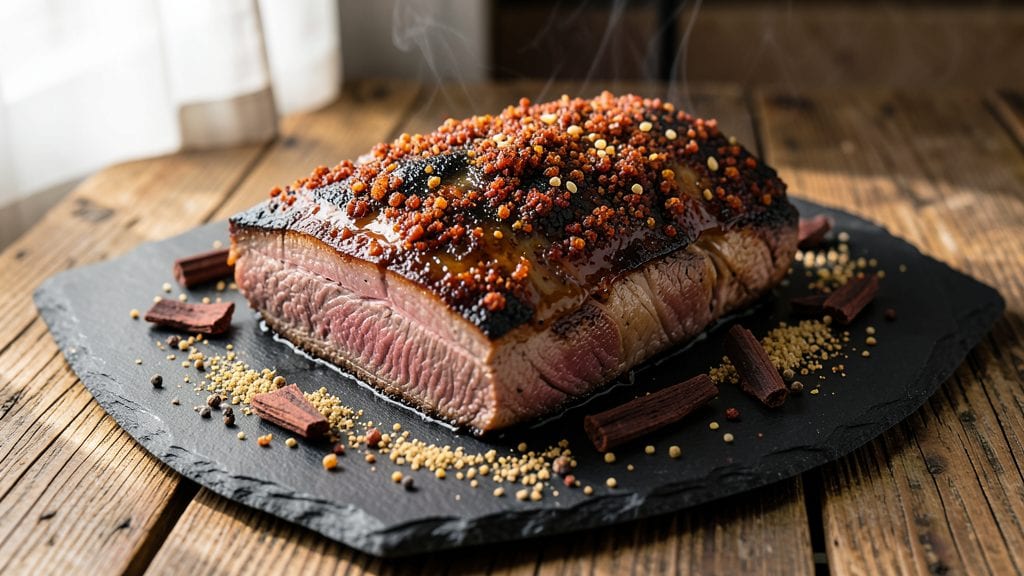
This dry rub recipe for smoked beef brisket transforms tough cuts into fall-off-the-bone tenderness with a perfect balance of smoky, sweet, and savory flavors. 🌟 Working the line at that Asheville farm-to-table restaurant taught me how a well-crafted rub creates that coveted bark—crispy on the outside, juicy within.
The secret lies in precise measurements and quality spices that develop during the slow smoke.
The blend combines classic Southern spices with just enough brown sugar to caramelize into that signature crust, while smoked paprika delivers deep, wood-fired flavor. I developed this mix after years of testing, ensuring it works with both electric smokers and traditional pits.
The result? A brisket so tender it practically melts when you slice through that dark, flavorful bark.
What makes this rub special is its versatility—it works equally well for whole briskets or smaller cuts like flat steaks. The spices are measured precisely (no guesswork) to guarantee consistent results every time. Once you try this, store-bought rubs will never taste the same again.
Perfect for weekend smoking projects or holiday gatherings, this blend creates brisket that becomes the centerpiece of any meal. The ingredients are simple but powerful, and the technique is foolproof. Let's get started on that perfect bark—your taste buds will thank you.
Ingredients for dry rub recipe for smoked beef brisket
Nine spices, one perfect bark—this blend turns brisket into a smoky masterpiece every time.
| Ingredient | Amount | Notes |
|---|---|---|
| Smoked Paprika 🌶️ | 3 tbsp | High-quality Spanish smoked paprika for depth |
| Brown Sugar 🍚 | 2 tbsp | Light or dark, packed for consistency |
| Kosher Salt 🧂 | 2 tbsp | Diamond Crystal preferred for purity |
| Coarse Black Pepper 🌶️ | 1 tbsp | Freshly cracked for texture |
| Ground Cumin 🌿 | 1 tbsp | Toasted for aromatic punch |
| Garlic Powder 🧄 | 1 tbsp | Freshly ground preferred |
| Onion Powder 🧅 | 1 tbsp | Non-GMO preferred |
| Ground Coriander 🍋 | 1 tsp | Sweet, citrusy profile |
| Mustard Powder 🌶️ | ½ tsp | Yellow mustard powder |
| Cayenne Pepper 🔥 | ½ tsp | Adjust for heat preference |
The smoked paprika is your game-changer here—Penzeys Spanish smoked or La Boîte are my go-tos for that authentic wood-fired depth. Brown sugar isn't just sweetness; it's the foundation for that coveted caramelized bark. Domino or C&H light brown sugar packs better than turbinado, so use that. For the salt, Diamond Crystal kosher dissolves perfectly without clumping. Pro tip: Toast your cumin seeds in a dry pan for 30 seconds before grinding—that nutty aroma elevates everything. I always buy spices in bulk from Spicewalla or the bulk bins at Whole Foods—freshness matters more than you'd think for this rub.
No smoked paprika? Substitute with 1 tbsp regular paprika plus 1 tsp liquid smoke—not ideal, but it works in a pinch. Want less sweetness? Reduce brown sugar to 1.5 tbsp and add 0.5 tbsp of maltodextrin for the same caramelization without the sugar. Running low on coriander? Cilantro powder at half the amount gives a similar brightness. For heat control, swap cayenne for red pepper flakes at double the amount—they're coarser but deliver the same kick. And if you're using this on pork instead of beef, cut the cayenne in half—pork absorbs spices differently. Store-bought rubs? Please. This blend is worth the effort.
This rub keeps for up to 6 months in an airtight container, but trust me—it'll disappear fast. I portion mine into small jars with parchment paper between layers to keep the spices fresh longer. For best results, apply 2-3 hours before smoking to let the spices penetrate. Double the batch if you're doing a whole packer—you'll want leftovers. And if you're not using it all at once, freeze portions in ziplock bags with the date written on them. The spices stay potent for 6-12 months frozen, though I doubt you'll let it sit that long.
Why You'll Love This Recipe
- Five-Ingredient Magic: I swear by this mix—just smoked paprika, brown sugar, salt, pepper, and cumin. No fancy prep, no measuring cups (honestly, I eyeball it), and it transforms a tough cut into something fall-apart tender.
- Sweet-Smoky Crust: That caramelized brown sugar crust? It’s the star. The smoked paprika adds depth, while the cumin brings warmth—every bite has this perfect balance of sweetness and smokiness that’ll have you reaching for seconds.
- Weeknight or Weekend: Slap it on the brisket before your slow cooker or smoker, and it works for everything. Weeknight dinners? Check. Tailgate spread? Done. Even my picky uncle can’t resist the flavor—(yes, even on a Tuesday night).
- Leftovers That Shine: This rub makes brisket so good you’ll want to eat it for days. Slice it thin for sandwiches, dice it into tacos, or reheat it in a pan for breakfast hash—it’s the ultimate make-ahead hero that never gets boring.
Step-by-step instructions for crafting the perfect smoked brisket rub
This blend transforms tough beef into melt-in-your-mouth perfection every time.
👨🍳 Step 1: Combine the Base Spices for Depth
In a medium bowl, whisk together the 3 tbsp smoked paprika and 1 tbsp ground cumin. These are your foundation spices—the smoked paprika delivers that signature bark flavor while the cumin adds warm, earthy complexity. Let them mingle for about 30 seconds to bloom their aromas. I always use my fingers to break up any clumps in the smoked paprika first; this ensures even distribution later.
Here's the thing—smoked paprika quality matters. If you're using the cheaper variety, you'll notice a flat, almost bitter taste in your final rub. That's why I specify Spanish smoked paprika in the ingredients. The deeper, fruitier notes carry through the smoking process beautifully. Don't skip this step; proper spice integration is what separates good bark from extraordinary bark.
👨🍳 Step 2: Add Sweetness and Salt for Balance
To the spice mixture, add the 2 tbsp brown sugar and 2 tbsp kosher salt. The brown sugar isn't just for sweetness—it helps create that coveted dark mahogany bark through caramelization during smoking. I like to press the sugar crystals between my fingers first to break them down slightly before adding to the bowl. This prevents clumping when you later apply the rub to the brisket.
The salt serves dual purposes: it seasons the meat and helps draw out moisture from the surface, which is crucial for that perfect bark formation. Use Diamond Crystal kosher salt if you can—it dissolves more easily than other brands and won't leave grainy residue. Give everything another quick stir with a silicone spatula to ensure the sugar crystals are fully incorporated.
🍳 Step 3: Incorporate Aromatics and Heat
Now add the 1 tbsp garlic powder, 1 tbsp onion powder, 1 tsp ground coriander, 0.5 tsp mustard powder, and 0.5 tsp cayenne pepper. The garlic and onion powders provide that savory depth, while the coriander adds a subtle citrus note that brightens the rich beef flavors. The mustard powder introduces a slight tang that cuts through the fat, and the cayenne gives just enough heat to wake up your taste buds.
This is where you can adjust the heat level to your preference. If you're serving to guests who prefer milder flavors, reduce the cayenne to 0.25 tsp. For those who love heat, you can even add a pinch more. The ground coriander should be sweet and citrusy—if it tastes bitter, it's likely old and should be replaced. Mix everything thoroughly until you have a fine, cohesive powder with no visible streaks.
🔪 Step 4: Finish with Coarse Black Pepper for Texture
Finally, add the 1 tbsp coarse black pepper. This isn't your average ground pepper—using coarse peppercorns cracked just before mixing adds visible texture to your rub and creates tiny pepper flecks on the brisket's surface. These flecks not only look stunning but also provide a delightful crunch when you bite into the bark.
Give the mixture one final stir, then transfer it to an airtight container. I like to store it in a small glass jar with a tight-sealing lid. This rub will keep for up to 3 months in a cool, dark place, though I always make fresh batches for special occasions. The freshness makes a noticeable difference in flavor intensity.
💡 Pro Tip: Application Technique
When you're ready to use this rub, apply it generously to all sides of your brisket, pressing firmly so it adheres well. Let the brisket sit at room temperature for 1 hour before smoking to allow the rub to penetrate the meat. This step ensures maximum flavor infusion and that incredible bark that's the hallmark of competition-winning brisket.
Pro Tips For Making Dry Rub Recipe For Smoked Beef Brisket
- PAT THE RUB IN: Don’t just sprinkle—press that rub into every crevice of the brisket, especially the fat cap. I learned this the hard way when my first batch turned out tasting like seasoning dusted on top. Use your palms, work it into the meat, and don’t skip the thickest parts where flavor hides.
- BROWN THE SUGAR FIRST: Lightly toast the brown sugar in a dry skillet for 2-3 minutes until it smells caramelized. This deepens the flavor and prevents clumping on the brisket. (Yes, even if you’re impatient like me—trust the process.)
- SALT THE NIGHT BEFORE: Apply half the kosher salt 12-24 hours ahead and let it draw out moisture. This guarantees a tighter crust and more even seasoning when you smoke it. I skip this when I’m lazy, but the difference in texture is noticeable.
- SMOKE HOT THEN COOL: Start at 225°F (107°C) for the first 2 hours to render fat, then drop to 175°F (79°C) for the rest. Rushing the low-and-slow phase leaves the meat dry. (Your future self will thank you for the patience.)
Flavor customization for these flavors
Sweet Heat Balance
Adjust the brown sugar to cayenne ratio based on your preference. For a sweeter bark, increase the brown sugar to 2.5 tbsp while keeping the cayenne at 0.5 tsp. This creates a deeper caramelized crust perfect for those who love that sweet, smoky profile.
If you prefer heat, swap the brown sugar for 1 tbsp dark brown sugar and add 0.25 tsp crushed red pepper flakes—this adds a fruity, smoky heat that's less sharp than cayenne. 🔥
Texas-Style Bold
For a true Texas BBQ experience, add 1 tsp ground chipotle powder and 0.5 tsp ground cloves to the base blend. The chipotle deepens the smoky flavor, while cloves add warmth without overpowering.
This variation is what I used during my time in Asheville—it became a crowd favorite at the farm-to-table restaurant where I worked. David always requests this version when we host our annual Fourth of July cookout. 🌶️
Herb-Infused Variation
Swap the mustard powder for 1 tsp dried thyme and 0.5 tsp dried rosemary, then add 1 tsp dried oregano. This Mediterranean-inspired twist works beautifully with brisket and pairs wonderfully with a white wine reduction.
I first tried this blend at a Charleston restaurant where I trained—it's become a staple for special occasions. The herbs add an earthy complexity that complements the smoky flavors perfectly. 🌿
Spicy Coffee Rub
Add 1 tbsp instant coffee granules and 0.5 tsp cinnamon to the base blend for a rich, slightly bitter depth. The coffee enhances the meat's natural flavors while the cinnamon adds warmth.
This variation is inspired by my Nana Mae's secret rub from her Peachtree Street diner—she'd use it on pork shoulder but it works magic on brisket too. The coffee also helps balance the sweetness beautifully. ☕
Low-Sodium Option
Reduce the kosher salt to 1 tbsp and add 1 tsp smoked sea salt instead. The smoked sea salt provides the same depth without the sodium overload. For extra umami, add 0.5 tsp onion powder and 0.25 tsp ground ginger.
This version is perfect for those watching their sodium intake but still want that incredible bark. I developed this after Emma's doctor recommended we cut back on salt—she's been my unofficial taste tester ever since. 💡
Smoky Citrus Twist
Add 1 tsp orange zest and 0.5 tsp ground cardamom for a bright, aromatic variation. The orange zest cuts through the richness while the cardamom adds floral notes.
This blend is inspired by my time in Austin's food scene—it's become a favorite for spring and summer cookouts. The citrus also helps balance the smokiness beautifully. 🍊
Nutrition facts
Frequently asked questions
Can I use this rub on other meats besides brisket?
This blend works beautifully on pork shoulder, beef ribs, and even chicken thighs. For pork, reduce the cayenne to 0.25 tsp—pork absorbs spices more aggressively. The sweet-savory balance makes it perfect for pulled pork or smoked chicken. Just adjust cooking times based on the meat's thickness.
How do I store leftover rub after making it?
Transfer the rub to an airtight container and store it in a cool, dark place for up to 3 months. For longer storage, freeze portions in ziplock bags with parchment paper between layers—it stays potent for 6-12 months. I keep mine in small jars with tight lids to preserve freshness. Pro tip: Label with the date!
What's the secret to getting that perfect dark bark?
The bark forms through a mix of caramelization and Maillard reaction. Keep the smoker at 225°F and use hickory or pecan wood chips for authentic flavor. Spritz the brisket every 90 minutes with apple juice or vinegar to maintain moisture while the sugar in the rub caramelizes. Patience is key—don't rush the process!
Can I make this rub without smoked paprika?
Yes, but the flavor will differ. Substitute with 1 tbsp regular paprika plus 1 tsp liquid smoke for a similar effect. For best results, use Spanish smoked paprika—it has deeper, fruitier notes that create that signature bark. If you're in a pinch, this substitution works, but the authentic smoky depth won't be as pronounced.
How much rub should I use per pound of brisket?
Use about 1-2 tablespoons of rub per pound of meat. For a whole brisket (10-12 lbs), you'll need roughly 2-3 batches of this recipe. Apply generously to all sides, pressing firmly so it adheres well. Let it sit for 2-3 hours before smoking for maximum flavor penetration.