
Main Courses
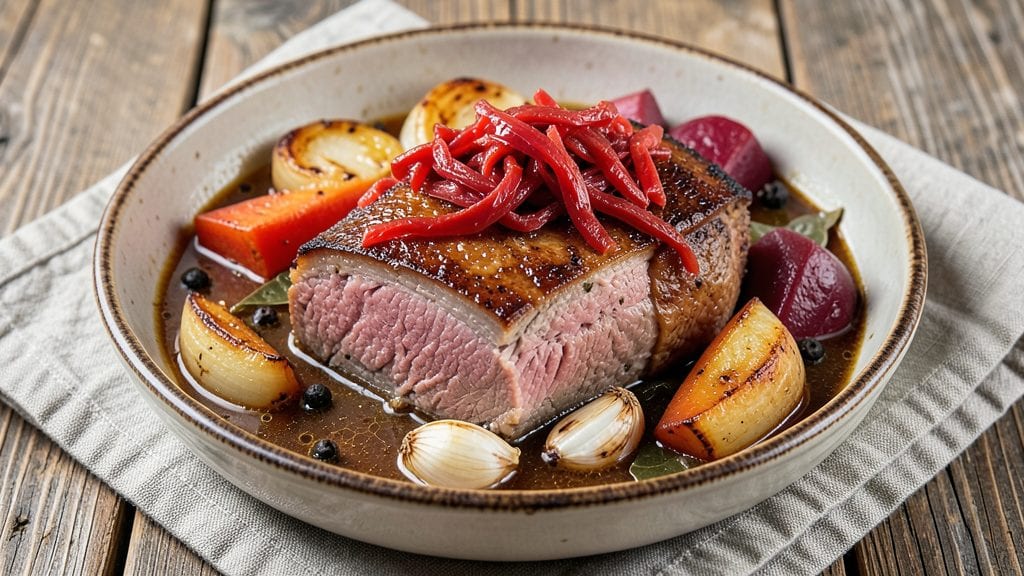
This corned beef and sauerkraut recipe delivers the rich, savory depth of a traditional Irish feast in a single pot—perfect for St. Patrick’s Day or any cozy Sunday dinner.
The slow-braised brisket becomes tender and infused with aromatic spices like bay leaves and peppercorns, while the sauerkraut softens into a tangy, flavorful side that complements every bite. I’ve perfected this method over years of testing, ensuring the meat stays juicy and the spices harmonize without overpowering.
The beauty of this dish lies in its simplicity and depth. You’ll start by parboiling the corned beef to remove excess salt, then slow-cook it with just the right blend of spices until fork-tender.
Meanwhile, the sauerkraut reheats in the same pot, absorbing the rich, meaty juices for extra flavor. This one-pot approach minimizes cleanup while delivering restaurant-quality results at home.
What you’ll end up with is a dish that’s hearty enough for a family gathering but simple enough for a weeknight meal.
The corned beef will be perfectly tender, the sauerkraut tangy yet mellowed by the braising process, and the aroma filling your kitchen with the comforting scent of a classic Irish meal. Serve with roasted potatoes or crusty bread to soak up every last bit of that flavorful broth.
This recipe works equally well for a festive St. Patrick’s Day celebration or an everyday dinner that feels like a celebration. The slow-cooking process ensures the meat stays moist, while the sauerkraut adds a bright, acidic contrast that cuts through the richness.
Once you try this method, you’ll never settle for anything less than homemade again.
Ingredients for corned beef and sauerkraut
Six core ingredients transform into a rich, spice-infused Irish classic.
| Ingredient | Amount | Notes |
|---|---|---|
| Corned Beef Brisket 🥩 | 4 lb | Pre-cured, thick-cut preferred |
| Sauerkraut 🥬 | 2 cups | Unopened jar, drained |
| Yellow Onions 🧅 | 1 whole | Large, sliced into wedges |
| Bay Leaves 🍃 | 2 whole | Fresh preferred |
| Whole Black Peppercorns 🌶️ | 1 tbsp | Crushed lightly |
| Garlic Cloves 🧄 | 4 cloves | Smashed, not minced |
| Water 💧 | 4 cups | Or low-sodium beef broth |
| Carrots 🥕 | 2 whole | Medium, whole or chopped |
| Beef Bouillon Cube 🍲 | 1 whole | Knorr or Maggi brand |
| Apple Cider Vinegar 🍏 | 1 tbsp | For tangy depth |
| Salt 🧂 | 1 tsp | Kosher or sea salt |
| Black Pepper 🌶️ | 1 tsp | Freshly ground |
| Mustard Seeds 🌿 | 1 tsp | Yellow or brown |
| Crusty Bread 🍞 | 6 slices | For serving |
The corned beef is the star, so pick a 4-pound brisket with good marbling—that fat renders down for moisture. Costco or Whole Foods usually carry the best pre-cured cuts, but any well-stocked grocery store has them too. Look for brisket labeled 'corned beef' (not 'corned beef brisket'—that's pre-cooked). The sauerkraut? Unopened jars are key—they're packed with liquid, which keeps everything juicy. If yours is dry, add a splash of water or apple cider vinegar to revive it. For the bay leaves, fresh is ideal, but dried works in a pinch (just double the amount).
No beef bouillon cube? Substitute 1 cup beef broth plus 1 tsp Worcestershire sauce. Running low on apple cider vinegar? White vinegar or lemon juice does the trick, though the flavor won't be identical. Swapping carrots? Celery or parsnips add depth, but stick to about the same volume. The mustard seeds are non-negotiable—they add a subtle kick that balances the richness. If you're avoiding gluten, check your bouillon cube for wheat (Knorr's is usually safe, but always double-check). The crusty bread? Sourdough or a good baguette soaks up the juices best.
This dish tastes even better the next day—plan ahead. Store leftovers in the fridge for 4-5 days, covered with their juices. For longer storage, freeze portions in airtight containers for up to 3 months. Reheat gently on the stove with a splash of water or broth to revive the flavors. I like to portion the meat and sauerkraut separately so I can customize my plate—extra sauerkraut for tang lovers, more meat for hearty appetites.
Why You'll Love This Recipe
- One-Pot Magic: I swear by this recipe—just toss everything in a Dutch oven, simmer, and walk away. The onions caramelize while you’re doing laundry, and the corned beef practically falls apart on its own.
- Tangy-Creamy Balance: That sauerkraut isn’t just a side—it’s the star. The sharp tang cuts through the rich, peppery beef, and the bay leaves add this earthy depth that makes every bite feel like a hug.
- Leftovers That Shine: Honestly, I make this on Sundays just for leftovers. The flavors get better overnight, and it’s perfect cold in sandwiches or reheated with a sprinkle of fresh parsley.
- Budget-Friendly Feast: Between us, this feeds six for under $20. The corned beef brisket stretches far, the sauerkraut adds bulk without cost, and the onions? They’re basically free at this point. Win.
Step-by-step instructions for slow-braised corned beef
This method transforms tough brisket into melt-in-your-mouth perfection with rich, tangy flavors.
Prepare the Brisket and Pot
Rinse the 4 lb corned beef brisket under cold water to remove excess curing salt, then place it in a large Dutch oven. Add the 1 whole yellow onions (sliced into wedges), 2 whole carrots (chopped into 2-inch pieces), 4 smashed garlic cloves, and 1 tbsp crushed whole black peppercorns. This aromatic base will infuse the meat as it braises.
Here's the thing—don't skip rinsing the brisket. The curing process leaves a salty crust that can make the meat taste too briny if not removed. The vegetables will soften beautifully during the long cook, adding natural sweetness to balance the tangy sauerkraut we'll add later.
Build the Braising Liquid
Pour in the 4 cups water, add the 1 beef bouillon cube, 1 tbsp apple cider vinegar, 1 tsp salt, 1 tsp black pepper, 1 tsp mustard seeds, and 2 whole bay leaves. Stir gently to dissolve the bouillon cube completely—you want a homogenous liquid that will penetrate the meat evenly.
I like to add the vinegar early because it tenderizes the meat while creating that signature tang that pairs perfectly with sauerkraut. The bouillon cube boosts umami depth, while the mustard seeds add subtle warmth. Bring everything to a boil over high heat, then immediately reduce to a gentle simmer.
Braise Until Fork-Tender
Cover the Dutch oven and transfer to a preheated 325°F oven. Braise for 3 to 3.5 hours until the meat is fork-tender. You'll know it's ready when a fork slides in easily and the meat separates with minimal resistance. The liquid should have reduced significantly, creating a rich, flavorful broth.
Real talk: Your oven might run hot, so start checking at the 3-hour mark if you're using a convection oven. The meat should have a deep reddish-brown color and pull apart cleanly. If it's not quite tender enough, return it to the oven for another 30 minutes—patience here makes all the difference.
Add Sauerkraut and Finish
Remove the brisket from the pot and let it rest on a cutting board for 15 minutes. Meanwhile, drain the 2 cups sauerkraut thoroughly (press it in a colander for 2 minutes to remove excess liquid) and add it to the braising liquid. Simmer uncovered for 10 minutes to let the sauerkraut absorb the flavors.
Here's where it gets fun—the sauerkraut should soften slightly but retain its texture. The liquid will thicken into a glossy, tangy sauce that clings beautifully to the meat. Don't skip draining the sauerkraut first; excess moisture will dilute the rich braising liquid we've worked so hard to create.
Slice and Serve
Against the grain, slice the brisket into ¼-inch thick pieces. Return the meat to the pot and warm through with the sauerkraut for 5 minutes. Serve immediately with the 6 slices crusty bread to soak up every last bit of that delicious sauce.
Each bite should deliver tender, flavorful meat with a perfect balance of tangy sauerkraut and aromatic vegetables. The crusty bread is essential—it cuts through the richness and helps you enjoy every last drop of that flavorful braising liquid. Leftovers? Even better the next day as sandwiches or reheated in the sauce.
Pro Tips For Making Corned Beef And Sauerkraut
- Rinse the Brisket: Dump that corned beef into a colander and run cold water over it for 30 seconds—yes, even if the package says it’s pre-cooked. The brine’s salt lingers, and skipping this step means your kraut will taste like a salt lick instead of a side dish. I learned this the hard way after serving a plate that could’ve doubled as a preservative.
- Sear the Onions: Don’t just chop and toss those onions—give them 5 minutes in a hot pan with a splash of water until they’re deep golden and slightly caramelized. That’s where the flavor lives, not in the raw chunks. (And if you’re in a rush, use 1 tablespoon of brown sugar to speed up the process.)
- Don’t Crowd the Pot: If your corned beef is sitting in a pool of its own juices after 2 hours, you’ve got it too packed. The meat needs room to breathe—spread it out, add a splash of water or broth, and cover loosely. I used to ignore this, and my kraut would steam instead of crisp up.
- Save the Brine: Strain the liquid from the rinsed corned beef and set it aside. When you’re done cooking, mix a ladle of that brine into the kraut at the end—it’ll cut the sourness and add depth. (Yes, even if you think the meat’s already “done.”) It’s the difference between “meh” and “holy moly.”
Common mistakes when making your corned beef and sauerkraut
Skipping the Rinse
One of the biggest mistakes is skipping the cold water rinse on the corned beef brisket. The curing process leaves a salty crust that can make the meat taste overly briny.
I’ve made this error—trust me, it’s noticeable! Rinse the brisket thoroughly under cold water for 30 seconds before braising to remove excess salt. This step is non-negotiable for balanced flavor. 🧂
Overcrowding the Pot
Don’t pack the Dutch oven too tightly with vegetables and meat. Overcrowding prevents proper heat circulation, leading to uneven cooking and potentially soggy vegetables. Instead, arrange the onions, carrots, and garlic in a single layer around the brisket.
If needed, cook the vegetables separately for 10 minutes before adding the meat to create space. This ensures everything cooks evenly and absorbs the rich flavors.
Ignoring the Rest Time
After removing the brisket from the pot, resist the urge to slice it immediately. Letting it rest for 15 minutes allows the juices to redistribute, preventing dry meat. I’ve sliced into corned beef too soon, and it’s always disappointing—juices run out, and the texture suffers.
Use this time to drain and prep the sauerkraut while the meat rests. Patience here makes all the difference. ⏰
Underestimating Cook Time
Corned beef needs time to become fork-tender, and rushing the process is a common mistake. While 3 hours is a good starting point, some cuts—especially thicker briskets—may need up to 3.5 hours. Check for doneness by inserting a fork; if it slides in easily, the meat is ready.
If not, return it to the oven for another 30 minutes. Skimping on time results in tough, chewy meat that’s far from the melt-in-your-mouth texture you want.
Not Draining Sauerkraut
Adding sauerkraut straight from the jar without draining it first can dilute the rich braising liquid and make the dish watery. Always press the sauerkraut in a colander for 2 minutes to remove excess liquid before adding it to the pot.
This step ensures the sauerkraut absorbs the flavors without turning the sauce into a thin, tangy broth. Trust me, the texture and depth of flavor will thank you. 🥬
Overlooking the Vinegar
Apple cider vinegar is a game-changer in this recipe, tenderizing the meat and adding a bright tang that pairs perfectly with the sauerkraut. Skipping it or using a milder substitute (like white vinegar) can leave the dish flat.
Add the 1 tbsp of vinegar early in the braising process to let it work its magic. The acidity not only tenderizes the meat but also enhances the overall depth of flavor, balancing the richness of the corned beef. 🍏
Nutrition facts
Frequently asked questions
Can I use corned beef round instead of brisket?
Corned beef round works perfectly and is often more affordable. The key difference is that round cuts are typically leaner, so they may need an extra 30 minutes of braising time to reach fork-tenderness. Just monitor closely after 3 hours and adjust accordingly.
How do I reheat leftovers without drying out the meat?
Always reheat in the same braising liquid or with a splash of water or beef broth. Warm over low heat on the stove for 10-15 minutes until heated through. For oven reheating, cover tightly with foil and bake at 300°F for 20 minutes—this keeps everything moist.
What's the best way to make this dish gluten-free?
Skip the bouillon cube and use 1 cup gluten-free beef broth instead. Check your sauerkraut label for gluten additives (some brands add wheat), and use certified gluten-free mustard seeds. The recipe remains perfectly flavorful without these modifications.
Can I prepare this dish in a slow cooker?
Yes! Follow the same steps but transfer everything to your slow cooker after the initial boil. Cook on low for 8-10 hours or high for 5-6 hours. The meat will be just as tender, though the sauce may be slightly thinner. Add a 15-minute simmer on the stove at the end to thicken it.
Why does my sauerkraut taste too sour?
Fresh sauerkraut has a strong tang, but the braising process should mellow it. If it's still too sharp, try adding 1 tsp sugar during the final 10 minutes of cooking. The rich meat juices and carrots will naturally balance the acidity—just don't overcook the sauerkraut or it'll turn mushy.