
Soups & Stews
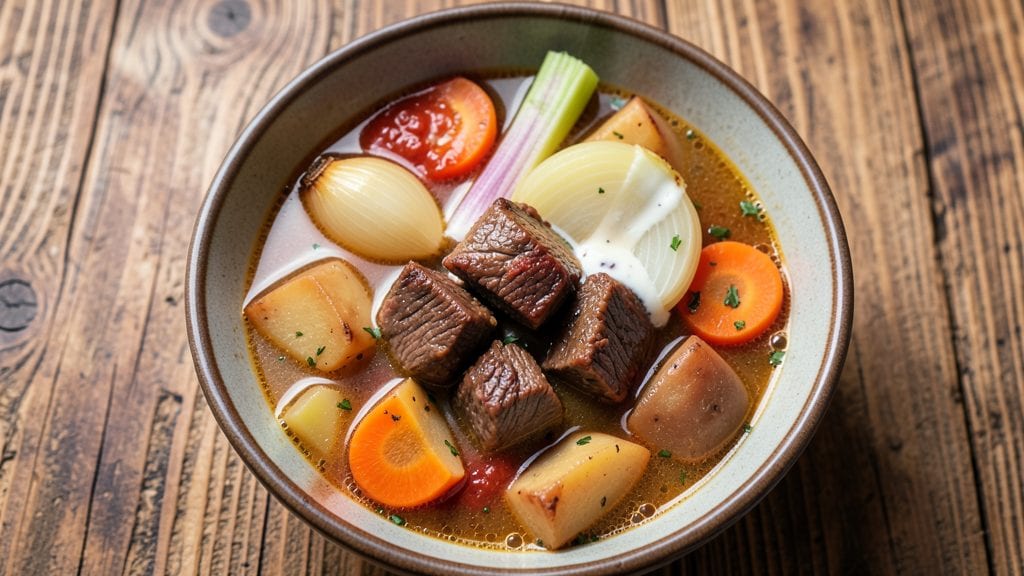
This copycat Campbell's vegetable beef soup recipe delivers the same comforting, hearty flavor you remember from the can—rich, savory, and packed with tender beef and vegetables in every spoonful. 💛 The secret lies in slow-cooking the beef to achieve that signature tender texture while building layers of flavor through a carefully balanced seasoning blend.
I've tested and refined this recipe to mimic the commercial version's depth, ensuring you get that familiar taste without the preservatives.
The beauty of making this soup from scratch is how simple yet rewarding it is. With just a few key ingredients—beef, potatoes, carrots, celery, and a blend of spices—you'll create a bowl that's heartier than anything store-bought.
The broth simmers down to develop a concentrated, savory base, while the vegetables soften just enough to melt in your mouth. This isn't just a soup; it's a comforting, one-pot meal that warms you from the inside out.
What you'll end up with is a steaming bowl of soup that's thick enough to satisfy but light enough to enjoy any time of day. The beef becomes fork-tender, the potatoes creamy, and the carrots and celery retain just enough bite to add texture.
The seasoning is balanced—savory, slightly sweet, and with a touch of saltiness that makes every spoonful irresistible. Perfect for chilly evenings or as a quick lunch, this recipe brings back the nostalgia of a classic comfort food.
Whether you're feeding a family or meal prepping for the week, this soup scales effortlessly. The instructions are straightforward, and the technique is foolproof, ensuring you'll achieve professional-quality results every time. Let's get cooking—your taste buds will thank you.
Ingredients for copycat campbell's vegetable beef soup
Sixteen simple ingredients transform into the soul-warming soup you love from the can.
| Ingredient | Amount | Notes |
|---|---|---|
| Chuck Roast Beef 🥩 | 1 ½ lb | Trimmed of fat for cleaner broth |
| Yellow Onion 🧅 | 1 whole | Chopped medium dice, about 1 cup |
| Carrots 🥕 | 4 medium | Peeled, cut into 1-inch pieces |
| Celery Stalks 🌿 | 4 whole | Trimmed, cut into 1-inch pieces |
| Russet Potatoes 🥔 | 3 medium | Peeled, cut into 1-inch cubes |
| Tomato Paste 🍅 | 2 tbsp | Squeeze tube or canned |
| Beef Broth 💧 | 6 cups | Low-sodium preferred |
| Water 💧 | 2 cups | For broth consistency |
| Salt 🧂 | 1 ½ tsp | Kosher or sea salt |
| Black Pepper 🌶️ | ½ tsp | Freshly ground preferred |
| Garlic Powder 🧄 | 1 tsp | Not garlic salt |
| Onion Powder 🧅 | 1 tsp | For depth of flavor |
| Dried Thyme 🌿 | ½ tsp | Or 1 tbsp fresh thyme |
| Worcestershire Sauce 🍶 | 1 tbsp | For umami depth |
| Extra-Virgin Olive Oil 🫒 | 1 tbsp | For sautéing vegetables |
The beef is the star here—chuck roast breaks down beautifully for that signature tender texture. Grab it from the butcher counter if you can, or the pre-cut chuck roast from the grocery store's meat section works too. Look for good marbling—it keeps the meat juicy. I usually buy mine from Costco when I'm making a big batch, but the regular supermarket stuff is fine for a weeknight dinner. The potatoes should be Russet—they hold up better to long cooking and get wonderfully creamy. Carrots and celery? Any color works, but orange carrots add that classic Campbell's look.
No beef broth? Chicken broth plus 1 tbsp soy sauce gets you close. Fresh thyme is ideal but dried works at one-third the amount. The tomato paste can be the squeeze tube kind from Trader Joe's—it's perfect for this recipe. Worcestershire sauce missing? Soy sauce plus a pinch of sugar mimics that umami kick. The onion and garlic powders are non-negotiable for that classic Campbell's flavor—don't swap them for fresh. If you're watching sodium, use low-sodium broth and add salt gradually at the end to taste.
This soup tastes even better the next day as flavors meld. Keeps for 5 days in the fridge, freezes for 3 months—perfect for meal prep. I always make a double batch and freeze half. The beef gets even more tender after reheating, and the broth reduces to a perfect consistency. Store in airtight containers with a splash of broth on top to keep everything moist. Leftovers reheat beautifully—just add a splash of water or broth if it gets too thick.
Why You'll Love This Recipe
- One-Pot Magic: I swear by this recipe because it’s actually just one pot—no chopping boards overflowing, no tiny dice of celery everywhere. Toss in the chuck roast (already cut into big chunks), onions, carrots, and celery stalks, and let the slow simmer do the work. My countertops stay clear, and my sanity stays intact.
- Rich, Familiar Comfort: That deep, savory beef flavor? It’s exactly what I crave after a long day. The chuck roast breaks down into tender shreds, the carrots soften just enough to melt in your mouth, and the potatoes soak up all that beefy goodness. It’s not fancy, but it’s ridiculously satisfying—like a warm hug in a bowl.
- Meal Prep MVP: Between us, this soup is my secret weapon for busy weeks. Cook a big batch on Sunday, and you’ve got lunch or dinner covered for days. The flavors actually improve the next day—yes, even the potatoes stay creamy. I freeze portions too, because who has time to cook when you’re running on coffee and willpower?
- Budget-Friendly Powerhouse: Chuck roast is affordable, and the veggies stretch for miles. A single pot feeds four for under $10, and the leftovers? Even better. I’ll be real: my college self would’ve lived on this. It’s the kind of dish that makes you feel like you’re feeding a whole family without breaking the bank.
Step-by-step instructions for copycat Campbell's vegetable beef soup
Here's how to recreate that iconic canned soup flavor from scratch—rich, hearty, and full of homestyle comfort.
🍳 Step 1: Sear the Chuck Roast for Deep Flavor
Heat the 1 tablespoon extra-virgin olive oil in a large Dutch oven over medium-high heat. Pat the 1.5 lb chuck roast beef dry with paper towels—this ensures a good sear. Once the oil shimmers, add the beef and sear for 4-5 minutes per side until deeply browned. This step builds the rich foundation of your soup.
Remove the beef and set it aside. Here's the thing—don't skip this searing. Those browned bits (fond) dissolve into the broth later, creating layers of flavor that canned soup can't match. If your pan gets too crowded, work in batches to avoid steaming instead of searing.
👨🍳 Step 2: Sauté the Vegetable Base
In the same Dutch oven, add the chopped 1 whole yellow onion, 4 medium carrots, and 4 whole celery stalks. Cook for 5-6 minutes, stirring occasionally, until the vegetables soften slightly and the onion becomes translucent. This step develops their natural sweetness and removes any raw taste.
Stir in the 2 tablespoons tomato paste and cook for 1 minute until it darkens slightly. This adds that signature umami depth you find in the canned version. If you're worried about the paste burning, keep the heat at medium—it's tough to overcook tomato paste, but you don't want it to scorch.
🥘 Step 3: Build the Rich Broth
Pour in the 6 cups beef broth and 2 cups water, scraping up any browned bits from the bottom of the pot. Return the seared beef to the pot along with the 1.5 teaspoons salt, 0.5 teaspoon black pepper, 1 teaspoon garlic powder, 1 teaspoon onion powder, and 0.5 teaspoon dried thyme. Bring everything to a gentle boil over high heat.
Once boiling, reduce heat to low and cover partially. Let it simmer for 1 hour, stirring occasionally. This long simmer time is crucial—it allows the beef to become fork-tender while the flavors meld together. You'll know it's ready when the beef pulls apart easily with a fork and the broth has deepened in color.
🍳 Step 4: Finish with Potatoes and Umami Boost
Add the peeled and cubed 3 medium russet potatoes and 1 tablespoon Worcestershire sauce to the pot. Return to a gentle simmer and cook uncovered for 20-25 minutes, until the potatoes are tender when pierced with a fork. The potatoes should absorb some of the broth but still hold their shape.
Here's where it gets good—taste the soup and adjust seasoning if needed. The Worcestershire sauce adds that signature savory depth, but you might want to add a pinch more salt or pepper to match your taste. If the soup is too thick, add a splash of water; if it's too thin, let it simmer uncovered for a few more minutes to reduce.
⏰ Step 5: Rest and Serve Warm
Remove the soup from heat and let it rest for 10 minutes. This resting period allows the flavors to fully develop and the beef to reabsorb some of the juices. Ladle the soup into bowls, making sure each serving gets a generous portion of beef and vegetables.
I like to serve this with a sprinkle of fresh parsley on top and a slice of crusty bread. The texture should be perfect—tender beef that falls apart easily, soft vegetables, and a broth that coats the back of your spoon. This copycat version delivers all the comfort of the canned soup but with restaurant-quality depth of flavor.
Pro Tips For Making Copycat Campbell'S Vegetable Beef Soup
- SEAR THE BEEF FIRST: After browning the chuck roast in batches, don’t rush the simmer—let the meat hit 165°F internal before pulling it. I learned this the hard way when my first batch came out tough; slow-cooking alone won’t fix undercooked beef. (Yes, even if you’re impatient like me.)
- CUT VEGETABLES UNIFORMLY: Dice onions, carrots, and celery into ½-inch pieces—no smaller, no larger. The carrots and potatoes will soften at different rates, and you want them all tender at the same time. I used to eyeball it, but now I measure with a knife against a 1-inch marker on my cutting board.
- SALT THE POTATOES BEFORE ADDING: Toss diced russet potatoes with ½ teaspoon salt per pound before they hit the pot. This keeps them from turning mushy later, especially if you’re simmering long. I was skeptical until I tried it—now my potatoes stay firm and soak up flavor better.
- SKIP THE BOILING START: Don’t bring the soup to a full boil after adding everything—just simmer gently from the start. Boiling burns the onions and celery, making the broth bitter. I used to crank the heat, but now I keep it at a low simmer and let the flavors meld without the harsh edge.
Essential equipment for this dish
Dutch Oven Essentials
The Dutch oven is your secret weapon for this recipe—its heavy construction ensures even heat distribution, preventing hot spots that can burn your soup. I use a Lodge 5.5-quart enameled cast iron because it retains heat beautifully and handles temperature shifts gracefully.
If you don’t own one, a stainless steel stockpot with a tight-fitting lid works too, though it may require more attention to prevent boiling over. 🥘
Meat Thermometer
A meat thermometer is non-negotiable for achieving that perfect fork-tender beef texture. I swear by the ThermoWorks Smoke—it’s durable, accurate, and stays put in the beef while you cook. Insert it into the thickest part of the roast, avoiding fat or bone.
The beef is ready when it reaches 195-200°F internal temperature, which typically happens after 1 hour of simmering. Without one, you risk overcooking the beef or undercooking it.
Sharp Knife Set
Invest in a sharp chef’s knife (I use a Wüsthof 8-inch) and a slicing knife for prepping vegetables efficiently. Dull knives make chopping carrots and celery frustrating—and dangerous. A mandoline speeds up dicing potatoes if you’re making a big batch, but a sharp knife works just fine.
The goal is evenly sized pieces so vegetables cook uniformly. 🔪
Wooden Spoon
A wooden spoon is your best friend for stirring this soup without scratching the Dutch oven or burning your hands. I keep a Oxo Good Grips in my kitchen for this exact reason—it’s heat-resistant and fits perfectly in my pot.
Avoid metal utensils when the soup is simmering to prevent scorching. A silicone spatula works too, but wood is classic for a reason.
Instant-Read Thermometer
An instant-read thermometer (like the Thermapen ONE) helps you check the broth temperature and potato doneness without opening the lid, which can cause temperature fluctuations. Aim for 205-210°F for the broth when the potatoes are tender—this ensures the soup is hot enough to serve immediately but not boiling.
Pro tip: Calibrate your thermometer before use for accuracy.
Slotted Spoon
A slotted spoon makes serving this soup effortless—you can easily scoop out beef and vegetables while letting the broth stay in the pot. I use a stainless steel one with a long handle for deep pots.
When ladling into bowls, hold the spoon at a 45-degree angle to get that perfect mix of meat, veggies, and broth in every bite. 🍲
Nutrition facts
Frequently asked questions
Why does the recipe call for searing the beef?
Searing the beef creates a flavorful brown crust called the "fond" that dissolves into the broth, adding deep, meaty richness. This step mimics the concentrated flavor of canned soup while also preventing the beef from becoming mushy during long cooking. Skipping it results in a broth that tastes more like plain beef broth than the iconic Campbell's flavor profile.
Can I substitute chicken broth for beef broth?
You can, but the flavor will be lighter. For best results, use chicken broth plus 1 tablespoon soy sauce to replicate the umami depth. The Worcestershire sauce later in the recipe also helps bridge the gap. If you're committed to chicken broth, add an extra pinch of garlic powder and onion powder to compensate for the missing beefy notes.
How do I fix soup that's too thick or too thin?
For thick soup, add 2-4 tablespoons of hot water or broth and simmer uncovered for 5-10 minutes to reduce again. For thin soup, simmer uncovered for 10-15 minutes to evaporate excess liquid. The ideal consistency should coat the back of a spoon but still allow easy ladling. If needed, mash a few potatoes slightly with a fork to thicken naturally.
What's the best way to reheat leftovers?
Reheat gently on the stove over low-medium heat, stirring occasionally, until steaming hot (165°F). For microwave reheating, cover with a damp paper towel and heat in 1-minute intervals, stirring between each. Never reheat to a boil—this can make the broth watery and the beef tough. The soup actually improves after reheating as flavors meld further.
Can I make this soup in an Instant Pot?
Yes! Sear the beef first, then sauté the vegetables on "Sauté" mode. Add all ingredients except potatoes, pressure cook for 30 minutes, then add potatoes and cook for 5 more minutes on high pressure. Quick-release the pressure and stir in Worcestershire sauce. The Instant Pot version cooks 40% faster but may require adjusting salt to taste since pressure cooking intensifies flavors.