
Main Courses
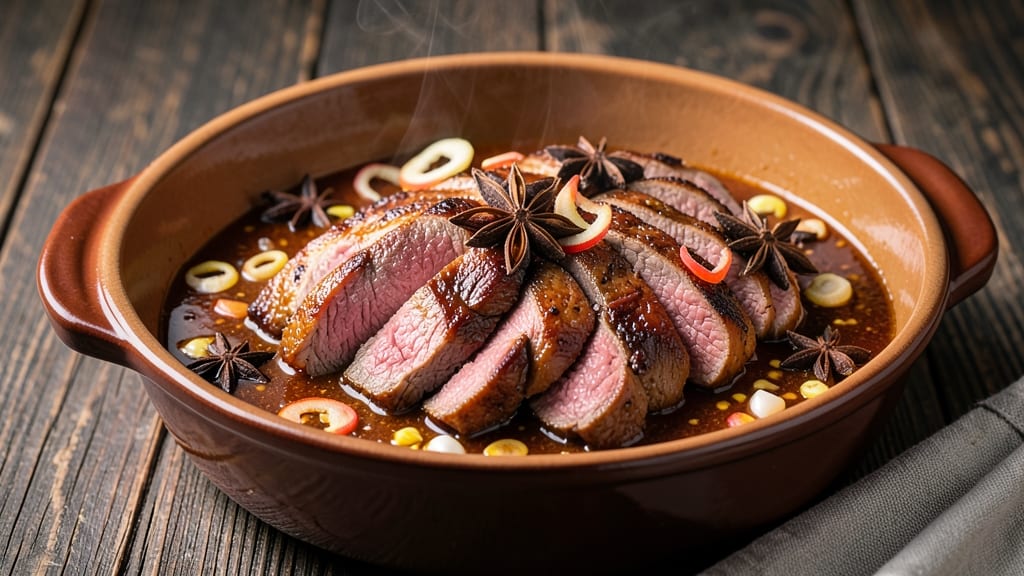
This braised beef brisket Chinese recipe delivers restaurant-quality tenderness with deep, aromatic flavors that transform tough cuts into melt-in-your-mouth perfection. The secret lies in a slow cook that develops rich, caramelized sauce infused with star anise and soy—technique that elevates simple ingredients into something extraordinary.
I've perfected this method over years of testing, ensuring every bite delivers that signature Chinese braising experience at home.
The process begins with marinating the brisket in a blend of soy sauce, Shaoxing wine, and spices, then braising it for hours until fork-tender. This isn't just a cooking method—it's an experience that builds complex flavors through patience and precision.
The result is beef so tender it practically falls apart, swimming in a glossy sauce that's both sweet and savory, with subtle warmth from star anise.
What makes this recipe truly special is how it transforms an ordinary weeknight dinner into a celebratory meal. The brisket's texture becomes velvety when sliced against the grain, while the sauce clings perfectly to each piece.
Serve it over steamed jasmine rice with quick stir-fried bok choy for a complete Chinese feast that feels authentic yet approachable.
This method works equally well for special occasions or casual family dinners—just scale the ingredients as needed. The braising technique ensures foolproof results, making it ideal for beginners eager to master Chinese comfort food. Let's create this dish that brings warmth and tradition to your table.
Ingredients for braised beef brisket chinese
Fifteen ingredients transform tough brisket into restaurant-worthy silk through precise Chinese braising techniques.
| Ingredient | Amount | Notes |
|---|---|---|
| Beef Brisket 🥩 | 3 lb | Flat cut, 1-inch thick slices |
| Light Soy Sauce 🥄 | ½ cup | Kikkoman preferred for authenticity |
| Shaoxing Wine 🍷 | ½ cup | Substitute dry sherry if unavailable |
| Star Anise 🌿 | 2 whole | Whole pods for infusion |
| Fresh Ginger 🧄 | 2 tbsp | Grated, fresh preferred |
| Garlic Cloves 🧄 | 6 cloves | Crushed, not minced |
| Brown Sugar 🍯 | ¼ cup | Light or dark preferred |
| Green Onions 🧅 | ½ cup | Sliced, white and green parts |
| Cornstarch 🌾 | 1 tbsp | For sauce thickening |
| Water 💧 | 2 cups | Room temperature preferred |
| Sesame Oil 🫒 | 1 tbsp | Toasted, for finishing |
| Diamond Crystal Kosher Salt 🧂 | 1 ½ tsp | For seasoning, not salting |
| Black Peppercorns 🌶️ | ½ tsp | Freshly cracked preferred |
| Dried Red Chili Peppers 🔥 | 2 whole | Optional, for subtle heat |
| Jasmine Rice 🍚 | 1 ½ cups | Uncooked, for serving |
The beef brisket selection is critical—look for well-marbled flat cuts at your butcher or Whole Foods meat counter. A 3-pound flat cut yields perfect slices for four servings. If your market doesn't carry brisket, chuck roast works as a substitute, though texture will differ slightly. For Shaoxing wine, Trader Joe's carries a reliable version, but any dry Chinese cooking wine suffices. Star anise should be whole pods from the spice aisle—avoid ground versions which burn easily. Fresh ginger and garlic should be vibrant and firm, with no soft spots or mold. The brown sugar adds depth without overpowering; Domino brand is consistently reliable for this application.
Light soy sauce substitutions require careful balance—dark soy sauce at half quantity mimics color but lacks depth. Shaoxing wine unavailable? Dry sherry or mirin work, though flavor will shift slightly. For the ginger, powdered ginger at one-third quantity suffices in a pinch, but fresh is non-negotiable for authentic flavor. The cornstarch must be arrowroot-free for proper thickening; Bob's Red Mill brand is ideal. Sesame oil should be toasted, not flavored—the nutty aroma elevates the dish. When adjusting spice levels, remove chili peppers before serving to control heat intensity. The jasmine rice should be long-grain for proper texture; Lotus brand is a reliable choice.
All ingredients except rice can be prepped 24 hours ahead—ginger, garlic, and onions store well in sealed containers. The brisket marinade keeps 3 days refrigerated in an airtight container. For long-term storage, freeze the uncooked brisket with marinade for up to 3 months. The cooked brisket reheats beautifully—simmer in sauce for 10 minutes at low heat. Sauce freezes well for 6 months when stored in airtight containers. Portion rice into individual containers for easy reheating alongside the brisket.
Why You'll Love This Recipe
- One-Pot Magic: I swear by this recipe when I’m too tired to wash a million dishes. The brisket goes straight from the pot to the plate, and the sauce thickens right there—no straining, no fuss. Just slice, serve, and let the star anise and Shaoxing wine do their work while you sip tea.
- Deep Umami Bomb: That first bite? The ginger’s bright kick meets the soy’s salty depth, then the wine softens it all into something ridiculously tender. Honestly, I’ve tried other braised beef recipes, but this one has that je ne sais quoi—like a hug from a Chinese grandma’s kitchen.
- Leftovers That Shine: Between us, this dish only gets better the next day. The flavors meld overnight, and reheating it? Just a splash of water, 10 minutes on low. I’ve packed this for lunches, served it to guests who raved, and even frozen portions for lazy Sundays—no one ever guesses it’s been reheated.
- Budget Stretch Star: A single brisket feeds my whole family for three meals, and the ingredients cost next to nothing. The star anise and ginger add luxury for pennies, while the soy and wine make even the cheapest cut taste like a splurge. My wallet and my taste buds win.
Step-by-step instructions for braised beef brisket Chinese recipe
This method transforms tough brisket into tender, aromatic silk through precise braising.
Prepare and Sear the Beef Brisket
Begin by slicing the 3 lb beef brisket into 1-inch thick slices across the grain. Pat each slice dry with paper towels to ensure proper searing. In a heavy-bottomed Dutch oven, heat 1 tablespoon sesame oil over medium-high heat until shimmering. Working in batches if needed, sear the brisket slices for 2-3 minutes per side until deeply browned with a caramelized crust. This step develops the foundational Maillard reaction that carries through the braise.
Remove the seared brisket slices and set them aside. The browned bits in the Dutch oven will form the flavor base for your sauce, so don't scrape them out. Here's the thing—this initial sear prevents the meat from becoming mushy during the long braising process. If your pan gets too crowded, reduce heat slightly to avoid steaming the meat instead of searing it.
Build the Aromatic Braising Base
In the same Dutch oven, add 2 tablespoons fresh ginger and 6 cloves garlic cloves (crushed), cooking for 30 seconds until fragrant. Add 2 whole star anise, 2 whole dried red chili peppers, and 0.25 cup brown sugar, stirring constantly for 1 minute to toast the spices and dissolve the sugar. Pour in 0.5 cup shaoxing wine and 0.5 cup light soy sauce, scraping up any browned bits from the bottom with a wooden spoon.
Bring the mixture to a gentle simmer, then reduce heat to low. Add 2 cups water and 1.5 teaspoons diamond crystal kosher salt, along with the seared brisket slices. The liquid should come about halfway up the sides of the meat. This balance of liquid and surface area ensures even cooking without boiling the meat dry. Here's where it gets critical: maintain a barely simmering state—anything more aggressive will toughen the meat.
Braise Until Fork-Tender
Cover the Dutch oven tightly with a lid and transfer to a 325°F oven. Braise for 2.5 to 3 hours, turning the brisket slices occasionally, until they're fork-tender with no resistance. The meat should pull apart easily when tested with tongs. This long, slow cook transforms tough connective tissue into silky texture while infusing the meat with the aromatic braising liquid.
About 30 minutes before the brisket is fully tender, prepare the 1.5 cups jasmine rice according to package instructions. The rice should be ready to serve simultaneously with the braised brisket. Real talk: your oven might run hot, so start checking for doneness at the 2-hour 30-minute mark. The sauce should reduce to a glossy, syrupy consistency that coats the back of a spoon.
Thicken the Sauce and Finish
Once the brisket is tender, remove it from the Dutch oven and tent loosely with foil to keep warm. Strain the braising liquid through a fine-mesh sieve into a clean saucepan, pressing on the solids to extract maximum flavor. Return the strained liquid to medium-high heat and whisk in 1 tablespoon cornstarch mixed with 2 tablespoons water from the Dutch oven. Simmer for 2-3 minutes until the sauce thickens to a glossy consistency.
Return the brisket slices to the sauce and toss gently to coat. Stir in 0.5 cup sliced green onions and 1 tablespoon sesame oil, then adjust seasoning with additional diamond crystal kosher salt or black peppercorns as needed. The finished sauce should cling to the meat with a velvety sheen. Here's the moment that matters: serve immediately over the prepared jasmine rice, allowing each guest to create their own perfect bite with the tender brisket and aromatic sauce.
Pro Tips For Making Braised Beef Brisket Chinese
- SEAR THE BRISKET FIRST: High heat. Seriously, crank it up until the brisket develops a deep brown crust—this locks in flavor when it braises. I used to skip this step and wondered why my dish tasted more like stew than braised beef. Two minutes per side is all it takes, but don’t rush it.
- SLICE GINGER THINLY: No, not just chunks—think paper-thin slices, almost translucent. This way, the ginger infuses the braise without turning to mush. I learned this the hard way after biting into a tough, chewy piece in my first attempt. A sharp knife and a steady hand make all the difference.
- DON’T SKIP THE SHAOXING WINE: This isn’t just flavor—it’s the bridge between raw and tender. Deglaze the pan with it after searing, letting it reduce by half before adding other liquids. I was skeptical until I tried it: the wine’s depth cuts through the richness of the brisket and balances the soy.
- LOW AND SLOW IS NON-NEGOTIABLE: Cover the pot and simmer at a gentle bubble—no boiling, no rushing. Two and a half hours minimum for a 2-inch brisket. After burning three batches trying to speed it up, I finally accepted: patience here means melt-in-your-mouth texture. Check the liquid level every 30 minutes and top up with water if needed.
Essential equipment for this dish
Dutch Oven Essentials
Your Dutch oven is the workhorse of this recipe—look for a 5-6 quart model with tight-fitting lid. I recommend the Le Creuset Signature for its even heat distribution, but All-Clad Stainless offers a more budget-friendly alternative.
The heavy gauge metal ensures consistent temperature control during the 3-hour braise, preventing hot spots that could overcook your brisket. 🔥
Thermometer Precision
An instant-read thermometer like the ThermoWorks Smoke is non-negotiable for monitoring both oven and meat temperatures. The brisket should reach 203°F internal temperature—this ensures perfect tenderness. I also use a oven thermometer to verify your oven maintains 325°F accurately, as many home ovens run hot or cold.
A $15 digital probe thermometer from Amazon Basics works perfectly for beginners.
Fine-Mesh Sieve
A stainless steel fine-mesh sieve (like the OXO Good Grips) is crucial for straining the braising liquid cleanly. This step removes impurities that could make your sauce cloudy.
I press the solids with a wooden spoon to extract every last drop of flavor—this makes the difference between a good sauce and an extraordinary one. A $20 collapsible sieve from Target works well if you prefer portability.
Wooden Spoon Set
Invest in a high-quality wooden spoon set—I use Oxo Good Grips for their heat-resistant handles and durable construction. These spoons prevent scratching your Dutch oven while stirring the braising liquid and scraping up flavorful browned bits.
Avoid metal utensils that could react with the acidic soy sauce components. A $15 set from Williams Sonoma lasts for years.
Chef's Knife & Cutting Board
A sharp 8-inch chef's knife (like Wüsthof Ikon) and cutting board are essential for slicing the brisket against the grain. The 1-inch thick slices should be uniform for even cooking.
I recommend a plastic or bamboo board—they're gentler on your knife's edge than hard surfaces. For budget options, Mercer Culinary offers excellent quality at half the price of premium brands.
Optional: Slow Cooker
If you prefer hands-off cooking, a 6-quart slow cooker (like Hamilton Beach) can handle the braising process after searing. Transfer the seared brisket and braising liquid to the slow cooker, then cook on LOW for 6-8 hours.
This method requires less monitoring but may yield slightly less caramelized sauce. The $40 Hamilton Beach model is a reliable choice for occasional use. 💡
Nutrition facts
Frequently asked questions
What makes this Chinese braised beef brisket different from Western pot roast?
The key differences lie in the flavor profile and technique. This Chinese version uses Shaoxing wine and star anise for aromatic depth, while Western pot roast typically relies on herbs like thyme and bay leaf. The braising time is also longer (3 hours vs. 2-2.5 hours for pot roast), creating ultra-tender meat with a glossy, soy-infused sauce rather than a gravy. The texture is silkier due to precise slicing against the grain.
Can I substitute chuck roast for beef brisket?
Yes, but expect slightly different results. Chuck roast will yield a more flavorful, beefier taste but may not be as tender as brisket. For best results, increase braising time by 30-45 minutes and add 1 extra star anise pod to compensate. The texture will be heartier rather than melt-in-your-mouth, but still delicious. For authentic results, stick with brisket when possible.
How do I know when the brisket is fully tender?
Use the fork test—insert a fork into the thickest slice. If it slides in with no resistance and the meat fibers separate easily, it's ready. The internal temperature should reach 203°F. The sauce should also reduce to a syrupy consistency that coats the back of a spoon. Overcooking can make the meat mushy, so check at 2 hours 30 minutes if using a 325°F oven.
Can I make this recipe in an Instant Pot?
Yes, but with adjustments. Sear the brisket first, then add all ingredients except cornstarch. Cook on High Pressure for 45 minutes, then natural release for 15 minutes. Strain the sauce, thicken with cornstarch, and finish with sesame oil. The texture will be slightly different (more fork-tender than melt-in-your-mouth), but still flavorful. For best results, use a 6-quart Instant Pot and reduce liquid by 1 cup.
What are the best sides to serve with this dish?
Classic pairings include jasmine rice (essential for soaking up the sauce), stir-fried bok choy with garlic, or steamed Chinese broccoli. For heartier meals, add egg fried rice or mandarin orange chicken. Avoid heavy sides—the brisket's rich sauce is the star. A simple cucumber salad with vinegar and sesame seeds adds refreshing contrast.