
Soups & Stews
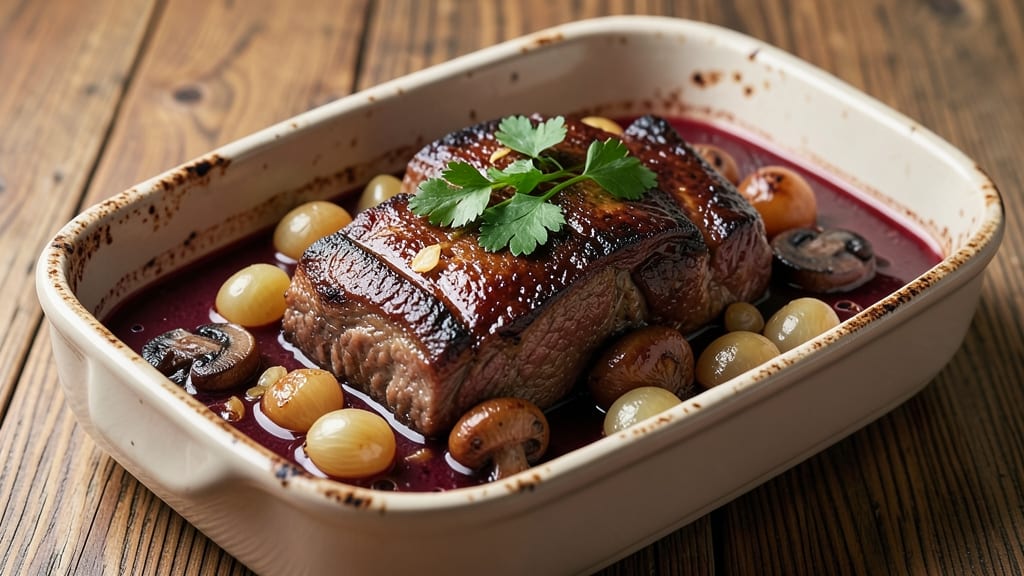
Betty Crocker's beef bourguignon recipe transforms tough beef chuck into melt-in-your-mouth tender slices swimming in a rich, velvety red wine sauce. This classic French technique—searing beef, slow-braising with aromatics, and finishing with a deep red wine reduction—delivers restaurant-quality results in your own kitchen.
The key lies in patience: letting the beef develop deep flavor while the wine reduces to a glossy, aromatic sauce that coats every bite.
What sets this version apart is the balance of techniques: browning the beef creates a flavorful crust, while the slow simmer transforms tough cuts into tender perfection. The sauce builds complexity through caramelized shallots, earthy mushrooms, and a splash of brandy that adds warmth.
Unlike many adaptations, this recipe maintains the traditional method while making it accessible for home cooks with standard kitchen tools.
By the time you serve this dish, you'll have a steaming pot of beef bourguignon with beef that falls apart at the touch and a sauce so rich it clings to every forkful.
The aroma alone—warm spices, red wine, and caramelized vegetables—will fill your home with the cozy comfort of a Parisian bistro. Pair it with creamy mashed potatoes or crusty bread to soak up every last drop of that luxurious sauce.
This recipe delivers professional results without requiring specialized equipment. The 3-hour cooking time may seem long, but it's hands-off after the initial searing, making it perfect for weekend cooking projects. The reward? A dish so impressive it'll have everyone asking for the recipe—just like Betty Crocker intended.
Ingredients for betty crocker beef bourguignon
Sixteen ingredients, three hours, restaurant-quality beef bourguignon without the fuss.
| Ingredient | Amount | Notes |
|---|---|---|
| Beef Chuck Roast 🥩 | 3 lb | Trimmed of excess fat, cut into 1.5-inch cubes |
| Dry Red Wine 🍷 | 2 cups | Bold variety like Cabernet Sauvignon or Merlot |
| Beef Broth 💧 | 2 cups | Low-sodium preferred, homemade or high-quality |
| Shallots 🧅 | 1 ½ cups | Finely chopped, about 8-10 medium shallots |
| Garlic Cloves 🧄 | 8 cloves | Minced, about 2 tablespoons total |
| Pearl Onions 🧅 | 1 ½ cups | Peeled, about 12-15 small onions |
| Cremini Mushrooms 🍄 | 1 ½ cups | Sliced into 1/4-inch pieces |
| Brandy 🍷 | ½ cup | Optional but recommended for depth |
| Tomato Paste 🍅 | 2 tbsp | High-quality, no sugar added |
| Fresh Thyme 🌿 | 2 tbsp | Leaves only, stems removed |
| Fresh Rosemary 🌿 | 1 tbsp | Needles only, finely chopped |
| All-Purpose Flour 🌾 | 2 tbsp | For browning beef, light coating |
| Olive Oil 🫒 | 2 tbsp | Extra-virgin, for searing |
| Diamond Crystal Kosher Salt 🧂 | 1 ½ tsp | Adjust to taste, don't oversalt |
| Freshly Ground Black Pepper 🌶️ | 1 tsp | Coarsely ground for texture |
The beef chuck roast is non-negotiable here—its marbling ensures tender results. Look for well-marbled cuts at your local butcher or the meat department of Whole Foods or Costco, where they often have it pre-cut for convenience. Avoid lean cuts like sirloin; the fat renders during cooking, creating a luxurious sauce. For the red wine, Cabernet Sauvignon or Merlot deliver the bold, dry profile needed—avoid sweet varieties. If you're concerned about alcohol content, the wine cooks down significantly, but you can always deglaze with additional beef broth if preferred. The shallots and pearl onions should be vibrant and firm, not wilted or discolored, indicating freshness. Fresh thyme and rosemary from the grocery store's produce section are ideal, but dried will work in a pinch if you're short on time.
No brandy? Substitute with an additional 1/4 cup of red wine—the depth of flavor is worth the effort, but it's not mandatory. For tomato paste, high-quality brands like Barilla or Hunt's ensure no added sugar or preservatives that could alter the sauce's balance. If you can't find pearl onions, substitute with small yellow onions cut into quarters. The mushrooms can be cremini, white button, or even oyster—just ensure they're sliced evenly for consistent cooking. For flour, all-purpose works perfectly, but bread flour adds a slight chewiness if you're feeling adventurous. The olive oil should be extra-virgin for its fruity notes, which complement the wine's acidity. If you're using a pre-cut chuck roast, check for even-sized pieces; if not, trim and cube the meat yourself for uniformity in cooking.
This dish tastes even better the next day, so plan ahead. The sauce thickens as it cools, so you can always thin it with a splash of beef broth if needed. Store in an airtight container in the refrigerator for up to 5 days, or freeze for up to 3 months—the flavors deepen over time. For reheating, warm gently on the stove over medium-low heat, adding a splash of water or broth if the sauce has thickened too much. The beef will be fork-tender, and the sauce will coat the back of a spoon, signaling it's ready to serve. Portion into individual containers for easy lunches or leftovers, and don't forget to save some sauce for drizzling over toasted bread or polenta.
Why You'll Love This Recipe
- One-Pot Magic: I swear by this recipe because it’s actually one-pot. No chopping mountains of onions—just a handful of shallots and garlic, seared right in the same dish. The beef chuck roast practically cooks itself while you sip that red wine (don’t skip this step—it’s non-negotiable for flavor).
- Wine-Infused Richness: That dry red wine? It’s not just for show. It transforms the broth into something ridiculously deep—earthy, slightly tangy, with this perfect balance of savory and bright. Honestly, the first time I tasted it, I thought, “Why haven’t I been doing this all along?”
- Weeknight to Dinner Party: Between us, this dish is my lazy Sunday and my “impress the in-laws” go-to. For weeknights, it’s hearty enough to feed a crowd but simple enough to throw together. For company? The aroma alone makes you look like a pro—no fancy plating required.
- Leftover Goldmine: I make a double batch on purpose. The flavors get better the next day—more tender, more layered. Freeze half for those “I have no idea what to cook” nights, and you’ll thank me. Plus, it’s budget-friendly: a chuck roast stretches farther than you’d think, and the wine adds luxury without breaking the bank.
Step-by-step instructions for beef bourguignon
Master this classic French technique for melt-in-your-mouth beef and rich, velvety sauce.
Sear the Beef Chuck Roast to Develop Deep Flavor
Pat the 3 lb beef chuck roast dry with paper towels—this ensures maximum browning. Heat the 2 tbsp olive oil in a heavy Dutch oven over medium-high heat until shimmering. Working in batches if needed, sear the beef cubes on all sides until deeply browned, about 3-4 minutes per side. The goal is to create a rich fond at the bottom of the pot that will dissolve into the sauce later.
Remove the beef and set aside. Don't wipe out the Dutch oven—those browned bits are pure flavor. Here's the thing—if your beef releases easily from the pan, it's ready to move to the next step. If it sticks, add another tablespoon of olive oil and let it heat before trying again. This searing step is non-negotiable for developing that fundamental beefy depth in your bourguignon.
Build the Aromatic Base with Shallots and Mushrooms
In the same Dutch oven, add the 1.5 cups finely chopped shallots and cook over medium heat for 5 minutes until softened but not browned. Add the 1.5 cups sliced cremini mushrooms and cook for another 5-6 minutes, stirring occasionally, until they release their moisture and begin to brown. The mushrooms should yield about ¼ cup liquid—this will contribute to your sauce's body.
Stir in the 2 tbsp tomato paste and cook for 1 minute until it darkens slightly. This step develops the sauce's foundation. Here's where it gets interesting—sprinkle the 2 tbsp all-purpose flour over the mushrooms and stir vigorously for 1 minute to cook off the raw flour taste. This creates a roux that will thicken your sauce beautifully later. If you smell any burning, reduce the heat immediately.
Deglaze and Simmer the Red Wine Reduction
Pour in the 2 cups dry red wine and scrape up all the browned bits from the bottom of the pot using a wooden spoon. This deglazing captures all the flavor you worked so hard to create. Bring to a simmer over medium heat and cook for 8-10 minutes until the liquid reduces by about half, leaving a concentrated wine reduction. You'll see the color deepen to a rich ruby—this is your signal that the alcohol has mostly evaporated.
Add the 0.5 cup brandy and cook for another 3-4 minutes until the brandy aroma is fully integrated. Here's the critical moment: pour in the 2 cups beef broth and bring to a gentle simmer. The sauce should now coat the back of a spoon when stirred. If it's too thin at this stage, reduce by another 2-3 minutes before proceeding. The reason we wait until now to add the broth is to build maximum flavor concentration in the sauce.
Braise the Beef Until Fork-Tender
Return the seared beef to the Dutch oven along with the 1.5 cups peeled pearl onions and 8 cloves minced garlic. Add the 2 tbsp fresh thyme leaves and 1 tbsp finely chopped fresh rosemary. Sprinkle with the 1.5 tsp diamond crystal kosher salt and 1 tsp freshly ground black pepper. Bring to a simmer, then reduce heat to low, cover, and braise for 2-2.5 hours, turning the beef occasionally.
The beef is done when it's fork-tender and pulls apart easily with minimal resistance. Here's what I do—after 2 hours, check the internal temperature with a meat thermometer. It should read 203-205°F in the thickest piece. If it's not quite there, continue cooking another 30 minutes covered. Real talk: your oven might run hot, so start checking at the 2-hour mark. The onions should be tender and the mushrooms should be fully cooked through.
Adjust Consistency and Finish with Herbs
Remove the beef and vegetables from the braising liquid and transfer them to a serving platter. Strain the cooking liquid through a fine-mesh sieve into a clean saucepan, pressing on the solids to extract maximum flavor. Return the liquid to medium heat and simmer uncovered for 5-7 minutes to reduce further if needed. The sauce should coat the back of a spoon but remain silky, not gluey.
Taste and adjust seasoning with additional salt or pepper if needed. Here's the final touch: stir in 1 tablespoon of the reserved cooking liquid to loosen the sauce if it's too thick. Return the beef and vegetables to the sauce, tossing gently to coat everything evenly. Serve immediately with crusty bread or mashed potatoes to soak up every last drop of that luxurious sauce.
Pro Tips For Making Betty Crocker Beef Bourguignon
- Sear the Chuck Hard: After burning three batches, I finally figured out—this isn’t the time to be gentle. Get that beef chuck roast screaming hot in a dry pan for 4-5 minutes per side until it’s deep brown, not just pink. The crust locks in flavor and keeps it from drying out later. (Yes, even if you’re impatient like me.)
- Deglaze with Wine Immediately: That browned crust? Don’t let it sit. The second the beef hits the pot, pour in the dry red wine right away—it’ll release all those caramelized bits stuck to the pan. Scrape with a wooden spoon while it bubbles, or you’ll lose half the flavor to the sink.
- Shallot Slice, Don’t Dice: Thin, even slices of shallots caramelize faster and stay tender, while dice turns into mush. Cut them paper-thin against the grain, and add them after the beef browns—just before the wine. They’ll soften perfectly without disappearing into the sauce.
- Simmer Low and Long: The Betty Crocker recipe might say "30 minutes," but I’ve learned the hard way—this isn’t a race. Cover and simmer at a gentle bubble (180°F internal for the beef) for at least 2.5 hours. The meat will fall apart, and the sauce will thicken naturally. (Your future self will thank you.)
Essential equipment for this dish
Dutch Oven Essentials
A heavy-duty Dutch oven is non-negotiable for beef bourguignon—it distributes heat evenly and handles the long braising time like a champ. I swear by the Le Creuset 6-quart (enamel-coated, oven-safe) for its durability and even heating, but the All-Clad Stainless Steel is a budget-friendly alternative that still delivers pro results.
Avoid thin, flimsy pots—they won’t retain heat during the 2-2.5 hour braise. 🔥
Meat Thermometer
Skip the guesswork with a meat thermometer—this is your secret weapon for perfect doneness. I use the ThermoWorks Smoke (it’s wireless and accurate to ±1°F), but even a basic instant-read thermometer like the Taylor Precision works.
Insert it into the thickest piece of beef when it’s been braising for 2 hours—it should hit 203-205°F for fork-tender results. No thermometer? Test with a fork: if it slides in like butter, you’re golden. ⚡
Wooden Spoon
A wooden spoon (I prefer Oxo Good Grips for its sturdy handle) is your best friend for deglazing and stirring without scratching your Dutch oven. Unlike metal spoons, wood won’t react with acidic ingredients like red wine or tomato paste.
Use it to scrape up those flavor-packed browned bits from the bottom of the pot—this is where the magic happens. Pro tip: Soak it in hot, soapy water for 10 minutes after cooking to remove stubborn sauce residue. 💫
Fine-Mesh Sieve
For a silky-smooth sauce, strain the braising liquid through a fine-mesh sieve (like the OXO Good Grips) to remove any sediment. This step is especially important if you’re serving the dish in a restaurant-style presentation.
Press the solids with a wooden spoon to extract every last drop of flavor—don’t skip this! If you’re short on time, a cheesecloth-lined colander works in a pinch, but it’ll take longer to strain. ✨
Kitchen Timer
Set a kitchen timer for every critical step—especially the 8-10 minute wine reduction and the 2-hour braising time. I use a simple digital timer (like the Westmark 12-Hour) because it’s loud enough to hear over the stove.
Timing is everything in braising: undercook the beef, and it’ll be tough; overcook it, and it’ll turn to mush. The timer keeps you from burning the sauce while the beef tenderizes. 💡
Butcher’s Twine
If you’re making this ahead of time, butcher’s twine (like White Cotton Butcher’s Twine) is your best friend for storing and reheating. Tie the beef and vegetables together in a bundle before freezing or refrigerating—this keeps everything intact and makes slicing effortless later.
Just untie the bundle before reheating, and the sauce will cling beautifully to the beef. 🌟
Nutrition facts
Frequently asked questions
Can I substitute red wine with something else if I don't have any?
Use 2 cups of beef broth plus 2 tablespoons of balsamic vinegar for depth, or 1 cup beef broth plus 1 cup cranberry juice (unsweetened) for a tangy twist. The key is maintaining acidity and richness—never use water or sweet juices like apple juice, as they won't replicate the wine's complexity.
How do I make this dish ahead of time without drying out the beef?
Cool the bourguignon completely, then transfer it to an airtight container and refrigerate for up to 5 days. Reheat gently on the stove with a splash of beef broth to restore moisture. For freezing, use butcher's twine to bundle the beef and vegetables together—this keeps everything intact. Thaw overnight in the fridge, then reheat slowly to prevent toughness.
Why is my sauce too thin after braising?
This usually happens when the wine reduces too quickly or the beef releases too much liquid. Simmer the sauce uncovered for 5-10 extra minutes to thicken, or stir in 1 tablespoon of cornstarch mixed with 2 tablespoons cold water. For prevention, always reduce the wine until it's cut in half before adding broth. The sauce should coat the back of a spoon—this is your target consistency.
What's the best way to serve beef bourguignon?
Traditionally, it's served with crusty French bread or buttery mashed potatoes to soak up the sauce. For a complete meal, add a simple green salad with a light vinaigrette to balance the richness. Garnish with fresh parsley and serve immediately—this dish tastes best fresh out of the pot when the beef is at its most tender.
Can I use a slow cooker for this recipe?
Yes, but with adjustments! Sear the beef first in a skillet, then transfer everything to the slow cooker. Cook on low for 6-8 hours (high heat will make the sauce too thin). The texture will be slightly different—more saucy than fork-tender beef—but it's still delicious. For best results, finish by reducing the sauce on the stovetop after cooking.