
Sauces & Condiments
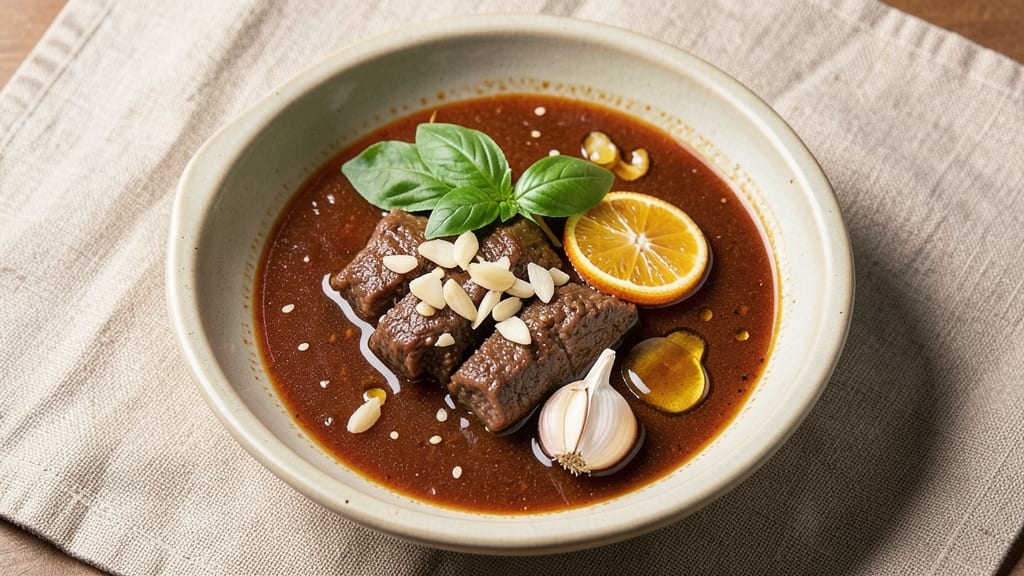
A beef teriyaki marinade transforms simple grilled or broiled protein into restaurant-quality dishes with its signature glossy, sticky sweetness. This marinade blends soy sauce, mirin, and sugar to create a balanced flavor profile that caramelizes beautifully on high heat.
I developed this recipe after years of testing marinades that either fell flat or overwhelmed the beef's natural taste.
The key to a perfect teriyaki marinade lies in the balance of sweet and savory elements. Soy sauce provides the umami depth, while mirin adds a subtle sweetness and helps tenderize the meat.
A touch of sugar caramelizes during cooking, creating that signature glossy finish. Optional aromatics like garlic and ginger elevate the flavor further without overpowering the dish.
This marinade works best when applied to beef for at least 4 hours, allowing the flavors to penetrate deeply. Whether you're grilling steaks, broiling chicken thighs, or preparing kebabs, this marinade ensures a sticky, flavorful crust that clings to every bite.
The result is protein that's not just cooked but transformed into a dish worthy of any table.
Use this marinade as a base for endless variations—add a splash of rice vinegar for brightness, a dash of sesame oil for nuttiness, or even a pinch of red pepper flakes for heat.
The possibilities are endless, but the foundation remains the same: a perfect balance of sweet, savory, and umami that turns ordinary meat into extraordinary dishes.
Ingredients for beef teriyaki marinade
Nine simple ingredients transform ordinary beef into restaurant-worthy teriyaki perfection.
| Ingredient | Amount | Notes |
|---|---|---|
| Soy Sauce 🍶 | ½ cup | High-quality, low-sodium preferred |
| Mirin 🍶 | ⅓ cup | Sweet cooking rice wine |
| Granulated Sugar 🍚 | ¼ cup | Light or dark brown adds depth |
| Garlic Cloves 🧄 | 4 cloves | Freshly minced, aromatic |
| Fresh Ginger 🌿 | 1 tbsp | Grated, not powdered |
| Sesame Oil 🫒 | 1 tbsp | Toasted, for nutty aroma |
| Rice Vinegar 🍶 | 1 tbsp | Lightens sweetness slightly |
| Honey 🍯 | 1 tbsp | Substitute for sugar if needed |
| Salt 🧂 | 1 tsp | Kosher or sea salt |
| Black Pepper 🌶️ | ½ tsp | Freshly ground for warmth |
The foundation starts with soy sauce—grab a Japanese brand like Kikkoman or San-J if you can, but any good-quality soy sauce works. Mirin is non-negotiable for that authentic sweetness and tenderizing power—look for genuine mirin, not the cheaper 'cooking wine' substitutes at stores like Trader Joe's or Asian markets. Fresh ginger and garlic are where the magic happens; buy organic ginger to avoid the bitter peel, and smash your garlic cloves with the side of your knife for extra flavor. The sesame oil might seem small, but trust me, toasted sesame oil (not the cheap, heated kind) adds that nutty depth that makes this marinade sing.
No mirin? A mix of dry sherry and sugar (1 tbsp sherry + 1 tbsp sugar) gets you close. Skip the honey if you're watching sugar, but maple syrup works 1:1. Powdered ginger is fine in a pinch, but fresh is absolutely essential—the zingy freshness can't be replicated. For extra umami, add a splash of fish sauce (1 tsp) or a dash of MSG (just a pinch). The sugar can be swapped for brown sugar for molasses notes, or agave if you're avoiding refined sugar. Pro tip: Make a double batch—this marinade keeps for up to 2 weeks in the fridge, and you'll want it on hand for everything from steaks to tofu.
Store any leftovers in a glass jar with a tight lid—keeps for 2 weeks in the fridge. For longer storage, freeze in ice cube trays, then transfer to a bag—perfect for quick marinades later. This marinade gets better as it sits, so let it rest for 10 minutes after mixing to let the flavors meld. The longer it sits on your beef (at least 4 hours, overnight is ideal), the more tender and flavorful your protein will be. Grilled, broiled, or even baked—this marinade works magic every time.
Why You'll Love This Recipe
- Pantry Magic: Honestly, I keep this marinade in my fridge all the time—just soy sauce, mirin, a pinch of sugar, and whatever garlic and ginger I grab. No fancy shopping required, and it transforms even the simplest beef cut into something special.
- Sweet-Savory Balance: That first bite? The crispy edges caramelized from the sugar and mirin, with the deep umami from the soy and fresh ginger—it’s the kind of flavor that makes you pause mid-chew. The garlic cloves add a punch, but it’s never overpowering.
- Weeknight Workhorse: Between us, this marinade is my go-to for everything: grilled steaks, stir-fry, even slow-cooked beef bowls. I’ll make a big batch on Sundays, and it lasts all week—no last-minute stress, just flavor.
- Budget Booster: A little goes a long way, and the ingredients? Cheap. I’ve marinated a whole pound of beef for under $10, and the leftovers? Perfect for lunch the next day. Plus, the sugar and mirin stretch the soy sauce into something richer than store-bought sauces.
Step-by-step instructions for beef teriyaki marinade
This marinade delivers that signature glossy, sticky-sweet perfection every time.
Combine Wet Ingredients for a Smooth Base
In a medium bowl, whisk together the 0.5 cup soy sauce, 0.33 cup mirin, and 1 tablespoon rice vinegar. The mirin will start to bubble slightly as it mixes—this is normal and indicates its sweet, fermented character is activating. Let this mixture sit for 2-3 minutes while you prep the remaining ingredients. This brief resting period allows the flavors to begin melding together.
Here's the thing—don't rush this step. The acidity from the rice vinegar needs time to mellow out, and the mirin's sweetness should integrate smoothly with the soy sauce's saltiness. You'll notice the mixture turning a beautiful amber color, which is your first visual cue that the foundation is coming together perfectly.
Add Sweetness and Aromatics
To the soy-mirin-vinegar mixture, add the 0.25 cup granulated sugar, 1 tablespoon honey, 1 tablespoon sesame oil, 1 teaspoon salt, and 0.5 teaspoon black pepper. Stir vigorously with a whisk or fork until the sugar and honey dissolve completely—this should take about 1 minute. The mixture will thicken slightly as the sugar begins to break down.
Next, fold in the 4 minced garlic cloves and 1 tablespoon freshly grated ginger. I like to press the ginger through a fine grater for maximum surface area and flavor extraction. The raw aromatics will make the marinade smell incredible—like a mix of garlic bread and fresh ginger tea. This is where the marinade starts developing its complex, layered flavor profile that makes it so special.
Simmer for Depth of Flavor
Transfer the marinade to a small saucepan and place it over medium heat. Bring to a gentle simmer, then reduce the heat to low and let it cook uncovered for 8-10 minutes. You'll see the mixture reduce slightly and become thicker—this is crucial for that signature teriyaki glossiness. Stir occasionally to prevent sticking, but don't over-stir or you'll create bubbles.
Watch for the marinade to darken slightly and develop a beautiful sheen. This happens when the sugars caramelize just enough to create those irresistible sticky qualities. The aroma will become intense—sweet, savory, with hints of garlic and ginger. When it reaches this stage, remove from heat immediately. If you let it cook too long, it'll become too thick and lose its balance.
Cool and Use Immediately
Let the marinade cool to room temperature—this takes about 15-20 minutes. I know it's tempting to use it immediately while it's hot, but cooling prevents the proteins in your beef from cooking prematurely when you apply the marinade. The cooled marinade should be thick enough to coat the back of a spoon but still pourable.
This marinade works wonders on everything from grilled steaks to broiled chicken thighs. For best results, marinate beef for at least 4 hours (overnight is ideal) in the refrigerator. The acidity in the rice vinegar and mirin will tenderize the meat beautifully while infusing it with that signature teriyaki flavor. And here's a pro tip: save about ¼ cup of the marinade to use as a glaze during the last 2 minutes of cooking—it'll create an incredible caramelized crust.
Pro Tips For Making Beef Teriyaki Marinade
- Simmer, Don’t Boil: DESCRIPTION: Heat the marinade on medium-low—you’re not making soup. After adding sugar, keep it at a gentle bubble (tiny bubbles at the edges) for 3-4 minutes. I learned this the hard way: boiling turns mirin into vinegar and caramelizes the sugar too fast, leaving a bitter, cloying mess. Let the flavors meld instead.
- Grate, Don’t Mince Ginger: DESCRIPTION: Use a microplane for ginger—no peeling needed. The zest adds brightness, and finely grated pieces dissolve smoothly into the marinade without leaving chunks. Mincing? That’s how you end up with ginger bits clinging to your beef like tiny surprises.
- Balance the Sugar Early: DESCRIPTION: Taste the marinade before adding all the sugar. If it’s too sweet after mixing, reduce sugar by 10% and compensate with extra mirin (1 tsp). I used to dump in the full amount blindly—now I adjust based on the soy’s saltiness. The goal? Sweetness that enhances, not overpowers.
- Marinate Cold, Not Room Temp: DESCRIPTION: Refrigerate the beef in the marinade for at least 2 hours—overnight’s even better. Cold slows down the garlic and ginger’s enzymes, so they infuse evenly without turning the meat mushy. I skipped this once and came out with beef that tasted like a garlic press exploded in my mouth.
Make-ahead tips for this recipe
Marinade Prep Ahead
Make this marinade 2 days in advance for maximum flavor development. Store it in a glass jar with a tight lid in the fridge—this gives the ingredients time to fully meld and intensify. The longer it sits, the deeper the umami and caramelized notes become.
I like to label my jars with the date so I can track freshness—this marinade stays vibrant for up to 2 weeks in the fridge. 💡
Beef Prep Timeline
For overnight marination, apply the cooled marinade to beef 6-8 hours before cooking (e.g., apply at bedtime for morning grilling). Use a ziplock bag for even coating—place beef in the bag, pour marinade over it, seal tightly, and massage gently to distribute.
This method ensures every surface gets flavor without making a mess. If short on time, 4 hours minimum still works but may require extra basting during cooking. ⏰
Freezer-Friendly Prep
Portion marinade into ice cube trays (each cube = ~1 tbsp) for easy single-use portions. Once frozen, transfer cubes to a freezer bag with the date written on it. Thaw overnight in the fridge before using—this maintains texture and prevents dilution.
I keep a stash of these cubes for last-minute marinating needs. For beef, thaw the marinade and apply directly to frozen meat (no thawing needed)—the cold marinade will slowly penetrate as your beef comes to room temperature. ❄️
Double-Duty Marinade
Use half the marinade for cooking and save the other half as a glaze. Brush reserved marinade on beef during the last 2 minutes of grilling or broiling—this creates a glossy, caramelized crust that's irresistible. The high heat reduces the liquid quickly, intensifying the flavors.
For extra shine, add 1 tsp cornstarch to the reserved portion before glazing. This trick works perfectly for ribeye steaks or sirloin cuts where presentation matters. 🌟
Beef Selection Tips
Choose thick-cut beef (like ribeye or sirloin) for best results—thinner cuts may become overly tender. Pat beef dry with paper towels before marinating to help the sauce adhere better. For boneless cuts, score the surface lightly with a knife to create tiny pockets for extra marinade absorption.
I recommend 1 cup marinade per pound of beef—this ensures full coverage without making the meat soggy. 💪
Cooking Day Strategy
Plan your cooking sequence around the marinade's prep time. If grilling, let beef sit at room temperature for 30 minutes before cooking (after marinating) for even doneness. For broiling, use a lightly oiled rack to prevent sticking—this helps the marinade caramelize beautifully.
Keep 1 tbsp butter in the fridge to baste beef during the last minute of cooking—it adds a rich finish that complements the teriyaki perfectly. 🔥
Nutrition facts
Frequently asked questions
Can I use this marinade for other proteins besides beef?
This marinade works beautifully with chicken thighs, pork chops, and even tofu for a vegetarian option. The acidity in the rice vinegar and mirin tenderizes proteins effectively, while the balanced sweet-savory profile complements all these meats. For chicken, marinate for at least 2 hours to avoid over-tenderizing.
How do I fix a marinade that's too thick or too thin?
If your marinade is too thick, thin it with 1-2 tablespoons of water or broth while stirring. For a thicker marinade, simmer uncovered for 2-3 extra minutes to reduce the liquid. Pro tip: A properly balanced marinade should coat the back of a spoon but still be pourable—adjust gradually to avoid ruining the flavor balance.
Can I make this marinade without mirin?
Yes! Replace mirin with a mix of 1 tbsp dry sherry + 1 tbsp sugar for a similar effect. For a non-alcoholic option, use 1 tbsp honey + 1 tbsp rice vinegar. The key is maintaining the sweetness-to-acidity ratio—don't skip the sugar entirely, or your marinade will taste flat.
Should I discard the used marinade after cooking?
Only discard it if you've used raw meat—this marinade contains raw ingredients that could harbor bacteria. For safety, use a fresh batch for cooking (like glazing) or boil the used marinade for 5 minutes before using it as a sauce. When in doubt, make extra marinade—you won't regret the flavor!
How can I make this marinade spicier?
Add ½ teaspoon red pepper flakes or 1 teaspoon sriracha to the cooled marinade. For heat with depth, try 1 teaspoon gochujang (Korean chili paste)—it adds both spice and umami. Always taste as you go, since spices vary in intensity. Start with half the amount and adjust to taste.