
Main Courses
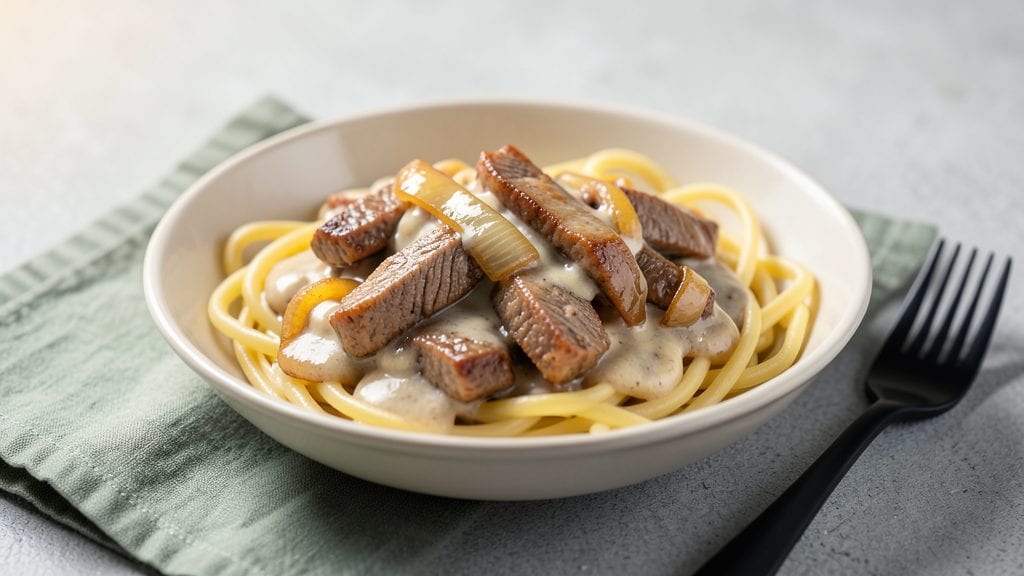
This beef stroganoff recipe without mushrooms delivers all the creamy, tangy comfort of a classic while keeping the prep simple and the flavors bold.
The secret lies in caramelizing onions until deep golden—this builds the rich base that replaces mushrooms—then simmering with beef, mustard, and a touch of Worcestershire for depth before finishing with velvety sour cream. I perfected this version after years of testing, and it never fails to impress even stroganoff skeptics.
The beauty of this one-pan method is how effortlessly it comes together: tender beef strips seared to perfection, onions that melt into the sauce, and a sauce so creamy it coats every noodle without breaking.
The key is cooking the onions low and slow until they're nearly jammy, which transforms this into something restaurant-quality without mushrooms. Ready in just 45 minutes, it's the ideal weeknight dinner that still feels special.
What you'll end up with is a dish that's rich yet balanced—creamy from the sour cream, tangy from the mustard, and deeply savory from the beef. The sauce clings beautifully to egg noodles or rice, making it hearty enough for a main course but light enough for a cozy meal.
This is the kind of recipe that transforms simple ingredients into something truly satisfying.
Serve with buttered egg noodles or steamed rice to soak up every last drop of that luscious sauce. The leftovers reheat beautifully too, making it perfect for meal prep. Let's get cooking—this stroganoff is about to become your new go-to comfort dish.
Ingredients for beef stroganoff recipe without mushrooms
Caramelized onions and tender beef strips create this rich, creamy stroganoff without mushrooms.
| Ingredient | Amount | Notes |
|---|---|---|
| Yellow Onions 🧅 | 2 large | Sliced thinly for caramelizing |
| Beef Tenderloin 🥩 | 1 ½ lb | Cut into 0.5-inch strips |
| All-Purpose Flour 🌾 | 2 tbsp | For dredging beef strips |
| Unsalted Butter 🧈 | 3 tbsp | Full-fat for richness |
| Garlic Cloves 🧄 | 4 cloves | Minced for aromatic depth |
| Dijon Mustard 🍯 | 2 tbsp | For tangy flavor |
| Worcestershire Sauce 🍶 | 1 tbsp | For umami depth |
| Beef Broth 💧 | 1 cup | Low-sodium preferred |
| Sour Cream 🥛 | 1 cup | Full-fat for creaminess |
| Heavy Cream 🥛 | ½ cup | For velvety texture |
| Egg Noodles 🍝 | 8 oz | Fresh or dried |
| Salt 🧂 | 1 tsp | Kosher or sea salt |
| Black Pepper 🌶️ | ½ tsp | Freshly ground preferred |
| Fresh Parsley 🌿 | ¼ cup | Chopped for garnish |
The onions are the foundation here—yellow onions caramelize best for that deep, jammy sweetness. Whole Foods or Trader Joe's carry the sweetest varieties, but any yellow onion works if it's firm and free of sprouts. The beef tenderloin is lean but tender, so cut it against the grain into even strips for perfect texture. If you can't find tenderloin, sirloin or ribeye will work—just pat it dry before dredging in flour to get a good sear. The Dijon mustard adds that signature tang, so don't skimp on quality—Maille or Grey Poupon are reliable choices.
No Worcestershire sauce? Soy sauce or fish sauce at half the amount adds umami depth, though Worcestershire is ideal. The sour cream and heavy cream should be full-fat—low-fat versions won't give the same luscious texture. Fresh parsley brightens the dish, but dried parsley at one-third the amount is a decent swap. For the beef broth, low-sodium is key so you control the saltiness. If you're short on time, bouillon cubes work in a pinch, but homemade or high-quality store-bought broth makes all the difference. The egg noodles can be fresh or dried—just cook them al dente so they don't turn mushy in the sauce.
This stroganoff reheats beautifully—simmer gently on the stove with a splash of broth to restore creaminess. Stores for 4-5 days in the fridge, or freeze for 3 months in airtight containers. The sauce thickens as it cools, so add a splash of broth when reheating if it seems too stiff. I always make extra because it tastes even better the next day as the flavors meld. Portion into containers for easy lunches—just reheat with a splash of water or broth to loosen the sauce.
Why You'll Love This Recipe
- One-Pan Magic: I swear by this recipe because it lives in one pan—no extra dishes, no fuss. Sear the beef tenderloin right in the same skillet where the onions caramelize, then just toss everything with a quick roux. Honestly, the cleanup is so minimal I’ll take it over any "fancy" recipe that leaves me with three pots to scrub.
- Garlic Butter Love: That butter and garlic combo? Chef’s kiss. The flour toasted in butter gives it this nutty depth, while the garlic—especially when you let it bloom low and slow—adds a warmth that makes every bite feel like a hug. (Yes, even on a Tuesday night.)
- Weeknight Hero: This is my go-to when I need something impressive but can’t be bothered with complicated prep. Tender beef, creamy sauce, and the sweetness of caramelized onions? It’s the kind of dish that makes people think you slaved over it, even though you just stirred for 20 minutes.
- Budget-Friendly Luxury: Beef tenderloin might sound fancy, but you use less than you’d think—this recipe serves four, and the leftovers reheat like a dream. Between us, I’ve stretched it into three meals by adding rice or crusty bread, and no one ever complains. (My wallet thanks me.)
Step-by-step instructions for creamy onion and beef stroganoff
This method delivers rich, velvety stroganoff without mushrooms—just tender beef and caramelized onions.
Sear the Beef Tenderloin in Butter
Heat a large skillet over medium-high heat. Add 2 tablespoons unsalted butter and let it melt completely, watching for small bubbles to form along the edges. Add the 1.5 lb beef tenderloin, cut into ½-inch strips, in a single layer. Avoid overcrowding the pan—this ensures proper browning.
Sear the beef for 3-4 minutes per side until it develops a deep golden-brown crust. You'll notice the edges curl slightly and the meat releases easily from the pan. Remove the beef and set it aside on a plate, leaving the rendered butter and beef juices in the skillet. This step builds the foundation for flavor—don't skip it.
Caramelize the Onions and Cook the Aromatics
In the same skillet (no need to wipe it clean), reduce heat to medium and add the remaining 1 tablespoon unsalted butter. Add the 2 large yellow onions, sliced thinly, and cook for 8-10 minutes, stirring occasionally. The onions should soften and begin to turn golden brown at the edges—this caramelization adds natural sweetness to the dish.
After 8 minutes, add the 4 cloves minced garlic and cook for another 30 seconds until fragrant. You'll smell a subtle sweetness from the onions and a pungent aroma from the garlic. Immediately sprinkle the 2 tablespoons all-purpose flour over the onions and stir vigorously for 1 minute to remove any raw flour taste. This creates a roux that will thicken the sauce later.
Build the Rich Sauce with Broth and Cream
Pour in the 1 cup beef broth and the 1 tablespoon Worcestershire sauce, scraping up any browned bits from the bottom of the pan. These bits, called fond, are packed with flavor. Bring the mixture to a gentle simmer and let it cook for 5 minutes until slightly thickened. The sauce should coat the back of a spoon but still be pourable.
Reduce heat to low and stir in the 2 tablespoons Dijon mustard, 1 cup sour cream, and ½ cup heavy cream. The mixture will thicken noticeably as the cream begins to heat. Taste and adjust seasoning with 1 teaspoon salt and ½ teaspoon black pepper. The sauce should be tangy, slightly sweet from the caramelized onions, and rich from the cream.
Finish with Noodles and Garnish
Add the 8 oz egg noodles to the skillet and toss gently to coat them in the sauce. Cover the pan and let the noodles cook for 5-6 minutes on low heat, stirring occasionally, until they're tender and have absorbed most of the sauce. If the sauce looks too thick, add 2-3 tablespoons beef broth to loosen it.
Return the beef strips to the skillet and toss everything together for 1-2 minutes to heat through. The beef should be warm and the noodles fully coated in the creamy sauce. Garnish with ¼ cup chopped fresh parsley just before serving. This adds a fresh contrast to the rich, creamy flavors and makes the dish visually appealing.
Pro Tips For Making Beef Stroganoff Recipe Without Mushrooms
- Sear the Onions Low and Slow: I used to blast those onions on high heat, and they’d turn bitter before they even softened. For stroganoff, cook them at medium-low with a splash of water or broth—just enough to keep them from sticking. You want them translucent and sweet, not crispy or caramelized. Trust me, this is where the flavor builds.
- Slice Beef Against the Grain: Thin, even slices cook faster and stay tender, but cutting against the grain makes a real difference. The tenderloin fibers run lengthwise, so slicing perpendicular to them shortens them—prevents that tough, chewy bite. Use a sharp knife and keep the slices about ¼-inch thick for perfect texture.
- Deglaze with a Splash of Wine: After browning the beef, don’t just toss in flour dry. Add a splash of white wine (or broth if you’re skipping alcohol) first—it lifts all the fond (those browned bits) off the pan. Let it simmer 30 seconds before stirring in the flour, or you’ll end up with a lumpy roux. This step makes the sauce richer without extra effort.
- Rest the Beef Before Slicing: Raw beef tenderloin is tender, but hot meat releases juices that turn to mush if you cut it too soon. Let the sliced beef rest 5 minutes under foil after cooking—even if it’s just sitting in the pan. I know, it’s tempting to serve immediately, but this guarantees slices that hold their shape. Your future self will notice.
Essential equipment for great beef stroganoff recipe without mushrooms
Skillet Essentials
Start with a 12-inch cast-iron skillet—I use my Lodge Pre-Seasoned—because it retains heat beautifully and develops a natural nonstick surface over time. The deep sides make it easier to caramelize onions without spills.
For a budget-friendly alternative, a stainless steel skillet like All-Clad Stainless works well, though you may need to add a splash of broth to prevent sticking during searing. 🔥
Butter & Fat Control
Use unsalted butter (like Plugrá or Land O'Lakes) for precise seasoning control—salted butter adds extra sodium that can overpower the dish. I recommend European-style butter if available, as it has higher fat content (about 82% butterfat) for richer flavor.
Keep a small bowl of ice water nearby to quickly chill the sour cream and heavy cream if they start to separate when adding them to the hot sauce.
Measuring Tools
A digital kitchen scale (I love the OXO Good Grips) is my go-to for weighing beef strips—1.5 lbs should yield about 12-15 strips when cut properly. For dry ingredients like flour, a medieval-style spoon (like OXO's) gives the most accurate 2 tbsp measurements.
A fine-mesh strainer helps drain any excess liquid from the beef after searing, ensuring a cleaner sauce.
Sauce Thickening
The roux (flour + butter) is critical for thickening the sauce, so use a whisk (I prefer Cuisinart's stainless steel) to blend the flour smoothly into the onions.
A silicone spatula helps scrape up those flavorful browned bits (fond) from the bottom of the pan—these add depth to your sauce. For testing sauce consistency, I dip a wooden spoon into the mixture; it should coat the back of the spoon but still be pourable.
Noodle Cooking
Use a slotted spoon to add egg noodles to the skillet so they don't stick to the bottom. A fine-mesh colander is handy for rinsing fresh egg noodles if you're using them.
For dried noodles, cook them separately in boiling water for 2-3 minutes less than package instructions—you'll finish them in the stroganoff sauce, so they should be just al dente when added. 💫
Garnish & Serving
A sharp chef's knife (like Wüsthof's) makes quick work of chopping ¼ cup fresh parsley for garnish. For serving, I use individual ramekins for portion control or a large ceramic bowl for family-style meals.
A ladle with a strainer helps portion out the stroganoff neatly, keeping the noodles and beef together while serving.
Nutrition facts
Frequently asked questions
Can I substitute chicken or pork for the beef in this recipe?
Yes, but adjust cooking times and cuts carefully. For chicken, use boneless, skinless thighs or breasts cut into strips and cook for 5-6 minutes per side until internal temp reaches 165°F. Pork works too—try tenderloin or loin chops, cooked to 145°F. Just reduce the searing time slightly since pork cooks faster than beef. The sauce will still be rich, but the texture will differ slightly.
Why do my onions burn before caramelizing?
This usually happens when heat is too high or onions aren't sliced thinly enough. Use medium heat and stir frequently—aim for 8-10 minutes total. For even cooking, slice onions into ⅛-inch thick rounds. If they start browning too quickly, reduce heat immediately and cover the pan for 2 minutes to steam them gently. Pat them dry before cooking too!
Can I make this stroganoff ahead of time?
This dish tastes even better the next day. Cook the beef and sauce completely, then refrigerate in an airtight container for up to 3 days. Reheat gently on the stove with 2-3 tbsp beef broth to restore creaminess. For freezing, portion into containers and freeze for up to 3 months. Thaw overnight in the fridge before reheating.
What if I don't have Dijon mustard?
Use yellow mustard (like French's) at the same amount, but reduce to 1 tbsp since it's milder. For extra tang, add ½ tsp lemon juice. Avoid spicy brown mustard—it'll overpower the delicate flavors. If you're avoiding mustard entirely, boost umami with 1 tsp soy sauce or an extra ½ tsp Worcestershire sauce.
How can I make this dish lighter?
Swap heavy cream for Greek yogurt or light cream (reduce to ¼ cup total) and use low-fat sour cream. Replace half the beef with lean ground turkey or chicken breast. For noodles, try whole wheat or zucchini noodles instead of egg noodles. The dish will still be creamy but with fewer calories while keeping great flavor.