
Main Courses
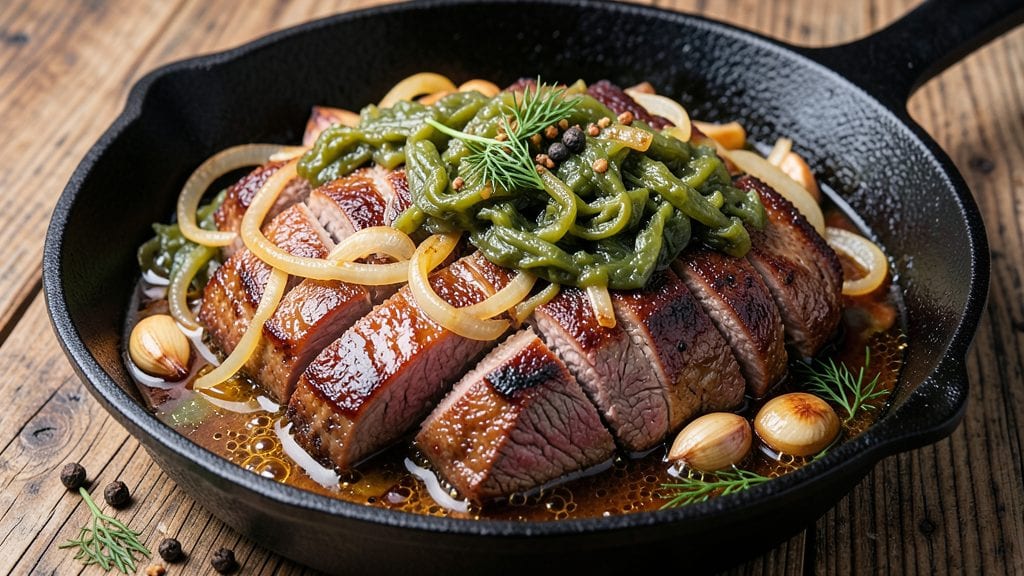
This German-style braised beef with sauerkraut delivers hearty, comforting flavors that taste like a home-cooked meal from a Bavarian tavern. The secret lies in slow-braising tender beef until it practically melts in your mouth while caramelizing onions and integrating tangy, crunchy sauerkraut into a rich, savory sauce.
I developed this recipe after years of testing—balancing the right amount of vinegar sharpness, caramelized depth, and meaty richness to create a dish that’s both traditional and foolproof for home cooks.
The beauty of this recipe is its simplicity: just a few quality ingredients transform into a restaurant-worthy meal with minimal effort. You’ll start with beef chuck roast, which becomes fork-tender through slow cooking, while onions and garlic form the aromatic base.
The sauerkraut adds that signature tangy crunch, and a splash of beer (or broth) deepens the flavor profile. This method ensures maximum flavor extraction without requiring advanced techniques—just patience and attention to timing.
By the end, you’ll have a dish that’s rich, aromatic, and deeply satisfying—perfect for chilly evenings or family gatherings. The beef will be fall-apart tender, the sauerkraut slightly softened but still retaining its signature bite, and the sauce thickened just enough to coat every forkful.
Serve it with crusty bread to soak up every last bit of that savory sauce, or pair it with mashed potatoes for a complete meal. This is comfort food at its finest, and it’s impossible to resist.
Whether you’re cooking for a crowd or treating yourself to a hearty weeknight dinner, this beef sauerkraut recipe delivers professional-quality results with minimal fuss. The slow-cooking process means you can prepare it ahead of time, letting the flavors meld even more deeply.
Plus, the leftovers reheat beautifully, making it an ideal meal for busy schedules. Let’s get cooking—your taste buds will thank you.
Ingredients for beef sauerkraut
Fourteen simple ingredients transform into rich, German-style beef sauerkraut with tender meat and tangy crunch.
| Ingredient | Amount | Notes |
|---|---|---|
| Beef Chuck Roast 🥩 | 2 lb | Bone-in preferred for flavor |
| Yellow Onions 🧅 | 2 whole | Medium size, sliced even thickness |
| Garlic Cloves 🧄 | 4 cloves | Peeled, minced for even distribution |
| Sauerkraut 🥬 | 2 cups | Unopened jar preferred for tang |
| Dark Beer 🍺 | 1 cup | Any dark lager or stout |
| Beef Broth 💧 | 1 cup | Low-sodium preferred for balance |
| Tomato Paste 🍅 | 2 tbsp | Smooth consistency for sauce |
| Apple Cider Vinegar 🍎 | 1 tbsp | For tangy depth |
| Bay Leaves 🌿 | 2 whole | Dried, for aromatic base |
| Thyme Sprigs 🌿 | 4 whole | Fresh, stems removed |
| Black Peppercorns 🌶️ | 1 tsp | Coarsely cracked for texture |
| Kosher Salt 🧂 | 1 ½ tsp | Diamond Crystal preferred |
| Unsalted Butter 🧈 | 2 tbsp | For finishing sauce richness |
| All-Purpose Flour 🌾 | 1 tbsp | For sauce thickening |
The beef chuck roast is non-negotiable here—bone-in adds depth, but boneless works if that's what you find. Costco or Whole Foods always have good cuts, but any grocery store's meat department will have chuck roast. Look for pieces with good marbling—those white streaks of fat are what make the meat tender. The onions? Yellow, medium-sized—they caramelize best and won't overpower the dish. If you're prepping ahead, slice them and store in the fridge for up to 3 days.
No dark beer? Substitute beef broth or apple juice—it'll still work, though the flavor profile shifts slightly. Fresh thyme is ideal, but dried thyme at one-third the amount gets you close. Sauerkraut from the refrigerated section (not canned) has better texture. The tomato paste can be the squeeze-tube kind from Trader Joe's—it's perfect for small amounts and lasts forever. If you're making this ahead, skip the butter until reheating—it burns easily in the slow cooker.
This reheats beautifully—2-3 minutes in a skillet with a splash of water if it's dried out. Keeps for 5 days in the fridge, freezes for 3 months. I always make a double batch because the leftovers are even better—the flavors meld overnight. Store in airtight containers with a splash of broth on top to keep it moist. Serve with crusty bread to soak up every last bit of that rich sauce.
Why You'll Love This Recipe
- One-Pan Magic: I swear by this—just toss everything in one pot, walk away, and let the beer and garlic work their magic. That rich, tangy sauerkraut soaks up all the juices while the chuck roast turns tender without babysitting.
- Deep Umami Bomb: The dark beer and caramelized onions create this unreal depth—savory, slightly sweet, with a tangy kick from the sauerkraut. It’s the kind of flavor that sticks with you long after the last bite.
- Leftovers That Don’t Suck: Honestly, this dish begs for seconds, but even if you don’t finish it, reheated portions taste just as good. The sauerkraut stays crisp, the beef stays juicy, and the beer adds that cozy, restaurant-worthy warmth.
- Budget-Friendly Feast: A chuck roast stretches forever, and sauerkraut is one of the most affordable fermented veggies out there. For under $20, you feed a crowd—or at least me for three meals—without breaking the bank. (Yes, even on a Tuesday night.)
Step-by-step instructions for German-style braised beef with tangy crunch
Here's how to transform tough beef chuck into melt-in-your-mouth braised perfection with that signature sauerkraut tang.
Sear the Beef Chuck for Deep Flavor
Pat the 2 lb beef chuck roast dry with paper towels and season generously with 1.5 tsp kosher salt and 1 tsp coarsely cracked black peppercorns. Heat a heavy Dutch oven over medium-high heat until hot, then add the beef. Sear on all sides until deeply browned, about 5 minutes total. This step develops the rich, caramelized crust that forms the foundation of the dish.
Don't rush this process - you want that beef to develop a dark mahogany crust. If your pan isn't hot enough, the meat will steam instead of sear. For best results, work in batches if needed, keeping the seared beef warm on a plate while you finish the remaining sides.
Build the Aromatic Base with Onions and Garlic
Remove the seared beef from the pot and set aside. In the same Dutch oven, add 2 tbsp unsalted butter and let it melt completely over medium heat. Add the sliced 2 whole yellow onions and cook for 8-10 minutes until softened and beginning to caramelize at the edges. Here's the thing - you want those onions to develop some color, but not burn.
Add the 4 cloves minced garlic cloves and cook for 30 seconds until fragrant. Immediately add 2 tbsp tomato paste and stir to coat the onions completely. This creates a rich, umami-packed base that will carry through the entire dish. Let it cook for 1 minute until the raw taste of the tomato paste disappears.
Deglaze and Simmer the Braising Liquid
Pour in the 1 cup dark beer and scrape up all the browned bits from the bottom of the pot with a wooden spoon. This deglazing step captures all that concentrated flavor that would otherwise stick to your pan. Add the 1 cup beef broth, 1 tbsp apple cider vinegar, 2 whole bay leaves, and 4 whole thyme sprigs. Return the beef to the pot, making sure it's submerged in the liquid.
Bring the mixture to a gentle simmer, then reduce heat to maintain a bare bubble at the surface. Cover partially and let it cook for 2 hours. Here's where patience pays off - the beef needs this slow cooking time to become fork-tender. Check occasionally and add a splash of water if the liquid reduces too much, but don't overdo it.
Add Sauerkraut and Finish the Braise
After 2 hours of braising, add the 2 cups sauerkraut to the pot. The acidity from the fermented cabbage will help tenderize the beef even further while adding that signature tang. Stir gently to distribute the sauerkraut evenly throughout the liquid. Return the pot to a simmer and cook uncovered for an additional 30-45 minutes until the beef is fork-tender and the sauce has thickened slightly.
You'll know it's ready when the beef easily pulls apart with two forks. The sauce should coat the back of a spoon and have a rich, slightly tangy consistency. If it's too thin, remove the beef and reduce the sauce over high heat for 2-3 minutes until it reaches your desired thickness.
Thicken the Sauce and Serve
Remove the beef from the pot and set it aside. In the same pot, whisk together 1 tbsp all-purpose flour with 2 tbsp cold water to make a slurry. Slowly pour this into the simmering sauce, stirring constantly until it thickens enough to coat the back of a spoon. This step creates that luscious, clingy sauce that makes this dish so satisfying.
Return the beef to the pot and stir to coat it completely in the sauce. Taste and adjust seasoning if needed - you might need a bit more salt to balance the tangy sauerkraut. Serve immediately with the braising liquid spooned over the top, garnished with additional thyme sprigs if desired. The beef should be tender enough to pull apart with a fork, with rich, caramelized edges and a sauce that clings beautifully to each bite.
Pro Tips For Making Beef Sauerkraut
- Sear the Chuck First: Walk away from the pan after the initial sear—it’s not done when it’s brown, it’s done when it’s deep brown with edges that almost look burnt. I used to rush this, and the meat would stay tough no matter how long I braised it. Let that crust form for 3-4 minutes on high heat before touching it with anything else.
- Drain and Rinse the Kraut: Dump that sauerkraut into a colander and give it a good rinse under cold water. The brine is great for pickles, but in this dish, it’ll turn your beer-based sauce watery and dilute the flavors. Pat it dry afterward—wet kraut steams instead of caramelizing.
- Deglaze with Beer Early: Don’t wait until the onions are mushy to add the beer. Scrape up those browned bits from the seared meat with a splash of beer right away—it’s the easiest way to build depth of flavor. Add the rest of the beer later, but that first scrape makes a real difference.
- Use Two Onions, One Chopped: Thinly slice one onion for quick cooking, but leave the second whole and quartered (peel on). The whole quarters soften slower, releasing sweetness into the braise while the chopped onion caramelizes. I learned this the hard way—burnt onions ruin everything.
Wine and beer pairings for this beef sauerkraut
German Beer Pairings
This dish practically begs for a dark German lager—think Dunkel or Bock styles like Paulaner Dunkel or Ayinger Altbairisch Dunkel. The malt sweetness and caramel notes in these beers complement the caramelized onions and beef beautifully, while their moderate bitterness balances the sauerkraut's acidity.
I always reach for a 500ml bottle to enjoy alongside my first bowlful—it's that good. 🍺
For a lighter option, try a Helles like Weihenstephaner Original. Its crisp, clean profile won't overpower the dish but still enhances the beef's richness.
If you prefer something with more body, a Märzen like Weissbier from Bavaria (yes, it's a wheat beer!) adds a fruity contrast that works surprisingly well with the tangy sauerkraut.
American Craft Beer Options
If German beers aren't available, don't worry—American craft brews can shine here too. A dark ale like New Belgium Fat Tire Amber Ale brings caramel and toasty malt notes that mirror the dish's depth.
For something with a bit more funk, try a Berliner Weisse-style sour beer like The Bruery's Tartine. The acidity cuts through the richness, creating a perfect balance. 🍻
For IPA lovers, a red or amber IPA with lower bitterness (around 40-50 IBUs) works better than a hop-heavy session beer. Brands like Deschutes Mirror Pond or Allagash White offer just enough hop character without overwhelming the dish's savory profile.
Wine Pairings
A German Riesling Kabinett from the Mosel region is my go-to wine pairing—its bright acidity and hints of apple and citrus cleanse the palate between bites of rich beef and tangy sauerkraut.
Look for bottles labeled "Trocken" (dry) to avoid sweetness that might clash with the dish. A 2018 Dr. Loosen Blue Slate is a reliable choice. 🍷
For red wine lovers, a light-bodied German Spätburgunder (Pinot Noir) like Bernhard Huber "Eichenberg" offers earthy notes that complement the thyme and beef beautifully.
If you prefer New World wines, a Pinot Noir from Oregon or a Gamay from Beaujolais both work wonderfully with the dish's balance of richness and acidity.
Non-Alcoholic Options
Don't drink alcohol? No problem—a sparkling apple cider like Martinelli's adds a refreshing fizz that cuts through the dish's richness. For something more substantial, try a German-style ginger beer like Erdinger Alkoholfrei—its spicy kick pairs surprisingly well with the sauerkraut's tang. 🥤
For a savory non-alcoholic option, sip on a chilled cucumber-mint infusion. Combine 1 cup cold water with ½ cucumber (sliced), 4 fresh mint leaves, and 1 tsp honey.
Let it steep for 10 minutes before serving over ice. The cool, crisp flavors provide a perfect palate cleanser between bites.
Nutrition facts
Frequently asked questions
Can I substitute regular cabbage for sauerkraut in this recipe?
While you can technically use regular cabbage, it won't provide the same tangy flavor and probiotic benefits that make this dish special. If you must substitute, try fermenting your own cabbage for 3-5 days (store-bought sauerkraut is already fermented). For quick results, combine 2 cups chopped cabbage with 1 tbsp apple cider vinegar and let it sit for 1 hour before using.
What's the best cut of beef for this recipe?
Beef chuck roast is ideal because it's well-marbled and becomes tender when braised. For a leaner option, try beef shoulder or even short ribs. Avoid tender cuts like sirloin—they'll turn tough during the long cooking process. If you can't find chuck, ask your butcher for a "pot roast" cut, which works beautifully too.
How do I prevent the sauerkraut from making the dish too sour?
The key is balancing the sauerkraut's acidity with rich, sweet elements. Add 1 tbsp brown sugar or 1 extra caramelized onion> to mellow the tang. Also, simmer the dish uncovered for the last 10 minutes to let some liquid evaporate, which naturally reduces acidity. Taste as you go—you can always add more beef broth to balance flavors.
Can I make this recipe in a slow cooker?
Follow the same steps for searing the beef and building the base, then transfer everything to your slow cooker. Cook on low for 6-7 hours or high for 3-4 hours.> Add the sauerkraut in the last 30 minutes of cooking to preserve its texture. The slow cooker's gentle heat makes the beef extra tender with minimal effort.
Why did my beef turn out tough instead of tender?
This usually happens when the beef isn't cooked long enough or the heat is too high. The beef needs at least 2.5 hours of braising time to become tender. Check your heat level—it should be at a gentle simmer, not a rolling boil. If your pot isn't deep enough, the liquid may evaporate too quickly, making the beef dry. Use a Dutch oven for best results.