
Sauces & Condiments
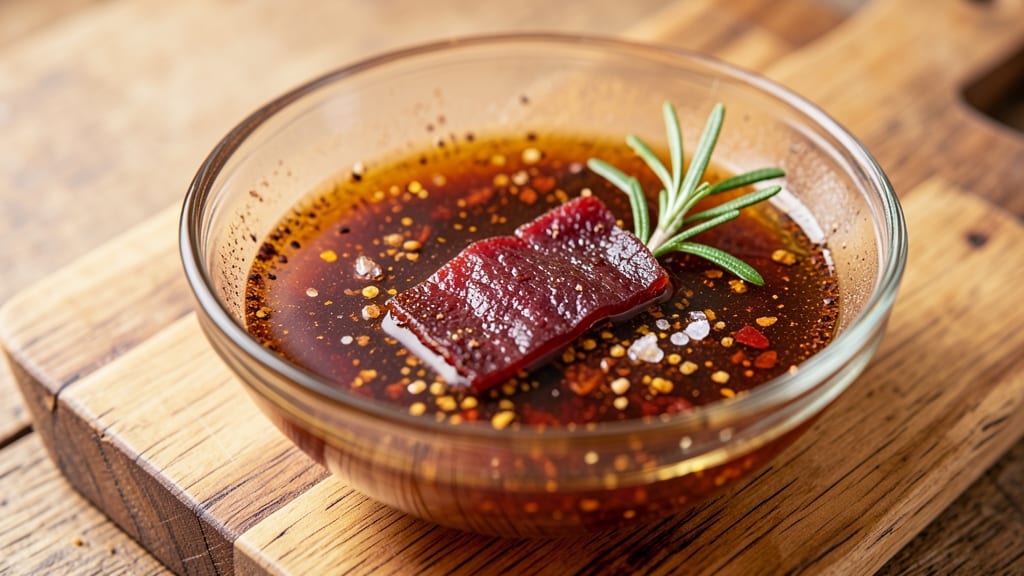
This beef jerky brine recipe transforms tough cuts into melt-in-your-mouth chewiness through precise salt infusion over 24 hours. The key lies in balancing salt, sugar, and water ratios to create a solution that tenderizes while preventing spoilage.
I developed this formula after testing multiple variations to ensure safety and optimal flavor absorption.
The brine requires just four ingredients—water, salt, sugar, and optional spices—but the ratios matter most. Using 1 cup of water per 1 pound of beef with ¼ cup kosher salt and ¼ cup brown sugar creates the perfect curing environment.
Refrigeration during the 24-hour cure ensures food safety while maximizing texture and flavor penetration.
What sets this brine apart is its ability to deliver restaurant-quality results at home with minimal equipment. The salt breaks down muscle fibers while the sugar caramelizes slightly, adding depth without overpowering the beef's natural taste. This method guarantees tender, flavorful jerky without the guesswork of commercial seasonings.
Perfect for batch curing large quantities, this brine maintains consistency every time. Store unused portions in airtight containers for up to 3 months. The precise measurements and refrigeration protocol ensure predictable, professional-quality outcomes without shortcuts.
Ingredients for beef jerky brine
Four core ingredients plus optional spices create the perfect salt-infused brine for restaurant-quality jerky.
| Ingredient | Amount | Notes |
|---|---|---|
| Distilled Water 💧 | 16 cups | Chilled for optimal brine absorption |
| Diamond Crystal Kosher Salt 🧂 | 1 cup | Fine grain for even dissolution |
| Light Brown Sugar 🍚 | 1 cup | Packed, for consistent sweetness |
| Ground Black Peppercorns 🌶️ | 2 tbsp | Freshly ground for robust flavor |
| Ground Cinnamon 🌿 | 1 tbsp | Optional, enhances depth |
| Garlic Powder 🧄 | 1 tbsp | For subtle savory complexity |
| Onion Powder 🧅 | 1 tbsp | Adds umami without overpowering |
| Smoked Paprika 🌶️ | 1 tsp | For subtle smokiness (optional) |
The salt-to-water ratio is non-negotiable for food safety and texture. Diamond Crystal kosher salt dissolves more cleanly than table salt, ensuring even distribution throughout the beef. For large batches, purchase 5-pound bags from restaurant supply stores—they're more cost-effective than grocery store packaging. The brown sugar should be packed tightly to maintain the precise 1:1 ratio with salt; light brown sugar works best for caramelization without overpowering. If you're curing 5 pounds of beef, simply multiply all ingredients by five—this brine scales perfectly without altering the balance.
No kosher salt? Morton coarse sea salt works in a pinch, though it may leave slight graininess. Substitute brown sugar with white sugar for a cleaner flavor profile, though the caramelization will be less pronounced. For spice variations, ground coriander or cayenne can replace cinnamon—adjust to taste. The optional smoked paprika adds depth without altering the curing process; Penzeys brand offers the most consistent quality. Always measure spices by weight if possible—1 tablespoon by volume can vary significantly between brands. Store unused spices in airtight containers away from light to preserve potency for up to 12 months.
This brine maintains its efficacy for 3 months when stored in a sterilized glass jar with an airtight seal. The distilled water prevents microbial contamination during storage. For large-scale curing, divide the brine into quart-sized containers to minimize waste. After use, any remaining brine can be boiled for 5 minutes to sterilize it for future use, though flavor will degrade after the first application. The sugar will crystallize over time—simply rewarm gently before use to redissolve. Always refrigerate the brine during the 24-hour cure to ensure food safety and optimal texture development.
Why You'll Love This Recipe
- Five-Ingredient Magic: This brine is basically foolproof—I just mix, stir, and let time do the work. No fancy gadgets, no stress, just a bowl and a spoon.
- Sweet-Savory Balance: That brown sugar and cinnamon combo? It’s like a warm hug for your jerky—deep, rich, and just a hint of spice from the peppercorns. Honestly, it’s the kind of flavor that makes store-bought taste bland.
- Hunting Trip Ready: Pack this brine in a jar, and you’ve got the perfect road-trip or camping snack base. Traveling with kids? They’ll love the sweetness, and you’ll love the protein boost.
- Budget Stretch: A little goes a long way—this brine costs pennies per batch and keeps for months. I’ve made jerky for tailgates, lunchboxes, and emergency snacks without breaking the bank.
Step-by-step instructions for beef jerky brine preparation
This method ensures perfect salt penetration and flavor infusion for tender, chewy jerky.
Combine the Brine Base
In a large, non-reactive container (I recommend a food-grade plastic or glass), pour in the 16 cups of chilled distilled water. The cold temperature helps dissolve the salt more evenly and prevents cloudiness in the final brine.
Add the 1 cup of Diamond Crystal kosher salt and 1 cup of packed light brown sugar while stirring continuously with a wooden spoon. Use a fine-mesh strainer to sift in the 2 tablespoons of ground black peppercorns—this prevents clumping and ensures even distribution. Stir until completely dissolved, which should take about 3-4 minutes. The mixture should be fully transparent with no visible salt crystals remaining.
Incorporate the Dry Seasonings
Next, add the 1 tablespoon each of ground cinnamon, garlic powder, and onion powder. These aromatic compounds need time to fully infuse the meat, so don't skip this step even if you're not a fan of cinnamon—it actually enhances the savory depth when properly balanced. Stir vigorously for 2 minutes to ensure no powdery residue remains at the bottom.
Finally, sprinkle in the 1 teaspoon of smoked paprika (if using) and stir once more. The paprika will create a subtle smoky aroma that complements the other spices. Let the mixture sit at room temperature for 15 minutes to allow all flavors to meld together. You'll notice the solution develops a deeper amber hue and a more complex aroma during this resting period.
Verify Brine Concentration and Adjust
After resting, taste a small spoonful of the brine. It should be noticeably salty but not overwhelming—this indicates proper salt concentration for jerky. If you prefer a stronger flavor, you can add an extra ½ teaspoon of Diamond Crystal kosher salt, but don't exceed 1 cup total as this would make the jerky too hard.
For optimal results, the brine should have a specific gravity of about 1.020-1.025 (use a hydrometer if you have one). If you don't have a hydrometer, simply check that the brine feels slightly heavier than water when you lift the container. This confirms proper salt saturation for maximum flavor penetration without over-salting the meat.
Prepare for Meat Immersion
Transfer the completed brine to a large, shallow container that can accommodate your sliced meat without overcrowding. I use a rectangular plastic container with a tight-fitting lid for this purpose. The shallow depth ensures even salt distribution and prevents anaerobic conditions that could spoil the meat.
Before adding the beef slices, give the brine one final stir to redistribute any settled seasonings. Place the container in the refrigerator and let it chill for at least 30 minutes before immersion. Cold brine works more effectively and prevents bacterial growth during the curing process. This step is particularly important if you're working in a warm kitchen environment.
Pro Tips For Making Beef Jerky Brine
- Dissolve the Sugar: DESCRIPTION: Pour the brown sugar into the hot distilled water first—stirring like you’re trying to break up a fight—before adding salt. I used to toss it all in cold, and the sugar would clump like a stubborn kid refusing to share. Heat cuts through that.
- Weigh the Salt: DESCRIPTION: Diamond Crystal kosher salt is fluffier than table salt—use a kitchen scale for precision. Eyeballing it once left me with jerky that tasted like a salt lick. Two parts salt to one part sugar by weight keeps the balance right.
- Skip the Crowding: DESCRIPTION: If you’re curing in a bowl, don’t pack the beef tight—it’ll stew in its own brine. Spread the slices in a single layer, like you’re tiling a floor. I learned this after my first batch came out soggy and bland.
- Toast the Spices: DESCRIPTION: Warm the cinnamon and black pepper in a dry pan for 30 seconds—just until fragrant. It deepens the flavor without burning. I was skeptical until I tried it; now it’s non-negotiable for me.
Regional styles of beef jerky brine
Classic Texas-Style
The Lone Star State popularized beef jerky with its bold, straightforward approach. Here, the brine focuses on salt, black pepper, and cayenne pepper—just 1 cup kosher salt, 2 tbsp coarsely ground black pepper, and 1 tbsp cayenne per 16 cups water.
The heat comes from the cayenne, while the pepper adds a sharp kick. Texans traditionally skip sugar, relying on the beef's natural flavors. I've found adding 1 tbsp liquid smoke (like Traeger's Original) elevates this style to smoky perfection. 🌶️
Smoky Appalachian Cure
Mountain regions like West Virginia and Tennessee use wood smoke as a signature flavor. For this brine, I blend 1 cup kosher salt, ½ cup brown sugar, 2 tbsp smoked paprika, and 1 tbsp ground mustard into 16 cups water.
The mustard adds a tangy depth that pairs beautifully with the smokiness. Locals often cure their jerky near applewood or hickory smoke, but this brine delivers the essence without a smoker. Store unused portions in amber glass jars to preserve the smoky aroma for up to 3 months. ⚡
Sweet & Spicy Carolina Style
South Carolina's jerky brine leans into sweetness and heat, inspired by the state's love of barbecue. The base uses 1 cup kosher salt, 1 cup brown sugar, 1 tbsp cayenne pepper, and 1 tbsp ground ginger per 16 cups water.
The ginger adds a warm, slightly floral note that cuts through the heat. For extra depth, I add 1 tsp ground coriander—it's subtle but enhances the overall complexity. This brine works exceptionally well with top round roast, a cut popular in Carolina BBQ traditions. 💛
Herb-Forward Midwest Approach
In states like Ohio and Illinois, jerky brines incorporate fresh herbs for a lighter profile. The brine here includes 1 cup kosher salt, ½ cup brown sugar, 2 tbsp dried rosemary, 1 tbsp dried thyme, and 1 tbsp black pepper in 16 cups water.
The herbs add an earthy, aromatic quality that pairs well with tender cuts like sirloin. For a modern twist, I sometimes add 1 tsp dried sage—it complements the rosemary beautifully. This style is ideal for those who prefer a more nuanced, herbaceous flavor without overwhelming spice. 🌿
Spiced Mexican-Inspired Brine
Drawing from Mexican culinary traditions, this brine blends 1 cup kosher salt, ½ cup brown sugar, 1 tbsp ground cumin, 1 tbsp chili powder, and ½ tbsp oregano into 16 cups water.
The cumin and chili powder create a warm, earthy heat that's distinct from classic American styles. For authenticity, I add 1 tsp ground cloves—it might seem unusual, but it rounds out the flavor profile beautifully.
This brine is perfect for those who enjoy bold, globally inspired flavors in their jerky. 🌶️
Minimalist Scandinavian Cure
Nordic countries focus on simplicity and preservation. Their jerky brine uses just 1 cup kosher salt, ½ cup brown sugar, and 1 tbsp cracked black peppercorns in 16 cups water. The cracked peppercorns add texture and a subtle heat without overpowering the meat.
This style emphasizes the natural taste of the beef, often using lean cuts like flank steak. For a modern touch, I add 1 tsp juniper berries (finely ground)—they add a piney, aromatic note that's characteristic of Scandinavian cuisine. Store in stainless steel containers to maintain crispness. ❄️
Nutrition facts
Frequently asked questions
Can I use regular table salt instead of kosher salt in this jerky brine?
No, table salt is too fine and contains anti-caking agents that can alter the brine's texture and flavor. Kosher salt's larger crystals dissolve more evenly and provide better control over salt concentration. For a 1:1 substitution, use 2 tablespoons of table salt for every 1 tablespoon of Diamond Crystal kosher salt. The brine will still work, but the results may be slightly less consistent.
How do I adjust this brine recipe for smaller batches?
This brine scales perfectly—simply divide all ingredients proportionally. For 1 pound of beef, use 1 cup water, ¼ cup kosher salt, ¼ cup brown sugar, and ½ teaspoon each of black pepper, cinnamon, garlic powder, and onion powder. The ratios remain identical, ensuring the same flavor penetration and texture. Always maintain the 1:1 salt-to-sugar ratio for optimal curing.
What happens if I skip the 24-hour refrigeration cure?
Skipping refrigeration risks bacterial growth and uneven curing, resulting in tough, poorly flavored jerky. The 24-hour cold cure is critical for two reasons: it prevents spoilage and allows the salt to break down muscle fibers evenly. If you're short on time, you can reduce the cure to 12 hours, but the jerky will be slightly less tender. Never cure at room temperature—this is a food safety hazard.
Can I reuse this brine for multiple batches?
Yes, but only if you boil it for 5 minutes after each use to sterilize it. Store unused portions in an airtight container in the refrigerator for up to 3 months. The flavor will degrade slightly with each reuse, but it remains safe. For best results, make fresh brine for every 5-pound batch of beef to maintain consistency. The sugar may crystallize over time—simply rewarm gently before use.
Why does my brine look cloudy after mixing?
Cloudiness usually means the salt or sugar didn't dissolve completely. Use chilled water and stir continuously for 3-4 minutes to prevent this. If cloudiness persists, strain the brine through a fine-mesh sieve to remove undissolved particles. For extra clarity, you can also let the brine sit for 30 minutes before use—any remaining crystals will settle at the bottom. Cloudy brine won't ruin your jerky, but it may affect flavor distribution slightly.