
Main Courses
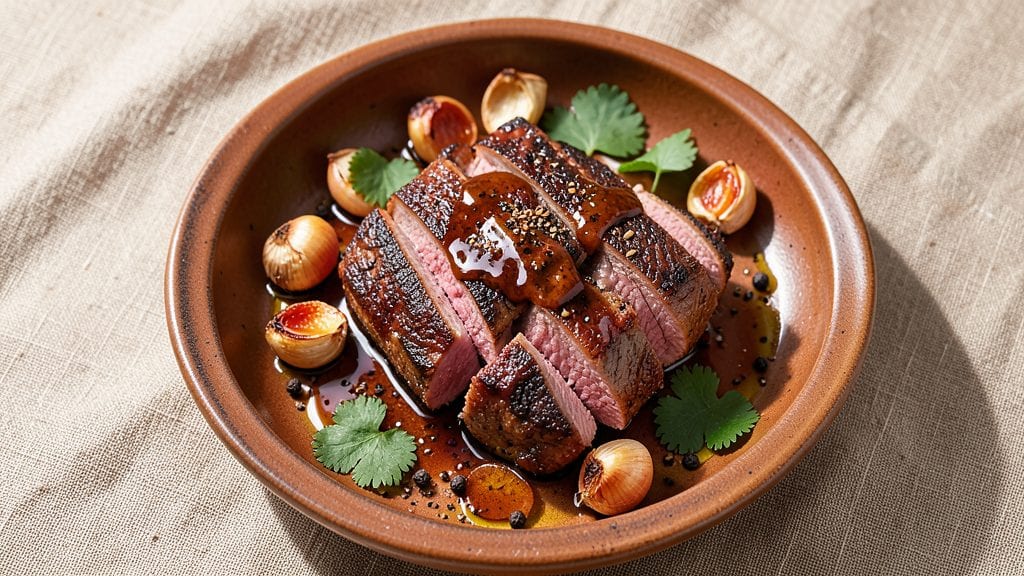
This beef Colorado recipe delivers the perfect balance of smoky, spiced crust and tender steakhouse-quality meat that feels like a restaurant-worthy meal. Growing up, Mrs. Henderson always said great cooking starts with the right seasoning—this dish proves it by transforming simple beef into something extraordinary.
The key lies in a bold marinade that tenderizes while building flavor, followed by a quick sear that locks in juices and creates that coveted crust.
The process is straightforward but delivers restaurant-quality results—no fancy techniques required. You'll start with a smoky-spiced marinade that works overnight, then finish with a pan-sear that creates a caramelized crust while keeping the inside perfectly tender.
The beauty of this recipe is its versatility: grill it for outdoor cooking or use your stovetop for weeknight convenience. Every bite delivers that perfect harmony of seasoning and texture that makes it worth the effort.
What you'll end up with is juicy, flavorful beef with a deep, smoky crust that's impossible to resist. The marinade's blend of spices and herbs ensures every slice is packed with flavor, while the quick cooking method keeps the meat tender.
This isn't just another steak recipe—it's a foolproof method for achieving steakhouse perfection at home, whether you're cooking for two or feeding a crowd.
Pair it with roasted potatoes or a fresh garden salad to complete the meal. The smoky notes in the beef complement both sides beautifully, making this a complete dish that feels special without requiring hours in the kitchen. Let's get started on creating your own steakhouse-worthy masterpiece.
Ingredients for beef colorado
Transform simple beef into restaurant-worthy masterpieces with these carefully selected ingredients.
| Ingredient | Amount | Notes |
|---|---|---|
| Beef Chuck Roast 🥩 | 2 lb | Cut into 1-inch cubes, trimmed of excess fat |
| Extra-Virgin Olive Oil 🫒 | ¼ cup | For marinade and searing |
| Balsamic Vinegar 🍷 | ¼ cup | Aged variety preferred |
| Worcestershire Sauce 🍶 | 2 tbsp | High-quality, full-bodied |
| Smoked Paprika 🌶️ | 1 ½ tbsp | For authentic smoky depth |
| Ground Cumin 🌿 | 1 tbsp | Toasted for enhanced aroma |
| Garlic Powder 🧄 | 1 ½ tbsp | Freshly ground preferred |
| Onion Powder 🧅 | 1 tbsp | No lumps, fine grind |
| Dried Oregano 🍃 | 1 tsp | Mexican oregano if available |
| Black Peppercorns 🌶️ | 1 ½ tsp | Freshly cracked for intensity |
| Diamond Crystal Kosher Salt 🧂 | 1 ½ tsp | For seasoning and marinade |
| Fresh Rosemary 🌿 | ¼ cup | Finely chopped, stems removed |
| Fresh Thyme 🌿 | ¼ cup | Leaves only, finely chopped |
| Yellow Onion 🧅 | 1 whole | Finely diced for marinade |
| Garlic Cloves 🧄 | 4 cloves | Minced for marinade base |
The beef selection is critical for this recipe. Chuck roast delivers the ideal texture—tender yet robust enough to handle the bold marinade. Opt for USDA Choice or Prime cuts from reputable butchers or trusted grocery chains like Whole Foods or Costco, where you can verify freshness and marbling. The cubes should be uniform in size (about 1-inch) for even cooking. For the herbs, fresh rosemary and thyme from the grocery store's produce section are ideal, but ensure the leaves are vibrant green and free from browning. If you're sourcing smoked paprika, Penzeys or McCormick offer high-quality options that provide that authentic smoky depth without overpowering the dish.
Substitutions should maintain the recipe's balance. If fresh rosemary or thyme isn't available, dried varieties at one-third the amount will suffice, though fresh herbs elevate the dish significantly. For Worcestershire sauce, Lea & Perrins is the gold standard, but Annie's or Hunts work well in a pinch. The balsamic vinegar should be aged at least 25 years for optimal depth—Giovanni Rossi or Bartoli are excellent choices. If you're missing garlic powder, fresh minced garlic at double the amount works beautifully, though it adds moisture to the marinade. For those avoiding gluten, ensure your Worcestershire sauce is gluten-free, as traditional versions often contain barley malt vinegar.
Proper storage extends freshness and flavor. The marinade can be refrigerated for up to 5 days in an airtight container, though it's best used within 24 hours for maximum impact. Fresh herbs should be stored in a sealed container with a damp paper towel to maintain their vibrancy for 5-7 days. The marinated beef can be refrigerated for 12-24 hours, though it's best cooked within 12 hours for peak tenderness. Leftovers should be consumed within 3-4 days when stored properly in the refrigerator. For longer storage, freeze the cooked beef in airtight containers for up to 3 months, though the texture may change slightly upon reheating.
Why You'll Love This Recipe
- One-Pan Magic: I swear by this recipe when I need dinner on the table fast. The chuck roast and balsamic vinegar caramelize right in the skillet—no fancy equipment, no extra pots, just deep, smoky flavor with almost no effort.
- Smoky-Sweet Obsession: That smoked paprika and Worcestershire combo? It’s the kind of punch that makes you close your eyes mid-bite. The balsamic glaze ties it all together—rich, tangy, and just a little bit addictive.
- Weeknight Superhero: Between us, this is my go-to when I’m too tired to think. Toss in the roast, let it simmer, and boom—you’ve got a meal that feeds four (or two very hungry people) without stress. Even my picky-eating partner asks for seconds.
- Budget Win: A chuck roast stretches like crazy, and the pantry staples (olive oil, vinegar, spices) mean I’m not breaking the bank. Honestly, it’s the kind of dish that makes grocery day feel like a victory—great taste, minimal cost, and leftovers that taste just as good reheated.
Step-by-step instructions for beef Colorado preparation
A methodical approach ensures deep flavor penetration and a perfect sear every time.
Prepare the Spiced Marinade
In a medium bowl, combine the 0.25 cup extra-virgin olive oil, 0.25 cup balsamic vinegar, 2 tbsp Worcestershire sauce, 1.5 tbsp smoked paprika, 1 tbsp ground cumin, 1.5 tbsp garlic powder, 1 tbsp onion powder, 1 tsp dried oregano, 1.5 tsp freshly cracked black peppercorns, and 1.5 tsp diamond crystal kosher salt. Whisk vigorously to fully integrate the spices into the liquid base.
Add the 0.25 cup finely chopped fresh rosemary, 0.25 cup finely chopped fresh thyme, 1 whole yellow onion that has been finely diced, and 4 cloves minced garlic. Mix thoroughly until all aromatics are evenly distributed throughout the marinade. This blend creates the foundation for both flavor infusion and moisture retention during cooking.
Here's the thing—let the marinade rest for 10 minutes before using. This allows the spices to bloom and release their essential oils, maximizing flavor extraction from the beef when it's submerged.
Cube and Marinate the Beef Chuck Roast
Using a sharp chef's knife, cut the 2 lb beef chuck roast into 1-inch cubes, ensuring each piece is uniform in size. Trim any remaining excess fat to maintain consistent cooking results. Place the beef cubes into a large resealable plastic bag and pour the prepared marinade over them, ensuring each piece is fully coated.
Seal the bag tightly and refrigerate for at least 4 hours, or preferably overnight. The acidity in the balsamic vinegar and Worcestershire sauce helps tenderize the tough chuck roast while the spices penetrate deeply. Don't skip this step—proper marination transforms this inexpensive cut into something restaurant-quality.
I know it seems like too much time, but trust me: the flavor development during this period is what separates good beef Colorado from exceptional. The beef will absorb the marinade completely, resulting in each bite bursting with complex, layered flavors.
Sear the Beef for Maximum Crust Development
Remove the marinated beef from the refrigerator and let it sit at room temperature for 30 minutes before cooking. This ensures even heat distribution when searing. Heat a large cast-iron skillet over high heat until it's smoking hot—this is critical for developing that signature steakhouse crust.
Working in batches to avoid overcrowding, add the beef cubes to the skillet in a single layer. Let them sear undisturbed for 2-3 minutes per side until they develop a deep, caramelized crust. You'll see the edges turn rich mahogany brown—this is your signal that the Maillard reaction is working perfectly. If the pan isn't hot enough, the beef will steam instead of sear.
For the first batch, press down gently on the beef with a metal spatula during the first minute—this prevents the cubes from curling and ensures even contact with the pan. Remove the seared beef to a plate and repeat with remaining batches, adding a splash of the reserved marinade to the pan between batches to prevent burning.
Complete the Cooking Process
Return all the seared beef to the skillet and reduce heat to medium-high. Pour any remaining marinade from the bag into the pan, scraping up all the browned bits from the bottom—these contain concentrated flavor. Add the beef back to the skillet and cook for an additional 5-7 minutes, stirring occasionally, until the internal temperature reaches 160°F when measured with an instant-read thermometer.
The beef should be tender but still hold its shape—it will continue cooking slightly as it rests. If the sauce begins to reduce too quickly, add 1-2 tablespoons of beef broth (if available) to maintain moisture. Here's where it gets fun—the spices in the marinade will caramelize further, creating a rich, complex sauce that clings beautifully to each piece of beef.
This is the moment that matters: the combination of the seared crust, tender beef, and reduced marinade creates the perfect balance of textures and flavors that define beef Colorado. The spices should be aromatic but not overpowering, with the smokiness from the paprika complementing the acidity of the balsamic.
Rest and Serve
Transfer the cooked beef to a serving platter and let it rest for 5 minutes before serving. This resting period allows the juices to redistribute throughout each piece, ensuring maximum tenderness with every bite. The crust will remain crisp while the interior stays perfectly juicy.
Serve immediately with your choice of sides—crusty bread to soak up the sauce, a fresh green salad to cut through the richness, or roasted vegetables for added texture. The beef should have a deep, caramelized crust on the outside while remaining tender and flavorful throughout. Each bite should deliver a perfect harmony of smoky, spiced flavors with a touch of sweetness from the balsamic reduction.
Real talk: this dish tastes even better the next day when the flavors have time to meld completely. Store leftovers in an airtight container in the refrigerator for up to 3 days, or freeze for up to 3 months for future meals.
Pro Tips For Making Beef Colorado
- SEAR IN TWO BATCHES: Chuck roast is heavy—crowding the pan turns your sear into a sad, greasy bath. Split the meat into two batches if your skillet’s too small, and you’ll get that deep, caramelized crust worth the extra minute of work.
- REDUCE THE SAUCE HARD: Balsamic and Worcestershire taste flat if you just dump them in at the end. After browning, deglaze with a splash of water or beef stock, then simmer that liquid down to a thick glaze before adding the vinegar. The flavor concentrates, and your sauce won’t taste like diluted marinade.
- DON’T SKIP THE SMOKED PAPRIKA TOAST: I used to just sprinkle it in raw, but toasting it first in the hot oil for 30 seconds—until it smells like a campfire—amplifies its smoky punch. Skip this, and you’ll miss that extra layer of depth in every bite.
- REST IT WRAPPED: Chuck roast needs a break, but not just on a cutting board. After cooking, wrap it in foil and let it sit for 10 minutes. This keeps the juices from pooling out when you slice, and the meat stays tender instead of turning into shoe leather. (Yes, even if you’re impatient.)
Essential equipment for this recipe
Cast-Iron Skillet
This is your non-negotiable workhorse for Beef Colorado. I swear by a Lodge Pre-Seasoned Cast Iron Skillet—it retains heat like magic and develops that perfect crust through the Maillard reaction. The deep sides prevent splatter, and the heavy construction ensures even heat distribution.
If you don't have one, invest in a Made In Skillet or Le Creuset—both deliver professional results. For stovetop cooking, a 12-inch diameter skillet is ideal for batch searing without overcrowding. 🔥
Instant-Read Thermometer
Never guess the doneness of your beef again. A ThermoWorks Smoke or Meater Plus thermometer gives you pinpoint accuracy to hit that 160°F internal temperature without overcooking. I keep mine on my counter for quick checks—it's the difference between dry, tough beef and perfectly tender cubes.
The probe's flexibility lets you test multiple pieces easily, and the backlight makes reading simple in any kitchen lighting.
Sharp Chef's Knife
Your knife makes or breaks the uniformity of your beef cubes. A Wüsthof Ikon or Shun Premier with a 10-inch blade handles the chuck roast like butter. Keep it razor-sharp by honing before each use—I use a Dickie Stone on my countertop.
Uniform 1-inch cubes ensure even cooking, so take your time here. A dull knife crushes fibers, leading to uneven texture. For budget options, Mercer Culinary Genesis delivers professional performance at half the price.
Heavy-Duty Mixing Bowls
You'll need two medium-sized bowls—one for the marinade and another for tossing the beef. Pyrex Glass Mixing Bowls are my go-to because they're durable, easy to clean, and won't react with acidic ingredients like some plastics.
The 4-cup and 8-cup sizes work perfectly for this recipe. For whisking the marinade, a stainless steel whisk (like OXO Good Grips) prevents rust and ensures smooth integration of spices and oils.
Plastic Food Storage Bags
For marination, quart-sized resealable plastic bags are essential. They maximize surface area contact between beef and marinade while minimizing mess. Look for thick, freezer-grade bags from Hefty or Glad—they won't tear when you're pressing out air.
I use the zip-top style with the double seal feature to prevent leaks during overnight marination. Pro tip: Use a straw to suck out excess air before sealing for even better flavor penetration.
Metal Spatula Set
A stainless steel spatula (like Mercer Culinary) is crucial for both flipping and pressing down on the beef during searing. The flat, flexible head prevents tearing the crust while the heat-resistant handle keeps your hands safe.
I also keep a slotted spoon handy for removing beef from the pan without losing sauce. For browning the marinade bits, a wooden spoon works best—it won't scratch your skillet like metal utensils can over time.
Nutrition facts
Frequently asked questions
Can I use a different cut of beef for this recipe?
While chuck roast is ideal for its tenderness and flavor, you can substitute with sirloin or flank steak cut into cubes. For tougher cuts like flank, marinate for 6-8 hours instead of 4 to ensure maximum tenderness. Avoid lean cuts like tenderloin—they won't develop the same rich crust.
How do I adjust the recipe for grilling instead of pan-searing?
Preheat your grill to medium-high heat (400°F) and clean the grates thoroughly. Thread the marinated beef cubes onto skewers (if using) or place directly on the grill. Sear for 3-4 minutes per side until caramelized, then move to indirect heat to finish cooking to 160°F internal temp. Brush with leftover marinade during cooking for extra flavor.
Can I make this recipe ahead of time?
Cook the beef up to 2 days in advance and store in an airtight container in the fridge. The flavors actually improve as they meld. Reheat gently in a skillet over low-medium heat with a splash of beef broth to prevent drying. For best texture, serve at room temperature or reheated briefly.
What's the best way to serve this dish?
Pair with crusty sourdough bread to soak up the sauce, or serve over mashed potatoes for a hearty meal. A simple mixed green salad with lemon vinaigrette cuts through the richness. For extra flair, garnish with fresh cilantro or chopped parsley. The smoky flavors work beautifully with roasted root vegetables too!
Why does my beef turn out dry?
Overcooking is the most common cause—use an instant-read thermometer to hit 160°F internal temp precisely. Also, avoid cutting into the beef immediately after cooking; let it rest for 5 minutes first. If using leaner cuts, marinate longer (8-12 hours) and cook at slightly lower heat (medium) to retain moisture.