
Soups & Stews
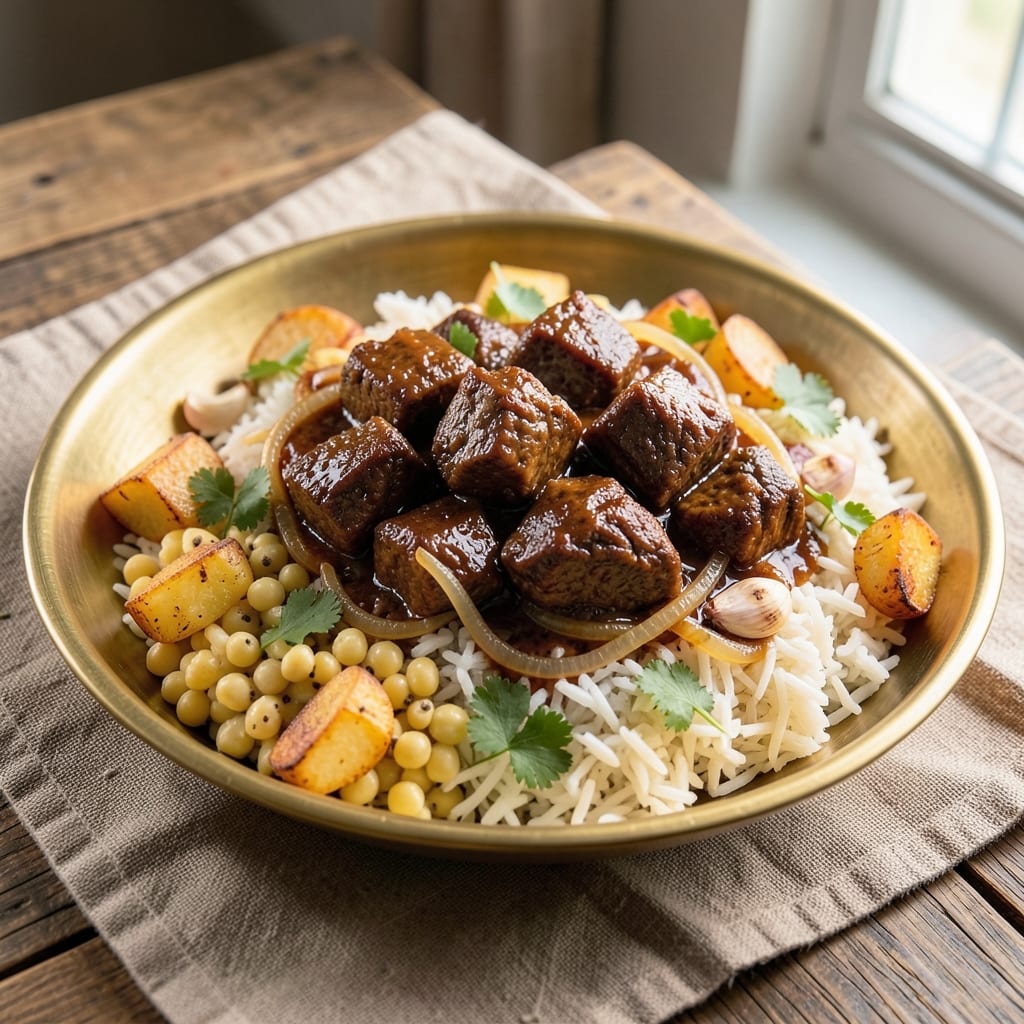
This beef bhuna khichuri recipe brings the soul of Bengali home cooking to your kitchen in one comforting pot. 🌟 The rich, slow-cooked beef bhuna—tender and infused with cumin, coriander, and garam masala—marries perfectly with fluffy rice and lentils, creating a dish that’s both hearty and deeply flavorful. What makes this recipe special is the harmony of textures: the melt-in-your-mouth beef, the soft potatoes, and the fragrant rice-lentil mix, all balanced by a tempering of mustard seeds and curry leaves.
The secret lies in the slow cooking of the beef bhuna, where spices are toasted to release their aromas before simmering in a rich, spiced gravy. Meanwhile, the khichuri base—rice and lentils cooked together—absorbs the flavors of the bhuna as they’re combined, resulting in a dish that’s far more than the sum of its parts. This recipe stays true to traditional Bengali techniques while being accessible for home cooks, with no need for specialized equipment.
By the time you serve this dish, you’ll have a steaming pot of beef bhuna khichuri that’s ready to be enjoyed with a dollop of yogurt, a drizzle of mustard oil, or a sprinkle of fresh green chutney. The aroma alone will transport you to a Bengali household, where this dish is a staple for celebrations and everyday comfort. Let’s bring this classic to your table with step-by-step clarity.
Perfect for feeding a family or sharing with friends, this recipe delivers restaurant-quality results with minimal effort. The slow-cooked beef stays tender, the khichuri is fragrant and perfectly balanced, and the final tempering adds a burst of freshness. Whether you’re new to Bengali cooking or a seasoned fan, this dish is sure to become a favorite. Let’s get started!
Ingredients for beef bhuna khichuri recipe bengali
Pantry staples meet Bengali spices in this one-pot wonder—rich beef, fragrant rice, and tender potatoes all in one comforting bowl.
| Ingredient | Amount | Notes |
|---|---|---|
| Beef Chuck Roast 🥩 | 1 ½ lb | Cut into 1-inch cubes |
| Basmat Rice 🍚 | 1 cup | Uncooked, long-grain preferred |
| Yellow Lentils (Moong Dal) 🌾 | ½ cup | Rinsed before cooking |
| Russet Potatoes 🥔 | 2 medium | Peeled and cubed (1-inch) |
| Onions 🧅 | 2 whole | 1 large yellow, 1 small red |
| Garlic Cloves 🧄 | 8 cloves | Freshly minced |
| Ginger Root 🌿 | 1 inch | Fresh, peeled and grated |
| Garam Masala Powder 🌶️ | 1 tbsp | Authentic blend preferred |
| Ground Cumin Seeds 🌿 | 1 tbsp | Toasted for aroma |
| Ground Coriander 🌶️ | 1 tbsp | Freshly ground preferred |
| Turmeric Powder 🧂 | ½ tsp | Bright yellow color |
| Red Chili Powder 🔥 | 1 tsp | Adjust for heat preference |
| Mustard Seeds 🌿 | 1 tsp | Whole, for tempering |
| Curry Leaves 🌿 | 10 whole | Fresh, dried if unavailable |
| Tomato Paste 🍅 | 2 tbsp | Squeeze tube preferred |
| Coconut Milk 🥥 | ½ cup | Full-fat for creaminess |
| Plain Yogurt 🥛 | ¼ cup | For serving (unsweetened) |
| Mustard Oil 🫒 | 2 tbsp | For tempering (optional) |
| Salt 🧂 | 1 ½ tsp | Adjust to taste |
The beef is the star, so pick a cut with good marbling—Costco or Whole Foods carry excellent chuck roast. Look for bright red color and visible fat. For the garam masala, Indian grocery stores have authentic blends that beat the supermarket versions. Fresh curry leaves make all the difference—freeze them if you can't find them fresh. The moong dal should be yellow, not green, for that classic Bengali texture. If you're short on time, pre-cut potatoes from the grocery store work fine, but peeling and cubing yourself gives better control.
No garam masala? Mix 1/4 tsp cinnamon, 1/2 tsp cardamom, 1/4 tsp cloves, and 1/2 tsp black pepper as a substitute. Subbing coconut milk? Heavy cream works too—just reduce the amount by 1/4 cup. The mustard oil can be skipped if you're sensitive to its strong flavor, but a tiny drizzle at the end adds that authentic Bengali touch. For the potatoes, if you accidentally use waxy potatoes like Yukon gold, they'll hold their shape but won't be as fluffy. The yogurt for serving should be plain and thick—Greek yogurt works perfectly. And if you can't find moong dal, yellow split peas make a decent substitute in a pinch.
This dish tastes even better the next day—make extra if you can. Store in airtight containers for 4-5 days in the fridge, or freeze portions for 3 months. The beef bhuna portion keeps well separately if you want to reheat just that. For reheating, add a splash of water or coconut milk to prevent drying out. The khichuri base reheats beautifully on its own—just warm with a little water and a pat of butter if you're feeling fancy. Serve with extra yogurt, a sprinkle of fresh cilantro, and a side of mango chutney if you want to go all out.
Why You'll Love This Recipe
- One-Pot Magic: I swear by this recipe because it’s all in one pot—no switching pans, no extra bowls. The beef tenderizes right alongside the rice and lentils, so you’re not stuck scrubbing multiple dishes afterward. (Yes, even on a Tuesday night.)
- Deep, Rich Layers: That slow-cooked beef with cumin, fennel, and a touch of vinegar? It’s ridiculously flavorful. The potatoes soak up the juices while the moong dal adds just the right bite—like a hug in a bowl.
- Leftovers That Don’t Suck: Honestly, I make this on Sundays because the second day is even better. The rice gets slightly firmer, the beef more tender, and the spices meld into something next-level. No sad, dry leftovers here.
- Budget Feeds Crowds: This recipe stretches a beef chuck roast into four or five meals—no waste, just satisfaction. My in-laws always ask for seconds, and I’ve never had to stress about feeding a houseful. (Between us, it’s my secret weapon.)
Step-by-step instructions for beef bhuna khichuri
This one-pot wonder brings together rich beef bhuna and comforting khichuri in perfect harmony.
🍳 Step 1: Prepare the Base with Mustard Oil and Spices
Heat a heavy-bottomed pot over medium heat and add the 2 tablespoons mustard oil. Let it warm until it shimmers but doesn't smoke - you'll smell that distinctive mustard aroma. Add the 1 teaspoon mustard seeds and let them pop for about 30 seconds.
Add the 10 whole curry leaves and cook for 10 seconds until they darken slightly. This is where all the magic begins - the oil carries those aromatic spices that will infuse every bite. Next, add the 1-inch ginger root and 8 cloves garlic, cooking for 1 minute until fragrant and lightly golden. Be careful not to burn them - you want sweet, floral aromas, not bitter flavors.
🍳 Step 2: Build the Spiced Beef Bhuna
Push the spices to one side of the pot and add the 1.5 lb beef chuck roast cut into 1-inch cubes. Let the beef brown slightly for 3-4 minutes before stirring to combine with the spices. Add the 1 tablespoon ground cumin seeds, 1 tablespoon ground coriander, 1 teaspoon red chili powder, and 0.5 teaspoon turmeric powder, stirring well to coat the beef.
Pour in 2 tablespoons tomato paste and cook for 2 minutes, allowing it to darken slightly. This creates a rich base for your bhuna. Add 1 cup water and bring to a gentle simmer. Cover and cook for 30 minutes, stirring occasionally, until the beef is tender and the sauce has thickened. You'll know it's ready when the beef easily pulls apart with a fork.
🥘 Step 3: Layer the Khichuri Components
While the beef simmers, peel and cube the 2 medium russet potatoes into 1-inch pieces and add them to the pot. Stir well to combine with the beef and spices. Add the 1 cup basmat rice and 0.5 cup yellow lentils (moong dal), spreading them evenly over the potatoes and beef. Pour in 4 cups water and bring to a boil.
Once boiling, reduce heat to low and simmer for 20 minutes without stirring. The rice and lentils should absorb the liquid and become tender. You'll see the khichuri thicken and develop a creamy texture - this is when it starts to transform into that comforting, fluffy consistency we love. The potatoes will soften beautifully, absorbing all the rich flavors.
🍳 Step 4: Finish with Aromatics and Coconut Milk
After 20 minutes, stir in the 2 whole onions (peeled and quartered) and cook for another 5 minutes until the onions soften and the flavors meld together. Add the 1 tablespoon garam masala powder and stir well. Remove from heat and let it sit covered for 5 minutes to allow the spices to bloom.
Stir in the 0.5 cup coconut milk and 1.5 teaspoons salt, adjusting to taste. The coconut milk adds a beautiful creaminess that balances the rich beef flavors. If the khichuri is too thick, add 2-3 tablespoons water to reach your desired consistency. The final dish should be moist but not soupy, with each bite offering that perfect balance of tender beef, creamy rice, and aromatic spices.
🍽️ Step 5: Serve with Yogurt and Fresh Garnishes
Transfer the bhuna khichuri to serving bowls and let it rest for 5 minutes. The flavors will continue to meld during this time, creating that perfect harmony of textures and tastes. Serve each portion with a dollop of 0.25 cup plain yogurt and garnish with freshly chopped cilantro if you like. The cool yogurt cuts through the richness, while the fresh herbs add a bright contrast to the warm, spiced dish.
This one-pot wonder delivers the comforting essence of Bengali home cooking in every bite - rich, flavorful beef bhuna perfectly balanced with the comforting texture of khichuri. The combination of tender beef, creamy rice, and aromatic spices creates a dish that's both hearty and satisfying, perfect for sharing with loved ones.
Pro Tips For Making Beef Bhuna Khichuri Recipe Bengali
- CRACK THE BEEF FIRST: Skip the slow cooker—sear the beef chuck roast in chunks until deep brown (not just pink) before simmering. I learned this the hard way: undercooked beef turns mushy in the long cook, while properly browned pieces stay tender but hold their shape. Use a heavy pot and medium-high heat—this isn’t the time to rush.
- SOAK MOONG DAL 30 MINUTES: Don’t just rinse the yellow lentils—soak them for at least 30 minutes before cooking. This cuts down on cooking time and prevents that gummy texture that ruins the khichuri’s creaminess. Drain well, but hold onto the soaking water—it’s liquid gold for balancing flavors later.
- POTATOES IN LAYERS: Chop the russet potatoes into even 1-inch cubes and add them after the beef has simmered for 20 minutes. Layering them on top (not stirring in) ensures they absorb the rich bhuna gravy without turning to mush. Cover and cook until fork-tender—no need to overcrowd the pot.
- FINISH WITH ONION TEMPER: Save a handful of finely sliced onions for the end. Fry them in ghee until golden and sprinkle over the finished dish—this adds a crisp, aromatic punch that cuts through the richness. (Yes, it’s an extra step, but it’s the thing that makes the dish feel special.)
Regional styles of this dish
West Bengal Style
The classic version from West Bengal features potatoes as the primary vegetable, creating a hearty, one-pot dish where the beef bhuna's rich gravy perfectly coats the fluffy khichuri base. In this style, the khichuri is often cooked in a heavy clay pot (like a deghi) over low heat for hours, allowing the spices to develop deeper complexity. The dish is traditionally served with mustard oil drizzled on top and a side of green chutney made with coriander, mint, and green chilies. 🌿
East Bengal (Bangladesh) Twist
In Bangladesh, this dish often includes eggplant or pumpkin alongside potatoes, adding a sweeter contrast to the beef's richness. The khichuri here might incorporate toor dal (split pigeon peas) instead of moong dal, creating a slightly nuttier flavor profile. Another key difference is the use of fresh fenugreek leaves (methi) in the tempering, which adds a unique bitterness that balances the dish beautifully. The final touch is often a sprinkle of fried onions for extra crunch. 🍆
Kolkata Home Kitchen
Kolkata's version is all about slow-cooked beef that practically falls apart, thanks to a longer simmering time with tomato puree (instead of paste) for a smoother gravy. The khichuri here is often made with partially cooked rice (parboiled) that's then finished in the beef bhuna, ensuring each grain absorbs the flavors deeply. A signature touch is adding a pinch of saffron to the coconut milk at the end, lending a luxurious aroma that elevates the dish to restaurant-quality. 💛
Rural Bengali Variations
In rural areas, this dish gets adapted based on availability—chicken or goat meat might replace beef, and wild greens like khirsa sag (water spinach) are sometimes mixed into the khichuri. The spices are often freshly ground in a mortar and pestle, and the dish is cooked in earthen pots over wood fires, which imparts a smoky depth that's hard to replicate on stovetops. The khichuri here is often drier, almost like a rice-lentil porridge, served with a side of pickled vegetables to cut through the richness. 🔥
Modern Urban Adaptations
Today's urban Bengali chefs are putting their own spin on this classic. You'll find versions with creamy cashew paste replacing coconut milk, or even a yogurt-based bhuna for a tangier profile. Some modern takes include roasted cauliflower or sweet potatoes for added texture, while others experiment with smoked paprika for a subtle depth. The khichuri might be served in individual bowls with a side of garlic naan or paired with chilled lassi for a fusion twist that still honors the dish's roots. ✨
Nutrition facts
Frequently asked questions
Can I substitute beef with chicken or lamb?
Chicken works beautifully for a lighter version, while lamb adds richer depth. For chicken, use 1.5 lbs boneless thighs and reduce cooking time to 20 minutes once tender. With lamb, increase simmering to 45 minutes for fall-apart texture. Adjust salt accordingly—lamb needs less, while chicken benefits from an extra 0.5 teaspoon of salt.
Why does my khichuri turn out mushy instead of fluffy?
Overcooking or stirring too much causes mushiness. Use low heat after boiling and avoid stirring for the first 15 minutes—this lets rice absorb liquid evenly. For extra fluffiness, rinse the rice before adding and use 4 cups water (not more). If it's still too thick, stir in 2 tbsp coconut milk at the end for creaminess.
How can I make this dish in a pressure cooker?
First cook the beef bhuna separately in the pressure cooker on high heat for 10 minutes after adding water. Then add potatoes, rice, lentils, and 3 cups water, sealing the lid. Cook on medium heat for 3 whistles. Release pressure naturally, then finish with coconut milk and garam masala. The khichuri will be ready in 30 minutes total instead of 1.5 hours!
Is mustard oil really necessary? Can I use another oil?
Mustard oil adds that authentic Bengali aroma, but you can substitute with vegetable or coconut oil (use 2 tbsp). For a milder flavor, heat the oil until it shimmers but doesn't smoke. If using coconut oil, add 1/2 teaspoon asafoetida (hing) when tempering mustard seeds for depth. Skip mustard oil if you're sensitive to its strong taste—just increase the garlic and ginger slightly.
How do I store leftovers to keep them tasting fresh?
Store in airtight containers in the fridge for 4-5 days. For reheating, add 2 tbsp water or coconut milk per serving and warm on low heat for 5 minutes. The khichuri reheats beautifully—just stir gently to avoid breaking the rice. For longer storage, freeze portions for 3 months. Thaw overnight in the fridge, then reheat with extra water to restore moisture.