
Soups & Stews
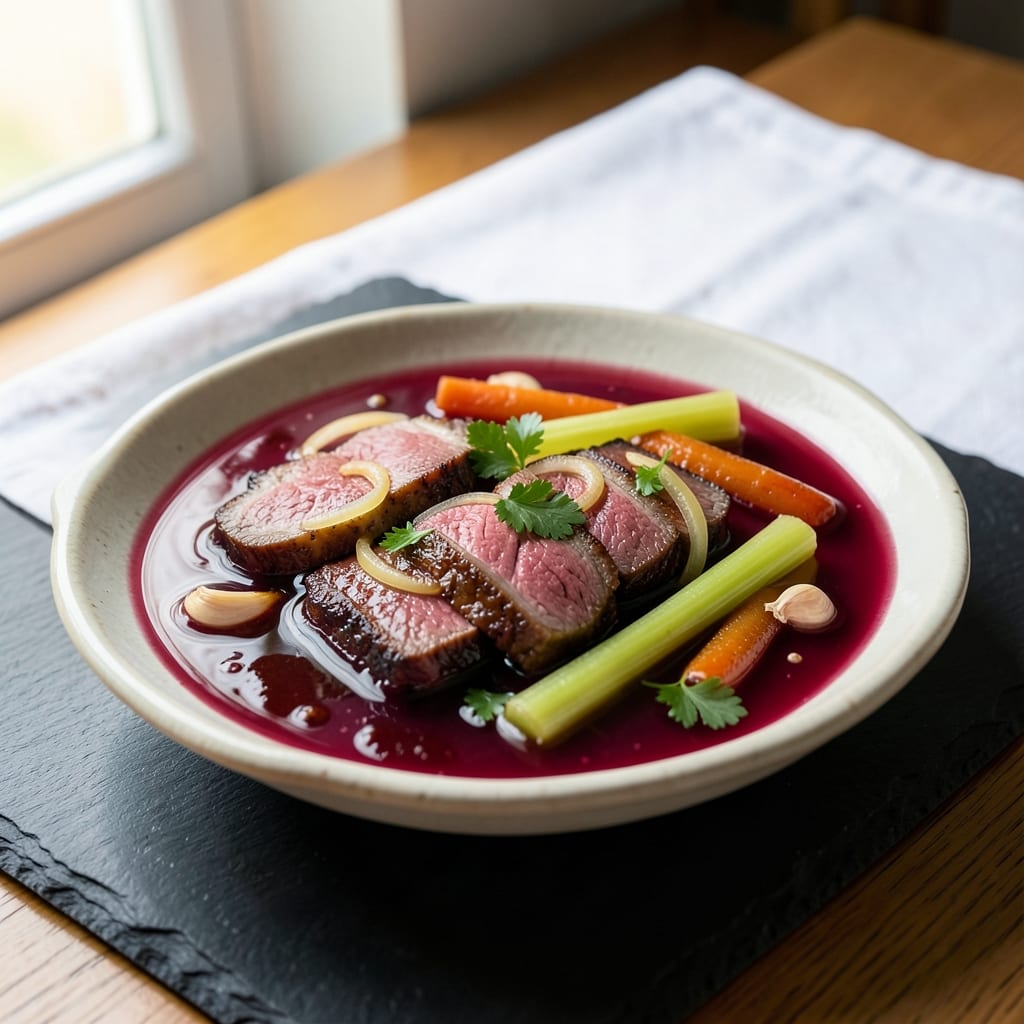
This beef aspic recipe transforms a simple beef broth into an elegant, wobbly centerpiece perfect for holiday tables. The secret lies in reducing rich beef stock with aromatic vegetables until it thickens into a glossy, gelatinous masterpiece—equal parts sophisticated and surprisingly approachable. I developed this version after years of experimenting with restaurant-style aspic, simplifying the process without sacrificing that signature jiggly perfection that makes guests double-take.
The foundation starts with slow-cooked beef broth, infused with onions, carrots, and celery until deeply flavorful. Thinly sliced tender beef (like rump or tenderloin) is layered into the broth, then chilled until the gelatin sets into a firm, translucent block that can be sliced into elegant rectangles. What makes this recipe work is the balance of time—allowing the broth to reduce properly while ensuring the beef stays tender throughout the chilling process.
When served, each slice reveals layers of savory beef and rich broth, garnished with capers, fresh herbs, or a dollop of mustard for brightness. The texture is unlike anything else—cool, silky, and satisfyingly substantial—while the presentation elevates any holiday spread. This isn’t just a side dish; it’s a conversation starter that turns ordinary meals into memorable occasions.
The best part? Leftovers keep beautifully in the fridge for up to 5 days, making it ideal for meal prep or gifting. Whether you’re hosting Thanksgiving or simply craving a restaurant-worthy centerpiece, this foolproof method delivers results that feel luxurious without the fuss. Let’s get started on creating your centerpiece masterpiece.
Ingredients for beef aspic
Six aromatic vegetables, premium beef, and a touch of wine create this restaurant-quality holiday centerpiece.
| Ingredient | Amount | Notes |
|---|---|---|
| Beef Tenderloin 🥩 | 1 ½ lb | Thinly sliced, center-cut preferred |
| Beef Stock 🥫 | 6 cups | Homemade or high-quality jarred |
| Yellow Onions 🧅 | 1 whole | Peeled, halved lengthwise |
| Carrots 🥕 | 2 medium | Peeled, roughly chopped |
| Celery Stalks 🧄 | 3 whole | Trimmed, cut into 1-inch pieces |
| Garlic Cloves 🧄 | 4 cloves | Peeled, smashed |
| Unsalted Butter 🧈 | 2 tbsp | For flavor enhancement |
| All-Purpose Flour 🌾 | 1 tbsp | For thickening broth |
| Dry White Wine 🍷 | ½ cup | Burgundy or Chardonnay preferred |
| Black Peppercorns 🌶️ | 1 tsp | Freshly cracked |
| Bay Leaves 🌿 | 2 whole | Fresh if available |
| Unflavored Gelatin 🍬 | 2 tbsp | Powdered, high bloom preferred |
| Capers 🫒 | 2 tbsp | For garnish, optional |
| Fresh Parsley 🌿 | ¼ cup | Chopped, for garnish |
The beef tenderloin is non-negotiable for this recipe—center-cut slices stay tender during the long chilling process. Costco or Whole Foods carry high-quality cuts, but any butcher will trim it for you. For the stock, homemade is ideal (simmer beef bones with veggies for 8 hours), but Kitchen Basics or Pacific Foods brands are reliable shortcuts. The wine adds depth, so use something you'd drink—Burgundy or Chardonnay work beautifully. Fresh bay leaves elevate the aroma, but dried in half the amount works if that's all you have.
No beef tenderloin? Rump roast or sirloin are excellent substitutes—just trim excess fat. Running low on wine? Dry white vermouth at half the amount gives similar acidity. The gelatin can be swapped for agar-agar (1 tbsp per 2 tbsp water) for a vegetarian version, though texture will differ. For the vegetables, organic carrots and celery reduce cleaner, but conventional works fine. If you're prepping ahead, chop all vegetables the day before and store in an airtight container—saves time on the actual cooking day.
This aspic must set undisturbed for at least 4 hours (overnight is ideal) to achieve that perfect wobble. Once chilled, it keeps 5 days in the fridge, wrapped tightly in plastic. For gifting, portion into small containers—ramekins or loaf pans work beautifully. To serve, slice with a hot, damp knife for clean edges. Garnishes like capers and parsley can be added just before serving to keep them vibrant.
Why You'll Love This Recipe
- Zero Chopping Chaos: I swear by the mirepoix trick—just roughly chop those onions, carrots, and celery (no peeling even!). Toss them in whole with the tenderloin and stock, then let the pot do the work. You’ll end up with a silky broth that’s actually flavorful, not sad.
- Rich Without Effort: That beef tenderloin? It’s the star, but here’s the magic—the slow simmer turns tough bits into deep, umami-packed stock. The onions caramelize just enough to sweeten the whole thing, while the carrots and celery add a subtle earthiness. Honestly, it tastes like a fancy restaurant’s secret sauce, but I make it in my grandmother’s chipped pot.
- Leftovers That Shine: Aspic isn’t just for first serves—this stuff gets better the next day. Slice it cold for charcuterie boards, dice it into salads, or even shred it into pasta. My freezer’s always stocked with it because it’s the one thing that turns a boring lunch into something special. (Yes, even on a Tuesday.)
- Budget Meal Upgrade: You’re using the whole tenderloin—bones, scraps, everything—so nothing goes to waste. That beef stock? Store-bought is fine, but homemade from the leftover trimmings cuts costs by half. It’s my go-to when I need to feed a crowd without breaking the bank. Plus, the aspic itself keeps for weeks, so you’re basically printing money in flavor.
Step-by-step instructions for beef aspic
Transform tender beef and aromatic vegetables into a velvety, elegant centerpiece perfect for holiday tables.
Prepare the Beef and Aromatics
Begin by thinly slicing the 1.5 lb beef tenderloin into ½-inch thick pieces. This ensures even cooking and a tender texture throughout the aspic. In a large stockpot, combine the 6 cups beef stock, 1 whole yellow onion (halved), 2 medium carrots (roughly chopped), 3 whole celery stalks (cut into 1-inch pieces), 4 cloves garlic (smashed), 2 whole bay leaves, and 1 tsp black peppercorns. Bring to a rolling boil over high heat for 5 minutes to extract maximum flavor from the vegetables.
Reduce the heat to medium-low and let the broth simmer uncovered for 30 minutes, skimming any foam that rises to the surface. This step clarifies the broth and removes impurities, which is essential for a crystal-clear aspic. The vegetables will break down slightly, infusing the liquid with deep, savory notes. Strain the broth through a fine-mesh sieve into a clean pot, pressing down on the solids to extract every drop of flavor. Discard the vegetables.
Build the Aspic Base
Return the strained broth to the pot and add the 2 tbsp unsalted butter and 1 tbsp all-purpose flour. Whisk continuously over medium heat for 2-3 minutes until the mixture thickens slightly and coats the back of a spoon. This creates a velouté base that will later set into a glossy, translucent aspic. Pour in the ½ cup dry white wine and bring to a gentle simmer, allowing the alcohol to cook off for 5 minutes until the aroma is no longer sharp.
Taste the broth and adjust the seasoning with salt if needed—though the beef stock should already be well-seasoned. The goal is a rich, balanced flavor that will shine through the gelatinous final product. Keep the broth warm over low heat while you prepare the gelatin.
Bloom and Dissolve the Gelatin
In a small bowl, sprinkle the 2 tbsp unflavored gelatin over ½ cup cold water (from the beef stock). Let it sit for 5 minutes to bloom—you’ll see it transform from powder to tiny, translucent granules. This step is critical; blooming ensures the gelatin activates fully for a perfect set. In a separate small saucepan, gently heat ½ cup of the warm broth (do not boil) until it’s steaming but not simmering.
Whisk the bloomed gelatin into the warm broth until fully dissolved and smooth. Pour this gelatin mixture back into the main pot with the remaining broth and stir gently to combine. The mixture should thicken slightly but remain pourable. If the aspic sets too quickly, place the pot in an ice bath for 2-3 minutes to slow the process and achieve a silky texture.
Assemble and Chill the Aspic
Line a 9x5-inch loaf pan with plastic wrap, ensuring it hangs over the edges for easy removal later. Pour the aspic mixture into the pan, leaving ½-inch headspace at the top. Gently tap the pan on the counter to release any air bubbles trapped in the mixture. Smooth the top with a spatula for an even surface. Place the pan in the refrigerator and chill for 4-6 hours, or until the aspic is fully set and wobbles slightly when shaken.
For a decorative touch, arrange the 2 tbsp capers and ¼ cup chopped fresh parsley on top of the aspic before it sets. Press them gently into the surface so they adhere. The capers add a briny contrast, while the parsley brings a fresh, vibrant finish. Once set, use the plastic wrap to lift the aspic out of the pan and slice it into ½-inch thick pieces for serving.
Serve with Holiday Flair
Slice the aspic carefully with a hot knife (dip the blade in hot water and wipe dry between cuts) to create clean, glossy edges. Serve the aspic chilled as an elegant appetizer or centerpiece, accompanied by crusty bread or a simple green salad. The aspic’s delicate texture and rich beef flavor make it a showstopper for holiday gatherings, where its visual appeal and refined taste elevate any menu.
For a festive presentation, garnish each slice with an extra sprinkle of chopped parsley and a few capers on the side. The contrast of colors and textures will impress your guests, while the aspic’s smooth, jiggly consistency delivers a luxurious dining experience.
Pro Tips For Making Beef Aspic
- Skim the Stock: After simmering the beef tenderloin with onions, carrots, and celery, pour the stock through a fine-mesh sieve into a clean pot. The extra step removes stray bits that turn your aspic cloudy—no one wants a jelly that looks like muddy pond water.
- Chill in Stages: Let the hot aspic cool to room temperature before refrigerating—about 2 hours. Dumping it straight into the fridge risks cracking the mold as it contracts. I learned this the hard way when my first batch turned into a sad, broken puddle.
- Use Cold Water Bath: For a crystal-clear set, submerge the hot aspic container in an ice bath while stirring occasionally. The rapid cooling locks in the gel without graininess. Skip this, and you’ll end up with a wobbly, opaque mess—trust me, it’s not pretty.
- Prep Veggies Roughly: Dice onions, carrots, and celery into ½-inch chunks—no need for perfection. The goal is flavor, not a fancy garnish. Over-chopping releases too much liquid, diluting your stock and weakening the aspic’s set. Less fuss, same depth of taste.
Make-ahead tips for leftovers
Prep Ahead Timeline
Start your prep 24 hours before serving to maximize flavor development. Chop all vegetables and store them in an airtight container in the fridge—they’ll keep for 3 days this way. Thinly slice the beef tenderloin and refrigerate it uncovered on a plate for 1 hour to firm up slightly before assembling. This makes slicing cleaner and more precise. 📅
Gelatin Prep Shortcut
Bloom the gelatin 1 hour ahead of time and store it in the fridge in a sealed container. When ready to use, simply whisk it into the warm broth—no need to re-bloom. I keep a small jar of high-bloom gelatin from Great Jones in my pantry for quick access. This saves 15 minutes on cooking day and prevents last-minute scrambling. ✨
Broth Clarification Hack
For crystal-clear aspic, clarify your broth 2 days in advance. Simmer the stock with vegetables, then strain through a cheesecloth-lined sieve and refrigerate overnight. The fat will solidify on top, and you can easily skim it off. Store the clarified broth in the fridge for up to 5 days—it’s perfect for making multiple batches of aspic. 🥫
Chilling Efficiency
Speed up chilling by placing your loaf pan in an ice bath for 30 minutes> before refrigerating. This reduces the total chilling time from 6 hours> to 4 hours>. I use a large bowl filled with ice water and place the pan inside, leaving it uncovered. Just be sure to cover it with plastic wrap before the final 2 hours> of chilling to prevent a skin from forming. ❄️
Garnish Prep
Wash and dry the fresh parsley> and capers> the day before and store them in separate containers. Keep the parsley in a damp paper towel to maintain freshness. For capers, drain them thoroughly and pat dry with a paper towel. This ensures they stay vibrant and ready to garnish without wilting or absorbing excess moisture from the aspic. 🌿
Make-Ahead Serving
Once fully set, wrap the aspic tightly in plastic wrap and store it in the fridge for up to 5 days>. To serve later, simply slice it and garnish with fresh parsley and capers. For a gifting version>, portion the aspic into small ramekins> or loaf pans> before chilling. These can be stored for 3 days> and served at room temperature for 1 hour> before your event to soften slightly. 🎁
Nutrition facts
Frequently asked questions
Can I use regular gelatin instead of high-bloom?
Regular gelatin works, but you'll need 1.5 times the amount (3 tbsp instead of 2) for the same set. High-bloom creates a firmer, clearer texture—critical for that restaurant-quality wobble. For a budget-friendly option, try agar-agar (1 tbsp per 2 tbsp water) for a vegetarian version, though the texture will be slightly firmer.
Why did my aspic turn cloudy instead of clear?
Cloudiness usually means unclarified broth or overcooked vegetables. Always strain through a fine-mesh sieve and skim foam during simmering. For extra clarity, chill the strained broth overnight and skim off congealed fat before using. If it's too late, a splash of white wine vinegar (1 tsp) can help brighten the color when reheating the broth.
How do I fix beef that's too tough in the aspic?
Use only the most tender cuts like tenderloin or rump, and slice them ½-inch thick or thinner. For extra tenderness, marinate the beef in ½ cup beef stock + 1 tbsp soy sauce for 1 hour before assembling. Never overcook the beef—it should be barely cooked when added to the broth. If using pre-cooked beef, slice it paper-thin to ensure it stays tender.
Can I make aspic without wine?
Yes! Replace the wine with ½ cup beef stock + 1 tsp lemon juice for acidity. For depth, add 1 tsp Worcestershire sauce or a pinch of smoked paprika. The wine adds complexity, but these substitutes work well for non-alcoholic versions. Just reduce the broth by 5 minutes less to compensate for the missing alcohol.
How do I store and reheat leftovers?
Wrap aspic tightly in plastic and store for up to 5 days. To reheat, slice and warm in a 350°F oven for 10-15 minutes until just softened. For a quick option, microwave 20-second intervals until warm—just be gentle to avoid melting. Never reheat fully; aspic is best served chilled or at room temperature.