
Soups & Stews
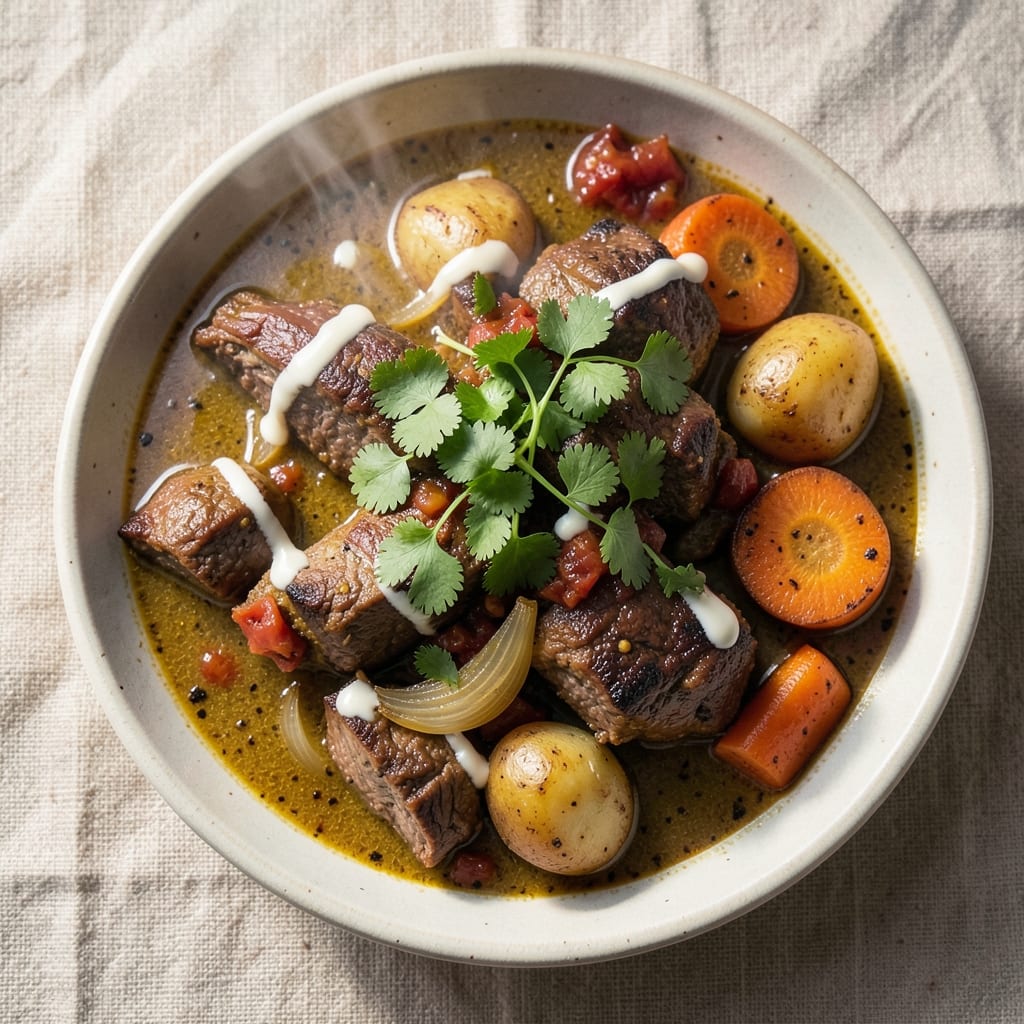
This beef and vegetable curry recipe delivers restaurant-quality spiced coconut depth with melt-in-your-mouth tender meat and vibrant vegetables. 🌟 The secret lies in marinating the beef overnight, which transforms tough cuts into fork-tender pieces, while the aromatic spice blend infuses every bite with warm, earthy flavors that build complexity as they simmer.
What sets this curry apart is the balance of textures—tender beef, crisp-tender potatoes, and sweet carrots—all coated in a rich, velvety coconut sauce that's neither too sweet nor too spicy. The slow cooking process allows flavors to meld perfectly, creating a dish that's hearty enough for a weeknight dinner but impressive enough for guests.
By the time you serve this curry, your kitchen will be filled with the intoxicating aroma of toasted spices and coconut, while the dish itself delivers layers of flavor: the subtle heat of chili, the sweetness of tomatoes, the creaminess of coconut milk, and the earthy depth of fresh herbs. Each spoonful is a perfect harmony of textures and tastes.
The best part? This recipe is designed for flexibility—swap in your favorite vegetables, adjust the spice level to your preference, and even make it ahead for even deeper flavors. Let's get cooking!
Ingredients for beef and vegetable curry
Pantry staples and fresh produce for a curry that tastes like restaurant magic.
| Ingredient | Amount | Notes |
|---|---|---|
| Chuck Roast 🥩 | 1 ½ lb | Boneless, cut into 1-inch cubes |
| Yellow Onion 🧅 | 1 whole | Medium, chopped |
| Garlic Cloves 🧄 | 6 cloves | Minced, fresh preferred |
| Russet Potatoes 🥔 | 2 lb | Peeled, cut into 1-inch chunks |
| Carrots 🥕 | 1 ½ lb | Peeled, cut into 1-inch pieces |
| Canned Crushed Tomatoes 🍅 | 14 ½ oz | San Marzano preferred |
| Coconut Milk 🥥 | 13 ½ oz | Full-fat canned, well-stirred |
| Ground Cumin 🌿 | 1 tbsp | Toasted for deeper flavor |
| Ground Coriander 🌿 | 1 tbsp | Freshly ground preferred |
| Turmeric Powder 🌶️ | 1 tsp | Bright yellow color |
| Garam Masala 🌶️ | 1 tbsp | Store-bought or homemade |
| Salt 🧂 | 1 ½ tsp | Kosher or sea salt |
| Black Pepper 🌶️ | ½ tsp | Freshly ground preferred |
| Fresh Cilantro 🌿 | ¼ cup | Chopped, stems removed |
| Olive Oil 🫒 | 2 tbsp | Extra-virgin for richness |
The chuck roast is your secret weapon—it's tough enough to handle marinating but turns fork-tender when slow-cooked. Costco or Walmart usually have it pre-cut, but if you're buying a whole roast, ask the butcher to cube it for you. Look for good marbling, which means more flavor. The potatoes and carrots? Organic if you can swing it, but regular works too—just scrub them well. For the tomatoes, San Marzano is the gold standard, but any good-quality canned crushed tomatoes will do. Coconut milk? Full-fat only—the creaminess is non-negotiable here.
No garam masala? Mix 1 tsp each of cinnamon, cardamom, cloves, and black pepper for a DIY version. Short on fresh cilantro? Dried cilantro at half the amount works in a pinch, though it won't be as bright. The spices need to be toasted for maximum flavor—heat a dry pan and toast the cumin, coriander, and turmeric for about 30 seconds until fragrant. As for the beef marinade, yogurt or coconut milk both work, but yogurt adds a nice tang. If you're using coconut milk, just add a splash of lemon juice for brightness.
This curry tastes even better the next day, so make a double batch if you're feeding a crowd. Store leftovers in the fridge for 4-5 days or freeze for 3 months. For reheating, add a splash of water or coconut milk to prevent drying out. The flavors deepen overnight, so don't skip the leftovers—trust me on this. And if you've got extra coconut milk, save it for smoothies or curries later; it keeps for up to 2 weeks unopened.
Why You'll Love This Recipe
- One-Pot Magic: I swear by this recipe when I’m too tired to wash dishes—just toss everything in one pot, and the chuck roast practically melts into tender perfection. The potatoes and carrots soak up all that rich, spiced sauce while you’re busy doing whatever else life throws at you.
- Deep, Warm Comfort: That slow-cooked chuck roast? It’s ridiculously tender, falling apart with just a fork, while the onions and garlic build layers of flavor that make every bite feel like a hug. Honestly, the kind of taste that sticks with you long after the last spoonful.
- Meal Prep MVP: Between us, this curry begs to be made in bulk—it reheats beautifully for lunches all week, and the flavors only get better as the spices meld. I double the batch every Sunday because my kids (and my wallet) thank me for it.
- Budget-Friendly Feast: A chuck roast stretches miles in this dish, and potatoes/carrots keep it hearty without breaking the bank. I’ll be real: it’s the kind of recipe that makes me feel like I’m feeding a crowd without sacrificing taste—or my grocery budget.
Step-by-step instructions for beef and vegetable curry
Here's how to build rich, aromatic curry with melt-in-your-mouth beef and vibrant vegetables.
🔥 Step 1: Sear the Chuck Roast for Deep Flavor
Heat the 2 tablespoons olive oil in a large Dutch oven over medium-high heat until shimmering. Working in batches, add the 1.5 lb chuck roast cut into 1-inch cubes, letting each piece develop a deep golden crust—about 3-4 minutes per side. This searing step creates the Maillard reaction that forms the flavor foundation.
Don't overcrowd the pan or the meat will steam instead of brown. I press down gently on the cubes during the first minute to ensure even contact with the hot oil. Once all pieces are seared to a rich brown color, transfer them to a plate and set aside. You'll want to keep them warm but not cooking further at this stage.
👨🍳 Step 2: Build the Spice Base in Layers
In the same Dutch oven (those browned bits are pure flavor), add the 1 whole chopped yellow onion and cook for 5-6 minutes until softened and golden. Add the 6 minced garlic cloves and cook for 30 seconds until fragrant—you'll smell that sweet garlic aroma filling your kitchen.
Now add the spices: 1 tablespoon ground cumin, 1 tablespoon ground coriander, 1 teaspoon turmeric powder, 1.5 teaspoons salt, and 0.5 teaspoon black pepper. Stir constantly for 1 minute until the spices bloom and fill the kitchen with their warm, earthy aroma. This is where the magic begins—those spices need to toast slightly to release their full flavor potential.
🍳 Step 3: Simmer the Vegetables and Tomatoes
Add the 2 lb peeled russet potatoes cut into 1-inch chunks and 1.5 lb peeled carrots cut into 1-inch pieces to the spice mixture. Pour in the 14.5 oz canned crushed tomatoes and stir to combine. Bring everything to a gentle simmer, then reduce heat to medium-low and let it cook uncovered for 15 minutes, stirring occasionally.
Here's where the vegetables start to soften and release their natural sweetness. You'll see the potatoes begin to turn translucent at the edges and the carrots lose their bright orange color slightly. This simmering step helps break down the vegetables' cell structure so they absorb the rich curry flavors later.
🥘 Step 4: Add Coconut Milk and Cook Until Tender
Pour in the 13.5 oz coconut milk and stir well to combine. Add the seared beef back to the pot and sprinkle with 1 tablespoon garam masala. Bring the mixture to a gentle simmer again, then reduce heat to low and cover partially. Let it cook for 1 hour to 1 hour 15 minutes, stirring occasionally, until the beef is fork-tender and the vegetables are fully cooked.
You'll know it's ready when the beef easily pulls apart with a fork and the sauce has thickened slightly. The potatoes should be soft enough to pierce with a fork but still hold their shape. If the sauce gets too thick before the beef is tender, add 2-3 tablespoons water to loosen it. This slow cooking ensures the beef becomes fork-tender while the vegetables absorb all those beautiful flavors.
🔪 Step 5: Finish and Garnish for Freshness
Remove the curry from heat and let it rest for 5 minutes. Stir in the 0.25 cup chopped fresh cilantro just before serving. The cilantro adds a bright, fresh contrast to the rich, spiced curry. Taste and adjust seasoning if needed—you might want to add a pinch more salt or a dash of black pepper to balance the flavors.
Serve the curry hot over steamed basmati rice or with warm naan bread. The beef should be so tender it practically melts in your mouth, while the vegetables maintain their vibrant colors and slight bite. Each spoonful delivers a perfect balance of spicy, sweet, and creamy flavors that make this curry truly special.
Pro Tips For Making Beef And Vegetable Curry
- Sear the Chuck First: Walk away from the stove after browning the beef—don’t rush the crust. A deep, dark sear locks in flavor, and chuck roast needs that caramelized armor to stay tender. I used to cut corners here, and the curry always tasted like it was missing something.
- Cut Potatoes Evenly: Russets break unevenly, so slice them into 1-inch chunks before adding them to the curry. Smaller pieces cook faster and stay firm, while larger ones turn to mush. (Yes, I’ve served curry with potato paste—don’t ask.)
- Don’t Overcrowd the Pan: Let the onions and garlic sizzle in the oil without piling everything on top. Crowding steams instead of caramelizing, and you’ll end up with a bland base. Work in batches if needed—this isn’t a race.
- Simmer Low and Slow: After adding the curry paste and liquid, drop the heat to a bare simmer. Chuck roast needs 2–2.5 hours to melt into tender shreds, not 45 minutes of frantic bubbling. Walk away—this isn’t the time to hover.
Dietary considerations for this beef and vegetable curry
Gluten-Free Adaptations
This curry is naturally gluten-free as long as you use certified gluten-free spices and coconut milk. I always check my garam masala and spice blends for hidden gluten—brands like Spicewalla or Burlap & Barrel offer reliable gluten-free options. For extra safety, toast your spices in a dry pan to eliminate any potential cross-contamination from shared processing facilities. 🌱
Dairy-Free Considerations
Since this recipe doesn't contain dairy, it's already perfect for those avoiding lactose. The coconut milk provides all the creaminess you need, and the spices deliver rich, savory depth. If you're sensitive to coconut, you could substitute with cashew cream (blend 1 cup soaked cashews with ½ cup water) for a neutral alternative. Just remember cashew cream has a different texture—it's thinner than coconut milk.
Spice Level Control
Adjusting heat is easy! For a milder curry, reduce the garam masala to ½ tablespoon and omit any added chili powder. If you love heat, add 1-2 teaspoons of cayenne pepper or ½ teaspoon of red pepper flakes along with the other spices. I like to keep a small bowl of plain yogurt on the side for guests who prefer less spice—it cools the heat beautifully.
Vegetarian Swap
To make this curry vegetarian, replace the beef with 1.5 lb firm tofu or chickpeas. Press and pan-fry the tofu until golden, or use 2 (15 oz) cans chickpeas, drained and rinsed. Both options absorb the curry flavors wonderfully. For extra protein, add ½ cup cooked lentils to the pot during the final 30 minutes of cooking. The lentils stay firm and add hearty texture.
Protein Alternatives
If you're avoiding beef but want to keep the rich, meaty texture, try lamb shoulder (cut into cubes and marinated similarly) or chicken thighs (bone-in for extra flavor). For a seafood option, swap in firm white fish like cod or halibut—cook these for just 10-12 minutes in the curry so they don't overcook. The fish absorbs the coconut and spice flavors beautifully while staying tender.
Nut-Free Version
This recipe is naturally nut-free, but if you're serving guests with severe allergies, double-check your garam masala for nut contamination warnings. Some brands process spices in facilities that also handle nuts. For extra caution, make your own garam masala blend using cinnamon, cardamom, cloves, and black pepper—all nut-free spices. The flavor will be slightly different but still delicious.
Nutrition facts
Frequently asked questions
Can I use ground beef instead of chuck roast for this curry?
While you can use ground beef, chuck roast is ideal for its rich flavor and ability to become fork-tender when slow-cooked. If you must use ground beef, brown it well first and reduce the cooking time to 30-40 minutes after adding the coconut milk—ground beef cooks much faster than cubed roast. For best results, use 80/20 fat ratio ground beef to maintain moisture.
How can I make this curry less spicy?
Reduce the garam masala to ½ tablespoon and skip any added chili powder or cayenne. For extra mildness, stir in 1-2 tablespoons of plain yogurt at the end—it cools the heat beautifully. If serving spice-sensitive guests, keep a small bowl of yogurt on the side for them to add to their portions.
What vegetables can I substitute if I don't have potatoes or carrots?
This curry works wonderfully with almost any starchy or hearty vegetables! Try cauliflower florets (add 10 minutes before serving), sweet potatoes (cut into cubes), or bell peppers (add with the tomatoes). For a different texture, swap in green beans or zucchini—just add them during the final 10 minutes of cooking to prevent mushiness.
Can I make this curry in an Instant Pot or slow cooker?
For the Instant Pot, sear the beef first, then add all ingredients except coconut milk. Pressure cook for 20 minutes, then add the coconut milk and cook on high pressure for 5 more minutes. For a slow cooker, combine everything (including coconut milk) and cook on low for 6-7 hours or high for 3-4 hours. The slow cooker version will be even more flavorful!
Why did my curry turn out too watery?
This usually happens when the coconut milk separates or the sauce wasn't reduced enough. To fix it, simmer uncovered for 5-10 minutes to thicken, or stir in 1 tablespoon of cornstarch mixed with 2 tablespoons water. For prevention, use full-fat coconut milk (the cream separates less) and skim off excess oil if needed before adding the milk.