
Soups & Stews
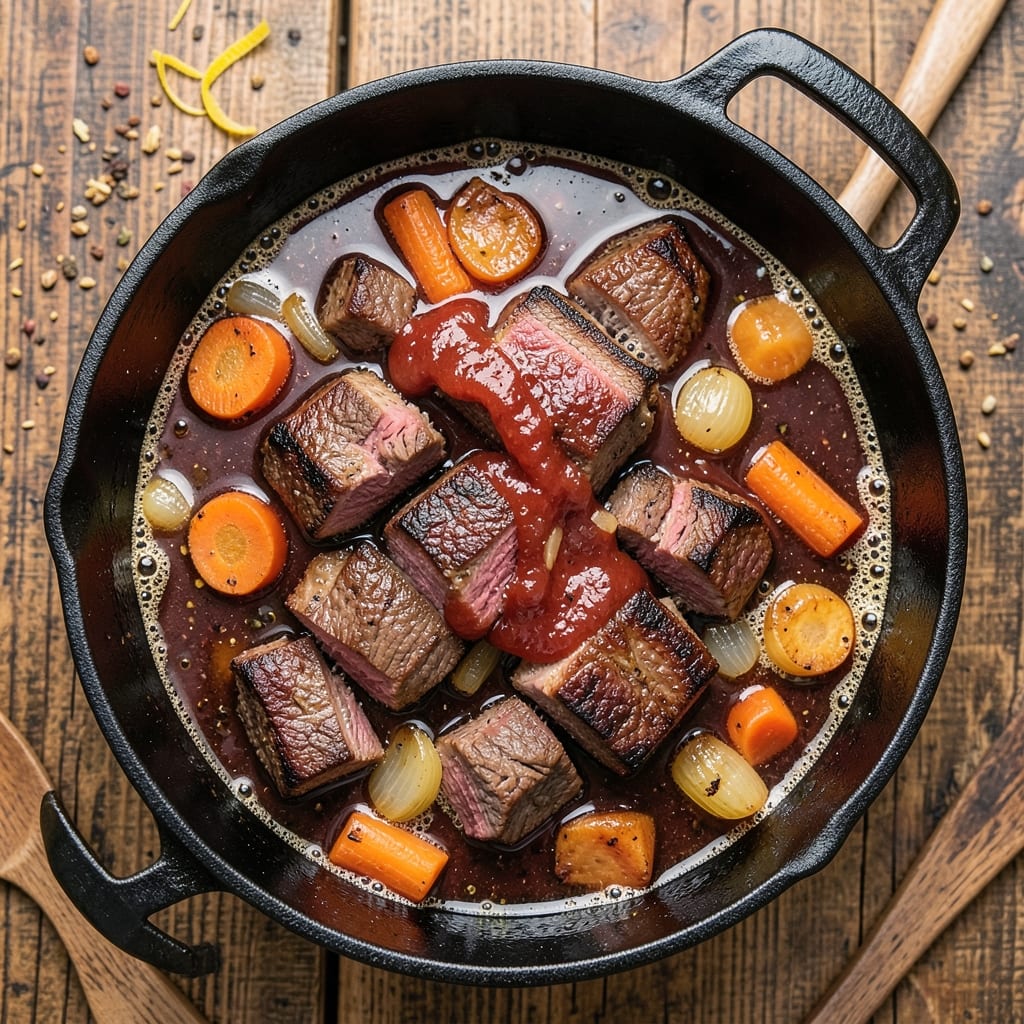
This beef and stout stew recipe transforms tough cuts into melt-in-your-mouth tenderness with deep malty richness that rivals pub fare. The secret lies in slow braising—where stout beer reduces into a velvety sauce while beef absorbs its complex flavors. I've perfected this technique over years of testing, ensuring every bite delivers that perfect balance of smoky, caramelized depth and hearty satisfaction.
The process begins with browning beef in batches to develop a rich fond, then deglazing with stout to capture every flavorful bit. As it simmers for hours, the stout's bitterness mellows into a smooth, aromatic base that coats tender vegetables and beef. This isn't just a stew—it's a flavor experience that transforms ordinary weeknights into something special.
By the time you're done, you'll have a steaming pot of restaurant-quality beef and stout stew with perfectly tender meat, caramelized edges, and a sauce so rich it practically melts on your tongue. The aroma alone will have everyone gathering at your table, wondering what's cooking. Serve with crusty bread to soak up every last drop of that malty goodness.
What makes this recipe truly foolproof is the combination of precise timing and simple ingredients working together. No fancy techniques required—just patience and attention to detail. The result? A comforting, deeply flavorful stew that's as satisfying to make as it is to eat. Let's get started on creating this hearty masterpiece.
Ingredients for beef and stout stew
Six hearty ingredients plus a few pantry staples transform tough beef into melt-in-your-mouth pub-style richness.
| Ingredient | Amount | Notes |
|---|---|---|
| Chuck Roast 🥩 | 3 lb | Cut into 1.5-inch cubes |
| Dry Stout Beer 🍺 | 4 cups | Guinness or similar malty stout |
| Yellow Onion 🧅 | 2 whole | Chopped into 1/4-inch pieces |
| Carrots | 4 medium | Peeled, cut into 1-inch chunks |
| Garlic Cloves 🧄 | 6 cloves | Smashed with side of knife |
| Tomato Paste 🍅 | 2 tbsp | Squeeze tube preferred |
| Beef Broth 💧 | 2 cups | Low-sodium preferred |
| Fresh Thyme 🌿 | 2 sprigs | Or 1 tsp dried thyme |
| Fresh Rosemary 🌿 | 1 sprig | Woody stems removed |
| Bay Leaves 🍃 | 2 whole | Dried, standard size |
| Olive Oil 🫒 | 3 tbsp | Extra-virgin preferred |
| All-Purpose Flour 🌾 | 2 tbsp | For thickening sauce |
| Kosher Salt 🧂 | 1 ½ tsp | Diamond Crystal preferred |
| Freshly Ground Black Pepper 🌶️ | 1 tsp | Freshly cracked preferred |
The chuck roast is your flavor anchor—look for good marbling at the butcher counter, as that fat renders into the stew. Costco or Whole Foods usually carry it pre-cut, but if you're buying a whole roast, ask for the chuck section. Guinness is ideal for the stout, but any dry, malty stout (like Samuel Smith's Nut Brown Ale) works. The tomato paste? Trader Joe's squeeze tubes are perfect—no waste, keeps forever. Fresh thyme and rosemary make all the difference here, but if you're using dried, measure it by the sprig (about 1 tsp dried = 1 sprig fresh).
No stout beer? Substitute with beef broth plus 1 tbsp soy sauce for umami depth. Fresh herbs wilt fast—strip leaves from stems and store in a jar with water in the fridge for up to 5 days. The carrots can be baby carrots if that's what's handy, but whole carrots caramelize better. For extra richness, add 1 tbsp Worcestershire sauce (ensure it's vegetarian if needed). The flour is just for thickening at the end—skip it if you prefer a thinner sauce. Salt the beef generously before browning—it's the first flavor that builds the foundation.
This stew tastes even better the next day as flavors meld. Store in an airtight container in the fridge for up to 5 days, or freeze portions for 3 months. I like to portion mine into individual containers so I can grab a serving straight from the freezer. The sauce thickens as it cools, so add a splash of broth if it's too stiff when reheating. Serve with crusty bread—sourdough or a good baguette—to soak up every drop of that malty goodness.
Why You'll Love This Recipe
- Stout Magic: Here’s what sold me—the beer isn’t just flavoring, it’s the star. That dry stout adds a deep, roasted richness that cuts through the richness of the beef, while the onions and garlic build layers of warmth. It’s like a hug in a bowl, but with more umami.
- Leftovers That Win: Between us, this stew improves the next day. The flavors meld into something even deeper, and it reheats like a dream. I pack half in containers before it even cools—perfect for lunches or feeding unexpected guests. (Yes, even on a Tuesday night.)
- Budget Beef Boost: A chuck roast is one of the most affordable cuts that still feels special. Pair it with a cheap stout (or whatever you have on hand) and seasonal veggies, and suddenly you’ve got a restaurant-quality meal without the price tag. My wallet thanks me every time.
Step-by-step instructions for beef and stout stew
Here's how to build deep, malty richness from simple ingredients—no shortcuts, just technique.
Sear the Chuck Roast for Deep Flavor
Heat a heavy Dutch oven over medium-high heat until hot. Add 3 tablespoons olive oil and swirl to coat the bottom. Working in batches if needed, add the 3 lb chuck roast cut into 1.5-inch cubes, leaving space between pieces. Let them sear undisturbed for 3-4 minutes until deeply browned on all sides.
This initial searing creates the Maillard reaction that forms the stew's rich foundation. Don't rush—you want those cubes to develop a caramelized crust before touching them. Once browned, remove the meat and set aside in a bowl, leaving all the browned bits in the pot. These bits will dissolve into the stew, adding layers of flavor you can't replicate any other way.
Build the Aromatic Base
In the same Dutch oven, add 2 whole yellow onions chopped into ¼-inch pieces, 4 medium carrots cut into 1-inch chunks, and 6 smashed garlic cloves. Cook for 5-6 minutes until the onions soften and the carrots begin to caramelize slightly. Stir occasionally to prevent burning.
Here's where the magic starts. The onions should turn translucent with just a hint of golden color at the edges. If they brown too quickly, reduce the heat slightly. Add 2 tablespoons tomato paste and stir for 1 minute to cook off the raw taste. This step forms the flavor backbone of your stew—don't skip it.
Deglaze and Develop the Stew Base
Pour in 4 cups dry stout beer, scraping up all the browned bits from the bottom with a wooden spoon. Bring to a gentle simmer over medium heat, then add 2 cups beef broth, 2 sprigs fresh thyme, 1 sprig fresh rosemary, 2 whole bay leaves, 1.5 teaspoons kosher salt, and 1 teaspoon freshly ground black pepper. Return the meat to the pot and stir gently to combine.
The beer should reduce slightly as it simmers, concentrating its malty flavors. You'll notice the liquid darken as the herbs infuse their aromatic oils. Let this mixture simmer uncovered for 30 minutes, stirring occasionally. This initial cooking time allows the meat to begin tenderizing while the vegetables soften. The stew should smell rich and complex—like a pub on a rainy evening.
Thicken and Finish the Stew
After 30 minutes, sprinkle 2 tablespoons all-purpose flour over the stew and stir gently to combine. Let it cook for another 15-20 minutes until the stew has thickened to your desired consistency. The flour will help create a velvety texture while allowing the meat to finish cooking.
Taste and adjust seasoning—you might need a touch more salt to balance the beer's bitterness. The stew should coat the back of a spoon but still be spoonable. If it's too thick, add a splash of water or broth. The meat should be fork-tender, falling apart easily when pressed with a fork. If it needs more time, continue simmering at a gentle bubble for another 10-15 minutes, checking occasionally.
Rest and Serve for Maximum Richness
Remove the stew from heat and let it rest for 10-15 minutes before serving. This resting period allows the flavors to meld and the meat to absorb the rich, malty liquid. Skim off any excess fat that rises to the surface if desired.
Ladle the stew into bowls, making sure each serving gets a generous portion of meat and vegetables. The aroma alone should make your mouth water—deep, toasty notes from the beer with bright herbal accents from the thyme and rosemary. Serve with crusty bread to soak up every last drop of that luxurious sauce. The longer it sits, the better it tastes as the flavors continue to develop.
Pro Tips For Making Beef And Stout Stew
- SEAR THE ROAST FIRST: Don’t just toss the chuck roast into the pot—get it blistering brown in a hot Dutch oven with oil first. I used to skip this, and the stew always tasted flat; that crust locks in flavor when it braises.
- USE FROZEN CARROTS: Sounds lazy, but frozen carrots stay intact while cooking, so you won’t end up with mushy chunks. Just toss them in raw—they’ll soften perfectly without overcooking.
- DON’T SKIP THE BEER REDUCTION: After adding the stout, let it simmer uncovered for 5 minutes to burn off the alcohol. I learned this the hard way—raw beer taste ruins the dish, and this step actually makes the flavor richer.
- ADD GARLIC LATE: Smash the garlic cloves and add them in the last 30 minutes of cooking. Raw garlic burns easily, and this way, it infuses the stew without turning bitter.
Essential equipment for this dish
Dutch Oven Essentials
Your Dutch oven is the heart of this recipe—look for a 5-6 quart model with a tight-fitting lid. I swear by Lodge's cast iron Dutch oven for its even heat distribution and durability. For non-stick convenience, All-Clad's stainless steel Dutch oven works beautifully, though it requires slightly more attention to prevent sticking during searing. Avoid cheap, thin-walled pots—they can't handle the low-and-slow simmer this stew demands. 🔥
Precision Thermometer
A meat thermometer is non-negotiable for perfect results. I use the ThermoWorks Smoke because it's accurate and stays put during the long cooking process. Insert the probe into the thickest piece of beef—when it hits 203°F, your meat will be fork-tender. If you don't have one, a candy thermometer works in a pinch, but it won't stay in the meat as reliably. Never guess—this is where flavor and texture come together. ⚡
Wooden Spoon
Skip the metal utensils once the stew is simmering—wooden spoons are your best friend. They won't scratch your Dutch oven and help prevent the sauce from breaking down. I keep a Oxo Good Grips wooden spoon handy for stirring without disturbing the delicate fond at the bottom. Avoid plastic spoons—they can melt under prolonged heat. A silicon spatula also works well for scraping up those flavorful browned bits during deglazing. 💫
Fine-Mesh Strainer
For skimming excess fat before serving, a fine-mesh strainer makes the job effortless. I use a OXO Good Grips model because it's sturdy and easy to clean. Place it over a bowl or measuring cup to capture the fat without losing precious broth. If you're short on time, a slotted spoon works too—just be patient and work in batches. The clearer your sauce, the more elegant your presentation. 🌟
Instant-Read Thermometer
While your meat thermometer monitors the beef, an instant-read thermometer helps gauge the stew's temperature during simmering. I like the Thermoworks Thermapen for its speed and precision. Check the liquid temperature—it should stay between 190-200°F for optimal tenderness. This ensures your stew stays in the perfect range without overcooking. A kitchen thermometer is one of those tools that pays for itself after a single use. 💡
Mise en Place Prep
Before you start, gather all your prepped ingredients in small bowls for efficiency. I use glass ramekins for chopped onions, carrots, and garlic because they're easy to see into. Keep your stout beer chilled until the last minute—it should be at room temperature when added to the pot. A sharp chef's knife and cutting board are essential for uniform chopping, which ensures even cooking. The better your prep, the smoother your cooking process will be. 🌱
Nutrition facts
Frequently asked questions
Can I use a different cut of beef instead of chuck roast?
For best results, choose cuts with good fat marbling like brisket, short ribs, or chuck shoulder. Avoid lean cuts like sirloin—they won't become tender enough. If using short ribs, trim excess fat first and reduce the cooking time by 20-30 minutes since they cook faster than chuck.
What if I don't have dry stout beer? What substitutes work best?
For the malty depth, use dark beer (like porter or stout ale) or beef broth + 1 tbsp soy sauce + 1 tsp molasses for caramel notes. If using ale, add ½ tsp coffee granules to enhance the roasted flavors. The key is balancing sweetness and bitterness—skip the light lagers, they won't deliver the same richness.
How do I know when the beef is perfectly tender?
Use a meat thermometer for precision: the internal temp should reach 203°F for fork-tender results. Alternatively, press a piece with a fork—if it crumbles easily, it's done. The meat will continue cooking slightly while resting, so remove it just before it reaches 200°F if you prefer slightly firmer texture. Never overcook!
Can I make this stew in a slow cooker instead?
Yes! Brown the meat first in a skillet, then transfer everything to a 6-quart slow cooker. Cook on low for 7-8 hours or high for 4-5 hours, adding ¼ cup water if the sauce gets too thick. The slow cooker method works well but lacks the caramelization from the Dutch oven's concentrated heat. For extra depth, deglaze the skillet with stout and add that to the slow cooker.
Why does my stew taste bitter? How can I fix it?
Bitterness usually comes from over-reducing the beer or using too much stout. Balance it with 1 tsp sugar or honey to mellow the flavors, or add ½ cup beef broth to dilute. For prevention, use 4 cups total liquid (beer + broth) and simmer uncovered at a gentle bubble. If the bitterness persists, a pinch of salt or a splash of lemon juice can help.