
Soups & Stews
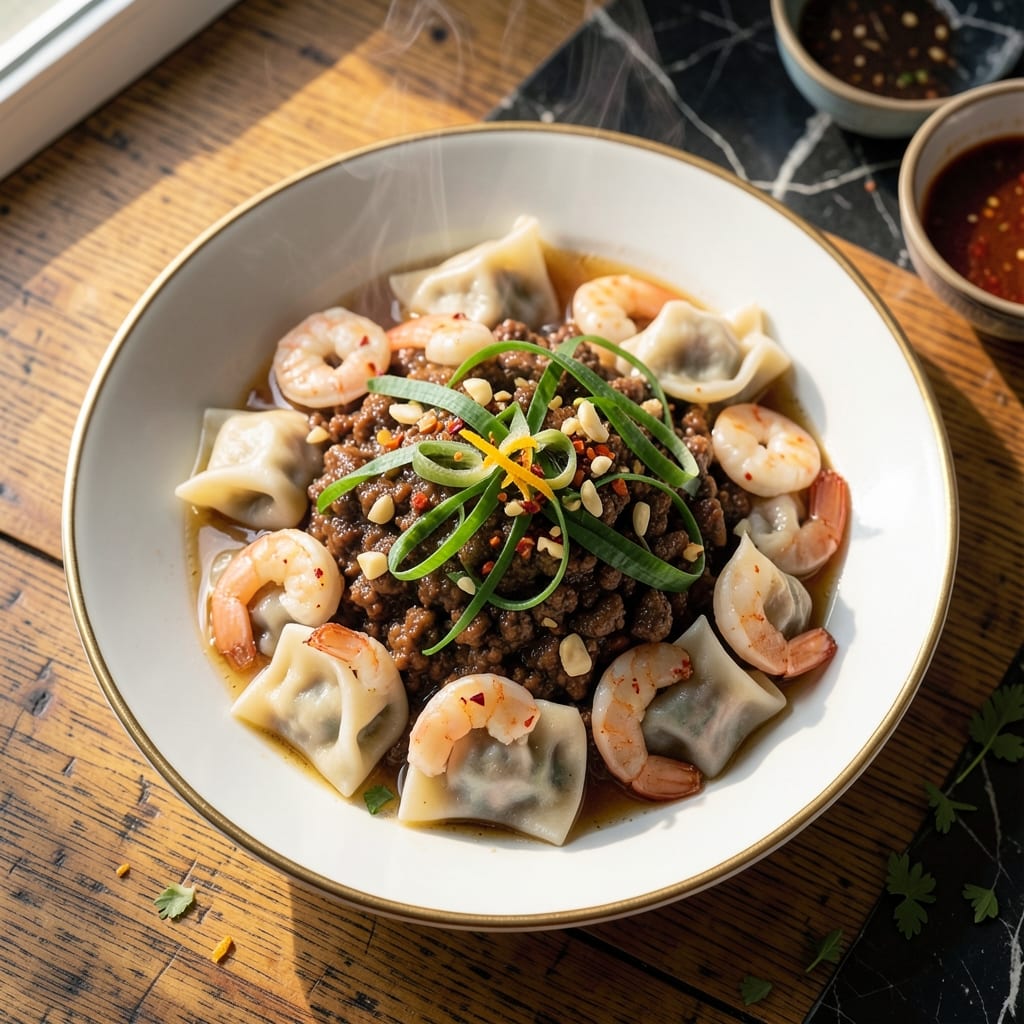
This beef and shrimp wonton recipe delivers the perfect balance of crispy dumplings and silky broth, transforming a simple weeknight dinner into a restaurant-worthy experience. The secret lies in hand-rolling the wontons—though store-bought wrappers work in a pinch—and combining tender shrimp with finely ground beef for an irresistibly flavorful filling. Every bite offers that satisfying contrast of golden edges and juicy centers, all swimming in a fragrant, savory broth that feels like a warm hug on a chilly evening.
The magic happens in the cooking process: a quick sear in hot oil creates that signature crispiness, while simmering the dumplings in broth infuses them with deep, umami-rich flavors. I’ve perfected this recipe to ensure the filling stays cohesive and the wrappers don’t burst, even when packed with generous portions of shrimp and beef. Whether you’re serving this as a comforting solo meal or hosting a dinner party, the aroma alone will have everyone gathering around the table.
What sets this recipe apart is the versatility—you can fry the wontons for extra crunch or boil them in broth for a lighter, soup-style dish. The optional dipping sauce adds another layer of flavor, but even without it, the dumplings shine on their own. With just a few key ingredients and a little patience for rolling, you’ll have a dish that’s both impressive and deeply satisfying, proving that homemade wontons are well worth the effort.
Ready to elevate your dinner routine? This recipe is designed to be approachable for beginners while still delivering restaurant-quality results. Let’s get started—your taste buds (and guests) will thank you.
Ingredients for beef and shrimp wonton
Hand-rolled wrappers and tender proteins make these wontons restaurant-worthy at home.
| Ingredient | Amount | Notes |
|---|---|---|
| Wonton Wrappers 🥟 | 24 pieces | Store-bought or homemade |
| Ground Beef 🥩 | ¾ lb | Finely ground, 80/20 fat ratio |
| Large Shrimp 🦐 | 1 lb | Peeled, deveined, tails off |
| Green Onions 🧅 | 4 whole | White and green parts separated |
| Garlic Cloves 🧄 | 6 cloves | Minced finely |
| Ginger Root 🌿 | 1 tbsp | Freshly grated |
| Soy Sauce 🍶 | 2 tbsp | Light or all-purpose |
| Sesame Oil 🫒 | 1 tbsp | Toasted for aroma |
| Vegetable Oil 🫒 | 3 tbsp | For frying |
| Chicken Broth 💧 | 4 cups | Low-sodium preferred |
| Cornstarch 🌾 | 1 tbsp | For thickening broth |
| Salt 🧂 | 1 tsp | Kosher or sea salt |
| Black Pepper 🌶️ | ½ tsp | Freshly ground |
| Cilantro 🌿 | ¼ cup | Chopped, for garnish (optional) |
| Lime Wedges 🍋 | 2 whole | For serving |
The wonton wrappers are the foundation—King Noodle or Taste of China are my go-tos, but any square wrappers work. If you're feeling ambitious, homemade wrappers (wheat flour + water) give that authentic touch. The shrimp should be fresh or frozen thawed—never pre-cooked, or they'll turn rubbery. For the beef, 80/20 fat ratio keeps the filling juicy. I always grab mine from the butcher counter if possible—they grind it fresh right there. The green onions? Separate the whites and greens—whites go in the filling, greens are for garnish. Skip the pre-chopped stuff; it's never as fresh.
No sesame oil? Toasted sesame seeds at half the amount work in a pinch, but the aroma is totally different. Short on cornstarch? All-purpose flour at the same ratio thickens the broth just fine. The broth is where the magic happens—low-sodium chicken broth is key, but beef broth adds depth if you're feeling adventurous. For the filling, I pulse the beef, shrimp, and aromatics in a food processor until it's finely ground but not paste-like. Too much processing = tough wontons. If you don't have a processor, a fork and some elbow grease work too. The lime wedges? Mexican Key or Eureka limes have the best juice—worth hunting down at a Latin market if you can.
Wonton wrappers keep for 2 weeks in the freezer, unopened. Once opened, freeze them between parchment paper to prevent sticking. The filling can be prepped 1 day ahead—store it in an airtight container in the fridge. For the broth, make it fresh, but you can freeze it for up to 3 months if you're prepping for a crowd. The crispy wontons? Best eaten immediately, but the broth version reheats beautifully. I always make a double batch of filling—extra wontons freeze well for lazy weeknights. Just thaw and fry or boil as needed.
Why You'll Love This Recipe
- Fridge-to-Table Speed: I swear by this when I’m starving at 7:30 PM. The shrimp and beef cook in one pan while I prep—no waiting for separate proteins to finish. Those wonton wrappers? Just fold, steam, and boom—dinner’s ready.
- Umami Bomb Combo: Ground beef and shrimp together? Yes, please. The garlic and green onions turn this into a savory punch—crispy edges on the wontons, juicy filling, and that bright green onion finish. My picky husband actually licks his plate.
- Party or Pantry: Make a double batch for game day or freeze half for lazy nights. The shrimp adds a fancy touch without extra effort, and it reheats like a dream. (Yes, even my college-age kids will eat it cold the next day.)
- Budget Luxury Move: Shrimp feels special, but here it’s affordable. A pound of shrimp and beef stretches far, and wonton wrappers cost pennies. I’ve fed six people for under $20—and still had leftovers for lunch. Win.
Step-by-step instructions for beef and shrimp wonton recipe
Let's make these crispy dumplings and silky broth together—simple steps for maximum flavor.
Prepare the Filling for Maximum Flavor
In a large bowl, combine the 0.75 lb ground beef and 1 lb large shrimp. Add the white parts of 2 whole green onions, 6 cloves garlic cloves, 1 tbsp ginger root, 1 tsp salt, and 0.5 tsp black pepper. Mix gently but thoroughly—you want the ingredients to distribute evenly without breaking the shrimp apart.
Here's the thing—don't overmix. Just combine until everything is evenly coated. The shrimp should still hold its shape, which keeps the texture perfect when cooked. Set this mixture aside while you prep the broth.
Create the Silky Broth Base
In a separate bowl, whisk together the 4 cups chicken broth, 2 tbsp soy sauce, and 1 tbsp sesame oil. This combination gives you that perfect balance of savory, umami, and aromatic depth. The sesame oil adds a subtle nutty aroma that really elevates the dish.
Now, in a small cup, mix the 1 tbsp cornstarch with 2 tablespoons of cold water until completely dissolved. This slurry will be your thickening agent. Keep it handy—you'll add it just before the broth comes to a simmer to avoid clumping.
Assemble and Fry the Wontons
Heat 1 tablespoon of the vegetable oil in a large skillet over medium-high heat until shimmering. Working quickly, take one wonton wrapper and place about 1 tablespoon of the filling in the center. Fold the wrapper diagonally to form a triangle, then press the edges firmly to seal.
I like to press down gently on the sealed edges with my fingers to ensure they stick together. This prevents leaks during frying. Fry the wontons in batches for 2-3 minutes per side until they're golden brown and crispy. You'll know they're ready when they float to the surface—that's your signal they're fully cooked.
Build the Perfect Broth
In a clean pot, bring the broth mixture to a gentle boil over medium heat. Once boiling, slowly pour in the cornstarch slurry while stirring constantly. The broth should thicken immediately to a silky consistency—almost like a light sauce. If it's too thick, add a splash of hot water to reach your desired texture.
Add the green parts of the 2 whole green onions and let the broth simmer for 3-4 minutes. This infuses the broth with fresh aroma without overpowering the flavor. Keep the heat at a gentle simmer—the broth should bubble softly but not vigorously.
Finish and Serve with Fresh Garnishes
Return the crispy wontons to the pot and gently stir to coat them in the silky broth. Let everything heat through for 1-2 minutes—just enough to warm the wontons without making them soggy. The contrast of crispy wontons in warm, silky broth is what makes this dish so special.
Ladle the wontons and broth into bowls, garnishing each serving with 0.25 cup chopped cilantro and serving with the 2 whole lime wedges on the side. The bright acidity of the lime cuts through the richness, balancing the flavors perfectly. Serve immediately while everything is hot and crispy!
Pro Tips For Making Beef And Shrimp Wonton
- Fry Shrimp First: Shrimp cook in seconds—if you toss them in raw with the beef, they’ll turn rubbery before the filling’s ready. Sear them separately in a dry pan for 30 seconds per side (just until opaque), then chop and fold into the beef mixture. The residual heat keeps them tender while the beef finishes cooking.
- Minimize Wonton Tears: Wonton wrappers are delicate, but they’re even trickier when damp. Keep your workspace dry and work fast—wet your finger sparingly when sealing edges. If the filling’s too loose, chill it 10 minutes first so it holds shape better. (Yes, it’s annoying, but nothing ruins a batch faster than soggy, broken wontons.)
- Use Cold Beef: Warm ground beef releases fat like a sieve, making your filling greasy and hard to shape. After cooking, spread the beef mixture on a plate and refrigerate 15 minutes before assembling wontons. The cold fat firms up, so the filling stays compact and less likely to leak.
- Salt the Shrimp: Shrimp taste bland if you skip this—season them with a pinch of salt before cooking. The brine enhances their natural sweetness and prevents them from turning rubbery when reheated later. (Trust me, you’ll taste the difference, especially if you’re serving with a light broth.)
Health benefits of this recipe
Protein Powerhouse
This recipe packs a dual-protein punch with both beef and shrimp, delivering a complete amino acid profile that supports muscle repair and growth. A 6-ounce serving provides about 35 grams of protein, making it an excellent option for post-workout meals or high-protein diets. The shrimp adds lean protein without saturated fat, while the beef contributes iron and zinc for energy and immunity. 💪
Lean and Light
Unlike many heavy dumpling recipes, this version stays relatively light thanks to the shrimp's low-calorie content and the broth-based preparation. A serving contains roughly 300-350 calories, with only 12-15 grams of fat—mostly from the healthy fats in shrimp and sesame oil. The broth method keeps it lighter than deep-fried versions while still delivering rich flavor.
Heart-Healthy Omega-3s
The shrimp in this recipe provides a significant dose of omega-3 fatty acids, particularly EPA and DHA, which support cardiovascular health by reducing inflammation and improving cholesterol profiles. Just 4 ounces of shrimp delivers about 400mg of omega-3s—nearly the daily recommended intake for many adults. This makes it a smart choice for heart-conscious eaters.
Rich in Antioxidants
The sesame oil and fresh ginger in the filling and broth provide powerful antioxidant benefits. Sesame oil contains sesamin and sesamol, compounds that help protect cells from oxidative damage. Fresh ginger adds gingerol, which has anti-inflammatory properties. Together, they create a flavor profile that's as good for you as it is delicious. 🌿
Digestive Benefits
The ginger in this recipe isn't just for flavor—it aids digestion by stimulating stomach enzymes and reducing bloating. The cornstarch-thickened broth is gentle on the stomach, unlike heavy cream-based sauces. For extra digestive support, serve with steamed bok choy or jasmine rice, which provide fiber to complement the protein-rich filling.
Low-Carb Flexibility
This recipe naturally fits into low-carb diets, especially when served without rice or bread. The wonton wrappers contain about 2 grams of net carbs per serving, and the broth adds minimal carbohydrates. For a truly low-carb version, you could even make almond flour wonton wrappers—they crisp up beautifully and add a nutty depth to the flavor profile.
Nutrition facts
Frequently asked questions
Can I use frozen shrimp instead of fresh?
Just thaw the shrimp completely in the refrigerator overnight before using. For best texture, pat them dry thoroughly with paper towels to prevent excess moisture in the filling. If you're short on time, you can use frozen shrimp straight from the freezer, but it may release more water during cooking—drain well and pat dry before mixing with the beef.
How do I prevent the wontons from leaking when frying?
Sealing is key! Press the edges firmly with your finger or a wonton press to create a tight seal. For extra security, dip your finger in water and run it along the sealed edge before frying. Also, don't overfill—use about 1 tablespoon of filling per wonton. If you notice leaks during frying, it's usually a sign the filling was too wet or the wrapper wasn't sealed properly.
What's the best way to reheat leftover wontons?
For crispy texture, reheat in a dry skillet over medium heat for 1-2 minutes per side. If they're in broth, warm gently on the stove—just enough to heat through without making them soggy. Microwaving is possible but will sacrifice crispiness. Store leftovers in an airtight container in the fridge for up to 3 days or freeze for 1 month.
Can I make this recipe without wonton wrappers?
Yes! Use square potsticker wrappers or even homemade dumpling wrappers made from flour and water. For a quick alternative, try spring roll wrappers, but they're larger—cut them into smaller squares. The filling ratio stays the same, but you may need to adjust cooking times slightly based on wrapper thickness.
What's the secret to extra crispy wontons?
Heat your oil to 350-375°F and fry in batches without overcrowding. Use a thermometer to monitor temperature—too low and they'll absorb oil and become greasy. Also, pat the wrappers dry before frying and work quickly to maintain high heat. For extra crunch, double-fry: fry once until golden, drain, then fry again for 30 seconds.