
Soups & Stews
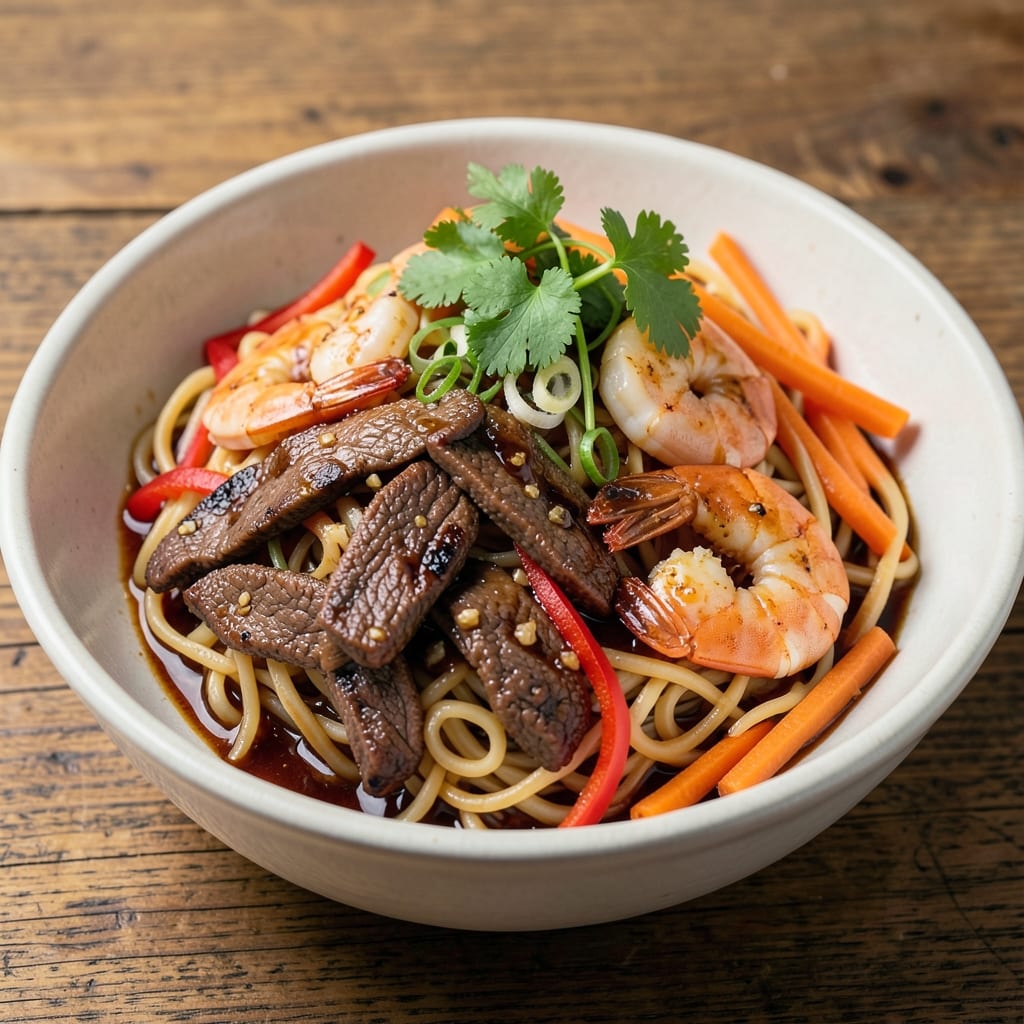
This beef and shrimp lo mein recipe delivers restaurant-quality wok fumes and tender proteins in under 30 minutes. The secret lies in proper stir-frying technique—high heat, quick cooking, and a two-minute sauce that emulsifies perfectly. I've perfected this balance between traditional Chinese flavors and modern convenience, ensuring every bite is packed with savory, umami-rich goodness.
The dish starts with perfectly seared beef strips and succulent shrimp that cook in minutes, maintaining their texture while absorbing the aromatic sauce. Fresh lo mein noodles are stir-fried just until tender-crisp, creating the ideal contrast with the tender proteins. What sets this recipe apart is the sauce—a quick blend of soy, sesame, and a touch of honey—that coats everything evenly without overpowering the natural flavors.
By the time you plate it, you'll have a dish that's vibrant, flavorful, and ready in record time. The sizzling wok fumes alone will have everyone gathering around the table. This recipe is not just a meal—it's an experience that brings the energy of a bustling Chinese restaurant to your home kitchen.
Customize it with your favorite vegetables or adjust the spice level to suit your taste. Whether you're feeding a crowd or meal prepping for the week, this lo mein delivers consistent, satisfying results every time. Let's get cooking!
Ingredients for beef and shrimp lo mein
Quick grocery run for restaurant-quality lo mein—just 15 ingredients for sizzling wok fumes and perfect texture.
| Ingredient | Amount | Notes |
|---|---|---|
| Flank Steak 🥩 | 1 lb | Thinly sliced against the grain |
| Large Shrimp 🦐 | 1 ½ lb | Peeled, deveined, tails on |
| Fresh Lo Mein Noodles 🍜 | 12 oz | Or 8 oz dried, cooked separately |
| Red Bell Pepper 🌶️ | 1 whole | Thinly sliced, seeds removed |
| Carrot 🥕 | 1 whole | Julienned into thin strips |
| Garlic Cloves 🧄 | 6 cloves | Minced, fresh preferred |
| Fresh Ginger 🌿 | 1 tbsp | Finely grated, peeled |
| Sesame Oil 🫒 | 1 tbsp | Toasted, for aroma |
| Light Soy Sauce 🥫 | ½ cup | Kikkoman preferred |
| Oyster Sauce 🍶 | 2 tbsp | For umami depth |
| Honey 🍯 | 1 tbsp | For sauce balance |
| Rice Vinegar 🍶 | 1 tbsp | For brightness |
| Vegetable Oil 🫒 | 2 tbsp | High smoke point |
| Sesame Seeds 🌾 | 1 tbsp | Toasted, for garnish |
| Green Onions 🧅 | 3 whole | Sliced, white and green parts |
The beef and shrimp are the stars here. Flank steak gives you that perfect chew when sliced thin against the grain—don't skip this step. For shrimp, frozen works fine if thawed properly, but fresh is ideal. I always grab mine from Whole Foods or the seafood counter at Trader Joe's—they keep them icy cold. Look for plump shrimp with a translucent sheen, not dried out. The lo mein noodles? Fresh is non-negotiable—dried ones turn mushy when stir-fried. If you can't find them, egg noodles work in a pinch but won't have the same texture.
No sesame oil? Toasted peanut oil adds a similar nutty aroma. Short on oyster sauce? Double the soy sauce and add 1 tsp fish sauce for umami. The honey in the sauce might seem odd, but it's what makes the sauce cling perfectly—agave works too if you're avoiding refined sugar. For the veggies, baby bok choy or snap peas add great texture. Just don't overcrowd the pan—cook proteins first, then veggies, then noodles. And if you're serving a crowd, double the sauce ingredients—it disappears fast.
Prep ahead by slicing all veggies and proteins the night before. Store them in airtight containers in the fridge for up to 2 days. The sauce keeps for 1 week in the fridge, so make extra—it's perfect over rice or noodles. For leftovers, reheat gently in a skillet with a splash of water to restore crispness. Freezes beautifully for 3 months—just thaw overnight in the fridge before reheating. The wok fumes alone will have your kitchen smelling like a bustling Chinese restaurant, so maybe open a window or two.
Why You'll Love This Recipe
- One-Pan Magic: I swear by this recipe on nights when I’m too tired to scrub a million bowls—just toss everything on one wok with the noodles, and let the beef and shrimp sear right in. The red bell pepper and carrot soften into sweet, caramelized bits while the shrimp stays juicy, all without a single extra dish.
- Umami Bomb: That first bite of tender flank steak with the briny shrimp? The soy-ginger sauce clings to everything, turning the noodles into a chewy, flavor-packed bed. Honestly, the balance of sweet and savory hits different—it’s the kind of dish that makes you pause mid-bite.
- Lunchbox Hero: Between us, this is my go-to for meal prep. Cook a big batch, portion the noodles into containers, and they reheat like a dream—no soggy mess, just that same satisfying chew. My kids grab it for school lunches, and my coworker keeps asking for seconds.
- Budget Flex: Flank steak stretches further than you’d think when sliced thin, and shrimp freezes beautifully, so I buy it in bulk. The veggies add freshness without breaking the bank, and leftovers? They’re even better the next day, reheated with a splash of water to keep things tender.
Step-by-step instructions for beef and shrimp lo mein
Here's how to create restaurant-quality beef and shrimp lo mein with a perfect wok sear and silky sauce.
Prepare the Protein and Vegetables
Slice the 1 lb flank steak thinly against the grain using a sharp knife—this ensures tender bites. Pat the 1.5 lb large shrimp dry with paper towels and make a small slit on the back of each to remove the vein if not already done. Thinly slice the 1 whole red bell pepper and julienne the 1 whole carrot into matchstick strips. Finely mince the 6 cloves garlic and grate the 1 tbsp fresh ginger. Keep all prepped ingredients separate until ready to cook.
I like to prep everything first so nothing gets forgotten in the rush of stir-frying. The key is to have all components ready to hit the wok simultaneously—this keeps everything hot and prevents soggy vegetables. Arrange your ingredients in small bowls labeled with their names for easy access during cooking.
Create the Two-Minute Stir-Fry Sauce
In a small bowl, whisk together the 0.5 cup light soy sauce, 2 tbsp oyster sauce, 1 tbsp honey, and 1 tbsp rice vinegar. Set aside—this sauce will come together in seconds when needed. The balance of salty, sweet, and tangy flavors is what makes this dish sing.
Here's the thing—this sauce is designed to be made quickly while the wok heats up. Don't rush it, though; whisking thoroughly ensures each bite gets that perfect umami-sweet balance. The honey adds just enough sweetness to complement the savory components without overpowering them.
Cook the Noodles Al Dente
Boil a large pot of salted water and cook the 12 oz fresh lo mein noodles for 1 minute less than package instructions. They'll finish cooking in the wok. Drain and rinse briefly with cold water to stop the cooking process, then toss with 1 tbsp toasted sesame oil to prevent sticking. Keep them covered while you cook the rest of the components.
Fresh lo mein noodles cook faster than dried, so timing is crucial. The rinse step might seem counterintuitive, but it prevents the noodles from turning mushy when combined with the hot stir-fry. The sesame oil adds an aromatic depth that carries through the entire dish.
Stir-Fry the Beef and Shrimp
Heat a wok or large skillet over high heat until smoking, then add 2 tbsp vegetable oil. Add the sliced flank steak and cook for 1-2 minutes until just browned but still slightly pink in the center. Remove and set aside. In the same wok, add the shrimp and cook for 1-2 minutes per side until pink and opaque. Remove and set aside with the beef.
This high-heat searing is what creates those beautiful wok fumes and tender yet slightly charred edges. Don't overcrowd the wok—cook in batches if needed. The shrimp should cook quickly, so keep a close eye on them to prevent overcooking. The beef will finish cooking when combined with the hot noodles.
Combine Everything for the Final Stir-Fry
Return the wok to high heat and add the remaining 2 tbsp vegetable oil. Add the red bell pepper, carrot, garlic, and ginger, stirring constantly for 1-2 minutes until the vegetables soften slightly. Pour in the prepared sauce and toss vigorously for 30 seconds until it begins to thicken.
Add the cooked noodles, beef, and shrimp to the wok. Toss everything together for 1-2 minutes until the noodles are heated through and coated with the sauce. The residual heat from the wok will finish cooking the beef perfectly. Garnish with 1 tbsp toasted sesame seeds and sliced 3 whole green onions before serving immediately.
This dish is all about timing and technique. The high heat, quick cooking, and proper sauce balance create a perfect harmony of textures and flavors. Serve hot with extra green onions on top for that authentic restaurant touch.
Pro Tips For Making Beef And Shrimp Lo Mein
- SEAR STEAK IN BATCHES: Flank steak releases a ton of liquid when you slice it raw—trust me, I’ve drowned my wok more times than I’d like to admit. Cut it into thin strips first, then sear in small batches over high heat until deeply browned. If you try to cook all at once, you’ll end up steaming it instead of getting that caramelized crust.
- PEEL SHRIMP LAST MINUTE: Shrimp turn rubbery if they sit too long after peeling, and nobody wants sad, chewy shrimp in lo mein. Keep them whole until you’re ready to toss them in the wok—just peel and devein them right before the final stir-fry. If you’re really ahead, store them in the fridge with a damp paper towel until needed.
- DON’T OVERCROWD THE WOK: I used to think more ingredients meant better flavor, so I’d jam everything in at once. Big mistake—the noodles and veggies steam instead of getting that crisp-tender texture. Cook the beef and shrimp first, then push them to the sides and add the noodles and veggies in stages. A hot wok with space is your friend.
- USE COLD NOODLES FOR CRISP: Fresh lo mein noodles stick together like glue when hot, and they’ll turn mushy if you don’t handle them right. Rinse them cold, then shock them in ice water for 30 seconds before draining. Toss them with a tiny bit of oil so they don’t clump—this guarantees that satisfying al dente bite instead of a soggy mess.
Serving suggestions for beef and shrimp lo mein
Garnish Like a Pro
Toast 1 tbsp sesame seeds in a dry skillet over medium heat for 1-2 minutes until golden brown and fragrant. Sprinkle them generously over the finished lo mein just before serving—they add a nutty crunch and visual appeal. I also like to drizzle with a few drops of chili oil for an extra kick, especially if you're serving to spice lovers. 🌟
Side Dish Pairings
A crisp cucumber salad with rice vinegar and sesame seeds cuts through the richness beautifully. Toss 2 cups sliced cucumber with 1 tbsp rice vinegar, ½ tsp sugar, and a pinch of salt. For extra protein, serve with steamed edamame or a simple miso soup on the side. The cool, refreshing contrast balances the warm, savory lo mein perfectly.
Beverage Recommendations
A cold jasmine green tea complements the dish's delicate flavors without overpowering them. For something stronger, try a light lager like Asahi Super Dry—its crisp, clean taste refreshes the palate. If you prefer wine, a dry Riesling with its citrus notes pairs wonderfully. Avoid heavy reds or oaky whites that could clash with the dish's umami richness. 🍶
Presentation Tips
Serve lo mein in a large, shallow bowl or directly on a platter for a restaurant-style presentation. Use a tongs** to fluff the noodles slightly before plating, creating that signature "tossed" look. Add a final sprinkle of green onions and a drizzle of sauce down the center for extra visual appeal. For a crowd, serve family-style in a large wok or skillet—it makes the dish feel even more special. 🍜
Meal Prep Adaptations
For meal prep, cook the lo mein as directed but let it cool completely before storing in airtight containers. Reheat portions in a skillet over medium heat with a splash of water to restore crispness. I like to portion the sauce separately so I can adjust the ratio when reheating. Store leftovers in the fridge for up to 3 days or freeze for 3 months—just thaw overnight before reheating. 💡
Custom Garnish Ideas
Add crushed peanuts for extra crunch and a nutty flavor. A sprinkle of fresh cilantro adds brightness, especially if you're serving a spicy variation. For a smoky touch, finish with a pinch of smoked paprika or a few drops of toasted sesame oil. Each garnish adds a new dimension to the dish while keeping it cohesive. 🌶️
Nutrition facts
Frequently asked questions
Can I substitute dried noodles for fresh lo mein?
Dried noodles work in a pinch, but fresh lo mein has a superior texture. If using dried, cook them separately until al dente, then toss with the stir-fry. The key difference? Fresh noodles absorb flavors better and maintain their bite when stir-fried. For best results, use egg noodles or rice noodles that are similar in thickness.
How do I prevent the shrimp from turning rubbery?
Cook shrimp over high heat for only 1-2 minutes per side until just opaque. Overcooking releases moisture that makes them rubbery. Pat them dry before cooking and avoid crowding the pan—this ensures even searing. A quick test: Shrimp should curl naturally when done.
Can I make this dish spicier?
Add ½ teaspoon red pepper flakes or 1 teaspoon sriracha to the sauce for heat. For extra kick, drizzle with chili oil before serving. Balance the spice with a touch more honey to prevent overpowering the dish. Start with ¼ teaspoon and adjust to taste.
What's the best way to reheat leftovers?
Reheat in a skillet over medium heat with a splash of water to restore crispness. Stir-fry for 2-3 minutes until everything is heated through. Avoid microwaving—it makes noodles soggy. For extra flavor, add 1 teaspoon fresh ginger or a drizzle of soy sauce while reheating.
Can I make this dish vegetarian?
Yes! Swap the beef for mushrooms (shiitake or oyster) and use tofu instead of shrimp. Marinate the tofu in soy sauce and cornstarch for extra flavor. Keep the same stir-fry technique—high heat and quick cooking. The sauce will still coat everything beautifully, maintaining the dish's signature taste.