
Soups & Stews
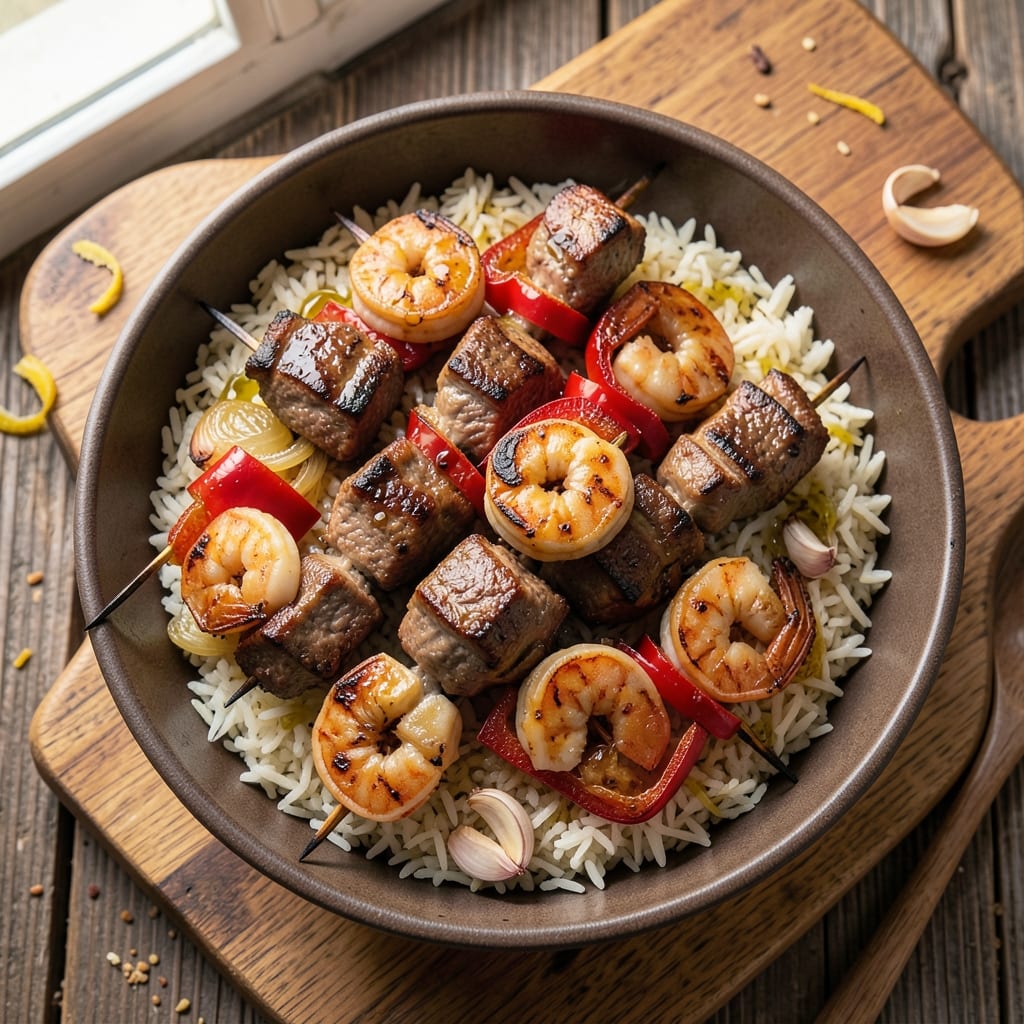
This beef and shrimp kabobs recipe delivers restaurant-quality skewers with tender beef and succulent shrimp, all kissed by smoky grill flavors. The secret lies in marinating both proteins separately—beef needs acidity and time, while shrimp benefits from a quick, bright marinade—to balance textures and flavors perfectly. Cross-contamination is critical, so we’ll show you how to handle raw ingredients safely while keeping prep streamlined.
Start with a bold marinade for the beef—garlic, soy sauce, and a touch of brown sugar create depth—while the shrimp soaks in lemon, olive oil, and fresh herbs for brightness. Skewer them together with bell peppers and onions for color and crunch, ensuring even cooking and a visually stunning plate. The high-heat grill or broiler transforms everything into charred, caramelized perfection in just 10–12 minutes.
What you’ll end up with is a dish that’s equal parts elegant and effortless: juicy beef cubes, plump shrimp with crisp edges, and vibrant vegetables all threaded onto skewers. Serve over fluffy couscous or with a fresh herb salad to soak up every last drop of that smoky marinade. This recipe proves gourmet dining doesn’t require hours in the kitchen—just smart prep and the right technique.
Pro tip: For extra safety, marinate beef and shrimp in separate containers, then assemble skewers just before grilling. The result? A showstopping centerpiece that’s foolproof, flavorful, and ready in under 30 minutes. Let’s get skewering!
Ingredients for beef and shrimp kabobs
Fourteen ingredients, two bold marinades, and skewers that deliver restaurant-quality flavor at home.
| Ingredient | Amount | Notes |
|---|---|---|
| Beef Chuck Roast 🥩 | 1 ½ lb | Pre-cubed, 1-inch pieces |
| Large Shrimp 🦐 | 1 ½ lb | Peeled, deveined, tails on |
| Red Bell Peppers 🌶️ | 2 whole | Cut into 1-inch chunks |
| Yellow Onions 🧅 | 1 whole | Cut into 1-inch chunks |
| Garlic Cloves 🧄 | 6 cloves | Minced for marinade |
| Extra-Virgin Olive Oil 🫒 | ½ cup | For marinades and grilling |
| Soy Sauce 🍶 | ⅓ cup | Low-sodium preferred |
| Brown Sugar 🍯 | 2 tbsp | Light or dark variety |
| Lemon Juice 🍋 | ¼ cup | Freshly squeezed |
| Fresh Cilantro 🌿 | ¼ cup | Chopped, for shrimp marinade |
| Fresh Dill 🌿 | ¼ cup | Chopped, for shrimp marinade |
| Wooden Skewers 🪵 | 16 pieces | Soaked in water 30 minutes |
| Kosher Salt 🧂 | 1 ½ tsp | For seasoning |
| Ground Black Pepper 🌶️ | 1 tsp | Freshly ground |
| Smoked Paprika 🌶️ | 1 tsp | For beef marinade |
The beef and shrimp require separate marinades for optimal texture and flavor balance. For the beef, chuck roast is ideal—it stays tender during grilling, while sirloin can become tough. Purchase pre-cubed beef from the deli section at Whole Foods or Costco for convenience, but if buying whole, cube it yourself for even pieces. Shrimp should be fresh or previously frozen—look for vibrant color and no fishy odor. Wild-caught shrimp from Trader Joe's or your local seafood market ensures better flavor. Soak the wooden skewers in water for 30 minutes to prevent burning on the grill.
No soy sauce? Coconut aminos work as a 1:1 substitute, though the flavor profile differs slightly. Want more depth in the beef marinade? Add 1 tbsp of Worcestershire sauce (ensure it's vegetarian). For the shrimp, if fresh herbs are unavailable, dried cilantro or dill at one-third the amount will suffice, though the flavor won't be as bright. The bell peppers and onions can be swapped for zucchini or mushrooms if preferred—just adjust the grilling time slightly. Pre-cut vegetables from the grocery store's salad bar save time, but freshly cut pieces hold up better on the skewer.
Marinate the beef for at least 4 hours, while shrimp only needs 30 minutes to absorb flavor. Store raw marinades in separate containers in the fridge for up to 2 days, and discard any unused marinade after contact with raw meat. Assembled skewers can be refrigerated for 2 hours before grilling, but assemble them just before cooking to maintain texture. Grilled kabobs reheat poorly, so plan to serve immediately. Leftover ingredients like herbs and marinade components can be stored separately for up to 5 days in airtight containers.
Why You'll Love This Recipe
- Here’s what sold me: you’re getting two high-quality proteins (beef and shrimp) for less than takeout. The chuck roast is forgiving and flavorful, while the shrimp adds that "special occasion" feel without breaking the bank. Plus, leftovers reheat like a dream—just pop them back on the grill or toss in a pan for a quick fix.
- No Chopping Chaos: I swear by this recipe because the beef and shrimp practically skewer themselves. Just slice the chuck roast into cubes—no fancy knife work—and thread them on with the shrimp and veggies. The onions and peppers stay sturdy enough to hold up, so you’re not stuck with a collapsing kabob disaster.
- Umami Bomb Combo: Between the rich, slightly fatty chuck roast and the briny shrimp, this dish is a flavor powerhouse. The garlic cloves, charred just right, add a deep punch that makes every bite feel like a hug. Honestly, the beef’s tenderness with the shrimp’s snap? It’s the kind of balance that’ll have you planning seconds before you even finish the first.
- Weeknight to BBQ Hero: This recipe works for everything—grill nights with friends, lazy Sundays, or even a last-minute dinner when you’re staring at a fridge full of random ingredients. Toss them on the grill, oven, or even a stovetop pan, and suddenly you’ve got a restaurant-worthy dish without the fuss. (Yes, even on a Tuesday night.)
Step-by-step instructions for skewered beef and shrimp kabobs
Mastering these kabobs combines precise preparation with controlled grilling technique.
Prepare the Beef Marinade and Tenderize
In a large bowl, combine the 0.5 cup extra-virgin olive oil, 0.33 cup soy sauce, 2 tbsp brown sugar, 1 tsp smoked paprika, 1.5 tsp kosher salt, and 1 tsp ground black pepper. Whisk vigorously until the sugar dissolves completely. This marinade should be smooth and glossy—if it separates, whisk again until fully emulsified.
Add the 1.5 lb pre-cubed beef chuck roast to the marinade, ensuring each piece is thoroughly coated. Cover the bowl and refrigerate for at least 4 hours, or preferably overnight. The acidity in the soy sauce and the sugar will begin breaking down the beef's tough fibers, while the paprika adds subtle smokiness that complements the charred flavor we're aiming for. For best results, marinate longer—up to 24 hours—as this guarantees maximum tenderness.
Create Separate Shrimp and Vegetable Marinades
In a separate bowl, mix together 0.25 cup lemon juice, 0.25 cup chopped fresh cilantro, 0.25 cup chopped fresh dill, 1 tsp kosher salt, and 1 tsp ground black pepper. Add the 1.5 lb large shrimp and gently toss to coat evenly. The lemon juice will prevent the shrimp from overcooking while adding brightness to the final dish.
Prepare the vegetables by cutting the 2 whole red bell peppers and 1 whole yellow onion into 1-inch chunks. There's no need to marinate these—their natural sweetness will complement the other flavors beautifully. Soak the 16 wooden skewers in water for at least 30 minutes to prevent them from burning during grilling. This is a critical step often overlooked—dry skewers can scorch before the food cooks through.
Assemble the Kabobs with Precision
Drain the marinated beef, discarding any excess marinade, and begin threading the pieces onto the soaked skewers. Alternate between beef chunks and vegetable pieces, creating a visually appealing pattern that also ensures even cooking. I recommend starting and ending with beef to maximize char exposure on these thicker pieces. Leave a small gap at the top of each skewer to prevent the meat from expanding and splitting the skewer during grilling.
For the shrimp kabobs, alternate between shrimp and vegetable pieces, again starting and ending with shrimp. The shrimp should cook quickly, so keeping them separate from the beef ensures they don't overcook while the beef finishes. Assemble all kabobs and set aside on a plate. This assembly process should take about 20 minutes—patience here ensures even cooking and presentation.
Grill to Perfect Doneness
Preheat your grill to medium-high heat, or about 400°F. The grill should be clean and well-oiled to prevent sticking. Arrange the beef kabobs first, leaving space between them for proper air circulation. Grill for 8-10 minutes, turning occasionally, until the beef reaches an internal temperature of 145°F and develops a deep char on all sides. The beef should be medium-rare with a slight pink center—this is crucial for optimal texture.
Move the beef kabobs to a clean platter and increase the grill heat to high for the shrimp. Add the shrimp kabobs and grill for 2-3 minutes per side until the shrimp turn opaque and the edges begin to curl slightly. Overcooking shrimp is easy—watch carefully and remove them as soon as they're just done. The vegetables will cook quickly during this final step, developing a pleasant char without becoming mushy.
Rest and Serve with Confidence
Transfer the beef kabobs to a cutting board and let them rest for 5 minutes before serving. This resting period allows the juices to redistribute throughout the meat, preventing them from running out when you cut into the kabobs. The shrimp can be served immediately—they'll continue to cook slightly from their residual heat but won't overcook significantly.
Garnish each plate with additional chopped fresh dill and serve with a side of the reserved marinade (reduced by half on the stovetop if desired) for dipping. Each bite should deliver perfectly charred beef with tender vegetables and succulent shrimp—proof that careful preparation and precise grilling yield restaurant-quality results at home.
Pro Tips For Making Beef And Shrimp Kabobs
- CUT CHUCK THIN: Chuck roast is tough—don’t fight it. Slice it against the grain into ½-inch strips (yes, even if it feels like overkill). Thinner pieces cook faster and stay tender, so you won’t end up with chewy beef while the shrimp turns to rubber.
- PEEL SHRIMP LAST: I used to peel shrimp first, then marinate them—big mistake. The shells protect them from overcooking. Leave the shells on until you’re ready to skewer, then peel right before grilling. (Bonus: Save the shells for stock later.)
- SKEWER IN ORDER: Start with beef, then shrimp, then veggies—always in that order. The beef needs the most time, so it sits at the bottom of the skewer, closest to the heat. Shrimp goes next (it cooks fast), and peppers/onions go on top to char nicely without overcooking.
- USE WOODEN SKEWERS RIGHT: Soak wooden skewers for 30 minutes, but don’t skip this—dry ones burn. And here’s the real trick: Thread the beef first, then fold the skewer in half to secure it. No more beef slipping off mid-grill. (Metal skewers? Skip the soaking, but still fold the beef in place.)
Wine and beer pairings for beef and shrimp kabobs
Red Wine Pairings
A bold Cabernet Sauvignon from Napa Valley is my go-to choice—its rich dark fruit flavors and firm tannins stand up beautifully to the charred beef while complementing the shrimp’s brightness. Look for a 2019 or newer vintage with notes of blackcurrant and cedar to match the smoky grill marks. 🍷
For a lighter option, try a Syrah from Washington State. The peppery spice and dark berry notes in Syrah enhance the smoked paprika in the beef marinade, while its medium body won’t overpower the shrimp. I recommend a 2020 or 2021 vintage for optimal freshness and balance.
White Wine Alternatives
If you prefer white wine, a crisp Viognier from Rhône Valley offers floral and stone fruit notes that harmonize with the lemon and herbs in the shrimp marinade. The wine’s natural acidity cuts through the richness of the beef, creating a refreshing contrast. 🍷
For a more affordable option, a dry Riesling from Germany brings citrus and mineral notes that echo the lemon in the shrimp marinade. The slight sweetness in some Rieslings also balances the soy and brown sugar in the beef marinade beautifully.
Beer Pairings
A Mexican Lager like Modelo Especial or Pacifico is a fantastic choice—its clean, crisp profile lets the flavors of the kabobs shine without competing. The subtle malt sweetness complements the caramelized onions and bell peppers beautifully. 🍺
For craft beer lovers, a Belgian Witbier like Hoegaarden or Blue Moon adds a citrusy, spiced note that pairs wonderfully with the shrimp’s lemon and herb marinade. The effervescence also helps cleanse your palate between bites.
Non-Alcoholic Options
For a refreshing non-alcoholic pairing, try sparkling water infused with lemon slices and fresh mint. The effervescence and citrus notes mirror the shrimp marinade while keeping the palate clean between bites. 💧
Alternatively, a ginger beer like Feather Ginger Beer adds a spicy kick that complements the smoky flavors of the grill. The ginger’s warmth also balances the richness of the beef beautifully.
Nutrition facts
Frequently asked questions
Can I use pre-marinated beef for this recipe?
While you can use pre-marinated beef, it won't have the same depth of flavor as homemade. If you do, reduce the soy sauce in the recipe by half to avoid overpowering the dish. For best results, stick with fresh marinade—it makes a noticeable difference in tenderness and taste.
How do I prevent the shrimp from sticking to the skewers?
Lightly oil the skewers with olive oil before threading the shrimp. Also, avoid overcrowding—leave a small gap between each shrimp. For extra security, thread a small piece of bell pepper or onion between shrimp to create space. This ensures even cooking and prevents sticking.
What if I don't have a grill? Can I make these on the stove?
Use a cast-iron skillet or griddle on medium-high heat. Cook the beef for 3-4 minutes per side until browned, then finish the shrimp in the same pan for 1-2 minutes per side. The skillet will create similar char marks, though grill marks will be slightly different.
Can I make these kabobs ahead of time?
Marinated beef and shrimp can be prepped 1 day ahead, but assemble the skewers just before cooking. For make-ahead convenience, marinate separately and store in airtight containers. Assemble kabobs 2 hours before grilling and refrigerate—this prevents soggy vegetables and ensures even cooking.
What's the best way to reheat leftover kabobs?
Unfortunately, reheating kabobs isn't recommended—they lose their crisp texture. Instead, cook only what you need or store components separately. If reheating is necessary, use a skillet on low heat for 1-2 minutes to warm through, but expect less ideal texture than fresh.