
Soups & Stews
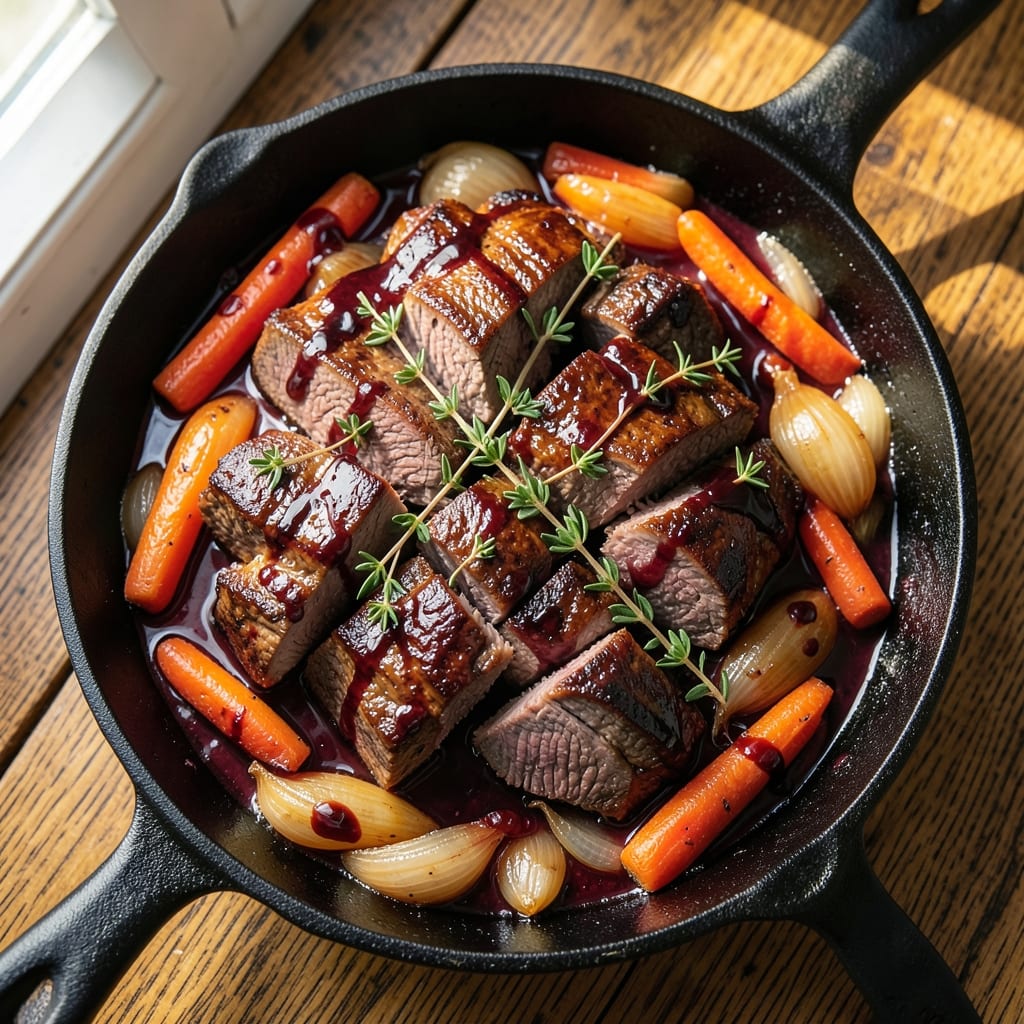
This beef and red wine casserole transforms tough cuts into tender, wine-infused bites that taste like a restaurant-worthy stew. The secret lies in searing beef first—creating a flavorful crust that deglazes beautifully with red wine, forming the rich gravy base. I perfected this recipe during a chilly winter when I needed comfort food that delivered depth without fuss.
What sets this dish apart is the balance of textures: fork-tender beef, caramelized onions, and al dente vegetables all bathed in a velvety red wine sauce. The slow braising process (just 3 hours in the oven) ensures maximum flavor development while keeping prep simple—no fancy techniques required. Best of all, it reheats beautifully for leftovers, making it ideal for meal prep.
The result is a hearty casserole where every bite delivers layers of savory, slightly sweet wine notes and herbal undertones. The aroma alone—warm beef, simmering wine, and fresh herbs—will have everyone gathering at your table. Serve with crusty bread to soak up every last drop of that luxurious gravy.
This recipe works equally well as a weeknight dinner or holiday centerpiece. The wine's acidity cuts through the richness of the beef, while aromatic herbs like thyme and bay leaves add complexity. Whether you're feeding a crowd or prepping for the week, this casserole delivers restaurant-quality results with minimal effort.
Ingredients for beef and red wine casserole
Sixteen ingredients for a deeply flavorful casserole that tastes like a restaurant-worthy stew.
| Ingredient | Amount | Notes |
|---|---|---|
| Chuck Roast Beef 🥩 | 3 lb | Pre-cut into 1.5-inch cubes |
| Red Wine 🍷 | 1 ½ cups | Bold, dry variety like Cabernet Sauvignon |
| Yellow Onions 🧅 | 2 whole | Sliced into 1/2-inch rounds |
| Carrots 🥕 | 1 ½ lb | Cut into 2-inch chunks |
| Garlic Cloves 🧄 | 6 cloves | Minced or finely chopped |
| Fresh Thyme 🌿 | ¼ cup | Leaves only, stems removed |
| Bay Leaves 🌿 | 2 whole | Dried, standard size |
| Beef Broth 💧 | 2 cups | Low-sodium preferred |
| Tomato Paste 🍅 | 2 tbsp | Smooth, not chunky |
| All-Purpose Flour 🌾 | 2 tbsp | For thickening gravy |
| Olive Oil 🫒 | 2 tbsp | Extra-virgin for searing |
| Salt 🧂 | 1 ½ tsp | Kosher or sea salt |
| Ground Black Pepper 🌶️ | ½ tsp | Freshly ground preferred |
| Fresh Parsley 🌿 | 0.1 cup | Chopped, for garnish |
| Balsamic Vinegar 🍶 | 1 tbsp | For deglazing |
The beef is non-negotiable—chuck roast with good marbling is your best bet. Costco or Whole Foods usually carry pre-cut cubes, but if you're buying a whole roast, ask the butcher to trim off excess fat and cut it into 1.5-inch pieces. That size ensures even cooking without turning to mush. The red wine should be bold and dry—Cabernet Sauvignon or Merlot work perfectly, but whatever's open in your fridge will do. Fresh thyme is ideal, but if you're using dried, cut the amount to one-third of what's listed. Carrots can be baby carrots if that's what you've got, but the larger ones add better texture.
No red wine? Beef broth with a splash of balsamic vinegar mimics the depth beautifully. Fresh thyme out of season? Dried thyme works at one-third the amount. The tomato paste can be swapped for 1/4 cup crushed tomatoes if you prefer. For a richer sauce, add 1/2 cup heavy cream at the end—just don't skip the flour slurry, or you'll end up with a watery mess. The onions and carrots can be prepped ahead and stored in the fridge for 3 days, which is a total game-changer for busy weeknights.
This casserole tastes even better the next day as the flavors meld. Store leftovers in an airtight container in the fridge for up to 5 days, or freeze for 3 months. I like to portion it into individual containers so I can grab and reheat for quick lunches. The gravy thickens as it cools, so add a splash of broth when reheating if it's too stiff. Trust me—leftovers are the best part.
Why You'll Love This Recipe
- One-Pot Magic: I swear by this recipe when I’m too tired to wash dishes. Chuck roast and veggies all simmer together—no separate pans, no fuss. Just slice, sear, and let the red wine do the work while you sip your own glass.
- Deep, Rich Layers: That first sip of red wine in the sauce? It’s not just flavor—it’s depth. The onions caramelize into sweetness, the garlic cloves melt into the beef, and the carrots turn tender without falling apart. Honestly, it’s the kind of taste that makes you slow down and savor every bite.
- Weeknight to Weekend: Between us, this casserole is my go-to for anything. Too busy? Make it for dinner. Hosting? Double the batch for leftovers. My kids even ask for it on Sundays—yes, even when they’re supposed to be eating chicken nuggets.
- Budget-Friendly Feast: Chuck roast stretches further than steak, and red wine adds luxury without breaking the bank. I’ve fed six people for under $20, and the leftovers? Just as good reheated the next day. (Yes, even on a Tuesday night.)
Step-by-step instructions for beef and red wine casserole
Here's how to create rich, wine-infused beef bites with a velvety gravy that clings perfectly to every tender piece.
Sear the Beef for Maximum Flavor
Heat a large Dutch oven over medium-high heat until hot. Add the 2 tablespoons olive oil and swirl to coat the bottom evenly. Working in batches to avoid crowding, add the 3 lb chuck roast beef cubes and sear for 3-4 minutes per side until deeply browned. This step develops the Maillard reaction, creating that deep, caramelized flavor that forms the foundation of your casserole.
As you sear, I like to press down gently on each piece with a spoon—this prevents them from curling and ensures even contact with the pan. Don't rush this process; you're building layers of flavor that will carry through the entire dish. Once all the beef is browned, remove it from the pot and set it aside on a plate.
Build the Aromatic Base
In the same Dutch oven (no need to wipe it clean—those browned bits are pure flavor), add the 2 whole yellow onions sliced into rounds and the 1.5 lb carrots cut into chunks. Cook for 5-6 minutes until the onions soften slightly and begin to caramelize at the edges. This process adds natural sweetness that balances the acidity of the red wine.
Add the 6 cloves minced garlic and 0.25 cup fresh thyme leaves to the pot, stirring for 30 seconds until fragrant. The thyme will release its piney aroma, while the garlic adds a subtle depth that complements the beef beautifully. Here's where it gets good—sprinkle in the 1.5 teaspoons salt and 0.5 teaspoon ground black pepper and stir to combine.
Deglaze and Develop the Wine Gravy
Pour in the 1.5 cups red wine and scrape up all those delicious browned bits from the bottom of the pot with a wooden spoon. This deglazing step captures all the concentrated beef flavor that would otherwise be lost. Let the wine simmer for 3-4 minutes until it reduces by about half and becomes slightly syrupy.
Stir in the 2 tablespoons tomato paste and 1 tablespoon balsamic vinegar, cooking for another 1 minute to allow the flavors to meld. The tomato paste adds a subtle umami depth while the balsamic vinegar introduces a touch of acidity that brightens the entire dish. Add the 2 whole bay leaves and 2 cups beef broth, then return the seared beef to the pot.
Simmer Until Tender and Thicken the Gravy
Bring the mixture to a gentle simmer, then reduce heat to low and cover partially with a lid. Let it cook for 1.5-2 hours, stirring occasionally, until the beef is fork-tender and easily pulls apart. The carrots should be soft but still hold their shape, and the onions should be completely tender. This low-and-slow cooking method ensures the beef becomes melt-in-your-mouth tender while allowing all the flavors to develop fully.
Once the beef is tender, remove the bay leaves and stir in the 2 tablespoons all-purpose flour. Cook for 2-3 minutes until the flour is fully incorporated and the gravy begins to thicken. If the sauce is too thick, add 1-2 tablespoons water to reach your desired consistency. The gravy should coat the back of a spoon but still be pourable.
Finish and Serve with Fresh Herbs
Transfer the casserole to a serving dish and let it rest for 5-10 minutes to allow the flavors to meld further. This resting period also helps the gravy set slightly, making it easier to serve. Before serving, garnish generously with the 0.1 cup chopped fresh parsley, which adds a bright, fresh contrast to the rich beef and wine flavors.
Serve the beef and red wine casserole hot, straight from the pot with crusty bread to soak up every last drop of that luxurious gravy. The combination of tender beef, sweet carrots, caramelized onions, and wine-infused sauce creates a dish that's hearty enough for a family dinner but elegant enough for company. The key to success lies in that initial sear and the patient simmering—don't rush either step, and you'll be rewarded with a casserole that tastes like it's been simmering all day.
Pro Tips For Making Beef And Red Wine Casserole
- Sear the Beef First: Chuck roast needs that crust to stay juicy, so don’t skip browning it before adding wine. I used to toss it straight into the sauce—big mistake. Pat the meat dry, hit it with oil in a hot pan, and let it turn golden-brown on all sides. The extra effort makes the wine reduction cling better later.
- Deglaze Aggressively: After searing, don’t just splash wine in and stir—scrape up those browned bits with a wooden spoon. Those bits hold flavor, and skipping this step means losing half the depth. Use a mix of wine and a splash of beef broth to loosen everything properly.
- Cut Carrots Evenly: Uneven carrot chunks cook at different rates, leaving some mushy while others stay crunchy. Aim for ½-inch slices or small rounds—consistent size ensures they soften together without falling apart. (Yes, it’s tedious, but your casserole will look and taste better.)
- Simmer Low and Slow: This isn’t a race—cover the casserole and cook it at 300°F (150°C) for at least 3 hours, or until the beef shreds easily. Rushing it turns the wine sauce watery and leaves the meat tough. Patience here guarantees tender, melt-in-your-mouth beef. (I know, I know—you’re hungry now.)
Creative variations of these flavors
Slow Cooker Adaptation
Transform this casserole into a hands-off slow cooker meal by browning the beef first (same method) and transferring everything to a 6-quart slow cooker. Add all ingredients except flour, then cook on low for 7-8 hours or high for 4-5 hours. Stir in the flour slurry at the end to thicken the sauce. The slow cooker's gentle heat ensures tender beef without drying it out. 🌡️
Portobello Mushroom Upgrade
Swap half the beef for 12 large portobello mushrooms, sliced into thick rounds. Sear them alongside the beef for 2-3 minutes per side until golden. Their meaty texture and earthy flavor complement the wine sauce beautifully, adding a vegetarian-friendly twist. Use the same cooking time as the original recipe.
Creamy Stout Version
Replace red wine with 1.5 cups dark stout beer (like Guinness) and add ½ cup heavy cream at the end. The maltiness of the stout deepens the sauce, while the cream adds luxurious richness. I recommend using 2 tablespoons cornstarch instead of flour to thicken, as it blends better with dairy. Perfect for beer lovers!
Mediterranean Twist
Add 1 teaspoon ground cumin and ½ teaspoon smoked paprika to the seared beef. Swap carrots for 1 cup chopped zucchini and add ½ cup kalamata olives at the end. Finish with fresh parsley and a sprinkle of feta cheese before serving. The Mediterranean flavors shine through while keeping the wine base intact.
Spicy Chipotle Kick
Infuse the red wine with 1 chipotle pepper in adobo sauce (minced) while simmering. Add ½ teaspoon ground chipotle powder to the beef during searing. The smoky heat cuts through the richness beautifully. For extra depth, stir in 1 tablespoon lime juice at the end. Serve with cilantro and avocado slices for a Southwest-inspired fusion.
Vegetable-Packed Family Style
Add 1 cup diced potatoes and 1 cup chopped celery with the onions. For extra heartiness, stir in 1 cup cooked lentils** at the end. This version works wonderfully as a family-style dish where everyone can serve themselves. The vegetables absorb the wine sauce beautifully, creating a complete one-pot meal. 🌱
Nutrition facts
Frequently asked questions
Can I use any red wine for this recipe?
A bold, dry red wine like Cabernet Sauvignon or Merlot works best, but you can use whatever you have on hand. Avoid sweet or fruity wines—they'll make the sauce taste unbalanced. For a non-alcoholic version, substitute with 1.5 cups beef broth plus 1 tablespoon balsamic vinegar to mimic the wine's depth.
Why does the beef need to be seared first?
Searing creates the Maillard reaction, which develops deep, caramelized flavors that form the foundation of your casserole. Those browned bits (fond) on the bottom of the pot are pure flavor—deglazing with wine captures them all. Skipping this step means missing out on the rich, complex taste that makes this dish special.
How do I know when the beef is fully tender?
The beef should easily pull apart with a fork and be fork-tender after 1.5-2 hours of simmering. For extra certainty, cut into a piece—if it's soft and juicy with no pink center, it's done. Overcooking can make it dry, so check it at 1.5 hours if you're unsure. The carrots should also be soft but still hold their shape.
Can I make this recipe in a slow cooker?
Brown the beef first, then transfer everything to a 6-quart slow cooker (except flour). Cook on low for 7-8 hours or high for 4-5 hours, then stir in the flour slurry at the end to thicken. The slow cooker's gentle heat ensures tender beef without drying it out.
What if my gravy is too thin?
If the sauce is too thin, mix 1 tablespoon flour with 2 tablespoons cold water to make a slurry, then stir it into the simmering casserole. Cook for 2-3 minutes until thickened. For extra richness, you can also whisk in 1/4 cup heavy cream at the end. Never add flour directly to cold sauce—it clumps!