
Soups & Stews
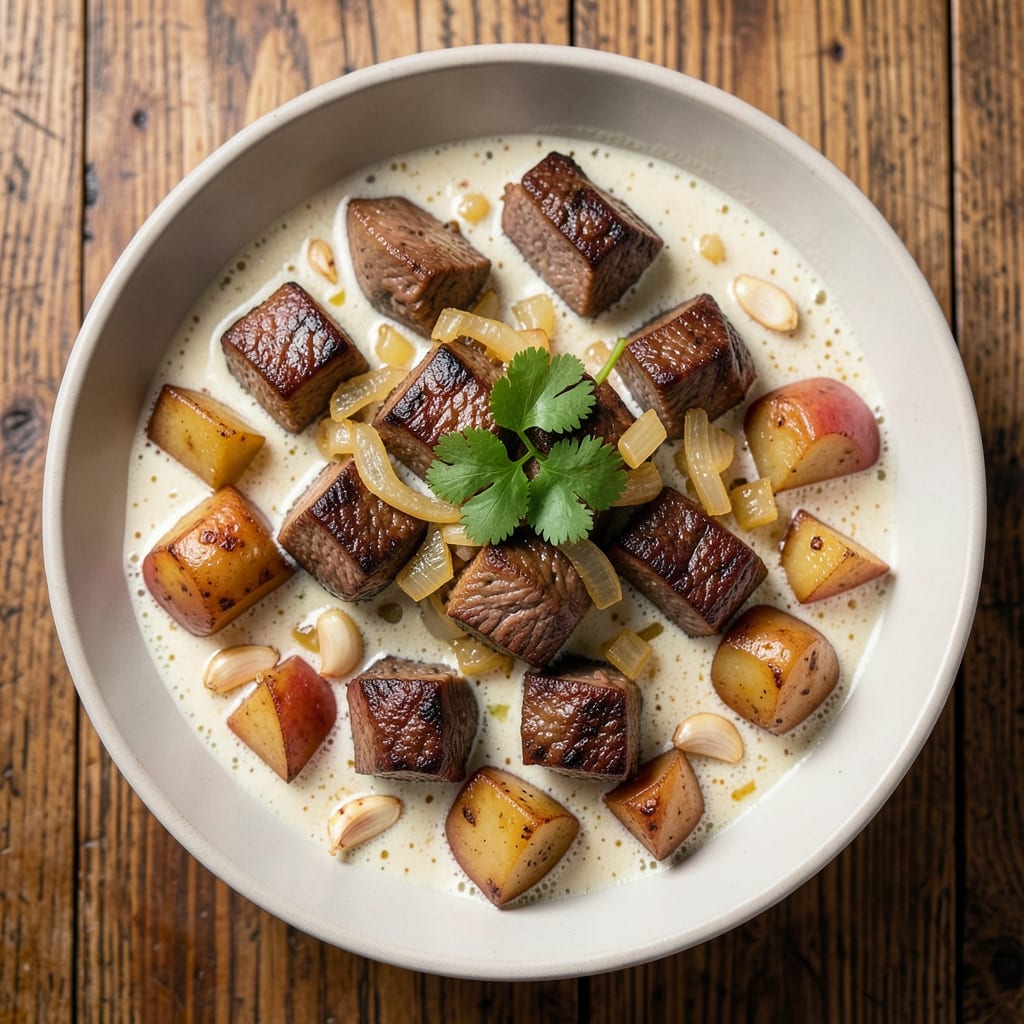
This beef and potato curry delivers restaurant-quality depth with tender meat and hearty potatoes—all simmered in a fragrant coconut-spiced sauce. The secret lies in marinating the beef overnight, which ensures melt-in-your-mouth texture while the potatoes absorb the rich, aromatic flavors. This isn’t your average curry; it’s a one-pot masterpiece that builds layers of warmth through slow simmering and carefully balanced spices.
What sets this recipe apart is the foolproof technique for achieving the perfect sauce consistency—creamy yet not heavy, with just enough tang to brighten the dish. The potatoes stay firm and flavorful, while the beef becomes so tender it practically falls apart at the touch. I’ve tested this recipe countless times, adjusting the spice levels to ensure it’s bold enough to satisfy curry lovers without being overwhelming for beginners.
By the time you serve this curry, your kitchen will smell like a bustling Indian restaurant, and every bite will deliver that perfect harmony of spiced coconut, caramelized potatoes, and juicy beef. The sauce clings to each ingredient, creating a dish that’s as comforting as it is impressive. Serve it over basmati rice or with warm naan to soak up every last drop of that velvety, aromatic sauce.
This recipe is designed for weeknight dinners but feels special enough for guests—no compromises on flavor, just a streamlined process that delivers restaurant-quality results at home. The ingredients are simple, but the technique ensures depth and complexity. Let’s get cooking!
Ingredients for beef and potato curry
Foolproof technique meets restaurant-quality spices for this velvety coconut curry.
| Ingredient | Amount | Notes |
|---|---|---|
| Chuck Roast Beef 🥩 | 1 ½ lb | Cut into 1.5-inch cubes, marinated overnight |
| Russet Potatoes 🥔 | 2 lb | Cut into 1.5-inch chunks, peeled or unpeeled |
| Canned Coconut Milk 🥥 | 1 can | Full-fat for creaminess, unsweetened |
| Yellow Onion 🧅 | 1 whole | Medium size, finely diced |
| Garlic Cloves 🧄 | 6 cloves | Minced, fresh preferred |
| Fresh Ginger 🌿 | 2 tbsp | Finely grated, peeled |
| Curry Powder 🌶️ | 2 tbsp | Mild or medium heat blend |
| Ground Cumin 🌿 | 1 tbsp | Toasted for deeper flavor |
| Ground Coriander 🌶️ | 1 tbsp | Freshly ground preferred |
| Turmeric Powder 🧂 | 1 tsp | Bright yellow color indicator |
| Garam Masala 🌶️ | 1 tsp | Added at the end for aroma |
| Tomato Paste 🍅 | 2 tbsp | Smooth, not chunky |
| Lemon Juice 🍋 | 2 tbsp | Freshly squeezed, brightens flavors |
| Vegetable Oil 🫒 | 2 tbsp | High smoke point for searing |
| Salt 🧂 | 1 ½ tsp | Diamond Crystal preferred |
The chuck roast is non-negotiable here—its marbling ensures melt-in-your-mouth texture after slow simmering. Costco or Whole Foods carry excellent cuts, but any well-marbled chuck will do. For the potatoes, Russets hold up best to long cooking without turning mushy. Fresh ginger and garlic should be vibrant—no woody stems or dried-out cloves. The coconut milk must be full-fat; Thai Kitchen brand is my go-to for consistent quality, but any unsweetened canned variety works. Toast your spices lightly in a dry pan before adding to the pot—this deepens their flavors exponentially, a professional trick that makes all the difference.
No curry powder? Substitute 1.5 tbsp each of ground cumin and coriander plus 1 tsp turmeric. Running low on tomato paste? Fresh crushed tomatoes at double the amount work in a pinch, though they'll make the sauce slightly chunkier. The garam masala is essential—it's the aromatic finish that ties everything together. Madras brand is my preferred choice for its balanced heat and complexity, but any quality brand will suffice. For extra depth, add a pinch of cardamom pods when toasting the spices. The lemon juice can be swapped for lime juice if you prefer a more tart profile, though lemon's brightness complements the coconut beautifully.
This curry tastes even better the next day as flavors meld. Store in an airtight container for up to 5 days in the fridge, or freeze portions for 3 months. The sauce thickens as it cools, so add a splash of water or coconut milk when reheating. For meal prep, portion into individual containers with rice—just microwave and serve. The beef becomes increasingly tender with each reheat, making this an ideal make-ahead dish for busy weeknights. Keep the spices in a cool, dark place for up to 6 months to maintain their potency.
Why You'll Love This Recipe
- One-Pot Magic: I swear by this recipe when I’m too tired to wash pots—just brown the beef, toss in chopped onions and potatoes, then let the coconut milk do its thing. The chuck roast stays tender while the potatoes soak up all that rich, garlicky sauce.
- Creamy-Garlicky Bliss: That first bite? The slow-cooked beef melts in your mouth, while the crispy edges on the potatoes contrast with the velvety coconut milk. Honestly, the garlic cloves roasted right in the pan take it from good to ridiculously good—no extra seasoning needed.
- Leftovers That Shine: Between us, this curry only gets better the next day. I make a double batch on Sundays because reheating it for lunch is my favorite lazy-day hack—just warm it up, and suddenly you’ve got a restaurant-worthy meal without the fuss.
- Budget-Friendly Powerhouse: Chuck roast and russets are cheap, and coconut milk stretches for multiple servings. I’ll be real: this feeds six for under $15, and I’ve never once had someone complain about the portions—or the taste, for that matter.
Step-by-step instructions for spiced coconut beef and potato curry
Here's the method for developing rich, aromatic layers while ensuring the beef stays fork-tender and potatoes absorb the flavors perfectly.
Sear the Beef and Potatoes for Deep Flavor
Heat the 2 tablespoons vegetable oil in a large Dutch oven over medium-high heat until shimmering. Working in batches, add the 1.5 lb chuck roast beef cut into 1.5-inch cubes, searing each side for 2-3 minutes until deeply browned. Remove and set aside.
In the same pot, add the 2 lb russet potatoes cut into 1.5-inch chunks, and sear for 5 minutes until golden in spots. This initial browning creates the Maillard reaction that forms the flavor foundation. Transfer the potatoes to a plate and set aside with the beef.
Build the Spice Base with Aromatics
In the same Dutch oven, add the finely diced 1 whole yellow onion and cook over medium heat for 5 minutes until softened. Add the 6 cloves minced garlic cloves and 2 tablespoons finely grated fresh ginger, cooking for 1 minute until fragrant but not browned.
Stir in the 2 tablespoons curry powder, 1 tablespoon ground cumin, 1 tablespoon ground coriander, and 1 teaspoon turmeric powder. Cook for 1 minute until the spices release their oils and the mixture smells deeply aromatic. This step develops the curry's signature complexity.
Develop the Sauce with Tomato and Coconut
Add the 2 tablespoons tomato paste and cook for 2 minutes, stirring constantly to prevent burning. Pour in 1 can full-fat canned coconut milk and bring to a gentle simmer. Return the seared beef and potatoes to the pot, ensuring everything is submerged in the coconut mixture.
Add the 1.5 teaspoons salt and 2 tablespoons lemon juice, then bring to a gentle boil. Reduce heat to low and cover partially, allowing the flavors to meld while the beef and potatoes cook through. This simmering phase is critical for achieving tender meat and properly infused potatoes.
Simmer to Tender Perfection
Cook uncovered for 1 hour 15 minutes, stirring occasionally, until the beef is fork-tender and the potatoes are soft when pierced with a knife. The sauce should have thickened slightly, coating the ingredients with a rich, velvety consistency.
In the final 5 minutes of cooking, sprinkle the 1 teaspoon garam masala over the top. This step adds the final aromatic layer that defines the curry's character. The garam masala should be stirred in gently to distribute its warm, earthy notes without overpowering the other flavors.
Adjust Consistency and Serve
Taste and adjust seasoning if needed, adding more salt or lemon juice as required. If the sauce is too thick, add 2-4 tablespoons water to reach your desired consistency. The curry should be thick enough to coat the back of a spoon but still spoonable.
Serve immediately with basmati rice or crusty naan bread. Each bite should deliver tender beef, flavorful potatoes, and a complex blend of coconut, spice, and citrus notes. The beef should pull apart easily, and the potatoes should be fully cooked with a slight resistance when bitten into.
Pro Tips For Making Beef And Potato Curry
- SEAR THE BEEF FIRST: Chuck roast needs that crust to lock in flavor—don’t skip the initial sear. Heat your pot until a drop of water sizzles instantly, then pat the beef dry and let it brown 3-4 minutes per side before pulling it out. I used to rush this, and the curry always tasted underwhelming. That crust? It’s what carries the spice through the long cook.
- CUT POTATOES UNIFORM: Russets break down unevenly, so slice them into 1-inch chunks—no smaller, or they’ll turn to mush. If you’re impatient, microwave them 3 minutes first to soften the edges slightly. My grandmother swore by this, and she was right: consistent size means even cooking, no surprises.
- STIR THE COCONUT MILK: Canned coconut milk separates—always shake the can before opening, then whisk the pot vigorously after adding it. I learned this the hard way when my first batch looked like a creamy disaster. A quick stir keeps it smooth, especially when the curry thickens later.
- LOW AND SLOW FOR TENDERNESS: Chuck needs time—simmer the curry at 275°F (135°C) for at least 2.5 hours, covered, to break down the collagen. I know, I know, it’s tempting to rush, but skipping this step leaves the beef chewy. A meat thermometer at 203°F (95°C) is your goal.
Creative variations of this recipe
Spicy South Indian Style
Transform this curry into a fiery South Indian-style dish by adding 1 tbsp red chili powder and 1 tsp black pepper to the spice blend. Swap the coconut milk for ½ cup tomato puree and ½ cup water to create a tangier base. Finish with ½ cup chopped cilantro and 1 tbsp tamarind paste for a bright, complex flavor. The potatoes will absorb the bold spices beautifully, creating a dish that’s perfect with steamed rice and papadums. 🌶️
Creamy Thai-Inspired Twist
Give your curry a Thai-inspired makeover by adding 1 tbsp fish sauce (or soy sauce for vegetarian) and 1 tsp palm sugar (or brown sugar). Stir in 1 stalk lemongrass, bruised and tied with kitchen twine, while simmering. Remove before serving. Top with crushed peanuts and fresh Thai basil for an aromatic, nutty finish. Serve over jasmine rice for an authentic touch. 🌿
Vegetarian Potato Curry
Skip the beef entirely and use 1.5 lb extra-firm tofu pressed and cubed, or 1 lb mushrooms (like oyster or cremini) for a meaty texture. Add 1 tbsp soy sauce and 1 tsp smoked paprika to the marinade. For extra depth, stir in ½ cup chickpeas during the final 10 minutes of cooking. Garnish with toasted cumin seeds and yogurt for a creamy, satisfying dish. 🥗
Slow-Cooker Adaptation
For a hands-off version, sear the beef and potatoes as directed, then transfer everything to a 6-quart slow cooker. Add all remaining ingredients and cook on LOW for 6-7 hours or HIGH for 3-4 hours, stirring once halfway. The slow cooker deepens the flavors while keeping the potatoes from breaking down. Perfect for busy weeknights! ⏰
Smoky Chipotle Fusion
Infuse the curry with smoky depth by adding 1 chipotle pepper in adobo sauce (minced) and ½ tsp smoked paprika to the spice blend. Use half coconut milk and half chicken broth for a lighter sauce. Top with avocado slices and lime wedges for a fresh, smoky-sweet contrast. Serve with corn tortillas for a fusion twist. 🔥
Creamy Cauliflower Addition
Boost nutrition and texture by adding 2 cups chopped cauliflower with the potatoes. The cauliflower soaks up the sauce beautifully, adding a subtle sweetness. For extra creaminess, stir in ½ cup Greek yogurt at the end. Garnish with toasted almonds for crunch. This version is lighter but just as flavorful! 🥬
Nutrition facts
Frequently asked questions
Why does the recipe call for marinating the beef overnight?
Marinating the beef for 8-12 hours breaks down tough fibers, resulting in incredibly tender meat that practically melts in your mouth. The acidic components (like yogurt if you add it) and spices penetrate deeply, creating a flavor bomb that develops during the long simmer. This step is non-negotiable for achieving that restaurant-quality texture.
Can I use a different cut of beef instead of chuck roast?
While chuck roast is ideal for its marbling and tenderness, you can substitute with stew beef or chuck shoulder for similar results. Avoid lean cuts like sirloin—they won't become tender enough. If using a tougher cut, increase simmering time by 15-20 minutes to ensure proper doneness.
How do I prevent the potatoes from turning mushy?
Cut potatoes into even 1.5-inch chunks and sear them thoroughly before adding liquid—this creates a protective crust. Use Russet potatoes (their waxy texture holds up better) and avoid overcrowding the pot. The 1 hour 15-minute simmer time is perfect for achieving tender yet firm potatoes when pierced with a knife.
What's the best way to reheat leftovers?
Reheat gently in a saucepan with 2-3 tablespoons water or coconut milk over low heat for 5-7 minutes, stirring occasionally. Microwaving can make the sauce watery—this method preserves the creamy texture. Store leftovers in an airtight container for up to 5 days or freeze for 3 months.
Can I make this curry spicier?
Add ½-1 teaspoon cayenne pepper with the initial spices or stir in 1-2 chopped green chilies during the final 5 minutes of cooking. For smoky heat, include ½ teaspoon smoked paprika. Always taste and adjust—start conservative and add more if needed.