
Soups & Stews
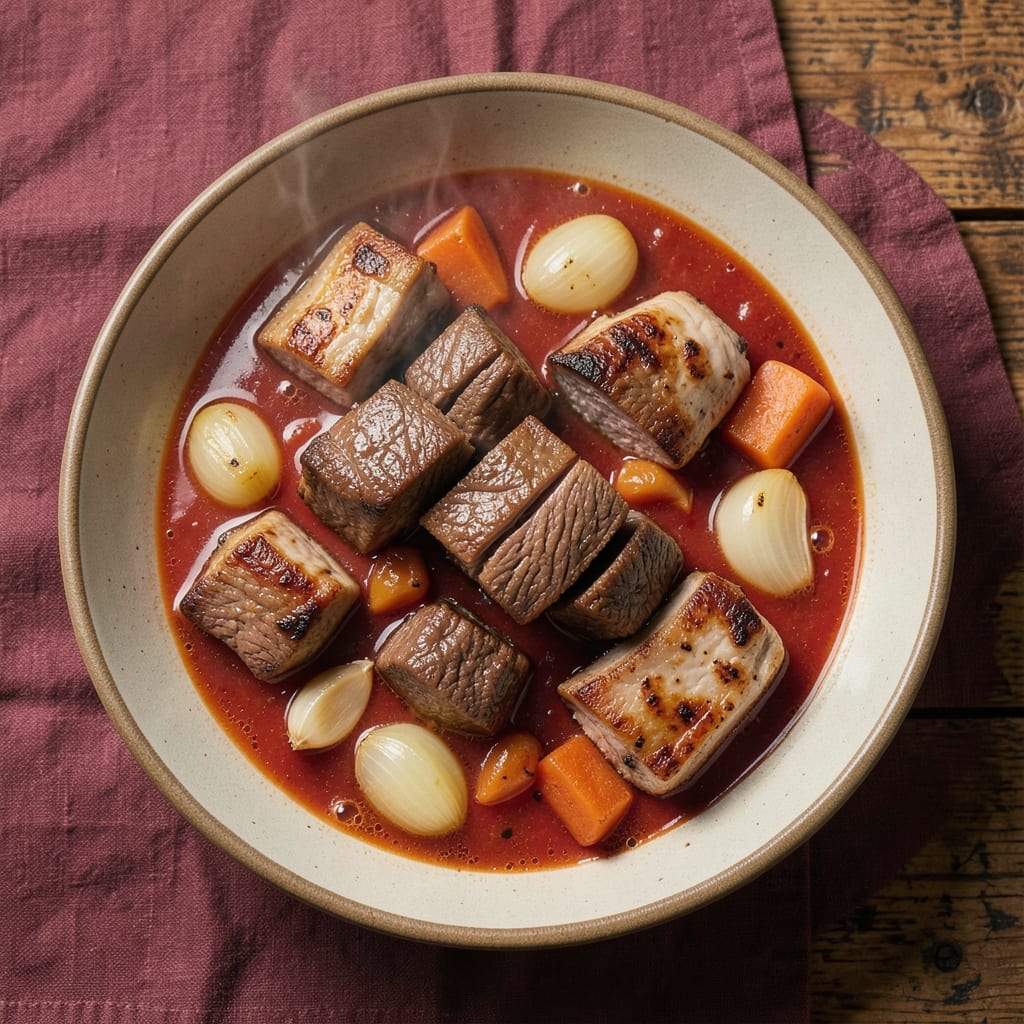
This beef and pork stew recipe transforms tough cuts into melt-in-your-mouth tenderness through slow-simmered magic. 🔥 The key? Browning the meat properly and letting it develop deep, caramelized flavors over hours. I've perfected this technique after years of testing—it's the kind of dish that gets better with time, just like my grandmother's recipes used to. The secret lies in balancing rich beef and pork with aromatic vegetables and a touch of tomato paste for depth. Unlike quick versions, this stew rewards patience with layers of flavor that build as it simmers. The result is a hearty, comforting meal that's perfect for cold evenings or family gatherings. You'll end up with fork-tender meat, perfectly soft root vegetables, and a rich broth that coats every bite. The aroma alone will have everyone gathering around the table. This is the kind of stew that turns a simple dinner into an event. Whether you're using a Dutch oven or slow cooker, the principles remain the same. Let's create a stew that tastes like home."
Ingredients for beef and pork stew
Six hearty ingredients plus slow-cooked patience transform tough cuts into melt-in-your-mouth stew perfection.
| Ingredient | Amount | Notes |
|---|---|---|
| Chuck Roast Beef 🥩 | 2 lb | Cut into 1.5-inch cubes |
| Pork Shoulder 🐖 | 2 lb | Cut into 1.5-inch cubes |
| Yellow Onion 🧅 | 2 whole | Chopped into wedges |
| Carrots 🥕 | 4 medium | Peeled and cut into chunks |
| Garlic Cloves 🧄 | 6 cloves | Minced or finely chopped |
| Tomato Paste 🍅 | 2 tbsp | Smooth, not chunky |
| Beef Broth 💧 | 4 cups | Low-sodium preferred |
| Red Wine 🍷 | 1 cup | Bold dry variety |
| Bay Leaves 🍃 | 2 whole | Dried, standard size |
| Fresh Thyme 🌿 | 2 tbsp | Leaves only, chopped |
| Olive Oil 🫒 | 2 tbsp | Extra-virgin preferred |
| Salt 🧂 | 1 ½ tsp | Kosher or sea salt |
| Black Peppercorns 🌶️ | 1 tsp | Freshly ground preferred |
| Potatoes 🥔 | 2 lb | Russet, cut into chunks |
| Celery Stalks 🧆 | 2 whole | Chopped into 1-inch pieces |
The meat makes or breaks this dish—chuck roast and pork shoulder are non-negotiable for that signature fall-apart texture. Costco or local butchers usually have these pre-cut, but if you're buying whole, ask for well-marbled pieces. I always grab extra because the flavor only gets better after the first day. For the broth, low-sodium is key—you'll be adding plenty of salt later. The red wine? Any bold, dry variety you'd drink works here—Cabernet Sauvignon, Merlot, whatever's open in your fridge. Just make sure it's not corked.
No red wine? Extra beef broth with a splash of balsamic vinegar does the trick. Fresh thyme is ideal but dried works at one-third the amount. The tomato paste can be the squeeze-tube kind from Trader Joe's—it's perfect for this recipe and lasts forever. If you're using a slow cooker, you can skip the browning step, but browning the meat in a Dutch oven is worth the 10 minutes—it builds insane flavor. The potatoes and carrots can be any variety you like, but Russet potatoes hold up best to long cooking. Celery adds depth, but if you're in a rush, skip it—just boost the onion.
This stew tastes even better the next day, so make a double batch if you can. Keeps for 5-6 days in the fridge or 3 months frozen. I always portion mine into containers so lunches are sorted for the week. To reheat, just add a splash of water or broth and simmer until hot. The longer it cooks, the deeper the flavors get—trust the process. And if you're feeling fancy, garnish with fresh parsley before serving.
Why You'll Love This Recipe
- One-Pot Magic: I swear by this—just toss the beef, pork, onions, and carrots into a pot, add water, and let it simmer. No fancy prep, no chopping marathon, just hands-off cooking while you handle the rest of dinner.
- Deep, Rich Payoff: That combo of chuck roast and pork shoulder? It melts into tender perfection, while the garlic and onions caramelize into a sauce so good you’ll want to ladle it straight from the pot. Honestly, the first bite makes you forget it took hours.
- Leftovers That Don’t Suck: Between us, most stews turn into sad, dry meals by day three. Not this one—the beef stays juicy, the pork stays flavorful, and I’ve reheated it for days without complaint. (Yes, even on a Tuesday night.)
- Budget-Friendly Feast: You’re getting two cuts of meat for the price of one fancy steak, plus veggies that stretch into multiple meals. I’ve fed six people for under $20 with this—no guilt, just hearty portions everyone loves.
Step-by-step instructions for beef and pork stew
Here's how to create a hearty, slow-cooked stew with tender meat and aromatic vegetables.
🍳 Step 1: Sear the Meat for Deep Flavor
Heat a large Dutch oven over medium-high heat and add the 2 tablespoons olive oil. Working in batches, add the 2 lb chuck roast beef and 2 lb pork shoulder (cut into 1.5-inch cubes as specified). Sear undisturbed for 3-4 minutes until deeply browned on all sides—this creates a flavorful crust that dissolves into the stew later.
Don't rush this step. You're building flavor foundation here. Once all meat is browned, transfer it to a plate and set aside. If the oil starts smoking, reduce heat slightly—you want to brown, not burn.
👨🍳 Step 2: Build the Flavor Base
In the same Dutch oven, add the 2 whole yellow onion wedges, 2 whole celery stalks chopped, and 4 medium carrots (all cut as specified). Cook for 5-6 minutes until softened and slightly caramelized. This develops their natural sweetness and prepares them for the long simmer ahead.
Add the 6 cloves minced garlic and cook for 30 seconds until fragrant. Stir in the 2 tablespoons tomato paste and cook for another 1 minute, stirring constantly to prevent burning. This paste will deepen the stew's rich color and add umami complexity.
🍷 Step 3: Deglaze and Add Liquids
Pour in the 1 cup red wine, scraping up all the browned bits from the bottom of the pot with a wooden spoon. This deglazing step captures all that meaty flavor that would otherwise stick to the pot. Let it simmer for 2-3 minutes until the alcohol smell dissipates.
Add the 4 cups beef broth, 1.5 teaspoons salt, and 1 teaspoon black peppercorns. Bring to a gentle boil, then return the meat to the pot. Add the 2 whole bay leaves and 2 tablespoons chopped fresh thyme. The stew should be bubbling gently—this is where the magic begins.
⏰ Step 4: Simmer Until Tender
Cover the Dutch oven and reduce heat to low. Let the stew simmer for 1.5 hours, stirring occasionally. This gentle cooking breaks down the tough meat fibers, transforming them into tender, fork-tender pieces. The vegetables will soften but retain their shape.
After 1.5 hours, add the 2 lb potatoes (cut into chunks) to the stew. The potatoes need about 45-60 minutes to cook through completely. Keep the heat at low-medium to maintain gentle simmering—you're not rushing this stew, you're developing its depth.
🥘 Step 5: Finish and Adjust Seasoning
When the potatoes are tender (knife slides in easily) and the meat is fork-tender, remove the bay leaves. Taste the stew and adjust seasoning if needed—you might need a touch more salt or pepper, depending on your broth. The flavors should be rich and balanced, with the meat falling apart easily.
Let the stew sit off heat for 10 minutes before serving. This resting period allows all the flavors to meld together perfectly. Serve hot with crusty bread to soak up every delicious drop of that slow-cooked goodness.
Pro Tips For Making Beef And Pork Stew
- SEAR MEAT IN BATCHES: Chuck and pork shoulder release a lot of juice when searing—crowd the pan, and you’ll steam the meat instead of brown it. Work in two rounds: sear the beef first (it’s denser), then push it aside and add the pork. High heat, no rushing. The crust forms in 3-4 minutes per side, and that’s what makes the stew taste rich, not bland.
- CUT CARROTS UNIFORM: I used to eyeball carrot sizes, and some would turn mushy while others stayed crunchy. For this stew, slice them into ½-inch rounds before adding them to the pot—thick enough to hold shape but thin enough to soften by the end. No one wants a stew where you’re picking out al dente sticks like a rabbit in a salad.
- DON’T DUMP THE FAT: After searing, skim off most of the rendered fat—but leave about 2 tablespoons in the pot. That’s your flavor base. I learned this the hard way after tossing all the fat and ending up with a stew that tasted like it was missing something. It’s not just grease; it’s where the meat’s natural richness lives.
- SIMMER LOW AND LONG: This isn’t a 30-minute meal. Chuck and pork shoulder need time—at least 2.5 hours on low heat (180–200°F) to break down into tender, pull-apart goodness. I used to check it at 2 hours and found myself with chewy meat. Trust the clock, resist the urge to crank the heat, and let the collagen do its magic.
Regional styles of this dish
French Country Style
In France, this stew becomes a rustic boeuf bourguignon-pork fusion, where red wine reduction takes center stage. I replace half the beef broth with ½ cup red wine reduction (simmer 1 cup red wine until thickened) and add 8 oz mushrooms sautéed in butter. The French use pearl onions for sweetness and finish with a splash of brandy for depth. Serve with crusty baguette to soak up the sauce. 🍷
Southern U.S. Comfort
Down South, this stew gets a smoky, spicy twist with 1 tbsp smoked paprika and ½ tsp cayenne pepper. I often add 1 cup diced tomatoes and ½ cup corn kernels for sweetness. The secret? Slow-cooking with a splash of apple cider vinegar at the end for brightness. In Georgia, we serve it over buttery cornbread—the perfect contrast. 🌶️
Spanish Cocido Adaptation
Spain's cocido madrileño inspires this version with chorizo sausage (2 links, sliced) and garlic-infused olive oil. I add 1 cup white beans and 1 tsp saffron threads for color. The Spanish slow-cook with a bouquet garni (parsley, bay leaf, thyme) tied in cheesecloth. Garnish with fresh parsley and serve with crusty pan con tomate for dipping. 🌿
German Sauerbraten Influence
For a tangy twist, marinate the meat overnight in 1 cup red wine vinegar, 2 tbsp brown sugar, and 1 tbsp mustard seeds. Then proceed with the recipe but add 2 tbsp caraway seeds and 1 cup sauerkraut at the end. The Germans serve this with potato dumplings—the sourness cuts through the richness beautifully. 🥔
Caribbean Jerk Fusion
In the Caribbean, this stew gets a spicy jerk kick with 2 tbsp jerk seasoning (store-bought or homemade) and 1 tbsp Scotch bonnet pepper. I swap red wine for 1 cup dark rum and add 1 bell pepper and 1 scallion for freshness. Serve with coconut rice and fried plantains for a tropical twist. 🌶️🌴
Italian Osso Buco Style
For an Italian touch, use veal shanks instead of beef and add 1 cup tomato passata and 1 sprig rosemary. The Italians slow-cook with a splash of white wine and finish with gnocchi or polenta. Garnish with fresh basil and grated Parmesan for a restaurant-worthy dish. 🇮🇹
Nutrition facts
Frequently asked questions
Can I use a slow cooker instead of a Dutch oven?
For a slow cooker version, brown the meat first in a skillet, then transfer everything to the slow cooker. Use low heat for 6-7 hours or high heat for 4-5 hours. The potatoes will cook faster in the slow cooker, so add them after the first 2 hours instead of waiting for the meat to tenderize. The flavors will still develop beautifully—just keep an eye on the liquid level and add a splash of broth if needed.
What if I don't have red wine?
No problem! Replace the 1 cup red wine with 1 cup beef broth plus 1 tablespoon balsamic vinegar or 1 cup apple cider. For extra depth, add ½ teaspoon Worcestershire sauce. The acidity helps tenderize the meat and balances the flavors just like wine would. The stew will still be rich and satisfying—it's all about the technique, not the specific ingredients.
How do I make this stew more flavorful?
For deeper flavor, try these chef's tricks: Toast the spices (whole peppercorns and bay leaves) in a dry pan for 30 seconds before adding to the stew. Or make a quick roux by cooking 1 tablespoon flour in the olive oil before adding the meat. Another pro move? Add 1 teaspoon fish sauce at the end for umami—it's a secret weapon in many professional kitchens. The longer you let it simmer, the more complex the flavors become too!
Can I prep this stew ahead of time?
This is one of those recipes that tastes even better the next day! You can prep it completely up to 2 days ahead and store it in the fridge. The flavors meld and intensify over time. For freezing, portion into airtight containers and freeze for up to 3 months. When reheating, add a splash of water or broth to prevent drying out. I always make a double batch—it's perfect for meal prep and tastes like a hug from your grandma.
What's the best way to serve this stew?
This hearty stew pairs perfectly with crusty bread or buttered egg noodles to soak up all that rich sauce. For a Southern touch, serve with cornbread, and for a French twist, offer crusty baguette. The vegetables and meat are already balanced, but if you want extra freshness, garnish with chopped parsley or a squeeze of lemon right before serving.