
Soups & Stews
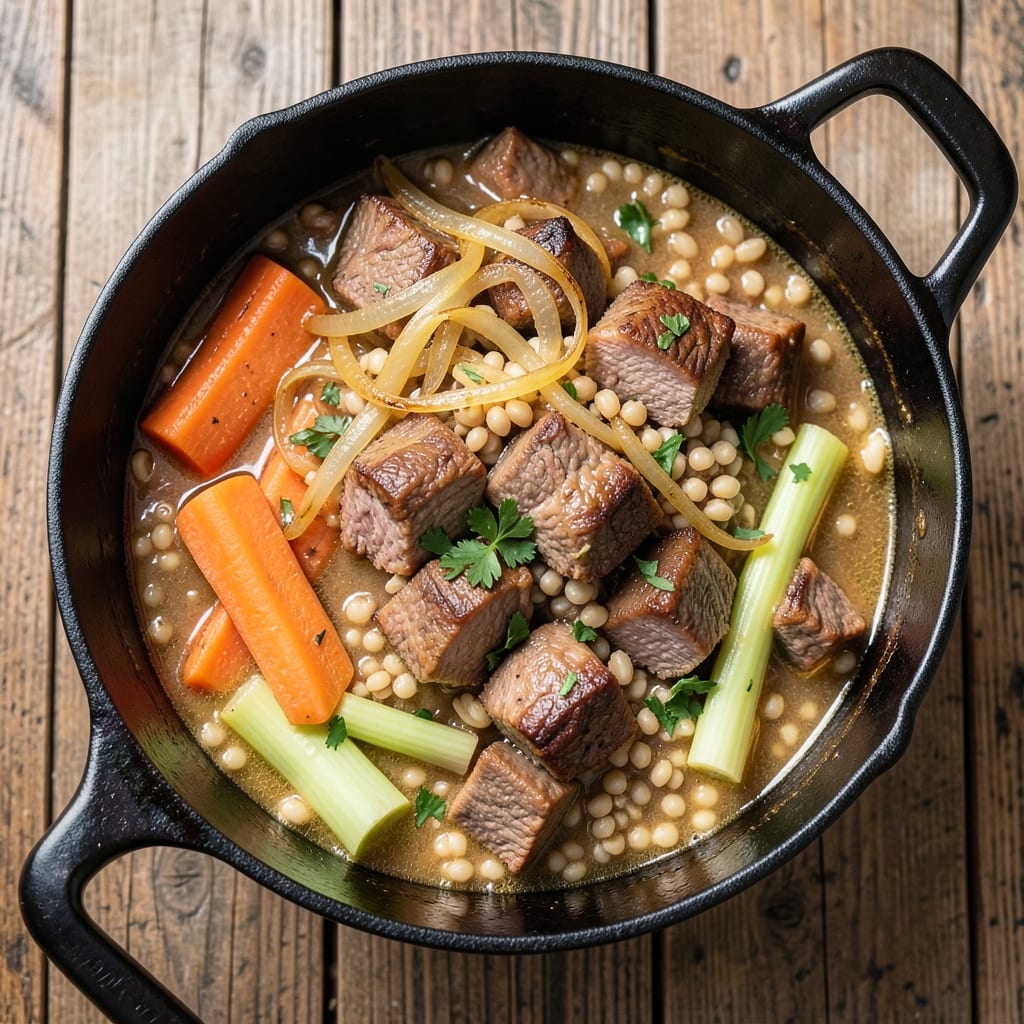
This beef and pearl barley stew recipe delivers the kind of deep-simmered comfort that turns weeknights into cozy gatherings. The secret lies in slow-cooking tough beef until it becomes fork-tender while pearl barley transforms into chewy, satisfying grains that soak up every rich, savory bite. I developed this version after years of testing—balancing tender meat, perfectly cooked barley, and a broth that's rich without being heavy.
The foundation starts with a proper sear on the beef, locking in flavor before it simmers for hours in aromatic vegetables and herbs. Pearl barley's long cooking time (about 45 minutes) gives it that signature chewy texture, while the beef breaks down into melt-in-your-mouth pieces. This isn't just a stew—it's a one-pot meal that feeds a crowd and tastes even better the next day, making it perfect for meal prep or holiday gatherings.
What makes this recipe stand out is the balance of techniques: browning the meat for depth, using a slow simmer to develop flavors, and finishing with fresh herbs for brightness. The result is a hearty, restaurant-quality stew with layers of umami from the beef, earthy barley, and aromatic vegetables. Serve it with crusty bread to soak up every last drop of that flavorful broth.
This version scales beautifully—double or triple the ingredients for large groups—and keeps well in the fridge for up to 5 days, making it an ideal make-ahead dish. The key to success is patience; letting the stew work its magic on the stove transforms simple ingredients into something extraordinary. Let's get cooking!
Ingredients for beef and pearl barley stew
Sixteen ingredients transform into a deeply comforting stew with melt-in-your-mouth beef and chewy barley grains.
| Ingredient | Amount | Notes |
|---|---|---|
| Chuck Roast 🥩 | 2 ½ lb | Cut into 1.5-inch cubes |
| Pearl Barley 🌾 | 1 cup | Rinsed before cooking |
| Yellow Onion 🧅 | 1 whole | Diced into 0.5-inch pieces |
| Carrots 🥕 | 4 medium | Peeled and cut into chunks |
| Celery Stalks 🧄 | 3 whole | Diced into 0.25-inch pieces |
| Garlic Cloves 🧄 | 4 cloves | Minced for aromatic base |
| Tomato Paste 🍅 | 2 tbsp | For rich umami depth |
| Dry Red Wine 🍷 | 1 cup | Bold Cabernet Sauvignon preferred |
| Beef Broth 💧 | 4 cups | Low-sodium preferred |
| Fresh Thyme 🌿 | 2 tbsp | Leaves only, chopped |
| Fresh Parsley 🌿 | ¼ cup | Chopped for garnish |
| Olive Oil 🫒 | 2 tbsp | Extra-virgin for searing |
| Salt 🧂 | 1 ½ tsp | Diamond Crystal preferred |
| Black Pepper 🌶️ | 1 tsp | Freshly ground for heat |
| Bay Leaves 🌿 | 2 whole | Removed before serving |
The chuck roast is non-negotiable—its connective tissue breaks down beautifully during the slow simmer, creating that signature stew texture. Costco or Whole Foods carry high-quality cuts, but any reputable butcher will have it. Look for well-marbled beef with a rich red color; avoid anything with a grayish tint. Pearl barley should be rinsed thoroughly before cooking to remove excess starch, which prevents gumminess. For the vegetables, Trader Joe's sells pre-cut mirepoix (onion, carrot, celery) that saves chopping time. The tomato paste? San Marzano is ideal, but any quality brand works—just avoid the watery, low-quality versions.
No red wine? Substitute with additional beef broth, though the acidity helps tenderize the meat. Fresh thyme is preferred, but dried thyme at one-third the amount works in a pinch. The olive oil matters here—use extra-virgin for searing, not the cheap vegetable oil. For a deeper flavor, toast the pearl barley in the pot with the olive oil for 2 minutes before adding liquid. The bay leaves should be removed before serving, as their flavor can become bitter with prolonged cooking. If you're short on time, pre-cut frozen vegetables work perfectly for the onion, carrot, and celery components.
This stew tastes even better the next day as flavors meld together. Store in an airtight container in the fridge for up to 5 days, or freeze for 3 months. For large gatherings, double the recipe—it scales beautifully. The barley will continue cooking slightly when reheated, so aim for a slightly undercooked texture when removing from heat. Serve with crusty bread to soak up the rich broth, and garnish with fresh parsley just before serving for a pop of color and freshness.
Why You'll Love This Recipe
- One-Pot Magic: I swear by this stew because it’s literally one pot—no chopping boards, no extra pans. Just toss in the chuck roast, roughly chopped onions, carrots, and celery (no need to be perfect), add the barley, and let the slow simmer do the work. Honestly, the only measuring I do is the broth, and even then, I eyeball it.
- Deep, Rich Payoff: That chuck roast? It turns insanely tender, falling apart at the touch of a fork. The pearl barley soaks up all the beefy, caramelized flavors—savory, slightly sweet, with just enough bite from the onions and celery. Between us, it’s the kind of dish that makes you pause mid-bite because it’s that good.
- Leftovers for Days: This stew only gets better after sitting overnight. The flavors meld into something even more complex, and the barley plumps up perfectly. I make a double batch on Sundays because it’s my go-to for lunches, freezer meals, or when I’m too tired to cook. (Yes, even on a Tuesday night.)
- Budget Meal, Big Impact: Chuck roast is cheap, barley lasts forever, and veggies stretch across multiple servings. For under $15, I feed four people a hearty, satisfying meal that feels like a restaurant dish. Plus, the leftovers? Even my picky eaters ask for seconds—no complaints, just empty bowls.
Step-by-step instructions for beef and pearl barley stew
Here's the method for developing rich, deep flavors through slow simmering and proper grain preparation.
Sear the Chuck Roast for Maximum Flavor
Heat a large Dutch oven over medium-high heat until very hot. Add the 2 tablespoons olive oil and swirl to coat the bottom. Working in batches to avoid crowding, add the 2.5 lb chuck roast cut into 1.5-inch cubes and sear for 3-4 minutes per side until deeply browned on all sides. This step creates the Maillard reaction that forms the stew's foundational flavor.
As you sear, resist the urge to move the meat around—let it develop that caramelized crust. I press down gently on the cubes during the first minute to prevent them from curling and ensure even contact with the pan. Transfer the browned meat to a plate and set aside, leaving all the browned bits in the pot—that's where the magic happens later.
Build the Aromatic Vegetable Base
In the same Dutch oven, add the 1 whole yellow onion diced into 0.5-inch pieces, 4 medium carrots cut into chunks, and 3 whole celery stalks diced into 0.25-inch pieces. Cook for 5-6 minutes until the vegetables soften and begin to caramelize slightly. This step develops their natural sweetness and prepares them to absorb the stew's flavors.
Add the 4 cloves garlic minced for aromatic base and the 2 tablespoons tomato paste, stirring to coat everything evenly. Cook for another 1 minute until the raw garlic smell disappears and the tomato paste darkens slightly. This creates the flavor bridge between the vegetables and the wine we'll add next.
Deglaze and Incorporate Liquids
Pour in the 1 cup dry red wine, scraping up all the browned bits from the bottom of the pot with a wooden spoon. This deglazing step captures all the concentrated meat flavor that would otherwise be lost. Let the wine simmer for 3-4 minutes until reduced by about half and the alcohol smell has cooked off completely.
Add the 4 cups beef broth, 1.5 teaspoons salt, and 1 teaspoon black pepper, stirring to combine. Bring the mixture to a gentle boil, then return the browned chuck roast cubes to the pot. Add the 2 whole bay leaves and 2 tablespoons fresh thyme leaves, then reduce heat to medium-low to maintain a gentle simmer.
Cook the Pearl Barley Separately
While the stew simmers, rinse the 1 cup pearl barley under cold water to remove any surface starch. In a separate saucepan, combine the barley with 3 cups water and bring to a boil. Reduce heat to low and simmer for 25-30 minutes until the barley is tender but still has a slight bite—it should be al dente with a chewy texture. Drain any excess water and set aside.
This separate cooking prevents the barley from absorbing all the stew's liquid too quickly, which would make the final dish too thin. The barley should be cooked to just before it's fully tender, as it will continue cooking slightly when added back to the stew.
Simmer and Finish the Stew
Return the separately cooked barley to the Dutch oven with the stew. Add the 0.25 cup chopped fresh parsley and stir gently to combine. Cover the pot and simmer on low heat for 1.5-2 hours, stirring occasionally, until the beef is fork-tender and easily pulls apart. The stew should have thickened slightly and developed a rich, aromatic broth.
Taste and adjust seasoning if needed, adding more salt or pepper as necessary. Remove the 2 whole bay leaves before serving. The stew should be hearty and comforting, with tender beef, chewy barley, and vegetables that have absorbed all the rich flavors. Serve immediately with crusty bread to soak up every last drop of that delicious broth.
Pro Tips For Making Beef And Pearl Barley Stew
- Sear the Chuck Roast: High heat. Seriously, crank it up to medium-high and let that chuck roast develop a deep brown crust before adding anything else—this locks in flavor and prevents blandness later. I used to skip this, and my stew always tasted like it needed more seasoning.
- Soak the Barley: Toss the pearl barley in cold water for at least 30 minutes before cooking—this cuts down on the cooking time and keeps it from turning mushy. I learned this the hard way after serving a stew where the barley was still hard in the center.
- Don’t Overcrowd the Pot: When browning the onions, carrots, and celery, work in batches if needed—packing the pan too tight steams the veggies instead of caramelizing them. Sounds weird, but it works: you’ll get that rich, sweet base flavor that makes the whole stew sing.
- Add Barley Late: Let the beef and veggies cook together for 45-60 minutes before adding the barley—this ensures the meat is tender and the veggies have time to break down first. I skip this when I'm lazy, but the dish is noticeably better when I don’t.
Make-ahead tips for beef and pearl barley stew
Prep Ahead for Perfect Texture
The key to making this stew ahead is prepping the beef and vegetables separately. Brown the 2.5 lb chuck roast and set it aside in the fridge for up to 2 days before assembling the stew. This allows the meat to develop deeper flavor during the sear. Chop all vegetables and store them in airtight containers—this saves 20 minutes of prep time on stew day. 🌶️
Freezer-Friendly Assembly
Assemble the entire stew (without the barley) up to 2 days in advance and refrigerate. When ready to cook, simply add the barley and simmer until tender. For longer storage, freeze the assembled stew (before adding barley) in a quart freezer bag for up to 3 months. Thaw overnight in the fridge before completing the cooking process.
Barley Pre-Cooking Hack
Cook the 1 cup pearl barley completely ahead of time and store it in the fridge for up to 3 days. When reheating the stew, add the pre-cooked barley during the final 30 minutes of simmering to prevent it from becoming mushy. This ensures the perfect chewy texture every time, even when reheating leftovers.
Slow Cooker Adaptation
For hands-off meal prep, brown the beef and vegetables as directed, then transfer everything (except barley) to a 6-quart slow cooker. Add the broth, wine, and seasonings, then cook on low for 6-8 hours. Stir in the pre-cooked barley during the last 30 minutes. This method is perfect for busy weeknights and maintains the same rich flavors. ✨
Reheating Like a Pro
Reheat stews gently to preserve texture. For stovetop reheating, simmer on low heat for 10-15 minutes, stirring occasionally. If using the microwave, cover with a damp paper towel and heat in 1-minute intervals at 50% power. Add 2-3 tablespoons water or broth if the stew appears too thick after reheating.
Make-Ahead Serving Suggestions
When serving make-ahead stew, garnish with fresh parsley and a drizzle of extra-virgin olive oil just before eating to brighten the flavors. Pair with crusty bread or roasted potatoes that can be prepped ahead and reheated alongside the stew. For a complete meal, prepare a simple arugula salad with lemon vinaigrette to cut through the richness. 💫
Nutrition facts
Frequently asked questions
Why cook pearl barley separately in this recipe?
Cooking the barley separately prevents it from absorbing all the stew's liquid too quickly, which would make the final dish too thin. The separate cooking also lets you control the barley's texture perfectly—it should be al dente with a chewy bite before going back into the stew. This method ensures every spoonful has tender beef, flavorful broth, and perfectly textured grains.
Can I substitute pearl barley for another grain?
For a quicker option, use 1 cup quick-cooking barley (reduces cooking time by 15-20 minutes). For a nuttier flavor, try wild rice blend (use ½ cup since it expands) or brown rice (simmer for 40-45 minutes). Just adjust liquid amounts—wild rice needs 1½ cups water per ½ cup dry, while brown rice needs 2 cups water per 1 cup dry.
How do I know when the beef is tender enough?
The beef is ready when it easily pulls apart with a fork and has a creamy, fork-tender texture. For best results, test a piece after 1.5 hours of simmering—if it's still slightly chewy, continue cooking another 30 minutes**. Never rush this step; the longer it cooks, the more flavorful it becomes. The broth should also coat the back of a spoon when the stew is done.
What's the best way to reheat leftovers?
Always reheat gently to preserve texture. On the stovetop, simmer on low heat for 10-15 minutes, stirring occasionally. For microwave reheating, cover with a damp paper towel and heat in 1-minute intervals at 50% power. If the stew thickens too much, add 2-3 tablespoons water or broth to restore the perfect consistency. Leftovers taste even better the next day!
Can I make this stew in an Instant Pot?
Yes! Sear the beef as directed, then transfer everything (except barley) to the Instant Pot. Use the high-pressure setting for 45 minutes, then quick-release the pressure. Cook the barley separately and stir it in during the last 5 minutes of cooking. The Instant Pot version cooks 60% faster but requires careful monitoring to avoid overcooking the beef. For best results, use the manual setting instead of quick-release.