
Soups & Stews
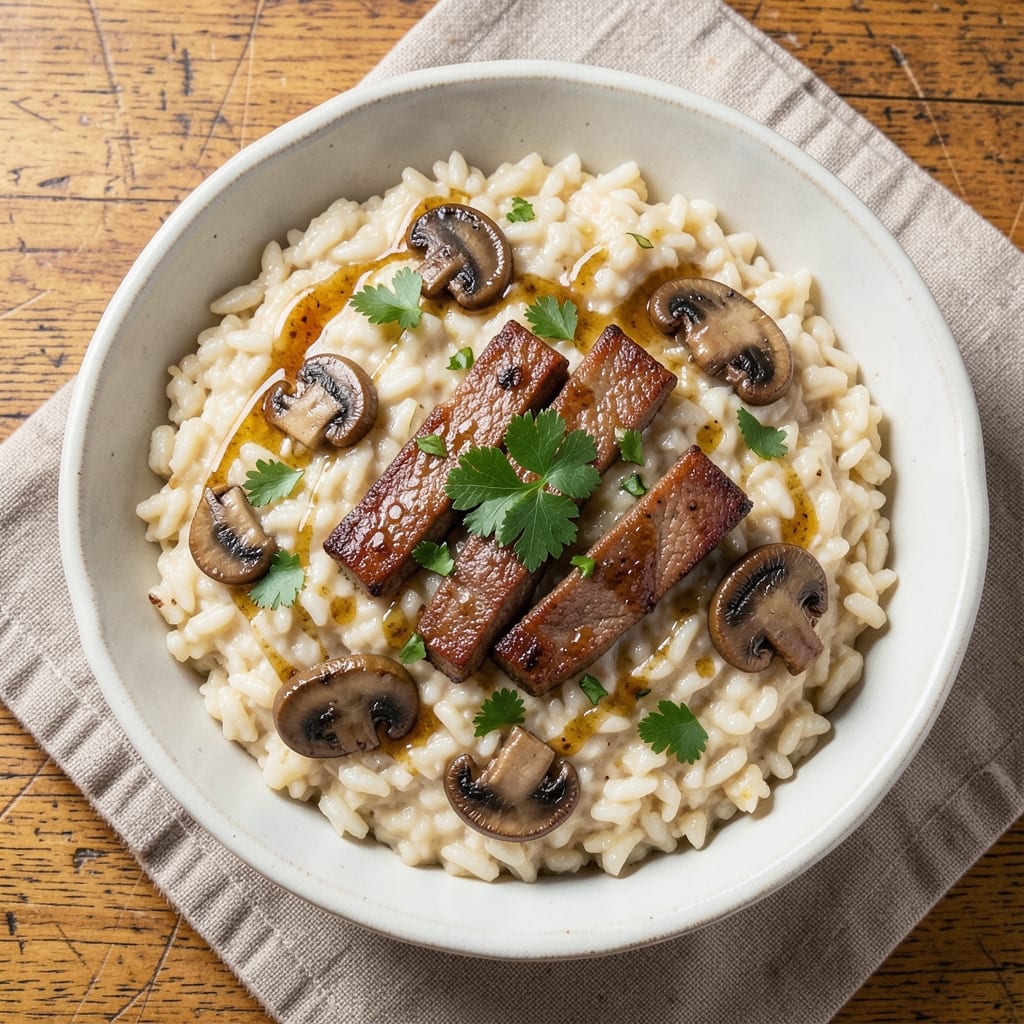
This beef and mushroom risotto recipe delivers restaurant-quality creaminess in a single pot, transforming simple Arborio rice into velvety perfection. The secret lies in gradual toasting and constant stirring—techniques that develop that signature al dente texture while keeping the rice perfectly tender. I've perfected this method after years of testing, and it never fails to impress even skeptical risotto purists.
The magic begins with searing thinly sliced beef until just pink, then deglazing the pan to capture every savory bit. Mushrooms add earthy depth as they soften, while Arborio rice absorbs successive ladles of warm broth, releasing starch that creates that luxurious creaminess without heavy cream. This method preserves the rice's natural texture while building rich, complex flavors.
By the final stir, you'll have a pot of silky, golden risotto where each bite delivers tender beef, umami mushrooms, and perfectly al dente rice coated in its own velvety sauce. The aroma alone will have everyone gathered at your table, and the first taste will confirm this is worth every minute of attention. Garnish with fresh parsley and shaved Parmesan for that final touch of elegance.
Perfect for impressing guests or treating yourself to a weeknight luxury, this risotto comes together in one pot with minimal cleanup. The technique might seem fussy at first, but once you master the rhythm of stirring and adding broth, you'll achieve professional results every time. Let's get cooking—your taste buds will thank you.
Ingredients for beef and mushroom risotto
Simple ingredients that transform into restaurant-quality risotto with perfect creaminess.
| Ingredient | Amount | Notes |
|---|---|---|
| Arborio Rice 🌾 | 1 ½ cups | Unrinsed for maximum starch |
| Thinly Sliced Beef 🥩 | 1 lb | Sirloin or ribeye preferred |
| Cremini Mushrooms 🍄 | 1 lb | Sliced into even pieces |
| Shallots 🧅 | 2 whole | Minced for fine texture |
| Garlic Cloves 🧄 | 4 cloves | Minced for aromatic depth |
| Dry White Wine 🍷 | 1 cup | Bold variety like Sauvignon Blanc |
| Beef Broth 💧 | 6 cups | Homemade or high-quality store-bought |
| Extra-Virgin Olive Oil 🫒 | ¼ cup | For searing and finishing |
| Unsalted Butter 🧈 | 4 tbsp | Cold, cut into small pieces |
| Parmesan Cheese 🧀 | ½ cup | Freshly grated from block |
| Fresh Parsley 🌿 | ¼ cup | Chopped for garnish |
| Salt 🧂 | 1 ½ tsp | Kosher or sea salt |
| Ground Black Pepper 🌶️ | ½ tsp | Freshly ground for flavor |
The Arborio rice is non-negotiable—its high starch content is what creates that signature velvety texture. Look for Arborio or Carnaroli at specialty stores or the Italian section of Whole Foods or Trader Joe's. For the beef, sirloin or ribeye slices thinly against the grain—this ensures tenderness. Mushrooms should be fresh and firm, not slimy or pre-sliced from the package. Shallots add subtle sweetness, so don't skip them. The white wine should be dry and bold—Sauvignon Blanc or Pinot Grigio work perfectly. For the broth, homemade is ideal, but Pacific Foods or Imagine brands are solid store-bought options.
No Arborio rice? Carnaroli or Vialone Nano are great substitutes, though slightly pricier. Running out of white wine? Dry vermouth or even beef broth will work in a pinch—just reduce the amount by a third. Fresh mushrooms are ideal, but cremini or baby bella from a can in water (drained and patted dry) can stand in. The Parmesan needs to be real Parmigiano-Reggiano—pre-grated tastes like sawdust. For the butter, European-style unsalted like Plugrá melts beautifully. If you're short on time, pre-minced shallots and garlic from the jar save 10 minutes of prep.
Store the Arborio rice in an airtight container in a cool, dark place for up to 1 year. Fresh mushrooms keep for 5-7 days in the fridge, but use them within 2 days for best texture. The Parmesan wedge lasts weeks wrapped in parchment paper, while pre-grated keeps for 3 months in the freezer. This risotto reheats beautifully—just add a splash of broth and stir over low heat. Leftovers keep for 3-4 days in the fridge, though it's best enjoyed fresh. For make-ahead prep, cook the risotto until just al dente, then finish with butter and Parmesan later.
Why You'll Love This Recipe
- No Fuss Setup: I swear by this recipe because it’s the kind of meal where the hardest part is remembering to set the timer. Sear the beef in one pan, sauté the mushrooms and shallots in the same, then just stir in the rice—no chopping, no stress, and no extra pots. The Arborio rice does all the work for you once it hits that simmering broth.
- Umami Bomb: Between us, that combo of beef and cremini mushrooms is chef’s kiss—deep, savory, and impossible to resist. The shallots and garlic add this bright, almost caramelized edge that cuts through the richness, so you get layers of flavor in every bite. I’ll take that over bland risotto any day.
- Date Night or Lazy Night: This is my secret weapon for when I don’t want to try too hard but still want to impress. It’s fancy enough for a dinner party (just garnish with parsley) but casual enough to eat straight from the pan on a Tuesday. My partner’s a skeptic, but he’s been known to ask for seconds—even when we’re watching trash TV.
- Leftovers That Don’t Suck: Honestly, I make this just because the leftovers are so good. The rice gets even creamier the next day, and the beef stays tender—perfect for cold sandwiches or reheating with a splash of broth. Plus, it’s budget-friendly: a single bag of Arborio rice and a pound of beef stretch across multiple meals without feeling repetitive.
Step-by-step instructions for beef and mushroom risotto
Here's how to create velvety, restaurant-quality risotto in one pot—no fancy equipment needed.
Sear the Beef and Mushrooms
Heat the 0.25 cup extra-virgin olive oil in a large, deep skillet or Dutch oven over medium-high heat. Add the 1 lb thinly sliced beef and cook for 2-3 minutes until the edges are deep golden brown and the meat begins to pull away from the pan. Remove the beef and set it aside on a plate.
In the same pan, add the 1 lb cremini mushrooms and cook for 5-6 minutes until they release their moisture and turn rich brown at the edges. Season lightly with ½ tsp salt and ¼ tsp ground black pepper during this time. You want the mushrooms to soften but still retain some texture—they'll finish cooking later in the risotto.
Sauté the Aromatics
Reduce the heat to medium and add the 2 whole minced shallots and 4 cloves minced garlic. Cook for 2-3 minutes until the shallots turn translucent and the garlic releases its fragrant aroma. Be careful not to let the garlic burn—it should smell sweet and nutty, not bitter.
Here's the thing—don't rush this step. The shallots and garlic form the flavor base for your entire risotto. If they're undercooked, your dish will taste flat. If they burn, it'll taste bitter. Aim for that perfect balance where they're soft but still vibrant.
Toast the Arborio Rice
Add the 1.5 cups unrinsed Arborio rice to the pan and stir for 1-2 minutes until the grains are lightly coated with the aromatic oil and begin to look slightly translucent at the edges. This toasting step is crucial—it builds flavor and prevents the rice from becoming mushy.
I always stir constantly during this step to ensure even coating. You'll see the rice grains become slightly opaque with a few tiny bubbles forming on the surface—that's your signal it's ready for the liquid. Don't let it brown or stick to the pan.
Deglaze and Add Broth Gradually
Pour in the 1 cup dry white wine and stir vigorously, scraping up all the browned bits from the bottom of the pan. Let the wine simmer for 2-3 minutes until it's nearly completely absorbed by the rice. This deglazing step captures all the meaty, mushroomy flavors we seared earlier.
Now, begin adding the 6 cups beef broth ½ cup at a time, stirring constantly after each addition. Wait until each increment of broth is almost completely absorbed before adding the next. This gradual process is what creates that signature creamy texture—it allows the rice to absorb just the right amount of liquid while releasing starch.
Finish with Butter and Cheese
When the rice is al dente (after about 18-20 minutes of total cooking time) and has absorbed most of the broth, remove the pan from heat. Stir in the 4 tbsp cold unsalted butter and 0.5 cup grated Parmesan cheese until the butter melts and the mixture becomes luxuriously creamy. This is where the magic happens—the fat and cheese create that velvety consistency we all love.
Return the beef to the pan and stir gently to coat the rice and meat in the creamy sauce. Taste and adjust seasoning with additional salt or pepper if needed. Garnish with 0.25 cup chopped fresh parsley just before serving. The parsley adds a fresh contrast to the rich, umami flavors of the risotto.
Pro Tips For Making Beef And Mushroom Risotto
- Sear Beef in Batches: Thinly sliced beef piles up fast—crowding steams instead of browns. Work in 2-3 batches over medium-high heat, letting the pan recover between additions. I learned this the hard way when my first batch turned gray and sad.
- Toast Mushrooms Low and Slow: High heat burns mushrooms before they release their moisture. After initial searing, drop heat to medium-low and let them cook undisturbed for 5 minutes—this builds flavor without char. (Yes, even if you’re impatient like me.)
- Stir Rice Like You Mean It: Risotto’s magic happens at the edges—constant stirring with a wooden spoon breaks up starch. Use the outer 1/3 of the pan’s surface to check doneness; if it’s dry there, add broth. Skimp on stirring, and you’ll end up with gluey rice.
- Finish with Cold Butter: Stir in a pat of cold butter and a splash of white wine at the end—it coats every grain, making the risotto silky. I was skeptical until I tried it; now I never skip it. (Your future self will notice the difference.)
Serving suggestions for beef and mushroom risotto
Elegant Garnish Finishes
Freshly chopped parsley brightens the dish with its vibrant green color and fresh aroma. I like to sprinkle it just before serving to maintain that crisp contrast against the creamy risotto. For extra flair, add shaved Parmesan cheese using a microplane—it melts into the sauce beautifully while adding umami depth. A drizzle of truffle oil (about ½ teaspoon) elevates the dish to gourmet status with its earthy aroma. 🌿
Bread Pairings
A warm, crusty baguette is my go-to for soaking up any extra sauce. I recommend toasting it in the oven for 5 minutes at 375°F until golden and crisp. For a more rustic touch, serve with sourdough bread or focaccia—both pair beautifully with the rich flavors. If you're feeling fancy, try a garlic bread twist by mixing minced garlic and butter into the dough before baking. 🥖
Wine Pairings
A bold Chianti or Barbera complements the dish's rich, umami flavors perfectly. The acidity cuts through the creaminess while the tannins balance the beef. For white wine lovers, a dry Pinot Grigio from Italy offers a crisp, refreshing contrast. If you prefer beer, a hoppy IPA or amber ale adds a nice contrast to the dish's richness. 🍷
Vegetable Sides
A simple arugula salad with lemon vinaigrette adds a peppery bite that refreshes the palate. I toss 4 cups baby arugula with 2 tablespoons olive oil, 1 tablespoon lemon juice, and a pinch of salt. Roasted asparagus or green beans> with garlic and butter also make excellent sides. For a heartier option, try a winter squash puree>—its sweetness complements the savory risotto beautifully. 🥗
Dessert Pairings
Finish the meal with something light yet indulgent. A lemon sorbet or panna cotta> with berry compote cleanses the palate after the rich risotto. For a classic pairing, serve with tiramisu>—the coffee and mascarpone balance the beef's richness. If you prefer chocolate, a dark chocolate-dipped strawberry> adds a touch of elegance. 🍫
Make-It Special Touches
For a restaurant-worthy presentation, serve the risotto in shallow ovenproof dishes> and broil for 2-3 minutes> until the top is golden and bubbly. A sprinkle of crispy fried shallots> adds texture and visual appeal. If you're serving a crowd, use a chafing dish> to keep the risotto warm and creamy. For a final touch, garnish with edible flowers> like nasturtiums—they add color and a subtle peppery note. ✨
Nutrition facts
Frequently asked questions
Why does risotto need to be stirred constantly?
Constant stirring prevents the rice from sticking to the pan and ensures even cooking. The gentle agitation releases starch from the grains, which creates that signature creamy texture as it absorbs the broth. Think of it like a dance between the rice and liquid—too little stirring means uneven cooking, while too much can break the grains. Aim for a rhythm that keeps everything moving without mashing the rice.
Can I use regular white rice instead of Arborio?
Regular white rice won't work because it lacks the high starch content that makes risotto creamy. Arborio rice is specially bred to absorb liquid gradually while releasing starch that thickens the sauce. If you're desperate, try Carnaroli or Vialone Nano—they're pricier but even better. For a quick fix, use bomb rice (a starchy short-grain variety), but the texture won't be as luxurious.
What if my risotto turns out too dry or too soupy?
Too dry? Add ½ cup warm broth and stir gently until absorbed. Too soupy? Remove the pan from heat, cover, and let it sit for 5 minutes—the residual heat will finish cooking the rice while the starch thickens the sauce. For future attempts, taste the rice after 15 minutes and adjust broth amounts accordingly. Remember, risotto should be al dente with a slight bite in the center.
How do I make this risotto ahead of time?
Cook the risotto until it's just al dente (about 15 minutes before the usual time), then stir in the butter and Parmesan. Let it cool completely, then refrigerate for up to 2 days. To reheat, add 2-3 tablespoons broth per cup of risotto and warm over low heat, stirring frequently. For a restaurant-style finish, broil for 2-3 minutes with extra Parmesan and butter before serving.
Can I make this risotto vegetarian?
Swap the beef for mushroom duxelles (finely chopped mushrooms sautéed with garlic and herbs) or portobello mushrooms marinated in balsamic vinegar. Add 1 cup cooked lentils or crumbled tempeh for protein. Use vegetable broth instead of beef broth, and consider adding nutritional yeast for a cheesy, umami flavor. The technique remains the same—just adjust seasonings to complement the vegetarian ingredients.