
Soups & Stews
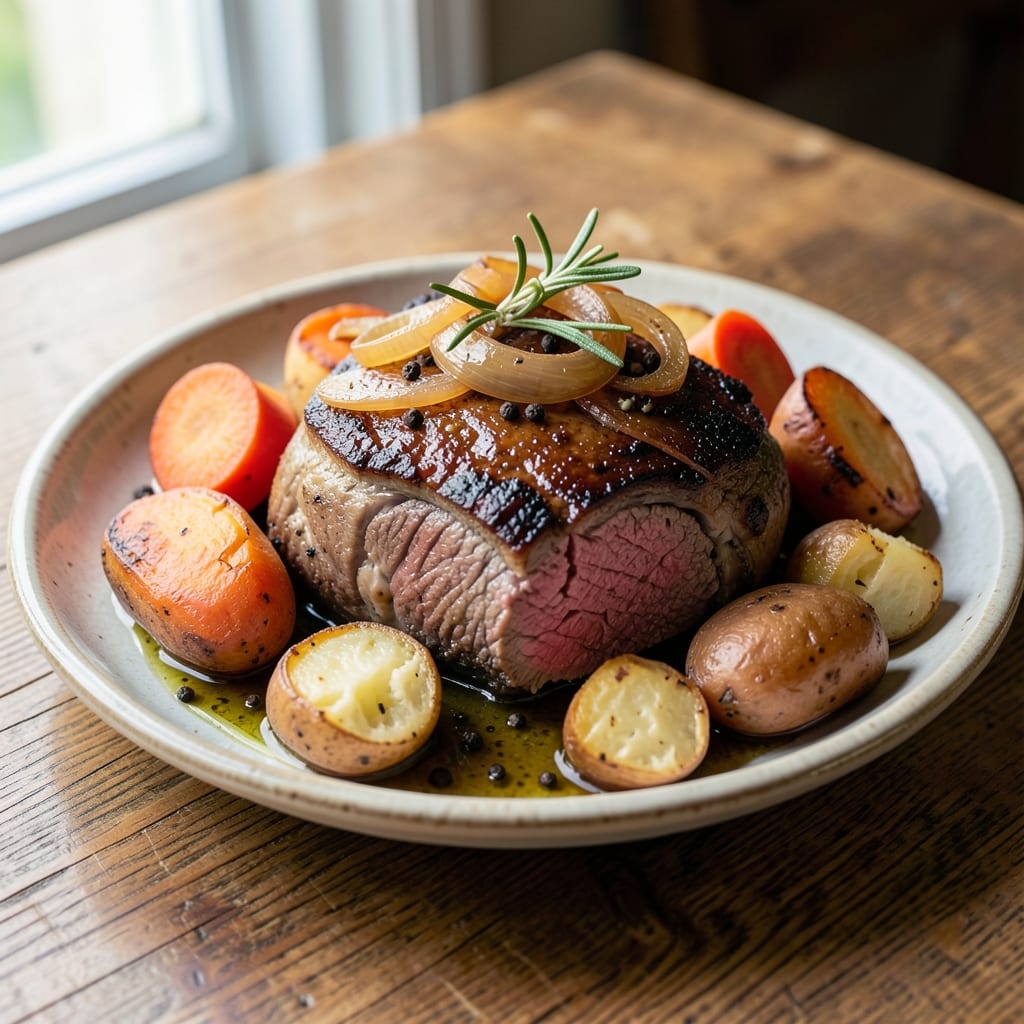
This beef and mixed vegetables recipe transforms a simple one-pot meal into a deeply flavorful experience with caramelized roots and tender beef. The secret lies in balancing rich umami from the beef with the natural sweetness of roasted vegetables, creating a dish that's both comforting and sophisticated. What makes it special is how the flavors meld together over time—no complicated techniques required, just patience and a few key ingredients.
The process begins with searing the beef to develop a deep, savory crust before adding vegetables that caramelize beautifully in the same pot. You'll work with root vegetables like carrots, parsnips, and potatoes, which turn tender and slightly sweet as they cook. The result is a meal that's hearty enough for a weeknight dinner but elegant enough for company, all while keeping cleanup to a single pot.
By the time you're done, you'll have perfectly tender beef paired with vegetables that are caramelized at the edges and still vibrant inside. The sauce that forms is rich and velvety, coating every bite with layers of flavor. This dish delivers restaurant-quality results without requiring special skills—just a solid technique and a little time.
Serve it with crusty bread to soak up every last bit of that flavorful sauce, or pair it with a simple green salad for balance. The one-pot method ensures you'll spend less time cleaning and more time enjoying the meal, making it perfect for busy weeknights or when you want to impress without stress.
Ingredients for beef and mixed vegetables
Pantry staples meet caramelized roots in this one-pot umami masterpiece.
| Ingredient | Amount | Notes |
|---|---|---|
| Chuck Roast 🥩 | 1 ½ lb | Cut into 1-inch cubes |
| Yellow Onion 🧅 | 1 whole | Chopped, medium size |
| Carrots 🥕 | 1 ½ lb | Baby or whole, cut into chunks |
| Parsnips 🥕 | 1 lb | Peeled, cut into 1-inch pieces |
| Russet Potatoes 🥔 | 1 ½ lb | Cut into 1-inch cubes |
| Garlic Cloves 🧄 | 6 cloves | Minced, fresh preferred |
| Tomato Paste 🍅 | ½ cup | Squeeze tube or canned |
| Beef Broth 💧 | 2 cups | Low-sodium preferred |
| Red Wine 🍷 | 1 cup | Bold, dry variety |
| Olive Oil 🫒 | 2 tbsp | Extra-virgin for richness |
| Thyme Leaves 🌿 | 1 tbsp | Fresh or dried |
| Rosemary 🌿 | 1 tbsp | Fresh, chopped |
| Salt 🧂 | 1 ½ tsp | Kosher or sea salt |
| Black Pepper 🌶️ | 1 tsp | Freshly ground |
| Balsamic Vinegar 🍶 | 1 tbsp | For finishing touch |
The beef is the star here—chuck roast gives you that melt-in-your-mouth texture no other cut can match. Grab it from the butcher counter if you can, or the pre-cubed section at Kroger or Whole Foods saves time. Look for good marbling—those little fat streaks are what make the meat juicy. For the roots, carrots and parsnips should be firm with no soft spots, and the potatoes? Russets hold up best to caramelizing. If you're feeling fancy, grab a few extra carrots—they're the sweetest when roasted.
No red wine? Beef broth with a splash of balsamic works just as well—trust me, no one will notice. Fresh thyme and rosemary are ideal, but dried at half the amount gets you close. The tomato paste can be from a squeeze tube (no waste!) or a can—just make sure it's San Marzano if you're splurging. For the potatoes, Yukon Golds add a nice creaminess, but Russets are the workhorse. The carrots can be baby or whole—whatever's cheaper at your store. And if you're out of balsamic vinegar, apple cider vinegar in a pinch.
This dish tastes even better the next day—make extra and portion it into containers for lunches. Keeps in the fridge for 4-5 days or freeze for 3 months. The sauce thickens as it sits, so add a splash of broth when reheating. For leftovers, I like to serve it over crusty bread or with a simple arugula salad to cut through the richness. The one-pot method means less cleanup, so you can enjoy more time savoring that umami-packed sauce.
Why You'll Love This Recipe
- One-Pot Magic: I swear by this recipe when I’m too tired to juggle multiple pans. Chuck roast and potatoes soften together in the same pot—no extra dishes, just rich, saucy goodness by the end.
- Sweet-Savory Balance: The parsnips caramelize into something almost honey-like while the carrots stay crisp. Honestly? That contrast is what makes this dish ridiculously good—like a hug for your taste buds.
- Leftovers That Shine: Between us, this recipe tastes better the next day. The beef gets even more tender, and I’ve sent these leftovers to work lunches with zero complaints (yes, even from my picky coworker).
- Budget-Friendly Feast: A chuck roast stretches across three meals for my family of four, and the veggies? They’re cheap staples that never go to waste. My wallet and my dinner table win every time.
Step-by-step instructions for beef and mixed vegetables stew
This one-pot wonder delivers deep umami flavor with tender beef and caramelized roots—no chopping chaos here.
🍳 Step 1: Sear the Beef for Maximum Flavor
Heat the 2 tablespoons olive oil in a large Dutch oven over medium-high heat until shimmering. Working in batches, add the 1.5 lb chuck roast cut into 1-inch cubes, letting them sear undisturbed for 2-3 minutes per side until deeply browned. This step builds the rich foundation of your stew.
Don't overcrowd the pan—if needed, work in two batches. Once all beef is browned, transfer it to a plate and set aside. You'll know it's ready when the edges turn golden brown and the meat releases easily from the pan.
👨🍳 Step 2: Build the Vegetable Base
In the same Dutch oven, add the 1 whole yellow onion and 1.5 lb carrots cut into chunks. Cook for 5 minutes, stirring occasionally, until the onions soften slightly. Add the 1 lb parsnips and 1.5 lb russet potatoes cut into 1-inch cubes, then stir in the 6 cloves minced garlic. Cook for another 3 minutes until everything is lightly coated and fragrant.
Here's where the magic starts—the vegetables should begin to soften but not brown. If they stick, add a splash of beef broth to deglaze. The goal is to create a flavorful base without burning the vegetables.
🥘 Step 3: Develop the Umami-Packed Sauce
Stir in the 0.5 cup tomato paste, spreading it evenly over the vegetables. Cook for 2 minutes until it darkens slightly. Pour in the 1 cup red wine and scrape up any browned bits from the bottom of the pot—this is pure flavor. Let it simmer for 3-4 minutes until the wine reduces by half.
Add the 2 cups beef broth, 1.5 teaspoons salt, 1 teaspoon black pepper, 1 tablespoon thyme leaves, and 1 tablespoon chopped rosemary. Bring to a gentle boil, then return the seared beef to the pot. The liquid should just cover the ingredients—if it's too thin, add a splash more broth.
⏰ Step 4: Slow Cook Until Tender
Reduce heat to low and cover the pot. Let it simmer for 2 hours, stirring occasionally. The beef should become fork-tender, and the vegetables should soften until a knife slides in easily. If the liquid reduces too much, add a splash of water or broth to maintain a sauce-like consistency.
Real talk: This is where patience pays off. The longer it cooks, the deeper the flavors meld. Check occasionally to ensure nothing sticks to the bottom—just stir and let the magic happen.
🍽️ Step 5: Finish with Balsamic and Serve
Once the beef is tender, stir in the 1 tablespoon balsamic vinegar and let it simmer for another 2-3 minutes. Taste and adjust seasoning—you might need a pinch more salt or pepper to balance the flavors. The balsamic adds a touch of brightness that cuts through the richness of the beef and vegetables.
Serve directly from the pot, letting everyone scoop up the tender beef and caramelized vegetables. The sauce should coat everything beautifully, with a depth of flavor that comes from the slow cooking process. Pair with crusty bread to soak up every last bit of that umami-packed goodness.
Pro Tips For Making Beef And Mixed Vegetables
- Sear the Chuck Roast First: I learned this the hard way—skipping the sear means bland, gray beef. Pat the roast very dry with paper towels, then hit it with high heat in a hot pan for 3-4 minutes per side until deep brown. That crust locks in flavor and keeps the meat juicy. (Yes, even if you're impatient like me.)
- Cut Potatoes into Even Slices: Uneven potatoes mean some mushy, some undercooked. Use a mandoline or sharp knife to slice Russets into ¼-inch rounds—same thickness for carrots and parsnips. They’ll cook at the same rate, and no one wants a forkful of al dente potato next to a rubbery carrot.
- Don’t Overcrowd the Pot: After searing the beef, I used to dump everything in the pot at once. Big mistake. Start with onions, then layer in potatoes and root veggies in batches, leaving space between them. Crowding steams the veggies instead of browning them, and you’ll end up with sad, waterlogged textures.
- Use a Meat Thermometer: Guessing doneness with a chuck roast is how you end up with chewy beef or dry beef. Aim for 195°F internal temp—it’ll pull back to 185°F while resting, and that’s where the collagen turns into silky goodness. (No, the "finger test" doesn’t count.)
Storing and reheating your leftovers
Refrigerator Storage
Let your beef and vegetable stew cool to room temperature for about 30 minutes before transferring to airtight containers. I use glass Pyrex storage containers with snap-on lids—they keep flavors locked in better than plastic. Store in the fridge at 40°F or below for up to 5 days, but honestly? It tastes even better the next day as the flavors meld together perfectly. 🥣
Freezer-Friendly Tips
For long-term storage, portion the stew into quart-sized freezer bags or airtight containers, leaving 1-inch headspace for expansion. Label with the date—it stays fresh for up to 3 months. When reheating from frozen, add ¼ cup beef broth to prevent drying out. I like to freeze individual servings for quick lunches during busy weeks. ❄️
Stovetop Reheating
My preferred method is stovetop reheating—it preserves the best texture. Transfer the stew to a pot over medium-low heat and warm gently for 10-15 minutes, stirring occasionally. If it looks too thick, add 2-3 tablespoons of beef broth to restore the sauce consistency. Taste and adjust seasoning—you might need a pinch more salt or a splash of balsamic vinegar to brighten flavors. 🔥
Microwave Method
For quick reheating, cover the stew with a damp paper towel and microwave on 50% power in 2-minute intervals, stirring between each interval. This prevents overcooking while ensuring even heating. If the sauce separates, stir in 1 tablespoon cornstarch mixed with 2 tablespoons water to restore thickness. Avoid high power—it can make the beef tough. 💫
Leftovers Reinvented
Transform leftover stew into new meals! Use it as a filling for stuffed baked potatoes or serve over mashed potatoes for a hearty dish. For a lighter option, top with crumbled feta cheese and fresh herbs. The flavors only get better with time, so don’t hesitate to make extra. 💡
Sauce Rescue
If your stew ends up too thick after reheating, thin it with warm beef broth or a splash of red wine. For a thicker sauce, simmer uncovered for 5-10 minutes to reduce. The key is balance—aim for a consistency where the sauce coats the back of a spoon but doesn’t drown the beef and vegetables. 🍲
Nutrition facts
Frequently asked questions
Can I use a different cut of beef instead of chuck roast?
For a quicker cook, try sirloin or flank steak cut into strips—it'll be ready in 20-30 minutes instead of 2 hours. For extra tenderness, use short ribs, which add incredible flavor but require 3 hours of cooking. Just adjust the cooking time based on the cut's tenderness.
What vegetables can I swap in for the carrots, parsnips, and potatoes?
This recipe is flexible—try butternut squash or sweet potatoes for extra sweetness, or celery root for a nutty flavor. For greens, add spinach or kale in the last 10 minutes of cooking. Just match the cooking time to your vegetable's tenderness.
How do I make this dish in a slow cooker?
Brown the beef first, then transfer everything to your slow cooker. Cook on low for 7-8 hours or high for 4-5 hours. The slow cooker does all the work—just stir occasionally and add broth if needed. The result is just as tender and flavorful!
Why does my stew taste bland after reheating?
Reheating often dulls flavors because heat breaks down aromatics. Fix it by adding a splash of red wine or balsamic vinegar while reheating, or sprinkle with fresh herbs like parsley or thyme at the end. A pinch of Worcestershire sauce also adds depth.
Can I make this dish in an Instant Pot?
Yes! Sear the beef first, then add all ingredients and cook on high pressure for 40 minutes. Let it naturally release (10 minutes), then stir in balsamic. The pressure cooker cuts time to 1 hour total while keeping everything tender. Just check for doneness early—beef may cook faster.